
Cheap Private Jet: How to Fly Private for Less in 2026


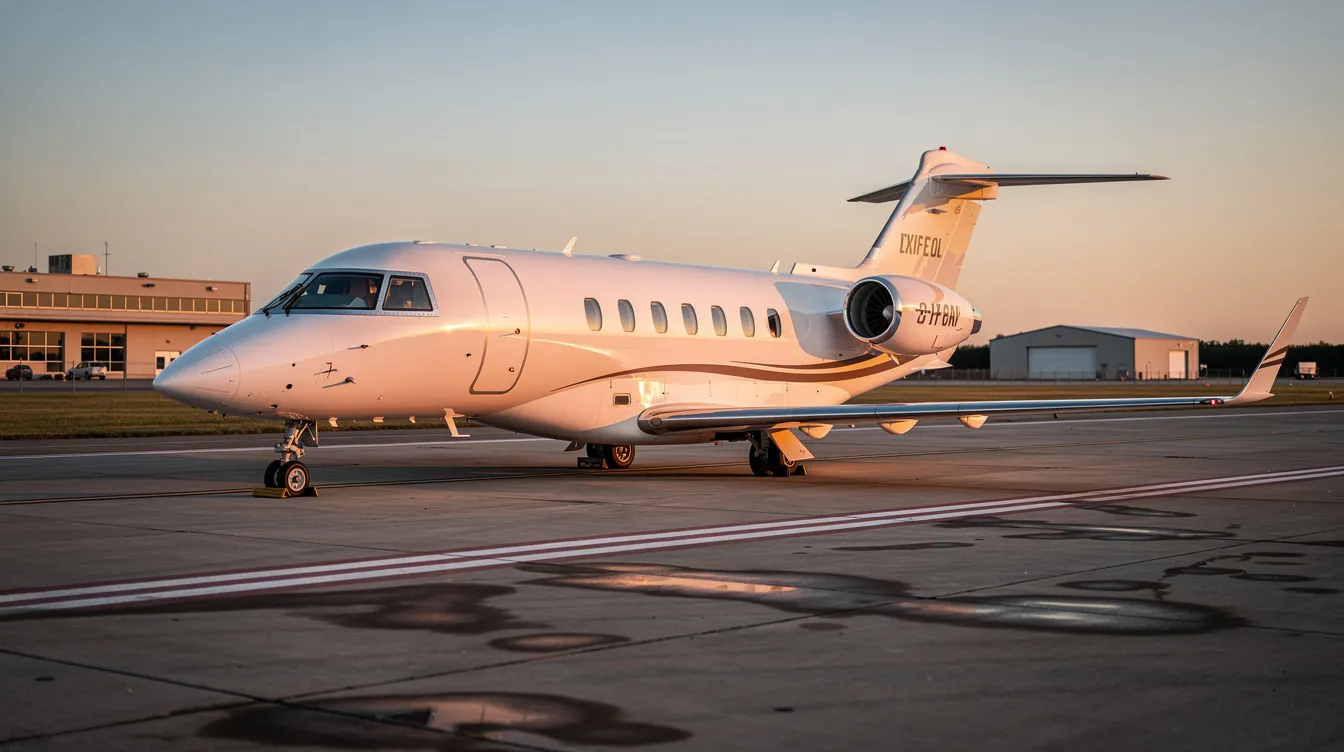
You don't need to spend $5,000 per hour to fly private. In 2026, the combination of empty leg flights, smarter aircraft selection, and flat-fee membership models has made private jet travel more accessible than ever. Here's how the economics actually work-and where to find the real deals.
Key Takeaways
You can fly private in 2026 without owning an aircraft or paying full charter rates. The cheapest private jet opportunities combine a flexible schedule with empty-leg flights or shared costs. With Hoppyn's flat $997/year membership, confirmed empty legs come with no per-flight cost, making "cheap private jet" travel genuinely realistic for frequent flyers and occasional travelers alike.
Buying vs. chartering vs. membership: Purchasing even the cheapest private jets (like the Eclipse 500 at ~$1M) locks you into $400K–$800K in annual operating costs. On-demand charter runs $2,300–$17,000 per hour. Empty leg access via a membership is usually the cheapest route for travelers flying under ~150 hours per year.
Most affordable aircraft categories: Very light jets, light jets, and turboprop aircraft dominate the "affordable private jet" conversation. They burn less fuel, require smaller crews, and frequently appear on empty leg boards at steep discounts.
Hoppyn's model: Members can browse a live board of empty leg flights, join waitlists, and fly confirmed repositioning legs with no per-flight cost beyond the annual fee-making private travel predictable even for first time jet owners of the experience.
What's ahead in this article: Specific aircraft examples with real 2025–2026 prices, honest breakdowns of operating costs, and a clear comparison of ownership, charter, and membership so you can decide which approach fits your budget.
What "Cheap Private Jet" Really Means in 2026
When people search for "cheap private jet," they usually mean one of three things. Some want the cheapest aircraft to buy outright. Others want the lowest hourly operating costs. But most people actually care about the total cost to fly private over a year-without committing to ownership.
That distinction matters. Flight duration and distance are core components of private jet rental pricing, and the hourly meter runs fast. Private jet rental costs range from $2,300 to $17,000 per hour depending on aircraft size and mission, while VIP airliners rent for $18,000 to $23,000 per hour. For occasional flyers, those numbers add up quickly.
Here's how to think about "cheap" in three ways:
Cheapest purchase price: Older aircraft like the Eclipse 500 or early 1990s Learjet 60 can be acquired for under $1.5M-sometimes well under $1M-but purchase price is only part of the story.
Cheapest hourly costs by category: Turboprop aircraft and very light jets typically run $650–$1,500 per flight hour, while large jets and ultra-long-range aircraft push $4,000–$8,500+.
Cheapest access without ownership: Charter, empty legs, and membership models let you skip fixed costs entirely. For travelers flying under 120–150 expected annual flight hours, paying per trip or via a platform like Hoppyn consistently beats the all-in cost of ownership.
Overview of Private Jets by Size and Cost
Private jets are grouped into categories by size, range, and passenger capacity. Costs rise as you move from compact jets to intercontinental heavy iron. The total number of private jets in operation worldwide is approximately 24,270, spread across these classes:
Very light jets (VLJs): 2–5 passengers, sub-1,200 nautical miles range. Pre-owned from ~$1M.
Light jets: 4–8 passengers, ~1,000–2,000 nm. Pre-owned from ~$1.5M–$5M depending on model and aircraft age.
Midsize jets / super midsize jets: 6–9 passengers, 2,000–3,500 nm. Pre-owned often $5M–$15M for recent models.
Large jets: 10–16 passengers, intercontinental range. Large cabin aircraft like the Dassault Falcon 50 can fly over 3,000 nautical miles. Even used, newer large jets run $10M–$30M+.
Ultra long range aircraft: Gulfstream G650, Bombardier Global 6000-nonstop long-haul capability. New prices start around $50M+; used examples often $20M+.
Larger aircraft generally incur higher hourly costs due to fuel and operational needs. Chartering costs typically range between $4,000 to $6,000 per hour for large jets, while VLJs can be chartered for a fraction of that.
What many private aviation enthusiasts overlook: operating costs-fuel, crew, maintenance-often matter far more than the initial purchase price over 5–10 years. That's why many budget-minded travelers skip private ownership entirely and access business jets through charter or empty leg platforms instead.
Very Light Jets: The Cheapest Private Jets to Own
The very light jet category represents the entry point into jet aircraft ownership. These compact planes seat 1–4 passengers, cruise at 300–380 knots, and cover regional routes up to about 1,200 nautical miles. Very light jets are the most affordable private jets you can buy and operate.
VLJs are often certified for single-pilot operation, which significantly reduces pilot and crew salaries compared with larger private jets that require two-pilot crews. That single line item alone can save an owner $80,000–$150,000+ per year.
Here's why VLJs dominate the "cheapest private jet" lists:
Low fuel burn: Smaller engines mean lower fuel costs per hour, often under $300/hour for fuel alone.
Simpler systems: Fewer complex components translate to lower maintenance bills and easier access to modern avionics upgrades.
Good pre-owned availability: Models like the Eclipse 500, Cessna Citation Mustang, and Cirrus Vision Jet are widely available on the secondary market across North America and Europe.
Typical operating costs: Roughly $800–$1,500 per flight hour depending on model, engine programs, and annual flight hours.
Eclipse 500: Often the Absolute Cheapest Private Jet
If you're looking for the absolute floor on jet aircraft ownership, the Eclipse 500 is probably where you land. The Eclipse 500 can be acquired for $1 million to $1.5 million for well-maintained post-2008 models, making it one of the most economical private jets to own in North America and Europe.
Seating: 4–5 passengers in a compact cabin
Range: ~1,100–1,200 nm
Cruise speed: ~370–380 knots
Ceiling: Above FL410
Operating costs: Around $1,200–$1,400 per flight hour at ~300 hours/year (variable + fixed)
Pros: Low acquisition cost, efficient fuel burn (~59 liters/hour), good for short-haul hops like Los Angeles–Denver or Paris–Milan
Cons: Orphaned OEM status-the original manufacturer is no longer producing aircraft. Parts sourcing can be a challenge, and buyers need to work with specialized Eclipse maintenance centers in the US and Europe
For many travelers, the smarter move is catching an Eclipse 500 as a charter or empty leg rather than owning one. You get the same efficient aircraft without absorbing the fixed costs of hangar fees, insurance, and crew between flights.
Cirrus Vision Jet SF50: Cheapest Modern Single-Engine Jet
The Cirrus Vision Jet costs around $2 million new, making it the cheapest factory-new jet aircraft on the market. Late-model pre-owned examples trade between roughly $2.1M and $2.9M for 2017–2025 G2 and G2+ variants, with some early 2016 models dipping to ~$1.75M.
Range: ~1,275 nm
Cruise speed: ~305–311 knots
Seating: Up to 5 adults plus 1–2 children (rear seats have size/weight limits)
Safety: Single-engine design with the Cirrus Airframe Parachute System (CAPS)-a whole-aircraft parachute
Operating economics: Relatively low fuel burn compared to twin-engine light jets, around $650–$800/hr variable cost. Owner-pilot-friendly avionics make it viable for high-usage pilots flying 150–250 hours per year
Many travelers will encounter the Vision Jet in charter fleets or as part of private charter and membership programs rather than buying one outright. On common US routes like Dallas–Atlanta, a Vision Jet empty leg can drop to a fraction of standard charter pricing when booked last-minute through platforms like Hoppyn.
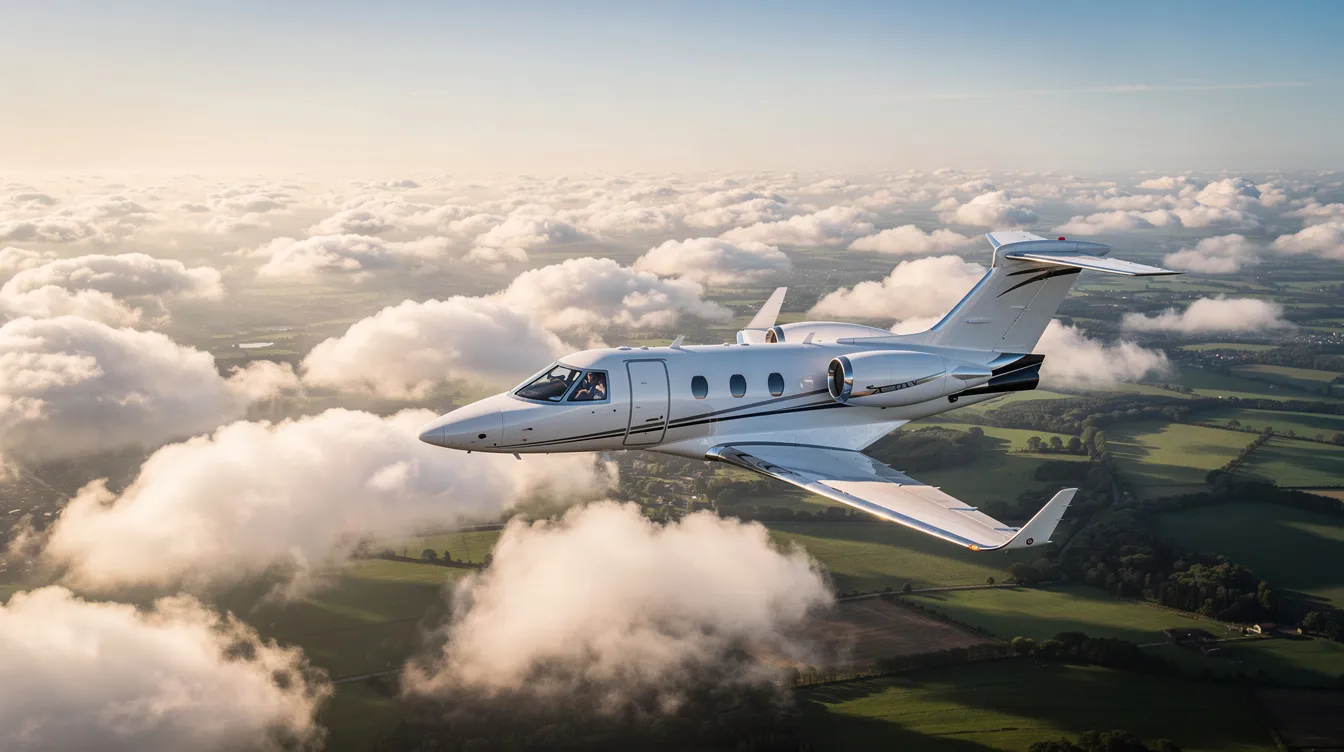
Cessna Citation Mustang: Budget Workhorse for Light Jet Fans
The Citation Mustang sits in the light jet category but behaves like a well-equipped VLJ. It's one of the most popular affordable aircraft in private aviation for its blend of reliability, support network, and low operating costs.
Configuration: 4-seat club layout with a spacious cabin for its class
Range: ~1,000–1,150 nm
Cruise speed: ~340 knots
Certification: Single-pilot certified, keeping crew costs down
Operating costs: Operating costs for a Cessna Citation Mustang are $1,000 to $1,200 per hour
Pre-owned prices: Cessna Citation Mustang prices range from $1.5 million to $2.5 million for 2008–2016 aircraft, depending on time on airframe and engine program enrollment
Common missions include New York–Chicago, London–Berlin, or Toronto–Miami-ideal stage lengths where the Mustang shines. Chartering or accessing Mustangs via empty legs is often cheaper than owning unless you're flying 200+ flight hours per year.
Embraer Phenom 100: Affordable Jet with a Big-Cabin Feel
The Phenom 100 fills a sweet spot for buyers who want more cabin space compared to most VLJs but still want relatively low operating costs. The taller, wider fuselage makes it feel closer to a small midsize jet, even though it prices like an entry-level private plane.
Pre-owned prices: Around $1.75M–$2.5M for 2009–2014 examples
Range: The Embraer Phenom 100 has a range of 1,178 nautical miles
Cruise speed: ~390 knots
Seating: Up to 6–7 passengers with flexible cabin layouts
Hourly operating costs: Hourly operating costs for the Embraer Phenom 100 are $1,200 to $1,600, depending on engine program and utilization
Cabin comfort: Larger baggage capacity and cabin volume than most VLJs-passengers notice the difference on flights over 90 minutes
The Phenom 100 is popular with private charter operators across North America and Europe. In empty leg markets, Phenom 100 segments on routes like Miami–Nassau or Geneva–Nice can become some of the best-value experiences when booked flexibly.
HondaJet HA-420: Innovative But Still Relatively Cheap to Operate
The HondaJet stands out with its distinctive over-the-wing engine mount design. This isn't just aesthetics-it reduces cabin noise, increases interior space, and keeps fuel burn competitive with larger light jets.
Pre-owned pricing: $3M–$4M for used examples; new aircraft often $5M+
Range: ~1,200–1,400 nm
Cruise speed: The HondaJet HA-420 has a cruise speed near 420 knots-faster than most jets in its class
Seating: 4–5 passengers in a notably quiet cabin
Operating costs: Positioned between VLJs and larger light jets, making it an efficient aircraft for small corporate teams on regional routes like Los Angeles–Seattle or Berlin–Madrid
Earlier service bulletins and fleet issues have largely been resolved in recent years, improving reliability and making HondaJets more attractive in the charter and membership market. Think of the HondaJet as a "step-up" from the cheapest private jets while still being relatively affordable to charter or fly via empty legs.
Learjet 60 and Older Midsize Jets: Depreciated but Not Always "Cheap"
Older midsize jets like the Learjet 60 look like bargains on paper. Early models can be found for under $1M, and even well-maintained 2000s-era examples average around $2.8M asking price. But low sticker prices mask significantly higher annual operating costs.
Range: ~2,200+ nm
Cruise speed: ~430–450 knots
Cabin: 7–8 passenger seating with more cabin class options than VLJs
The catch: Higher fuel burn, more intensive inspections (C-checks, hot-section inspections), and avionics overhauls can run well into six figures. At 300 hours/year, total annual operating spend can approach $1.8M
Upgrade costs: Many older Learjets need ADS-B compliance, WAAS/LPV approach capability, and modern connectivity (GoGo AVANCE Wi-Fi). These retrofits can add $100K–$300K+ to your first year of ownership
Large jets like the Dassault Falcon 50 follow similar patterns-they can fly over 3,000 nautical miles, but the annual bills surprise many first-time jet owners
Despite attractive initial purchase price points, occasional flyers are almost always better off chartering a Learjet 60 or booking it as a discounted empty leg. These older business jets are great illustrations of why "cheapest private jet" is more complicated than just listing aircraft under $2M.
Turboprop Aircraft: Often Cheaper Than Jets for Short Hops
For many "cheap private jet" missions under 500–800 nm, modern turboprop aircraft like the Pilatus PC-12 or King Air B100/90 deliver lower per-hour costs and better airport access than comparable light jets. Choosing turboprop charters can reduce hourly operational and fuel costs significantly.
PC-12 pre-owned: Around $4M–$6M for recent models
King Air B100 series: From ~$400K–$650K for older examples-though maintenance and overhaul costs ramp sharply on high-time airframes
Fuel efficiency: Lower fuel burn per nautical mile than most jet aircraft, especially on shorter routes
Airport access: Strong short-field performance lets turboprops reach small regional airports that lower landing and handling fees. Runway requirements that would exclude jets are no problem for a PC-12 or King Air
Example routes: Aspen–Salt Lake City, Geneva–Corsica, Dallas–Santa Fe-corridors where turboprops are often the most economical private aviation choice
Turboprops are the "secret" cheap option for private air travel when people search for private jets but could accept a propeller aircraft. They're slower and noisier than jets, but for sub-2-hour flights, the cabin comfort rivals light jets.

The Hidden Operating Costs Behind "Cheap" Private Jets
Even the most affordable private jets can cost $400K–$800K per year to operate when you add up every fixed and variable expense. Here's where the money actually goes:
Fixed annual costs:
Hangar fees: $1,000–$3,000/month in major US cities
Insurance: $15,000–$30,000/year
Scheduled and unscheduled maintenance: $50,000–$200,000/year depending on aircraft age and utilization
Pilot and crew salaries: $80,000–$200,000+ each, plus crew expenses for pilot and co-pilot overnight stays on multi-day trips
Training and recurrent certifications for crew
Variable operating costs:
Fuel: $300–$700 per hour depending on aircraft size and fuel efficiency
Landing and handling fees-airport fees vary significantly between major international hubs and regional facilities
Navigation and overflight charges on international routes
Fuel surcharges fluctuate based on global jet fuel prices
Domestic flights incur a Federal Excise Tax of 7.5% on top of other costs
Big-ticket items like engine overhauls ($200K–$500K+ per engine)
For owners flying under ~150 annual flight hours, these fixed costs make the hourly cost skyrocket compared to paying purely per trip via private charter or a membership product. That's the math that pushes most budget-conscious travelers away from private ownership.
Ownership vs Charter vs Empty Legs vs Membership
There are four realistic ways for most people to experience private aviation without inheriting an airline: outright ownership, on demand charter, booking empty legs, and joining a private jet membership.
Ownership: Best above ~200–300 flight hours per year. You get total control and full availability, but you also absorb the entire aircraft's fixed costs, depreciation, and capital expense. For private jet owners who fly enough, it can pencil out-but most don't.
Standard charter (on demand private jet charter): Maximum flexibility. You pick the route, time, and aircraft category. But you pay full market rates-often $5,000–$15,000+ per trip for light to midsize jets. Chartering a private jet on demand remains the most expensive per-trip option for most travelers.
Fractional ownership and jet cards: Fractional ownership splits the aircraft between multiple buyers. Jet card programs allow prepaid blocks of flight hours at fixed rates. Both offer more predictability than ad-hoc charter but still cost far more per hour than riding repositioning flights.
Empty leg flights via membership: Pay a fixed annual fee, access repositioning flights at no additional per-flight cost. Flying privately can be achieved without buying entire charters. Semi-private flights allow passengers to buy individual seats on scheduled private planes-another emerging option.
If you fly private occasionally or flexibly, leveraging empty legs via a membership often looks like the true "cheap private jet" route in 2026. The economics strongly favor access over ownership for most travelers.
Empty Leg Flights: The Smartest "Cheap Private Jet" Hack
Empty leg flights are repositioning flights that would otherwise fly empty. When a client charters a light jet from New York to Las Vegas, that aircraft may need to return home-or fly to its next booking-without passengers. That return segment is the empty leg.
Empty leg flights can be up to 75% cheaper than standard rates. Operators and brokers discount these segments heavily because the aircraft must move regardless. They are one-way flights sold at steep discounts.
Concrete pricing examples: A VLJ or light jet leg that might normally charter for $7,000–$9,000 can sometimes sell for $1,000–$3,000 total for the entire aircraft in late-notice deals. A heavy jet repositioning from Miami to New York might list for $5,000–$8,000 instead of $15,000+.
Empty leg flights are often used for repositioning aircraft, and they are ideal for opportunistic leisure travel-think a last-minute weekend in Las Vegas or a quick hop to a resort destination.
Trade-offs: Fixed route and schedule, higher risk of last-minute time changes, and difficulty lining up perfect round trips. Flexibility is required for scheduling empty leg flights. Traveling during off-peak times can reduce private jet rental costs even further on these segments.
Traditional brokers email lists of available legs to their networks. Hoppyn takes a different approach: a live global board with waitlists so members can track empty leg opportunities in real time rather than hoping to catch an email at the right moment, while dedicated resources for charter operators help fleets list and manage these repositioning flights efficiently.
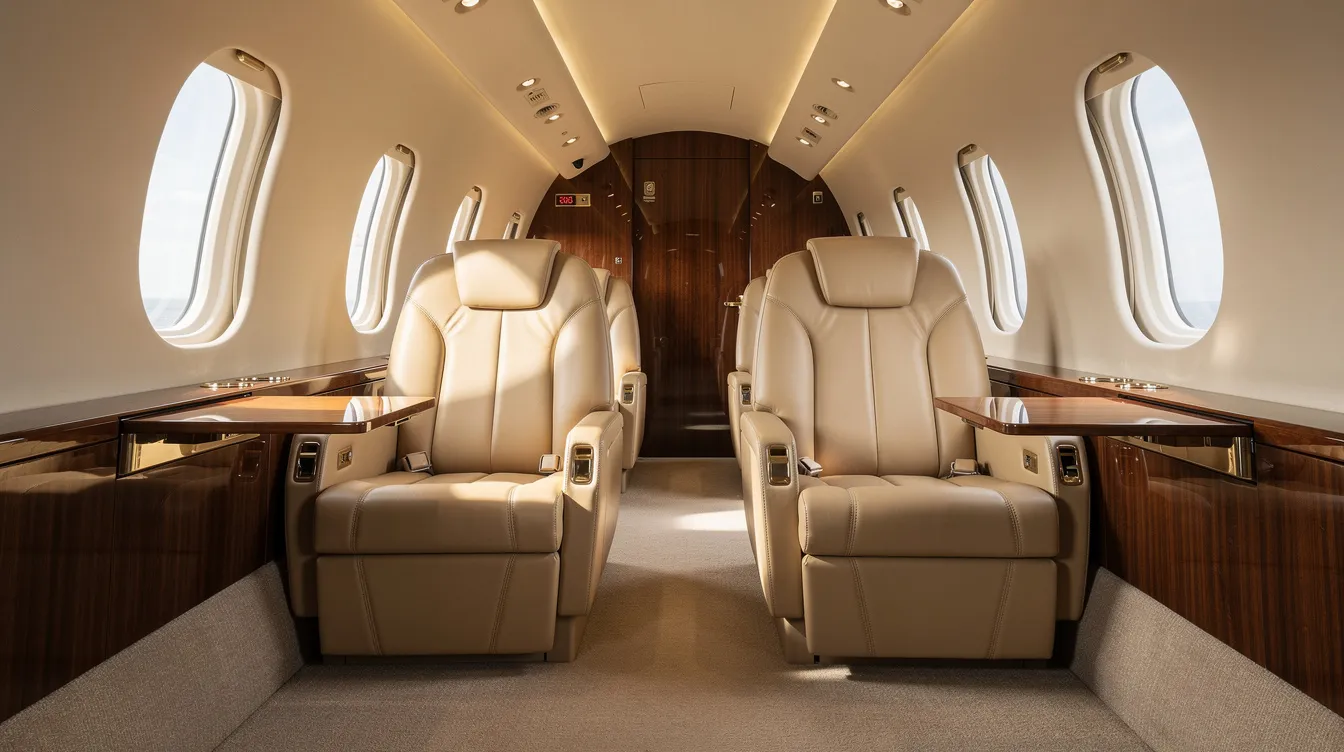
How Hoppyn Makes Cheap Private Jet Travel Predictable
Hoppyn is a subscription-based private jet membership built exclusively around empty leg flights worldwide. Hoppyn charges a flat annual fee of $997 for membership. Members can access unlimited free flights on confirmed empty-leg jets-no per-flight fee, no fuel surcharges, no hourly rates.
Here's how it works:
Members browse a live board of leg flights updated daily, filtered by region, date, and aircraft category
Join waitlists for routes that match upcoming plans
When the operator confirms the empty leg, the member flies-no additional flight cost
Coverage spans light jets, very light jets, midsize jets, large jets, and ultra long range aircraft across operation worldwide
This avoids the usual $2,300–$17,000 per hour charter pricing structure entirely. Instead, you get a predictable annual cost-ideal for flexible frequent travelers who want to fly private more often without buying a private plane.
Travel membership services offer access to private jets globally, and membership programs can provide significant cost reductions for private travel. Hoppyn's model delivers on both: unlimited free flights (once confirmed) and a flat annual membership with no hidden fees or surprise fuel surcharges. The About Hoppyn page lays out the full transparency promise.
What a Real "Cheap Private Jet" Year Can Look Like with Hoppyn
Let's walk through a realistic scenario. Imagine a consultant based in New York who travels regularly to Miami, Chicago, and Dallas for client work-plus a few leisure trips scattered through the year.
Over 12 months, she monitors Hoppyn's flight board and catches 12 empty leg trips on light jets and turboprop aircraft. Some are last-minute; others she waited for via the waitlist system.
The average market charter value of each flight runs $7,000–$15,000, depending on aircraft and route. That's roughly $84,000–$180,000 in charter value accessed for a $997 membership.
Private jet costs can vary significantly with the number of passengers sharing the flight. If she travels with 3 colleagues on average, the effective "per-seat" cost across those 12 flights is the $997 fee divided by trips and passengers-dramatically lower than a commercial flight in business class on the same corridors.
Even a member who only catches 3–4 flights in a year still beats the per-trip economics of ad-hoc private charter, because a single light jet leg might carry $5,000–$10,000 in market value.
The math works best for travelers with some scheduling flexibility. You won't always get the exact route on the exact day-but if you can shift by a day or depart from a nearby alternate airport, the savings compound quickly.
Choosing the Right Aircraft Type for Cheap Private Jet Trips
Private aviation relies on matching aircraft category to trip distance. Booking a smaller aircraft can be more economical if the route allows-and on empty legs, you sometimes "upgrade" for free simply because a larger jet needs repositioning.
1–4 passengers, under 1,200 nm: Prioritize very light jets or turboprops. These are the most affordable options and appear frequently on empty leg boards.
5–8 passengers, 1,500–2,000 nm: Look at light jets and midsize jets. The cabin space compared to VLJs is meaningfully better for groups, and these longer range aircraft handle cross-country routes comfortably.
Intercontinental or 10+ passengers: Reserve large jets and ultra long range jets for when you truly need nonstop range. These are rarer on empty leg platforms but do appear on high-traffic corridors.
Airport access matters: Turboprops and smaller jets can use many more regional airports-sometimes hundreds more than a heavy jet restricted to 6,000+ foot runways. This reduces ground transportation time and occasionally eliminates the need for a larger, more expensive aircraft entirely.
The empty leg upgrade: In the empty leg market, it's not uncommon to fly a super midsize jet for what you'd normally pay for a light jet, simply because the operator needs the larger aircraft repositioned. Flexibility is the key.
Safety and Standards When You Fly Private for Less
There's a persistent myth that cheaper private flights somehow mean lower safety standards. That's not how it works. Reputable operators comply with the same aviation regulations and maintenance standards for empty legs as they do for full-price charter flights. The aircraft, pilots, and procedures are identical-only the pricing changes.
Common third-party safety ratings like ARGUS and Wyvern audit and certify charter operators. Many operators used for both full-price and empty leg flights carry these designations.
Hoppyn partners only with established operators and does not compromise on aircraft maintenance or pilot qualifications to find cheaper private flights.
On the sustainability front, the trend toward fuel-efficient VLJs, modern turboprops, and sustainable aviation fuel (SAF) options is expanding-even on discounted or repositioning flights. Newer efficient aircraft burn less fuel per nautical mile, aligning private travel with broader environmental goals.
If you're a first-time private jet traveler who's price-sensitive but safety-conscious, focus on operator credentials rather than ticket price. A discounted empty leg on a well-maintained, safety-rated aircraft is no different in safety terms from a full-price charter on the same plane.
How to Start Flying Cheap Private Jets with Hoppyn
The path from "interested" to "boarding a private jet" is straightforward. Here's the step-by-step:
Sign up for Hoppyn's annual membership at Join Hoppyn-$997/year, no hidden fees
Browse the live empty-leg flight board, filtered by region, date, and aircraft type
Join waitlists for routes that match your upcoming schedule. You can request a flight for specific corridors you travel often
Confirm your trip when notified that the empty leg is locked in
Show up at the private terminal (FBO) and fly
A few practical tips that make the experience smoother:
Stay flexible on departure times by a few hours-this dramatically increases your chances of matching an empty leg
Be open to nearby alternate airports. Flying out of Teterboro instead of JFK, or Van Nuys instead of LAX, often unlocks more options
Travel with a small group to maximize per-person savings on the membership
Bookmark the Browse Flights page and check it regularly. Empty legs appear and fill quickly on popular corridors. And if you're unsure how to read aircraft categories or route details, Hoppyn's 24/7 support team is there to help.
Ready to start flying private for less? Join Hoppyn today and lock in the $997/year rate to begin tracking cheap private jet opportunities for your upcoming trips.

Frequently Asked Questions
Is it really possible to fly on a private jet for less than business class?
On some empty leg flights-especially on very light jets and light jets-splitting the Hoppyn membership fee and incidental ground costs among 3–4 travelers can bring the effective per-person cost close to, or sometimes below, last-minute business-class fares on scheduled airlines for popular routes. This is most likely when you're flexible on dates and routes, travel off-peak, and are willing to depart from or arrive at secondary airports rather than major hubs.
How often do empty leg flights appear on routes I actually need?
Empty legs follow where demand private jet charter is strongest-major business and leisure corridors like New York–South Florida, Los Angeles–Las Vegas, London–Nice, and Dubai–Riyadh. Hoppyn updates its global board daily with new flights added across all regions and dedicated tools like the City Hub make it easy to browse spontaneous one-way deals from your departure city. While you can't guarantee a specific route on a specific day, frequent travelers between major hubs usually see usable options appear regularly. The more flexible you are, the more options you'll find.
Can I choose the exact aircraft model when I book a cheap private jet empty leg?
Empty leg flights are tied to a specific aircraft that needs to reposition, so you typically accept the jet aircraft already scheduled-whether it's a Phenom 300, Citation XLS+, or Gulfstream G200. The listing always shows the aircraft category (very light jet, light jet, midsize, large),The selection always shows the aircraft category (very light jet, light jet, midsize, large), and you can filter to focus on types that match your comfort, baggage needs, or passenger count.
Cheapest Private Jet Opportunities Combine Flexibility and Smart Choices
The cheapest private jet options depend heavily on combining a flexible schedule with access to empty-leg flights or sharing costs with others. Empty-leg flights are one-way flights sold at steep discounts, often up to 75% cheaper than standard charter rates. These flights are primarily repositioning legs where the aircraft must move without passengers, making them ideal for opportunistic leisure travel.
Flexibility is crucial when booking empty legs since routes and times are fixed, and last-minute changes are common. Traveling during off-peak times can also reduce private jet rental costs further.
Understanding Operating Costs and Pricing Drivers
Private jet rental costs range widely from $2,300 to $17,000 per hour depending on aircraft size, flight duration, and distance. VIP airliners rent for even higher rates, between $18,000 and $23,000 per hour. Larger aircraft generally incur higher hourly costs due to increased fuel consumption and operational needs.
Fuel surcharges fluctuate based on global jet fuel prices, and airport fees vary significantly between major international hubs and smaller regional facilities. Choosing small regional airports can lower landing and handling fees, and selecting turboprop charters can reduce hourly operational and fuel costs.
Crew expenses, including pilot and co-pilot overnight stays, add to the overall cost, as do mandatory government taxes like the 7.5% Federal Excise Tax on domestic flights.
Aircraft Categories and Cost Considerations
Private aviation relies on matching aircraft category to trip distance and passenger count. Booking a smaller aircraft can be more economical if the route allows. Very light jets (VLJs) are the most affordable private jets, with models like the Eclipse 500 available for $1 million to $1.5 million. Light jets such as the Cessna Citation Mustang, which costs between $1.5 million and $2.5 million, offer a balance between cost and comfort with operating costs of $1,000 to $1,200 per hour.
The Embraer Phenom 100, a light jet with a range of 1,178 nautical miles, has hourly operating costs between $1,200 and $1,600. Larger jets like the Dassault Falcon 50 can fly over 3,000 nautical miles but typically charter for $4,000 to $6,000 per hour.
The HondaJet HA-420 stands out with a cruise speed near 420 knots and is positioned between VLJs and larger light jets in terms of cost and performance.
Membership and Shared Flight Models
Flying privately can be achieved without buying entire charters. Semi-private flights allow passengers to buy individual seats on scheduled private planes, while membership programs like Hoppyn offer access to thousands of empty-leg flights worldwide for a flat annual fee of $997.
Hoppyn members enjoy unlimited free flights on confirmed empty-leg jets with no per-flight costs, fuel surcharges, or hourly rates. Travel membership services provide global access to private jets and can deliver significant cost reductions compared to traditional charter or ownership.
Jet card programs offer another alternative, allowing prepaid blocks of flight hours at fixed rates, providing predictability and potential savings for frequent flyers.
The Scale of Private Aviation
There are approximately 24,270 private jets in operation globally, spanning categories from VLJs to ultra-long-range heavy jets. This vast fleet supports a wide range of travel needs and budgets, making private jet travel increasingly accessible to many travelers.
What happens if an empty leg flight gets changed or canceled?
Because empty legs depend on a prior or subsequent charter, schedule shifts can happen. If the primary client changes plans, the empty leg may move or disappear. Hoppyn's support team alerts members promptly, helps them switch to alternative empty legs when available, and emphasizes that flexibility is part of the value proposition for cheap private jet travel.
Do I pay anything besides the Hoppyn membership fee when I fly?
Hoppyn's core promise is no flight cost on confirmed empty legs beyond the flat annual membership-no hidden fuel surcharges or hourly fees. Members are still responsible for their own ground transportation, catering upgrades beyond any standard offerings, and any country-specific taxes or fees that must be paid directly as passengers where applicable. and you can filter to focus on types that match your comfort, baggage needs, or passenger count.
What happens if an empty leg flight gets changed or canceled?
Because empty legs depend on a prior or subsequent charter, schedule shifts can happen. If the primary client changes plans, the empty leg may move or disappear. Hoppyn's support team alerts members promptly, helps them switch to alternative empty legs when available, and emphasizes that flexibility is part of the value proposition for cheap private jet travel.
Do I pay anything besides the Hoppyn membership fee when I fly?
Hoppyn's core promise is no flight cost on confirmed empty legs beyond the flat annual membership-no hidden fuel surcharges or hourly fees. Members are still responsible for their own ground transportation, catering upgrades beyond any standard offerings, and any country-specific taxes or fees that must be paid directly as passengers where applicable.
Conclusion: Fly Private Smarter and Cheaper in 2026
Cheap private jet travel is no longer a luxury reserved for the few. By embracing flexible scheduling, leveraging empty leg flights, and joining membership platforms like Hoppyn, you can access private jets worldwide for a fraction of traditional charter or ownership costs. With a flat annual fee and no per-flight charges, Hoppyn makes private jet travel predictable, affordable, and accessible.
Whether you're a frequent flyer or an occasional traveler, choosing the right aircraft category and staying flexible unlocks incredible savings. From very light jets to midsize and turboprops, the market offers options that fit your trip length, passenger count, and budget.
Remember, flying private for less doesn't mean compromising safety or comfort. Reputable operators maintain the highest standards, and empty leg flights offer the same premium experience at steep discounts.
Ready to take control of your travel and fly private smarter? Join Hoppyn today and start exploring empty leg flights that make private aviation affordable and accessible for you.




Unlock Your Private
Jet Experience
Join our exclusive membership for
free flights today!

Explore More
Blogs


Join Our Exclusive
Newsletter
.png)






