
How to Fly Private for Less: Empty Legs, Memberships, and Smart Private Flights


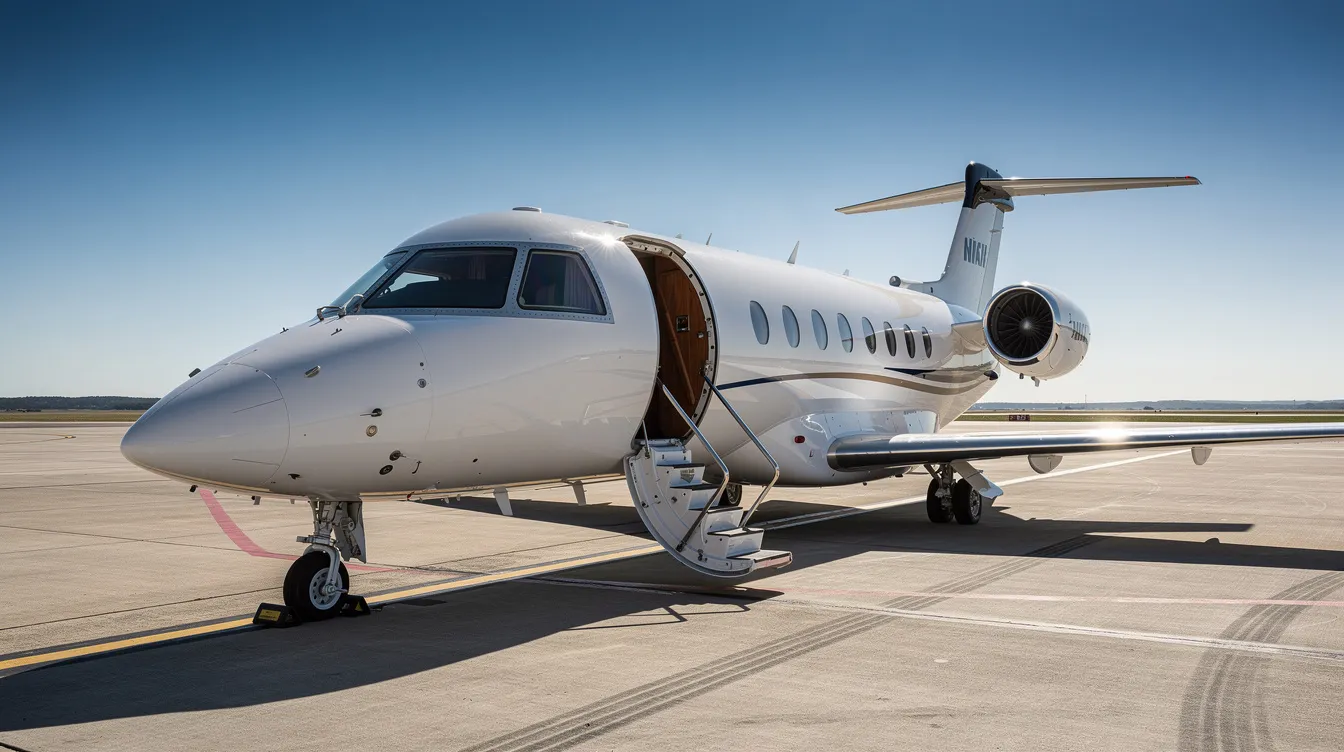
Introduction: How to Fly Private for Less
Are you a traveler interested in affordable private jet options, looking to fly private without the sky-high price tag? You’re not alone. Many assume flying private costs $5,000 or more per hour, every time—but that’s no longer the only way to fly private. This guide is designed for travelers who want to fly private for less, covering everything you need to know about empty leg flights (also called repositioning flights), private jet memberships, and smart strategies to access private aviation at a fraction of traditional charter costs. We’ll break down how empty leg flights can significantly reduce travel costs, how memberships like Hoppyn work, and practical steps to start flying private without draining your bank account.
Key Takeaways
Empty leg flights—also called repositioning flights—are private jet segments that must fly anyway, offered at steep discounts. About 30% of all private jet flights are empty legs, and they can significantly reduce travel costs compared to standard charter.
Hoppyn's $997/year membership gives you access to unlimited empty-leg private flights worldwide. Once you're confirmed on a flight, there's no additional per-flight cost. No hourly charter bills, no hidden fees—just the annual membership.
Empty legs work best when you have flexible scheduling:
Last-minute one-way trips (think Los Angeles to Las Vegas on a Friday)
Repositioning flights between major hubs like New York, Miami, and Dallas
Spontaneous weekend getaways or upgrades from economy seats
Flexible return dates where you can pair an empty leg one way with commercial the other
Hoppyn members can join waitlists for routes they care about, get notified when flights open, and bring friends, family, or small teams along on the same aircraft.
Over 20,000 unique aircraft are available worldwide in the private aviation market, and private jets can access over 3,000 airports in the U.S. and Caribbean alone—far more than commercial airlines serve.
Why Flying Private Doesn't Have to Be a Billionaire Move
The old picture of private jet travel looks something like this: fractional ownership stakes starting at six figures, jet card deposits in the tens of thousands, or ad-hoc charter flights that bill $10,000+ for a quick hop. That picture isn't wrong—it’s just incomplete.
Today, private aviation options go well beyond buying shares of a plane. You don’t need to own a jet or a jet card to fly private. Here’s how the three main approaches compare:
Traditional private charter flights: You pick the route, aircraft, and time. You pay hourly rates (ranging from $1,800 to $15,000 per flight hour depending on aircraft types) plus positioning fees. Maximum control, maximum cost.
Jet card / fractional ownership: You pre-buy 25–50 flight hours or purchase a share of an aircraft. Rates are locked in, but the upfront commitment is steep, and you still pay per hour flown. Long-term commitments are the norm.
Empty-leg private flights via membership: Flights that must fly anyway—repositioning segments—are offered at deeply discounted rates or included within a flat membership fee. Less route control, but significant savings and real access to private aviation.
Empty legs exist because private charter operators need to move aircraft between jobs. That flight is happening regardless. The competitive pricing that makes membership models like Hoppyn possible comes directly from this built-in inefficiency.
Direct routing allows private flights to bypass connecting hubs and layovers, so even on shorter hops, flying private can meaningfully reduce travel time compared to commercial flights with connections.
What Is an Empty Leg Flight and How Does It Work?
An empty-leg flight is a repositioning segment where a private jet flies without paying passengers. It happens after the aircraft drops off a charter client and needs to return to base—or move to its next pickup location. These flights are sometimes called "deadhead" legs, and they represent real waste in private aviation unless someone fills those seats.
Here's a concrete example: A light jet flies a charter client from Los Angeles to Las Vegas on a Saturday morning. That client stays in Las Vegas, but the jet needs to return to LA for its next booking on Monday. The return leg—Las Vegas back to Los Angeles—is an empty leg. The plane is flying either way.
How empty legs are created, step by step:
A charter client books a private flight from Point A to Point B
The aircraft must reposition—either returning to base or traveling to pick up the next client at Point C
The operator lists that repositioning segment as an available empty leg
Platforms like Hoppyn surface these flights to members at no additional flight cost, or brokers sell them at discounted rates, while dedicated resources for charter operators help fleets list and optimize their empty-leg segments
Empty leg flights occur when jets return without passengers, and private jet charter operators can offer substantial discounts—typically 30–75% below full charter pricing
Key trade-offs to understand:
Empty legs are one-way only—no guaranteed round trip on the same deal
Departure windows are fixed by the operator's underlying schedule
The route is determined by where the original charter needs the aircraft, not by your ideal airport pairing
If the anchor charter changes or cancels, the empty leg may shift or disappear
Booking empty leg flights can be done through waitlists, and new legs appear daily on active platforms
About 30% of all private jet flights are empty leg flights. That's a massive volume of seats going unused—which is exactly why this model works.
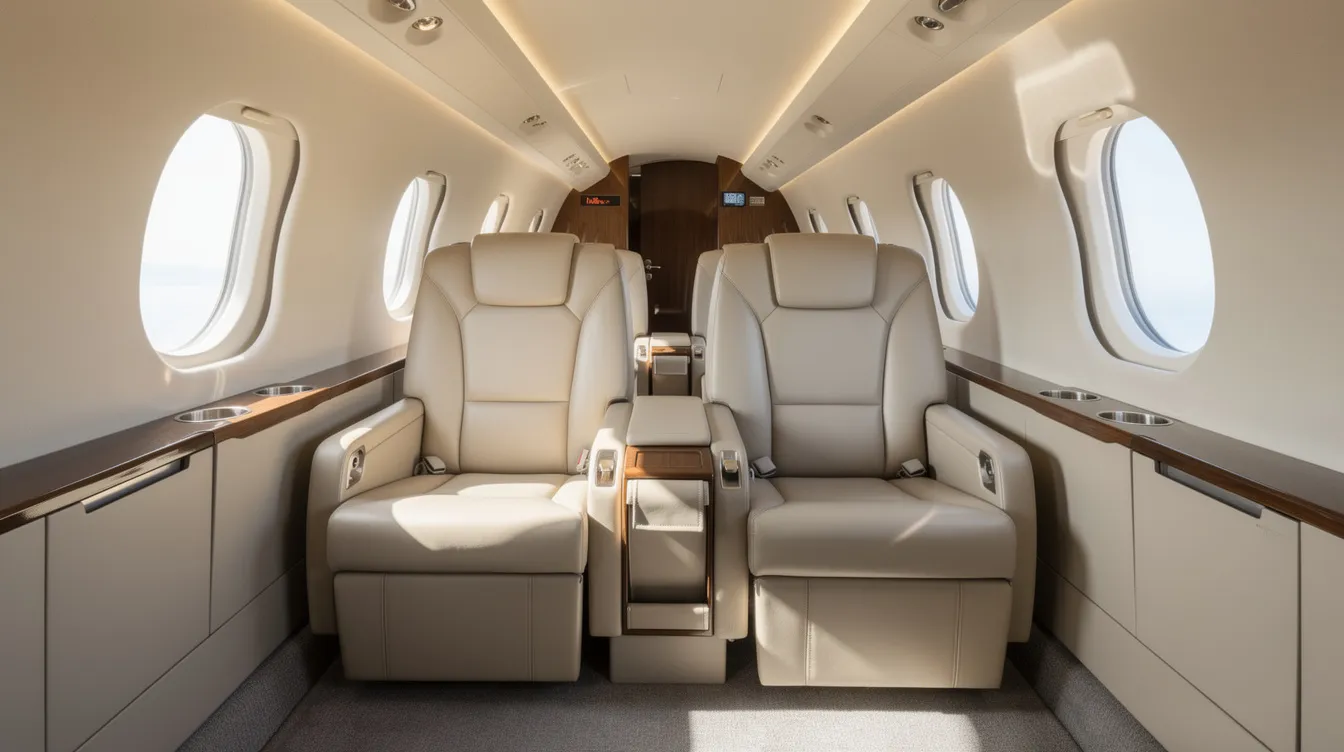
Empty Legs vs. Traditional Private Charter Flights
Think of it as custom route versus opportunistic route. Both get you on a private jet. The difference is who controls the details.
Route control: With a traditional private charter, you choose origin, destination, and even which airport. With empty legs, you adapt to what's available based on existing charter activity.
Timing control: Charter flight bookings let travelers choose their departure times down to the minute. Empty legs offer a fixed or semi-fixed window—sometimes negotiable by an hour or two, but not fully custom.
Cost: A private jet charter bills at full hourly rates, plus taxes, crew costs, and potential repositioning fees. Empty legs strip most of that away. Through a membership, they come with no additional per-flight charge beyond the annual fee.
Availability: You can book a charter anytime. Empty legs exist only when repositioning flights are scheduled—guaranteed availability isn't part of the equation.
Charter options make sense for business roadshows with tight schedules, large groups needing specific capacity, or multi-city trips. Empty legs pair best with one-way trips, flexible travel needs, and opportunistic upgrades from commercial.
Hoppyn doesn't sell per-hour private charter pricing. We connect you to existing empty-leg inventory through a single annual membership fee—a fundamentally different approach than quoting hourly rates for a plane.
Many smart travelers mix both: charter flights for mission-critical schedules, empty legs through Hoppyn for everything else.
How Hoppyn Lets You Fly Private on Empty Legs for a Flat Fee
Here's how it works: you pay a flat annual membership of $997/year. That membership grants access to private jet flights globally—specifically, empty-leg inventory across a diverse fleet of thousands of aircraft.
Once you're confirmed on an empty leg, there's no additional flight cost from Hoppyn, though specific operator-related variables may be subject to change where applicable. No invoices per leg. No hourly billing. No fuel surcharges or booking fees stacked on top.
The day-to-day experience looks like this:
Browse a live flight board showing global empty legs, updated daily
Join waitlists on routes you travel often—New York to Miami, London to Nice, Dallas to Las Vegas
Get notified when you clear a waitlist or when a new flight matches your preferences
Show up and fly
What the membership includes:
Unlimited flights once confirmed—no caps on how many empty legs you take per year
No hidden fees on the flights themselves
24/7 dedicated service from aviation experts who can walk you through your first booking or help with last-minute changes
Global access across multiple aircraft types, providing access to routes on several continents
Members pay for their travel club membership, not for individual flight hours or jet card deposits. You're not pre-buying 25 hours at $6,000/hour. You're paying $997 for a year of access. That simplicity is the point.
Step‑by‑Step: How to Start Flying Private with Empty Legs
Getting from "interested" to "boarding" is simpler than most people expect. Private jet flights can be booked with as little as 24 hours' notice, and Hoppyn's onboarding is designed to get you in the air quickly.
Here's your quick-start path:
Join Hoppyn and activate your membership - complete sign-up, provide basic contact and payment information
Set your preferred regions and home airport - this helps the platform surface relevant flights faster
Browse today's and upcoming empty legs - the flight board updates daily with new routes
Join multiple waitlists - don't limit yourself to one route; the more waitlists you're on, the higher your chances of flying
Confirm your seat when notified - once you clear a waitlist, you lock in your spot
Show up at the private terminal (FBO) 20–30 minutes before departure - bring your ID and any guest details
If you're flexible, watch for patterns: Friday empty legs into Las Vegas are common, as are Sunday returns from popular leisure cities like Miami or Aspen. Members who learn these rhythms book flights consistently.
For your first private flight, have your ID and passenger details ready. Traveling with pets? Let Hoppyn's support team know in advance so they can confirm the operator's pet policy for that specific aircraft.
Where Empty‑Leg Private Flights Really Shine (and Where They Don't)
Empty legs are powerful when your plans are flexible. They're less ideal when your schedule can't bend at all.
Best-fit scenarios:
Spontaneous weekend trips—Los Angeles to Las Vegas, New York to Miami
Repositioning between major hubs where charter activity is heavy
Last-minute schedule changes where you need to get somewhere fast
Upgrading a business trip flight home: fly commercial outbound, empty leg back
Travelers who can keep a half-day departure window open
Where classic charter or commercial tickets still win:
Tight business meetings where you absolutely cannot shift departure times
Remote locations with limited FBO access and fewer private flights in and out
Round trip needs with fixed return dates on both ends
Large groups needing guaranteed capacity on a specific date—for groups larger than what's available on a given empty leg, a dedicated private charter may be necessary
Private jets can access over 3,000 airports in the U.S. and Caribbean, which gives empty legs a vast network of potential departure and arrival points. But the busiest corridors produce the most inventory.
The smartest approach: use Hoppyn empty legs when the route and timing line up, and keep commercial or charter options as backup for must-keep schedules.
Popular Routes and Destinations for Flying Private (Including Las Vegas)
Certain corridors produce more empty-leg activity simply because they see heavier private charter demand. If you live near one of these hubs, you'll find more flights to explore.
New York – South Florida: Teterboro to Opa-locka, White Plains to Palm Beach. This is one of the busiest private aviation corridors in the world, and empty legs flow in both directions year-round.
Los Angeles – Las Vegas: Constant event, casino, and weekend traffic creates frequent empty legs into and out of LAS, Henderson Executive, and nearby airports. Chartering a jet from Dallas to Las Vegas costs $13,000 to $34,000 at full rates—empty legs on similar routes can cost a fraction.
Dallas – Aspen: Winter ski season drives heavy charter demand, which means plenty of repositioning flights heading back to Texas.
London – South of France: In summer, this corridor lights up with charter activity heading to Nice, Cannes, and the Côte d'Azur.
Seasonal patterns matter too:
Winter: Ski routes to Denver, Jackson Hole, and Aspen spike in empty-leg availability
Summer: European leisure routes to Ibiza, Mykonos, and the Mediterranean open up on charter networks
Year-round: Las Vegas stays active thanks to conventions, concerts, and sporting events
Hoppyn members can browse these hot routes on the platform and set waitlists when they spot a pattern matching their typical travel, or explore a city hub of spontaneous empty-leg deals when they’re open to opportunistic one-way trips. With the ability to fly to unlimited destinations through private charters, the network keeps expanding.

Understanding Private Jet Aircraft Types When You Fly Private
You don't need to be an aviation expert to feel confident boarding a private jet. Here's a practical breakdown of the most common aircraft types you'll encounter on empty-leg listings:
Aircraft Class | Example Models | Typical Seats | Approximate Range | Best For |
|---|---|---|---|---|
Turboprop | Pilatus PC-12 | 6–8 | ~1,500 mi | Short regional hops, fuel efficient aircraft for nearby cities |
Light Jet | Citation CJ3, Phenom 300 | 6–8 | ~2,000 mi | City pairs under 3 hours (LA–LV, NY–Miami) |
Midsize Jet | Hawker 800XP, Learjet 60 | 6–10 | ~3,500 mi | Cross-country U.S., longer legs with more cabin space |
Super Midsize | Challenger 350, Citation X | 8–10 | ~4,000 mi | Coast-to-coast with stand-up cabin, more luggage room |
Heavy Jets | Gulfstream G550, Global 6000 | 10–16 | ~8,000 mi | Transatlantic, international flights, large groups |
The Pilatus PC-12 can carry 6-8 passengers and is one of the most common turboprops for short-range repositioning. Light jets typically accommodate 6-8 passengers and cost around $6,000 per hour at full charter rates. Heavy jets can cost up to $12,000 per hour but offer the range and cabin size for serious long-haul trips.
Midsize jets have a range of 3,500 miles and can seat 6-10 passengers, making them the workhorse for cross-country flights. Large jets can carry 10-16 passengers with a range of 8,000 miles—ideal for international journeys.
When you fly via Hoppyn empty legs, you don't pick the exact tail number, but every listing shows the aircraft type, seating capacity, and key details so you can decide if it fits your party and luggage before confirming.
Cost Breakdown: Empty Legs vs. Jet Cards vs. Ad‑Hoc Charter
This is where the math gets compelling. Here's how different ways to fly private stack up financially:
Ad-hoc charter flights:
Billed at hourly rates ranging from $1,800 to $15,000 depending on aircraft
Light jets average around $6,000 per hour; heavy jets can hit $12,000 per hour
Add taxes, crew overnight fees, and repositioning charges
Total charter quotes are also subject to surcharges, taxes, and airport-specific fees.
A light jet from Los Angeles to Las Vegas (about 1.0–1.2 flight hours) runs roughly $6,000–$9,000
Jet card programs:
Pre-buy 25–50 hours at locked-in hourly rates
Upfront deposits often range from $100,000 to $300,000+
You still pay per hour flown; unused hours may expire
Long term commitments with limited flexibility
Empty-leg membership (Hoppyn):
Annual membership fees typically start around $997
Once confirmed on a flight, no additional per-flight cost
The same LA-to-Las Vegas route that costs $6,000–$9,000 on charter? Accessible through your existing membership with no extra invoice
According to SolusJet's price tracking, the median whole-aircraft empty-leg price across 478 live listings is $8,600, and 78% of all empty legs are priced under $10,000 for the entire plane. For 3–6 travelers splitting that cost, per-person prices can rival or beat business-class fares on busy commercial routes. Travel insurance can help protect your trip spend against cancellations, delays, or emergency disruptions.
Hoppyn focuses on transparent pricing: the membership is the product. There are no hidden hourly charges, no fuel surcharges, and no complex credit systems to navigate.
How Flexible Scheduling Works When You Fly Private
Flexible scheduling is one of the core reasons people choose private flights over commercial airlines. Private aviation is built around individual needs compared to commercial fixed schedules—but with empty legs, there's a nuance.
Two kinds of flexibility:
Total control (traditional charter): You pick the exact departure time. Private jet charters allow travelers to choose their departure times down to the minute. Last-minute changes to private flight schedules often do not incur additional penalties.
Opportunistic flexibility (empty legs): Departure windows are set by the operator's underlying schedule. You work within that window—but you still skip TSA lines, avoid layovers, and board in minutes.
With Hoppyn empty legs, you still enjoy many perks: late booking (flights can appear with just days' notice), faster airport processing at private terminals, and the ability to jump between multiple candidate flights when your dates are loose.
You'll always get clear departure windows, FBO locations, and real-time updates from Hoppyn's support team as flight time firms up. Flying private saves significant time and offers the kind of schedule control that scheduled flights on commercial airlines can't match—even when you're working within an empty-leg window.
Strategy tip:
Plan your meetings around a half-day window
Keep a backup commercial option on truly mission-critical dates
Use private flights when flexibility is available
Flying Private with Friends, Family, Pets, and Small Teams
Many Hoppyn members use empty-leg private flights for more than solo trips. Family getaways, friends' weekends to Las Vegas, and small business teams heading to conferences are all common.
Typical group sizes: 2–8 people on light jets and turboprops, up to 10–16 on midsize and heavy jets. For frequent flyers traveling in pairs or small groups, the per-person cost drops fast.
Cost-per-person advantage: When 4 travelers share a $997 membership and fly an empty leg that would otherwise cost $8,000+ on charter, the math works in everyone's favor. Compare that to buying four separate business-class airline tickets.
Pets: Most private flights are pet-friendly, but pet policies vary by operator and aircraft. Hoppyn support can clarify rules on a per-flight basis before you confirm.
Luggage and gear: Private flights allow for bringing larger or odd-sized gear without strict commercial limits—golf clubs, skis, surfboards, or oversized equipment.
Coordinating groups: Gather names and IDs early, agree on luggage expectations, and arrive at the private terminal together 20–30 minutes before departure.
First-timers, relax: the boarding process is simple. No TSA lines, often no shoe removal, and quick ID verification at the FBO front desk. Flying private provides flexibility with baggage compared to commercial airlines—no weigh-ins, no gate-check drama.
What the Private Flight Experience Actually Feels Like
Arrival and Check-In at FBOs
You arrive at a private terminal—a Fixed-Base Operator, or FBO. Private aviation typically uses these smaller private terminals instead of main commercial buildings. There's no maze of gates, no overhead announcements, no crowds. You check in at a quiet front desk or lounge, and within minutes you're walking across the tarmac to your aircraft.
Onboard Experience
Onboard:
Leather club seating or rows, depending on the jet
Wi-Fi available on many jets (data rates and availability vary by operator)
Drinks and light snacks; customized catering services are available on longer flights
Enclosed lavatory on jets and most larger turboprops
The cabin environment on a private jet can be fully controlled by the passengers—temperature, lighting, music
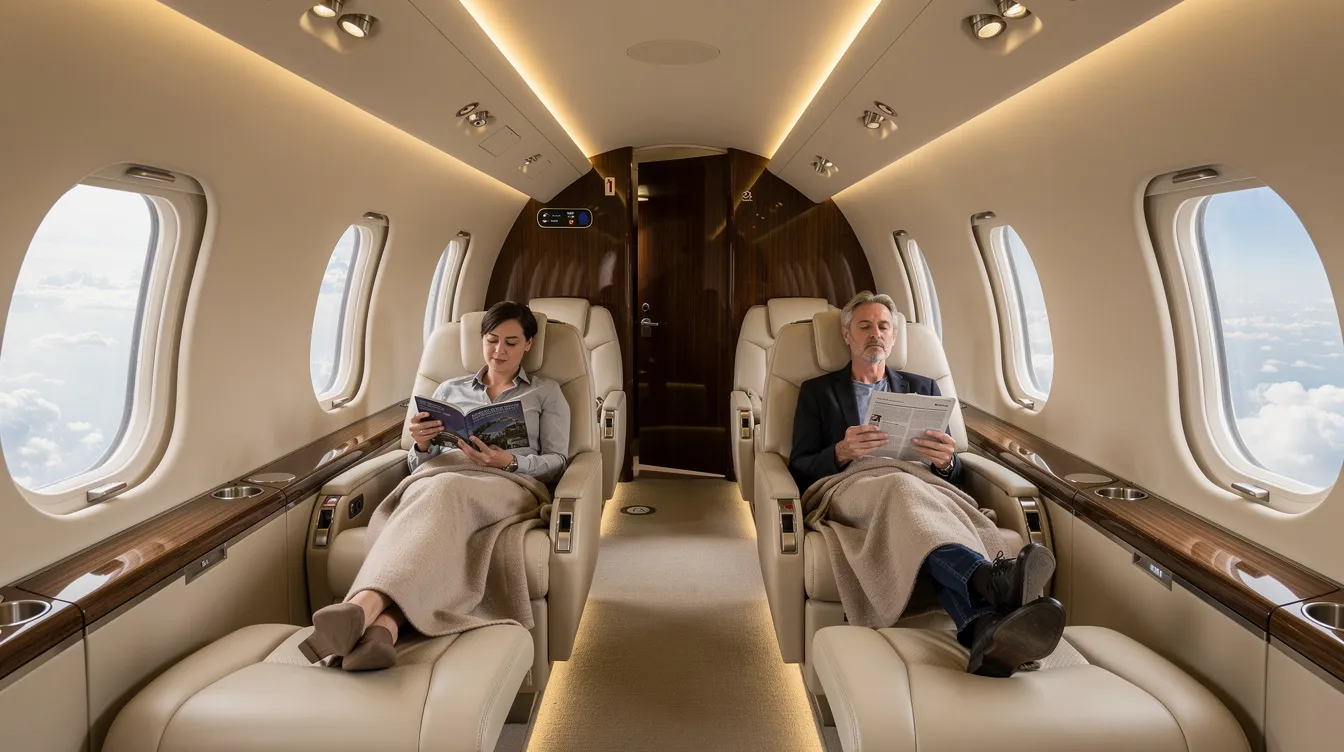
The travel experience is calmer, quieter, and more luxury-focused than commercial. No middle seats, no armrest battles, no strangers. Privacy and productivity during flights are enhanced as the cabin is reserved for your specific group. Private aviation provides privacy free from crowded cabins and strangers.
Typical check-in lead time is 20–30 minutes before departure. When you land, you're often on the road within 5–10 minutes—no baggage carousel, no ground transportation shuttle waits.
For more on cabin comfort, check out The Best Seat on a Private Plane: Comfort, Cost, and Booking Tips. Private jets allow travelers to customize the onboard experience, including meals, tailored amenities, and onboard service, making even a short hop feel like a genuine journey.
How to Plan Trips Around Empty Legs Without Stress
Planning around private jet empty legs requires a slightly different mindset than locking a commercial round-trip months in advance. The shift: think of empty legs as opportunities you can grab, not fixed itineraries you build around.
Tips for Stress-Free Planning
Practical strategies:
Set preferred routes you travel often – monitor those corridors regularly on the Hoppyn flight board
Keep flexible date ranges – a two- or three-day window dramatically increases your chances
Pair an empty leg one way with commercial or charter the other way – this is how experienced members handle trips with one fixed date
Join multiple waitlists – you only commit once confirmed on a specific flight, so there's no penalty for exploring several options at once
Watch seasonal patterns – winter ski routes, summer beach corridors, and Las Vegas event weekends all produce predictable empty-leg surges
Hoppyn's waitlist model is designed to reduce stress: browse, join, and wait. No deposits per waitlist, no complex booking holds. If something changes—maybe the underlying charter shifts—Hoppyn's support team alerts you and helps review alternative empty legs or, if needed, suggests commercial options. If you're building a trip around an empty leg, review travel insurance options as well.
For your first few months of membership, treat empty legs as upgrades to existing plans rather than the sole backbone of a non-moveable trip. Once you learn the patterns, you'll start building entire weekends around them. You can also request a flight if you don't see your preferred route listed.
Safety, Regulations, and Privacy When You Fly Private
Private flights operate under strict regulations. In the U.S., empty legs fall under FAA Part 135 (on-demand charter rules), meaning the same aircraft, crew, and maintenance standards apply whether the flight is a full-price charter or a repositioning leg.
Key safety points:
Two-pilot operations are standard on jets
Regular maintenance checks follow manufacturer and FAA schedules
Crew duty limits (typically around 14 hours per day) are enforced
Operators carry strong safety record certifications and undergo recurring audits
Verify safety ratings from independent auditors like ARGUS or Wyvern to ensure safety standards—these are industry-standard accreditation bodies
Privacy is another major draw. Smaller terminals mean fewer people handling your information. You fly only with your invited group. No shared cabin, no seat assignment lottery.
Hoppyn partners with reputable operators, and members' contact and payment details are handled securely on the platform. If you have specific safety or accreditation questions—ARGUS, Wyvern, or IS-BAO stage ratings—Hoppyn's support team can obtain those details from the operating partners for any listed flight.
Is a Private Jet Membership Right for You?
This is a quick self-check. A private jet membership focused on empty legs makes sense for certain lifestyles—and not others.
Ideal member profiles:
Entrepreneurs doing frequent U.S. city hops between hubs like New York, Miami, Dallas, and Los Angeles
Remote workers bouncing between cities on loose schedules
Couples or friends who do spontaneous long weekends 3–6 times per year
Anyone who values the seamless travel experience of private aviation but doesn't want to spend $100,000+ on a jet card
Travelers near major air travel hubs where empty-leg volume is high
When a jet card or traditional charter might still be better:
Ultra-fixed corporate schedules with zero departure flexibility
Guaranteed same-day returns with staff on tight timelines
Niche routes where empty legs are rare or the airport doesn't see much private traffic
Booking a private flight involves choosing an option that fits travel frequency and budget. If you value flexibility, love the adventure of spontaneous travel, and you're open to planning around existing private flights, a membership like Hoppyn can pay for itself with one or two successful trips per year.
Curious? Browse current empty-leg flights and picture which ones could replace your usual commercial routes. The ideal choice might already be on the board.
Frequently Asked Questions
How far in advance can I book an empty-leg private jet flight?
Empty legs often appear anywhere from a few days to a couple of weeks before departure, depending on when the underlying charter flights are booked. Private jet charters can be booked with as little as 24 hours' notice, and the same applies to many empty legs. Hoppyn members see new private flights added daily, and joining waitlists early increases your chances of securing the route you want. Because empty legs depend on original charter clients, some routes can change or cancel; Hoppyn notifies members promptly and helps discover alternatives when that happens.
Can I choose the exact departure time when flying on an empty leg?
With empty-leg private flights, departure times are anchored to the operator's schedule for the original charter, so you work within a defined window rather than picking your exact minute. Minor shifts of an hour or two may be possible on some flights, but big changes usually aren't available. All timing details are shown on the Hoppyn platform, and support keeps you updated if the schedule tightens or moves. Treat empty legs as fixed-time opportunities rather than fully custom private charter flights.
What happens if my empty-leg flight gets canceled or rerouted?
Empty legs can occasionally be canceled or adjusted if the underlying charter client changes plans. In those cases, Hoppyn alerts affected members quickly, helps them search for alternative empty legs, and can suggest commercial or charter options outside the membership if needed. There are no per-flight charges from Hoppyn, so members aren't stuck with unused flight credits or complex refunds on hourly charter bills. The cost of your membership covers access—not any single flight. Travelers may also want travel insurance for financial protection against cancellations, delays, or emergencies tied to broader trip plans.
Can I bring guests or large groups on my Hoppyn empty-leg flights?
Yes. As long as there are available seats on the aircraft and within the operator's limits, members can bring friends, family, or colleagues on the same private flight. Some empty legs are ideal for couples or small families on light jets, while others—on midsize or heavy jets—can handle larger groups of 10+ passengers, making the cost per person even more attractive. Add guest details in advance and coordinate luggage and pets with Hoppyn support so there are no surprises at the FBO.
How do I know which aircraft type I'll be flying on?
Every empty-leg listing on Hoppyn shows key aircraft details: model (e.g., Citation CJ3, Gulfstream G450), aircraft class, approximate range, and seating capacity. Shorter hops may be on turboprops or light jets, while longer or international flights typically use midsize or heavy jets. If you have questions about cabin layout, Wi-Fi, or baggage capacity for a specific aircraft, Hoppyn's team can walk you through what to expect before you confirm your seat.
Ready to fly private without the private jet price tag? Join Hoppyn today for $997/year and start browsing empty-leg flights that could replace your next commercial booking. Your first flight might already be waiting on the board. With private jet hourly rates ranging from $1,800 to $15,000, flying private can seem out of reach. For example, chartering a jet from Dallas to Las Vegas typically costs between $13,000 and $34,000. Light jets, which usually accommodate 6-8 passengers, average around $6,000 per hour, while heavy jets can cost up to $12,000 per hour.
One of the great advantages of private aviation is flexibility. Private jet flights can be booked with as little as 24 hours' notice, offering unmatched convenience compared to commercial airlines. There are over 20,000 unique aircraft available worldwide, ranging from turboprops like the Pilatus PC-12, which carries 6-8 passengers, to large jets seating 10-16 passengers with ranges up to 8,000 miles. Midsize jets typically seat 6-10 passengers and have a range of 3,500 miles, ideal for cross-country flights.
Private aviation typically operates through smaller private terminals known as Fixed-Base Operators (FBOs), which prioritize time savings, convenience, and personalized service. This setup enhances privacy and productivity since the cabin is reserved exclusively for you and your guests, free from crowded cabins and strangers. Unlike commercial flights, private aviation is built around your individual needs rather than fixed schedules.
When booking a private flight, you choose an option that fits your travel frequency and budget. Memberships like Hoppyn's grant access to private jet flights globally, allowing members to join waitlists for available flights or focus on specific empty leg flights from Toronto and other major hubs. Annual membership fees typically start around $997, and once confirmed, members enjoy unlimited flights with no additional per-flight cost. Plus, private jet memberships offer 24/7 dedicated support to assist with bookings and last-minute changes.
Flying private also means greater flexibility with baggage, as you can bring larger or odd-sized gear without strict commercial limits. The onboard experience is customizable, including tailored meals and services, with passengers fully controlling the cabin environment. Customized catering services are commonly available, making even short hops a comfortable journey.
Direct routing allows private flights to bypass connecting hubs and layovers, significantly reducing travel time compared to commercial flights. Private jets can access over 3,000 airports in the U.S. and Caribbean, offering travelers the freedom to choose departure times and fly to unlimited destinations.
Empty leg flights, also called repositioning flights, make up about 30% of private jet flights. These occur when jets return without passengers and can offer substantial discounts, significantly reducing travel costs. Booking empty leg flights can be done through waitlists, providing an affordable way to experience private aviation without the full charter price.
With all these benefits, your first private flight might already be waiting for you on the Hoppyn flight board, ready to offer an affordable, flexible, and luxurious travel experience.
Conclusion
Flying private no longer means breaking the bank or committing to costly hourly charters. Empty-leg flights and flat-fee memberships like Hoppyn’s offer a smart, affordable way to access private aviation globally. By leveraging repositioning flights that would otherwise fly empty, you can enjoy the convenience, flexibility, and privacy of private jets without the traditional price tag.
Whether you’re a frequent traveler seeking time savings or someone looking to upgrade a special trip, empty legs provide a unique opportunity to fly private for less. With thousands of aircraft worldwide, access to over 3,000 airports, and a transparent annual membership fee, Hoppyn empowers you to take control of your travel experience.
Ready to skip the crowds and fly on your terms? Join Hoppyn today and start exploring empty-leg flights that could transform how you fly private.




Unlock Your Private
Jet Experience
Join our exclusive membership for
free flights today!

Explore More
Blogs


Join Our Exclusive
Newsletter
.png)






