
How Much Does It Cost to Charter a Private Jet? (And How to Fly for Less with Hoppyn)


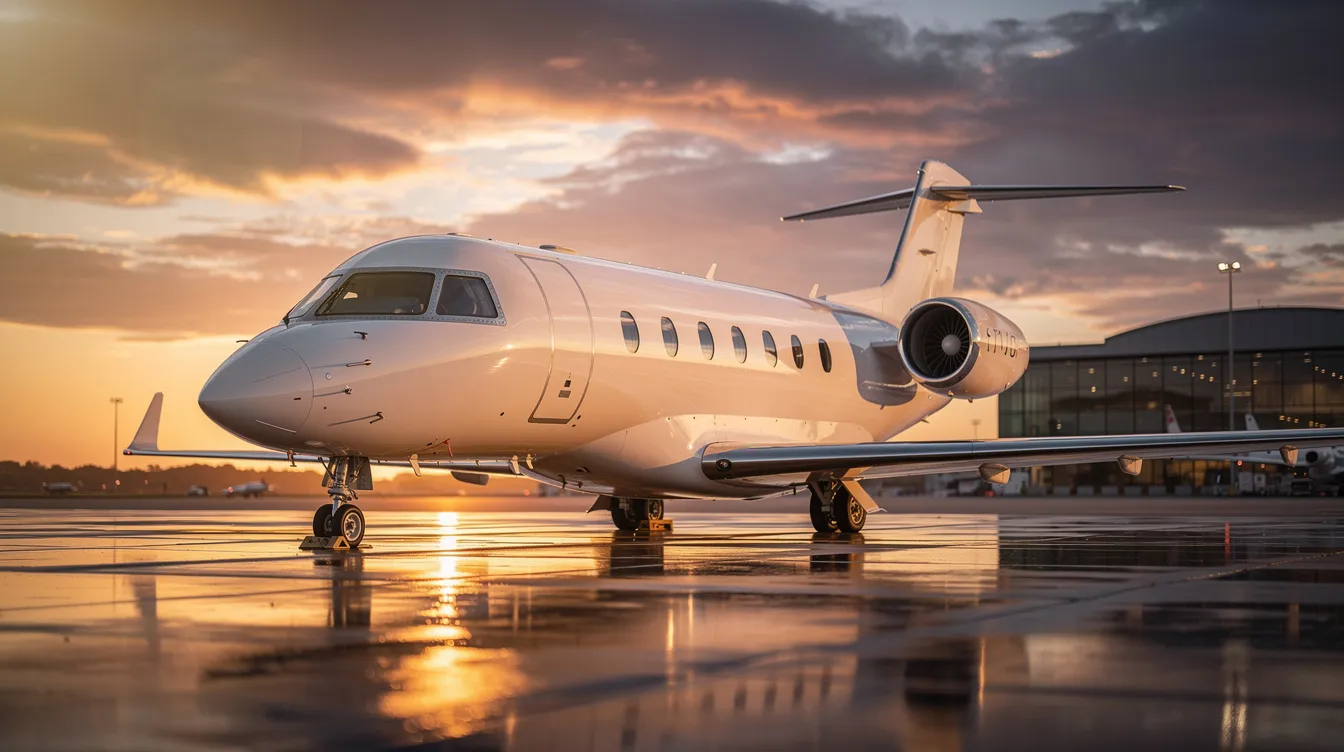
Think private jet travel is reserved for billionaires? The real numbers might surprise you—and so might the ways you can dramatically cut those costs. Here's everything you need to know about what it actually costs to charter a private jet in 2026, from hourly rates and hidden fees to a membership model that sidesteps the entire pricing structure.
Key Takeaways
Private jet charter costs typically range from $2,000 to over $20,000 per hour, depending on aircraft category, route, and time of year. A short hop on a light jet often totals $8,000–$15,000 all-in, while long-haul flights on ultra-long-range jets can exceed $100,000.
The hourly rate is only the starting point. Taxes (including the 7.5% federal excise tax on domestic flights in the U.S.), landing fees, crew expenses, fuel surcharges, and short-leg fees commonly add 20–40% to your final invoice.
Aircraft category is the single biggest cost driver. Very light jets and turboprops start around $1,800–$3,500/hour, while heavy jets run $8,000–$14,000/hour and VIP airliners can exceed $18,000/hour.
Empty leg flights—jets repositioning without passengers—can save 25% to 75% off standard charter rates if you're flexible on timing and route.
Hoppyn offers an alternative to per-hour private jet rental: members access global empty leg flights for a flat $997/year with no per-flight charges, turning what used to be a $10,000+ trip into something covered by a single annual membership.
What Does It Really Cost to Charter a Private Jet in 2026?
Private jet rental prices range from $2,300 to $17,000 per hour in 2026, depending on the aircraft type you fly. Add taxes, airport fees, and crew costs, and your total bill typically lands 20–40% above the base hourly rate.
Here's a quick snapshot of where hourly rates fall across categories:
Turboprops and very light jets: ~$1,800–$3,800/hour
Light jets: ~$2,600–$5,500/hour
Midsize jets: ~$3,500–$7,500/hour
Super midsize jets: ~$7,500–$9,500/hour
Heavy jets and ultra-long-range jets: ~$8,000–$20,000+/hour
Most private jet charter flights enforce 1.0–2.0 hour minimums per leg, which means even short hops can start around $5,000–$10,000 before extras are counted. Total private jet cost for a trip typically equals hourly rate × billable flight time + taxes + airport and handling fees + crew and positioning charges + extras like catering or ground transportation.
The contrast with Hoppyn's model is stark: instead of paying per billable flight hour, members pay a single annual membership to access pre-existing empty leg flights worldwide. No hourly rate negotiations. No per-flight invoices.
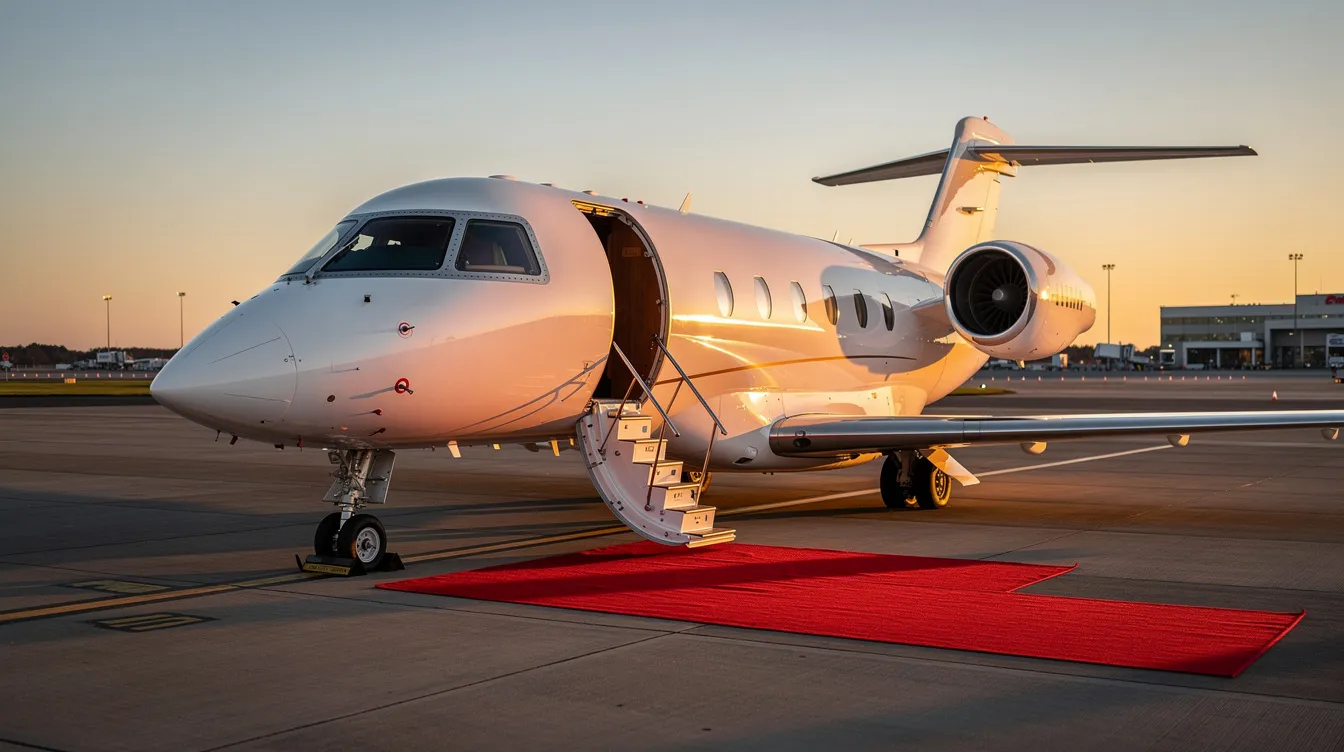
Private Jet Cost by Aircraft Category
Aircraft category refers to the size, range, and cabin configuration of the jet—and it's the single biggest factor in private jet pricing. A very light jet carrying four passengers 500 miles burns a fraction of the fuel that a Boeing Business Jet consumes crossing an ocean with 16 people on board.
Here are approximate 2026 hourly ranges for each category:
Aircraft Category | Typical Seats | Hourly Rate (2026) | Best For |
|---|---|---|---|
Turboprops | 4–8 | $1,800–$3,500 | Short regional hops |
Very light jets | 4–5 | $2,500–$3,800 | City pairs under 2 hours |
Light jets | 5–7 | $2,600–$5,500 | Short to medium trips |
Midsize jets | 7–9 | $3,500–$5,500 | Coast-to-coast, stand-up cabins |
Super midsize jets | 8–10 | $7,500–$9,500 | Longer range with full amenities |
Heavy jets | 10–16 | $8,000–$14,000 | Transcontinental, international flights |
Ultra-long-range jets | 12–18 | $10,000–$17,000+ | Nonstop transatlantic/transpacific |
VIP airliners | 18–50+ | $18,000+ | Large group, global missions |
Larger aircraft require more fuel, maintenance, and flight crew overhead, driving up the hourly rate. A light jet on a New York to Miami run (~2.5 hours) might cost $13,000–$19,000 one way. The same route on a midsize jet pushes to $20,000–$28,000+.
Choosing the right aircraft size—not over-sizing—is one of the easiest ways to avoid overspending when you rent a private jet. Six passengers with light luggage on a 2-hour route don't need a heavy jet.
Example: Private Jet Rental Cost on Common Routes
Hourly rates are useful for comparison, but what matters is the total price you'll actually pay for a specific trip. Here are several common routes with typical 2026 private jet charter prices:
Route | Distance / Flight Time | Aircraft Class | Typical One-Way Cost |
|---|---|---|---|
New York → Miami | ~950 nm / 2h 30m | Light jet | $13,000–$19,000 |
New York → Miami | ~950 nm / 2h 30m | Midsize / super midsize jet | $20,000–$28,000 |
Los Angeles → Miami | ~2,100 nm / 5–6h | Heavy/ultra long range | $38,000–$75,000+ |
Chicago → Miami | ~1,200 nm / 3h | Midsize / heavy jet | $16,000–$28,000+ |
Los Angeles → Aspen | ~600 nm / 1.5h | Light / midsize jet | $8,000–$15,000 |
These estimates assume simple one-way or round-trip itineraries. Multi-city routes or travel during peak seasons (winter holidays, major sporting events) can push prices 20–60% higher.
Aircraft availability and aircraft positioning from different charter companies can cause two quotes for the same route to differ by 20–40%. Always compare.
Worth noting: empty leg flights on these same corridors can run 50–75% cheaper than on-demand charter flights, a topic we'll dig into below.

How Private Jet Charter Prices Are Calculated
Chartering a private jet involves several cost tiers, from base rates to operational fees. The advertised hourly rate is usually only the starting point for a private jet charter—operators layer on multiple components before you see a final number.
Here's what goes into a standard quote:
Hourly aircraft rate: the base cost per flight hour for that aircraft type
Billable flight time: includes actual airborne time, taxi, and any positioning legs flown to reach you
Taxes: federal excise tax (7.5% on domestic flights), segment fees, and potential state taxes
Airport and handling fees: landing fees, FBO ramp charges, parking
Crew costs: pilot salaries, crew overnight costs, per diems for multi-day trips
Fuel surcharges: variable charges tied to jet fuel market prices, often treated as a direct cost passed through to the client when fuel markets are volatile
Extras: catering, Wi-Fi, ground transportation, de-icing, pet fees
A simple way to think about it:
Total private jet cost ≈ hourly rate × billable hours + taxes + airport/handling + crew and overnights + aircraft positioning fees + extras
Many charter company quotes claim to be "all-in" but still itemise line items separately. Always request a fully broken-down quote so you know exactly what's included.
Understanding this structure is the first step in deciding whether traditional private jet charter or an empty leg membership model fits your budget.
Billable Flight Time vs Actual Travel Time
Billable flight time is the time you pay the hourly rate for—and it's almost always longer than the time you spend in the air.
Most operators calculate billable time from engine start to engine shutdown, which includes taxi time on both ends. Some charge wheels-up to wheels-down only but then add taxi separately. Nearly all enforce minimum billable time per leg, often 1.0–1.5 hours, even if your actual flight is shorter.
Total billable time includes the actual flight path plus minimum daily hourly minimums enforced by operators.
That means a 40-minute hop still gets billed as 1.0 or 1.5 hours of flight time. If the aircraft also has to fly a 1-hour ferry leg to reach your departure airport, that positioning leg adds fully to the invoice. Positioning fees may apply whenever the aircraft is not already at your departure airport.
Here's where empty leg flights flip the script. Because they are pre-planned repositioning trips, membership models like Hoppyn let you ride along on flight time that the operator is already committed to flying—instead of paying for it out of your own pocket.
Core Factors That Drive Private Jet Cost
Beyond aircraft category, several variables push private jet flight costs up or down:
Flight distance and duration: longer missions burn more fuel, require more crew duty time, and may need fuel stops or crew swaps. A 2-hour domestic flight and a 10-hour transatlantic crossing are completely different cost profiles.
Passenger count: more people means more luggage weight, potentially a larger aircraft, and higher fuel burn. But cost per person drops when you fill the cabin.
Route structure: one-way trips often include repositioning charges. Multi-leg itineraries multiply landing fees, handling costs, and crew complexity.
Seasonality: winter travel to warm destinations, holiday weeks, and major events carry 20–60% premiums. Summer is typically softer for domestic flights.
Airport choice: landing and handling fees at large hubs (JFK, LAX) far exceed those at smaller regional airports. Choosing secondary airports can lower landing and ramp fees significantly.
Aircraft availability: if jets are far from your departure city, the operator must reposition first—and you pay for it. Booking floating-fleet aircraft can reduce repositioning fees by up to 30%.
Flexible travellers who can shift dates, use alternate airports, or travel off-peak can meaningfully lower private jet charter costs without downgrading the experience.
Aircraft Category and Size: Very Light, Light, Midsize, and Ultra Long Range Jets
Each aircraft category aligns with a specific trip profile and cost level. Picking the wrong one—too large or too small—either wastes money or compromises comfort.
Very light jets (e.g., Cessna Citation Mustang): 4–5 seats, range ~1,000 nm, ideal for regional business hops under 2 hours. Hourly rate: ~$2,500–$3,800.
Light jets (e.g., Cessna CJ3, Embraer Phenom 300): 5–7 seats, range ~1,500 nm. Good for short to medium trips. Light jets range from $2,600 to $3,500 per hour, though newer models with stand-up cabins push higher.
Midsize jets (e.g., Hawker 800XP, Citation XLS): 7–9 seats, range ~2,000 nm, stand-up cabins, more baggage room. Midsize jets charge $3,500 to $5,500 per hour.
Super midsize jets (e.g., Challenger 350, Citation Longitude): 8–10 seats, range ~3,000+ nm, flat-floor cabins. These are efficient aircraft for coast-to-coast missions. Hourly rate: ~$7,500–$9,500.
Heavy jets (e.g., Gulfstream G450, Challenger 604): 10–16 seats, range ~4,000+ nm. Heavy jets typically cost $8,000 to $14,000 per hour.
Ultra-long-range jets (e.g., Gulfstream G650, Bombardier Global 7500): 12–18 seats, nonstop transatlantic capability. Hourly rate: $10,000–$17,000+.
Upgrading to a larger category may avoid fuel stops, which saves time and sometimes money on total trip cost. But flying a heavy jet for a 2–3 passenger trip to a city 400 miles away is a common—and expensive—mistake. A smaller aircraft handles the same mission for a fraction of the cost.
Empty leg flights can give you access to larger aircraft categories at prices closer to a light jet charter—when you're flexible on route and date, and when operators leverage platforms and resources for charter operators to list and optimise empty legs.
Taxes and Government Fees (Including Federal Excise Tax)
In the U.S. and many other jurisdictions, mandatory taxes and regulatory charges are a non-negotiable part of private jet pricing, and on some international itineraries, environmental compliance costs can include sustainable aviation fuel requirements.
The big one domestically: a 7.5% federal excise tax (FET) applies to all domestic flights. It's calculated on the charter rate and transportation-related charges. On a $20,000 one-way charter, that's roughly $1,500 added to your bill before you even factor in other fees.
Beyond the FET, expect:
Segment fees: per-passenger, per-leg charges at many U.S. airports
State and local taxes: sales tax in some jurisdictions
International fees: overflight permits, customs and immigration charges, and international handling fees. International flights incur additional fees of $500 to $5,000 depending on destination and complexity.
These charges can easily add thousands on longer or multi-leg itineraries and should be explicitly shown in any quote you receive.
Members flying empty legs still travel on fully regulated charter flights operated by carriers with an air carrier certificate. The Federal Aviation Administration oversees the same safety standards regardless of whether you pay full charter rates or fly via membership. Taxes are absorbed within the operator's cost structure rather than billed to you per flight.
Airport, Landing, and Handling Fees
Every takeoff and landing comes with airport-side charges that directly affect private jet charter costs. These aren't optional—they're built into every flight.
The main types:
Landing fees: usually based on aircraft weight (MTOW). Landing fees range from $100 to $1,500 per flight depending on airport size and exclusivity.
Ramp and handling fees: charged by FBOs (fixed base operators) for ground staff, marshalling, and passenger services. Landing and handling fees can vary significantly based on the airport's congestion and exclusivity.
Hangar fees: optional in good weather, but sometimes essential in winter or at busy airports where ramp space is limited.
At smaller regional airports, combined landing and handling might run $100–$500. At busy hubs like JFK or Los Angeles International, expect $1,000+ per movement.
Some operators negotiate fuel-purchase arrangements with FBOs that waive or reduce certain handling charges. This can show up as a credit on your quote.
If your schedule allows it, choosing an alternate airport nearby—say, Teterboro instead of JFK, or Van Nuys instead of LAX—can trim these costs without sacrificing much convenience when you charter a private jet.
Operational Extras: Short Leg Fees, Crew Overnights, De-icing, and More
This is where first-time private jet customers get surprised. The "extras" section of an invoice can materially change how much it costs.
Short leg fees: Short leg fees apply to flights under 60 minutes because very short flights burn disproportionate fuel relative to distance and accelerate maintenance cycles. Operators often charge minimums or premiums per leg to compensate.
Crew expenses: For multi-day itineraries, crew overnight costs range from $200 to $600 per crew member per night. Add meals, per diems, and ground transportation for each crew member, and a three-night trip can add $2,000–$4,000 to your bill in crew expenses alone.
Fuel surcharges: Fuel surcharges are common due to fluctuations in jet fuel prices. They typically start at around $300 per hour and increase with aircraft size and fuel burn.
Seasonal extras: De-icing in winter can add $1,500–$15,000 depending on aircraft size and airport conditions. Hangar storage at cold-weather airports is another potential charge.
Optional services: In-flight catering beyond the standard setup, Wi-Fi usage fees on some aircraft, pet fees, extra cleaning, and bespoke concierge support (ground transfers, hotel bookings) all contribute to total private jet charter prices.
One-Way vs Round Trip vs Multi-Leg Trips
The way you structure your itinerary has a direct impact on cost—sometimes more than the aircraft category itself.
One-way trips can be nearly as expensive as round trips. If the charter company must fly the aircraft home empty after dropping you off, those repositioning hours are baked into your bill. You're paying for an entire aircraft in both directions, even though you only sit in it for one.
Round trips are often more efficient when the operator keeps the aircraft and flight crew at your destination rather than flying them back. You avoid double-positioning, and the operator saves fuel.
Multi-leg itineraries multiply everything: more landing fees, more handling charges, more short-leg fees (especially when segments are short but numerous), and more crew duty complexity.
This is exactly why empty leg private jet charters exist as a category. They are essentially discounted one-way flights—ideal if you can align your schedule with a pre-planned repositioning leg instead of dictating the route yourself.
Hidden vs Transparent Pricing: What to Ask a Charter Company
Not all private jet charters are priced with equal transparency. Before you sign, a charter broker or operator should be able to answer every item on this checklist:
Does the quoted hourly rate include fuel, insurance, and crew?
Is the federal excise tax (FET) included or added on top?
What about landing fees, handling, and FBO charges?
How is billable flight time calculated—engine start to shutdown, or wheels-up to wheels-down?
Are there minimum billable hours per leg? What about daily minimums?
Will crew overnight costs apply? Are per diems included?
Are fuel surcharges fixed or variable?
What about de-icing, catering, Wi-Fi, ground transportation?
Compare at least two or three itemised quotes on the same basis—same dates, same airports, same aircraft category, same service level—before deciding.
Hoppyn's model sidesteps this entire process. The membership fee is fixed and clearly stated up front at $997/year. There are no per-flight negotiations, no opaque surcharges, and no line-item surprises for every empty leg you fly.

How Empty Leg Flights Change the Cost Equation
An empty leg flight happens when a private jet must reposition without passengers—flying from where it dropped off its last customer to where its next one is waiting, or back to its home base. They occur when a jet repositions without passengers, and since the flight is happening regardless, operators offer these seats at steep discounts.
Empty leg flights can save 25% to 75% off standard charter rates. They are listed in real time on charter platforms and membership boards, including city-based tools where you can select a departure city and browse spontaneous one-way empty leg flights, giving travellers visibility into what's available.
The trade-offs are real: routes and departure times are largely fixed by operational needs, and flexibility is required for booking empty leg flights. You usually can't change the aircraft type, shift departure by more than a few hours, or switch airports significantly. Booking an empty-leg flight can offer significant discounts but with limited flexibility.
Consider the math: a heavy jet empty leg between New York and London might be priced closer to what a normal midsize jet charter would cost—potentially saving $30,000–$50,000 on a single flight. A light jet empty leg between Los Angeles and Aspen could run several thousand dollars less than an on-demand charter.
Empty leg flights can significantly reduce travel costs for travellers willing to adapt their schedule, and membership services offering unlimited empty leg flights from specific hubs can make this model even more cost-effective for frequent travellers.
This is the foundation of Hoppyn's model: instead of paying per empty leg individually, you pay a single annual membership and then fly on available segments without additional charter or hourly rate charges.
Hoppyn's Membership Model: Flying Private Without Paying Charter Rates
Hoppyn is a subscription-based private jet membership that gives you access to empty leg flights worldwide for a flat $997/year, with no per-flight charges once you're a member.
Unlike traditional private jet charters or jet card programs (which typically require a $50,000 upfront deposit), Hoppyn does not bill you an hourly rate, landing fees, or fuel surcharges. Members pay only the transparent annual membership plus personal travel costs on the ground—hotels, transfers, meals.
Here's what members get:
A global empty leg flight board, updated with new flights added daily
Unlimited free flights once confirmed on available empty legs
24/7 dedicated support
No hidden fees, no per-flight invoices
How it works in practice: members browse available flights, join waitlists that fit their schedule, and get notified when seats confirm. The process is straightforward—no negotiating hourly rates, no parsing 12-line invoices.
Membership programs offer fixed access to private jet travel rather than variable per-trip pricing. Members can access new flights added daily through the platform.
The comparison to traditional charter is simple. A single New York to Miami leg on a light jet costs $13,000–$19,000 through a charter company. Through Hoppyn, your incremental flight cost is $0 beyond the yearly fee if that route shows up as an available empty leg. Even one confirmed trip can pay back the membership many times over.
Cost Comparison: Traditional Charter vs Empty Leg Membership
Here's the math, side by side:
Scenario 1: New York → Miami (Light Jet)
Traditional Charter | Hoppyn Membership | |
|---|---|---|
Base cost | $13,000–$19,000 one-way | $997/year (membership) |
FET & taxes | ~$1,000–$1,500 | Included in operator costs |
Landing/handling | $300–$800 | Included |
Total out-of-pocket | ~$14,300–$21,300 | ~$997 (+ ground costs) |
Scenario 2: Los Angeles → London (Ultra Long Range Jet)
On-demand charter for this route can run $100,000–$150,000+ one-way when including fuel, crew, and positioning. An empty leg on the same aircraft—if available—could be offered at 50–75% off. Through membership, you'd fly for no additional flight cost beyond your $997 annual fee.
When Charter Is Still the Better Choice
Full-price charter makes sense when:
You have fixed-time business meetings with no schedule flexibility
You need a specific aircraft type, cabin configuration, or the same aircraft for multiple legs
You're flying to rarely served airports with minimal empty leg traffic
You're carrying special cargo or have bespoke requirements (medical flights, complex international routing)
You need guaranteed private jet service with exact aircraft age and configuration
Hoppyn membership is ideal when:
Your schedule is flexible by a day or a few hours
You're open to departing from or arriving at nearby airports
You travel frequently enough (or aspirationally enough) that the $997 fee amortizes quickly
You want to fly private without per-flight hourly rate stress
You're comfortable with waitlist confirmation
Many travellers use both: full charters for mission-critical trips and empty legs via membership for leisure, opportunistic travel, or repeat routes.
How to Estimate Your Own Private Jet Budget
Here's a quick process to estimate what a trip would cost:
Define your route and dates. Calculate approximate flight distance and time.
Choose an aircraft category based on passenger count, luggage, and required range. Don't over-size.
Multiply hourly rate by estimated flight hours. Use the category ranges from the table above. Don't forget minimum billable hours.
Add 20–40% for taxes and fees. This covers FET, landing fees, handling, crew, and fuel surcharges.
Add extras. Catering, de-icing, crew overnights, ground transportation.
Booking 30 to 60 days in advance typically offers the best pricing options on traditional charters.
Then compare that estimate against Hoppyn's $997/year membership. Consider how many flights you could realistically align with empty legs over the next 12 months. If even one or two trips match, the membership pays for itself—potentially saving you tens of thousands in private jet flight costs.
You can also request a specific flight through Hoppyn to check availability against your upcoming travel plans.
Is Flying Private Worth the Cost?
Private jet travel costs more than commercial airlines in absolute dollars. That's not debatable. But the value equation extends well beyond ticket price.
Flying private means:
Skipping commercial security lines and boarding processes
Departing from smaller airports closer to your origin and destination
Visiting multiple cities in a single day
Working, resting, or meeting in complete privacy
Carrying luggage, equipment, or pets without restrictions
Consider per-passenger cost. A $12,000 light jet charter split among six people works out to $2,000 each—above a commercial economy ticket but comparable to premium cabins on some routes, with far more convenience. Choosing the right seat and cabin can make the experience even better.
Empty leg memberships shift the equation further. Regular travellers who would never pay $10,000+ per trip become comfortable with a sub-$1,000 annual subscription that opens the door to private aviation whenever timing aligns.
Whether flying private is "worth it" depends on three things: how often you fly, how you value your time, and how flexible you're willing to be to access empty-leg savings.
Frequently Asked Questions
This FAQ covers common cost-related questions about private jet charter and Hoppyn's membership that weren't fully addressed above.
How much does it cost to charter a private jet for a 2-hour flight?
A 2-hour private jet flight on a light jet usually totals around $8,000–$12,000 all-in, including base rate, taxes, and airport fees. Midsize jets for the same flight time may run $10,000–$15,000 depending on route, fuel surcharges, and whether peak-demand pricing applies.
Most operators enforce a minimum billable time of at least 2 hours, so you'll pay this amount even if your actual airborne time is slightly shorter. Actual costs also depend on aircraft availability, aircraft positioning requirements, and whether the jet needs to reposition from another city to pick you up.
What is the cheapest way to fly private without owning a jet?
Three main options compete here:
Empty leg flights: 50–75% cheaper than on-demand charter, but require flexibility on dates and airports
Semi-private seat-sharing services: trade full privacy for more predictable schedules and lower per-seat cost
Flat-fee memberships like Hoppyn: use empty legs rather than full-price charters, with a single $997/year fee and no per-flight charges
Jet card programs require an upfront deposit of $50,000 or more, making them accessible only to high-frequency flyers. For travellers willing to plan around empty legs, a flat-fee membership is typically the most cost-efficient path to frequent private flights without per-hour charges.
Do I still pay taxes and fees if I fly via an empty leg membership like Hoppyn?
Charter operators still pay all relevant taxes and regulatory fees on every flight, including the federal excise tax (FET) and segment fees where applicable. That doesn't change based on who's sitting in the cabin.
The difference: Hoppyn members are not billed those costs per flight. Instead, you pay a single annual membership fee and fly on available empty leg segments without separate hourly, tax, or fuel invoices. You are still responsible for your own ancillary travel costs on the ground—hotels, local transport, meals—but not for the typical charter line items like landing or handling fees.
Can I choose any route and time when using empty leg flights?
No. Empty legs are set by operational needs. The operator decides when and where the aircraft must reposition, so routes and departure times are mostly fixed.
There's sometimes limited flexibility—shifting departure by a few hours or using a nearby alternate airport—but you should treat schedule and route as largely non-negotiable. This constraint is exactly why empty legs are far cheaper than standard charters: you're fitting into an existing plan rather than designing your own private jet flight from scratch.
How many flights do I need to take for a Hoppyn membership to be "worth it" financially?
Simple math: if a typical empty leg trip you'd otherwise charter costs $8,000–$15,000, one confirmed flight already justifies a $997/year membership. Even shorter regional empty legs valued at $4,000–$7,000 exceed the membership cost after just one or two trips.
Think about your next 12 months. If you can realistically align even a handful of trips with available empty legs, the effective per-flight cost becomes a tiny fraction of standard private jet charter pricing. That's the entire point of the model—making private aviation accessible without the five-figure invoices.
Ready to see what empty leg flights are available right now? Browse flights on Hoppyn or join today for $997/year and start flying private for less.
Conclusion: Making Private Jet Travel Affordable and Accessible
Chartering a private jet traditionally comes with high hourly rates, hidden fees, and complex pricing structures that can quickly add up. However, understanding the key cost drivers—from aircraft category and billable flight time to taxes and operational fees—empowers you to make smarter choices.
Empty leg flights offer a compelling way to save 25% to 75% on private jet travel by leveraging repositioning flights that would otherwise fly empty. Membership models like Hoppyn take these savings even further by offering unlimited access to empty legs worldwide for a flat $997 annual fee, eliminating per-flight hourly charges and surprise fees.
Whether you’re a seasoned private flyer or exploring private aviation for the first time, Hoppyn’s transparent, flexible membership approach can transform how you access private jets—making it more affordable and accessible without sacrificing convenience or quality.
Ready to fly private for less? Browse available empty leg flights or join Hoppyn today to start your journey to smarter private jet travel.




Unlock Your Private
Jet Experience
Join our exclusive membership for
free flights today!

Explore More
Blogs


Join Our Exclusive
Newsletter
.png)






