
International Plane Charter: How to Choose, Book, and Optimize Your Global Private Flights


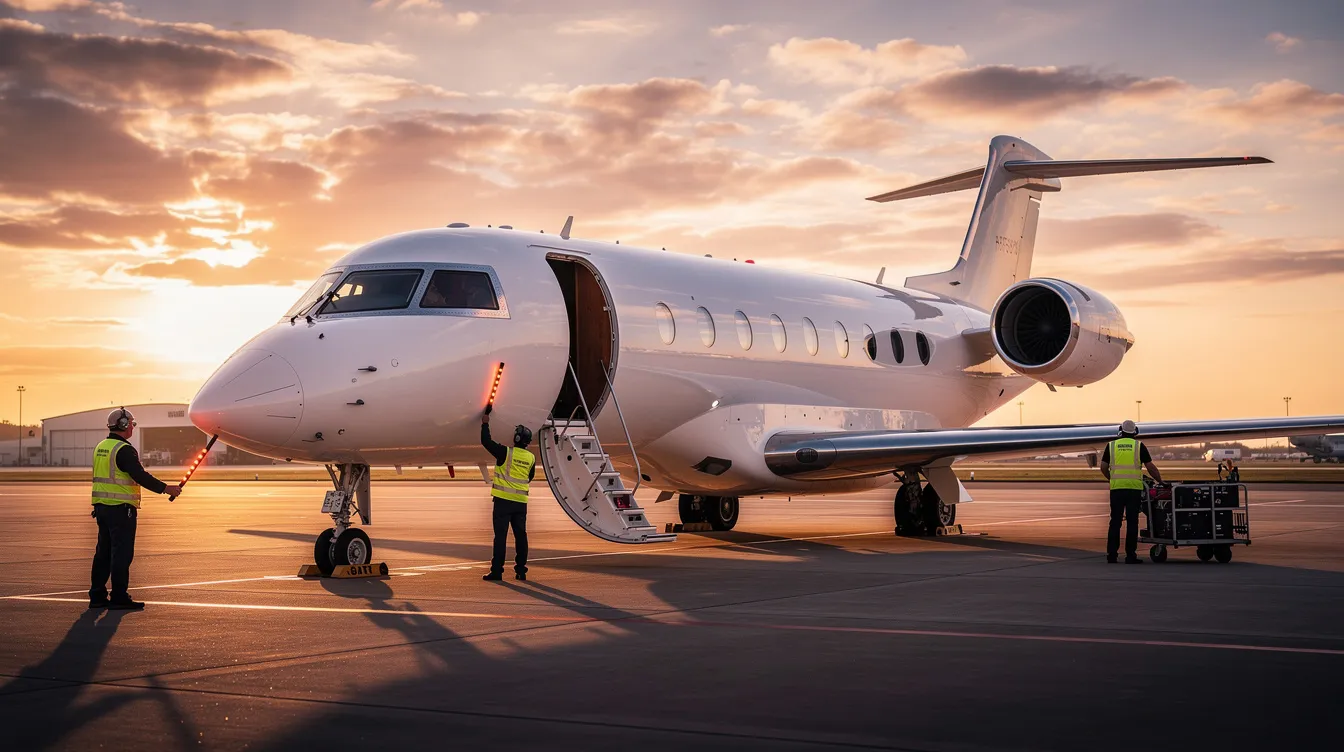
Private jets can access over 5,000 airports worldwide, yet most travelers assume chartering one across borders costs six figures per trip. Sometimes it does. But the international plane charter market has more options than the brochure price suggests, and empty-leg flights are reshaping who can afford to fly private globally.
This guide breaks down how international private jet charter works, what each aircraft category costs per hour, how to vet operators for safety, and how membership models like Hoppyn let you fly on empty-leg segments for a flat annual fee instead of per-flight charter pricing.
Key Takeaways
International plane charter means booking an entire aircraft for cross-border trips; you control the departure time, routing, and passenger list, unlike commercial travel where you buy a seat on a fixed schedule.
Travelers can choose from light jets, midsize, large-cabin jets, and VIP airliners for popular routes such as New York to London or Los Angeles to Paris, with private jet charter costs ranging from $2,500 to $15,000 per hour depending on aircraft type.
Traditional private charter is priced per hour, while Hoppyn offers access to international empty-leg jet flight opportunities via a flat annual membership ($997/year) instead of per-flight charter pricing.
About 41% of private jet flights in Europe operate as empty legs, meaning the aircraft flies without passengers. These repositioning segments create real opportunities for flexible travelers.
This article walks you step by step through aircraft selection, pricing, booking, safety checks, and how to use empty legs for affordable international private aviation.
What Is International Plane Charter?
International plane charter is the process of booking a whole aircraft for cross-border travel. You pick the departure airport, the departure time, the passengers, and the routing, so you can plan the route and passenger setup in advance. The aircraft can be a private jet, turboprop, or even a converted airliner.
An air charter differs from scheduled commercial travel in one fundamental way: you set the itinerary. No fixed airline routes, no connecting flights, no waiting for a Tuesday departure because that's the only nonstop option.
International charter flights typically operate under business aviation regulations. In the U.S., that means FAA Part 135 for on-demand operations. In Europe, EASA rules apply. Every international charter must also comply with customs and immigration rules in each country.
A charter flight can be one-way, round-trip, or multi-leg (for example, New York to London to Dubai to New York). Private aircraft can access more regional airports than commercial airlines, giving you routing freedom that scheduled carriers cannot match.
Travelers must meet entry and customs requirements when flying privately, just as they would on commercial flights. The difference: operators handle much of the paperwork on your behalf.
Empty-leg flights are a byproduct of international charter. When an aircraft repositions after dropping off clients or flies to pick up the next booking, it creates a segment with no paying passengers. Hoppyn members can access these flights at no per-flight cost.
Private Charter vs. Commercial Travel for International Trips
A commercial business-class ticket from New York to London runs $3,000 to $8,000 round-trip per person. A private jet charter for that same route can cost $60,000 to $130,000 one way on a heavy jet. The numbers aren't close, but the comparison isn't just about ticket price.
On a New York to London flight, a commercial passenger spends roughly 2 hours in check-in and security, 7 hours in the air, plus 1 to 2 hours clearing customs at Heathrow. Private jet travel can reduce total travel time by 30 to 50% by using airports like Teterboro or Farnborough, where ground processing takes minutes. Charter services allow companies to avoid long check-in and security queues entirely.
Private flights can be booked with as little as 2 hours notice for domestic trips; international routes need more lead time for permits, but the scheduling flexibility compared to commercial flights is still substantial. Private jet travel provides greater scheduling flexibility than any commercial airline can offer.
Privacy ensures secure discussions during private jet travel. Charter flights provide productivity benefits with facilities for meetings in transit. For executives, that means a transatlantic crossing doubles as a working session rather than six hours of interrupted sleep in a business-class pod.
Private jets offer direct routes to global destinations without commercial layovers. A Los Angeles to Tokyo trip that takes 14 to 20 hours commercially (with connections) can be flown nonstop in about 11 hours on an ultra-long-range jet.
The trade-off: higher base cost per trip in most cases. But empty-leg access via Hoppyn can sometimes approach the price of premium economy or business class for flexible travelers willing to match their schedule to available legs.
Types of Aircraft Used for International Plane Charter
Aircraft choice determines range, cabin comfort, and cost. Here are the main categories in the available fleet used on international charter routes.
Turbo prop planes are economical for shorter charter flights, covering regional cross-border hops under 2 hours. Light jets seat 4 to 6 passengers for short flights like New York to Toronto or London to Geneva. Models include the Embraer Phenom 300 and Cessna Citation CJ3, with light jets costing about $4,200 to $5,000 per hour on average.
Midsize jets accommodate 6 to 8 passengers for domestic travel and medium-haul international flights like Miami to Cartagena or New York to Nassau. The Hawker 800XP, Citation XLS+, and Challenger 350 are common choices. Super midsize jets offer greater range and comfort for longer routes, seating 8 to 10 passengers, and work well as versatile aircraft for different trip lengths and passenger mixes.
Large cabin jets can seat up to 12 passengers in luxury and handle intercontinental missions like New York to London, Paris to Dubai, or Los Angeles to Sydney. The Gulfstream G550, G650, Bombardier Global 6000, and Dassault Falcon 7X fall into this category. Heavy jets can cost between $9,000 and $15,000 per hour.
VIP airliners and regional airliners serve larger groups of 18 to 100+ passengers. An Airbus A320 or Boeing 737 BBJ configured for VIP use carries a price tag of $20,000 to $45,000+ per hour.
Private jets range from light jets to ultra-long-range models. Private jets can reach altitudes up to 15.5 km, higher than commercial planes, which means smoother flights above most weather. Empty-leg segments appear across all these categories. Hoppyn members may see everything from light jets to long-range jets on the international empty-leg board.
How International Charter Pricing Works
Most traditional private jet charter service billing is hourly, plus add-ons for repositioning, international handling, fuel surcharges, and crew overnight costs, though some booking strategies or aircraft choices can be more cost-effective depending on route and group size.
Charter flight prices depend on aircraft type, distance, and availability. Here are realistic per-hour ranges in USD for 2026:
Aircraft Category | Passengers | Hourly Rate (USD) |
|---|---|---|
Turboprop / Very Light Jet | 1-5 | $2,500 - $4,500 |
Light Jet | 4-7 | $4,000 - $7,000 |
Mid size Jet | 6-9 | $6,000 - $9,500 |
Super midsize Jet | 8-10 | $9,000 - $13,000 |
Heavy / Large-Cabin Jet | 10-16 | $10,000 - $18,000 |
Ultra-Long-Range Jet | 12-19 |
A New York to London charter on a Gulfstream G550 runs about 6.5 flight hours. At $12,000/hr, the flight time alone is roughly $78,000. Add positioning, customs handling, overflight fees, and taxes, and the total can reach $90,000 to $120,000 one way. Private jet charters can involve hidden costs, including handling charges, catering, crew accommodations, and de-icing fees.
One-way pricing differs from round-trip. Operators often charge for repositioning legs or aircraft waiting time if you keep the jet abroad for several days. Chartering can potentially lower total trip costs for groups compared to commercial travel when you split the cost across 8 to 12 passengers.
Some charter platforms provide instant pricing through online calculators that generate quick estimates for private jet rental across thousands of aircraft worldwide based on your selected route and date.
Hoppyn members pay a flat annual fee (around $997/year) and then $0 in flight costs when they secure an empty-leg seat, instead of paying hourly charter rates. That's the difference between a six-figure invoice and a three-figure membership.
Popular International Charter Routes and Use Cases
International plane charter serves both business travelers and leisure travelers. Certain city pairs generate especially frequent charter demand, and those same routes are where empty legs appear most often.
Transatlantic routes top the list. New York to London, Paris, Geneva, and Frankfurt are flown regularly by finance, tech, and media executives on large-cabin Gulfstreams or Globals. These are among the most popular routes in private aviation.
North America to Caribbean and Latin America covers routes like New York to Nassau, Miami to St. Barts, and Los Angeles to Cabo San Lucas. Light jets and midsize jets handle most of these long-weekend trips to exclusive destinations.
Europe to Middle East and intra-Europe routes include London to Dubai, Paris to Riyadh, plus shorter hops like Geneva to Nice or London to Ibiza for seasonal leisure charters. Las Vegas, meanwhile, generates heavy domestic charter traffic that creates repositioning legs outbound.
Asia-Pacific regional demand is growing: Singapore to Bali, Hong Kong to Tokyo, Sydney to Auckland. Regional business hubs across six continents are driving new charter activity.
Popular destinations for charter are also where international empty-legs are most likely to appear. Hoppyn members often see repositioning flights in and out of hubs like New York, London, Miami, Dubai, and Geneva, connecting travelers across the world.

Choosing the Perfect Plane for Your International Charter
Selecting the right aircraft for your journey means balancing range, cabin space, luggage capacity, and budget. Companies can customize aircraft selection based on traveler needs.
Range comes first. Not all light jets can fly New York to Reykjavik nonstop, whereas a Global 6000 covers New York to London comfortably. Check nonstop capability for your specific route before committing to an aircraft size.
Passenger headcount determines category. Light jets carry 4 to 6, midsize 6 to 8, super midsize 8 to 10, large-cabin 10 to 16+, and airliners 18 to 100+. Match the aircraft to your group, not the other way around.
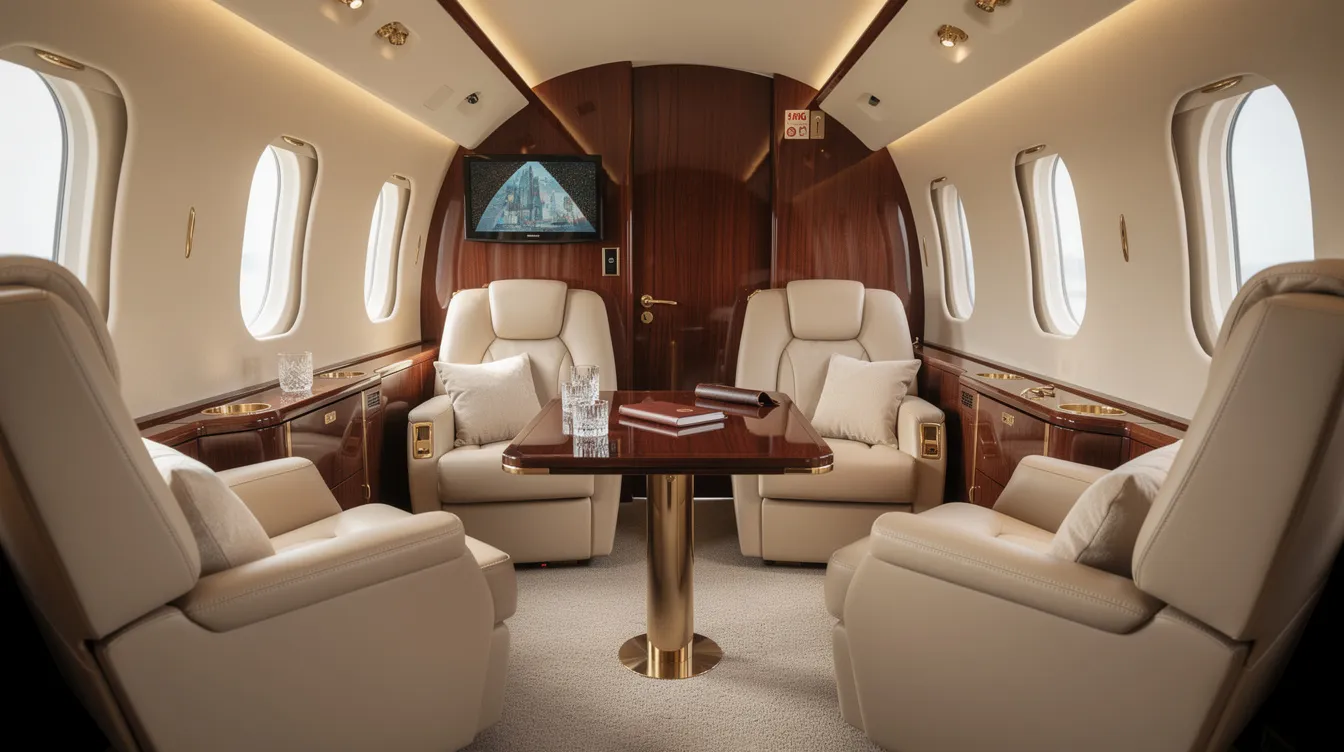
Cabin layout matters on longer flights. Stand-up cabin height, lie-flat divans, Wi-Fi, and a galley for hot meals make a 7-hour transatlantic crossing workable rather than endurable. Private jet travel supports customized in-flight experiences tailored to travelers' needs. For more on choosing the best seat and cabin setup, check our guide.
Baggage and special equipment require advance planning. Ski trips to Aspen or the Alps, golf outings, or touring with music gear all need confirmed baggage capacities for specific models. Ask before you book.
Private jet charters offer personalized service tailored to individual needs. A charter advisor or online air charter marketplace can help you compare aircraft quotes side by side. With Hoppyn's model, aircraft-by-aircraft pricing decisions disappear for empty-legs because confirmed flights carry no incremental cost beyond membership.
Step-by-Step: How to Book an International Charter Flight
Booking an international charter flight follows a clear sequence. Treat this as your checklist.
Step 1: Define your mission. Lock in dates, city pairs (for example, York to London), passenger count, luggage volume, preferred departure windows, and any pet or medical transport needs. Booking international charters requires careful planning and time to secure permits, so start early. Booking a private jet 1 to 3 months in advance is ideal for savings on international routes.
Step 2: Request quotes. Reach out to a charter broker, operator, or digital platform. Provide specifics so flight coordinators can propose the right aircraft categories and accurate pricing. Travelers must submit accurate passenger details for international charter flights, including passport scans and dates of birth.
Step 3: Review safety ratings. Check ARGUS, Wyvern, and IS-BAO certifications. Review operator history and aircraft age. Factor these alongside cost. Aviation safety should carry more weight than a $500 price difference.
Step 4: Confirm details. Lock in flight times, routing, onboard in flight catering, ground transportation, and special requests like meeting rooms or connectivity. Private flights can be booked with as little as 2 hours notice for simple domestic trips, but international routes need more lead time.
Step 5: Sign and pay. Payment typically happens via wire or card. International flights require passport details well in advance for APIS and manifest filings. FBOs (Fixed-Base Operators) facilitate private jet arrivals and departures at both ends.
With Hoppyn: You browse available international empty-leg flights inside the platform, join a waitlist, and once confirmed, you pay nothing for the flight itself. Only your annual membership fee applies. See how it works.
Safety, Regulations, and Compliance for International Charter Flights
Safety should be the foundation of any international plane charter decision. Not every operator holds the same certifications, and international routes add complexity.
All charter flights must meet FAA Part 135 standards in the U.S. In Europe, EASA approvals apply. Industry certifications add another layer: ARGUS Gold is a minimum benchmark for operators' safety. Wyvern Wingman certification ensures high safety standards. Private jet operators must have IS-BAO Level 3 certification for the most mature safety management systems.
Crew experience matters more on complex international routes. Minimum flight-hour requirements, recurrent training, and familiarity with challenging airports (London City with its steep approach, or Innsbruck surrounded by mountains) are non-negotiable for safe operations.
Operational approvals include ETOPS for extended over-water flights, LVO/ILS CAT II/III for low-visibility approaches (Global Jet is approved for CAT III B operations), and polar approvals for northern routes like New York to Tokyo via the Arctic.
International charter involves complexities like permits and customs requirements. Pilot and customs requirements vary by country for private travel. Reputable operators handle APIS submissions, TSA waivers, border overflight exemptions, and landing permits on your behalf.
Hoppyn members always fly on professional charter operators. The membership provides access to empty-legs, but each flight is operated by certified carriers that meet regional aviation safety regulations. Behind the scenes, charter operators connect their fleets and list empty legs on Hoppyn through dedicated integration and support resources.
Understanding Empty-Leg Flights on International Routes
Empty-leg flights are repositioning segments where an aircraft flies without paying passengers. They exist because charter demand is asymmetric: a client books one way, and the jet must move to its next assignment or return to base.
Here's how they work: a client charters a large-cabin jet from London to New York. After drop-off, the aircraft needs to return to London or fly to, say, Miami for the next booking. That return segment is the empty leg. Empty leg flights occur when jets return empty to their base or next pickup point.
Empty leg flights offer significant cost savings for travelers. Discounts typically run 35% to 80% below equivalent full charter pricing. A heavy jet trip that costs $78,000 as a full charter might appear as an empty-leg at $40,000 to $60,000. Travelers can access spontaneous, one-way empty-leg flights at reduced prices compared to standard charter.
Booking empty-leg flights requires flexibility in travel plans. You get a fixed departure time window, fixed routing, and limited ability to change the schedule. If you miss the slot, the aircraft still has to reposition.
Empty-legs appear frequently on popular routes like New York to London, Miami to the Caribbean, London to Nice, and Dubai to Europe. But they're inherently last-minute and supply-driven; about 41% of private jet flights in Europe are empty-legs.
Empty-legs are central to Hoppyn. Members pay a flat annual fee to access a global board of these flights, join waitlists, and, once confirmed, fly on unlimited empty-leg flights, including international ones where available.
Private Jet Membership vs. Traditional International Charter
The private aviation market offers several models for ongoing access to private jets. Choosing between them depends on how often you fly, how flexible your schedule is, and how much capital you want to commit upfront.
On-demand charter works on a per-trip basis. You pay each time based on aircraft type, flight hours, and route. It's the right fit when you need full control over exact timing and aircraft every trip, but it's the most expensive model per flight.
Jet cards and fractional ownership lock in hourly rates through large prepayments. A 25-hour light jet card runs roughly $183,000 to $215,000. Deposit-based memberships like Wheels Up require $100,000+ deposits plus annual dues. Jet membership programs offer access to private jet services, but the upfront cost eliminates most casual travelers.
Private jet membership through Hoppyn works differently: a flat annual fee of around $997/year, no hourly charter charges on confirmed empty-leg flights, and the ability to take unlimited flights as long as your schedule matches the legs listed. Members enjoy no hidden fees with jet membership programs under this model.
Who benefits from each? Executives needing guaranteed availability on specific dates should look at jet cards or fractional ownership. Flexible entrepreneurs, remote workers, and frequent international travelers who can adapt to available empty-legs are the ideal fit for a membership like Hoppyn.
Evaluate how often you fly internationally, how flexible you are with dates, and whether a membership or standard private charter model best matches your travel requirements and budget.
How to Find and Compare International Air Charter Options
Travelers can work through brokers, go directly to operators, or use digital platforms. Each path has trade-offs.
Brokers are experienced intermediaries who source aircraft, negotiate pricing, and vet operators for safety. They're ideal for complex multi-stop itineraries where a single operator can't cover every leg.
Some travelers prefer working directly with one or two preferred operators who know their preferences, especially for recurring routes. This works well as a private aviation partner relationship for frequent flyers on the same city pairs.
Online air charter marketplaces provide instant pricing, aircraft comparisons, and digital booking for general aviation. Empty leg flights can be booked through various digital platforms that aggregate listings from hundreds of operators.
Membership platforms like Hoppyn work differently. Rather than comparing per-flight charter pricing, you browse a live empty-leg board, see international segments as they appear, and join waitlists under your membership. Members can browse and book empty-leg flights globally.
When comparing options, weigh total trip cost, aircraft age, safety credentials, operator reputation, and fee transparency. Even a self-described global leader should be judged on maintenance, crew training, and transparency rather than brand claims alone.
Planning Your International Charter Itinerary
Building an efficient itinerary across time zones and borders requires more than picking a jet and a date.
On long-haul routes like New York to Paris or San Francisco to London, jet lag is real. Flexible scheduling with a private charter lets you depart in the evening and arrive rested, rather than conforming to an airline's 10 p.m. red-eye.
Use secondary airports closer to your actual destination. Teterboro for New York, Farnborough for London, Cannes-Mandelieu instead of Nice Côte d'Azur. Private aircraft can access more regional airports than commercial airlines, cutting ground transfer time from hours to minutes.
Coordinate ground transfers: chauffeured cars, helicopter connections, or rail links. Many private aviation providers and Hoppyn's 24/7 support team can help arrange this. Jet membership programs often provide 24/7 customer support for exactly these logistics.
Specify meal preferences, dietary restrictions, and any meeting or entertainment needs so the operator can tailor the cabin setup. In-flight catering on international routes ranges from cold platters to multi-course meals prepared by catering partners near your departure airport.
Build buffer time. Weather delays, slot restrictions (common in European airspace), and ATC congestion on busy routes like New York to London in winter can push your schedule. Contingency planning is not optional on international travel.

International Plane Charter for Different Traveler Profiles
International plane charter serves different needs depending on who's flying and why.
Business travelers and executive teams use charter for multi-city European roadshows (London to Frankfurt to Zurich), board meetings in New York, or same-day returns between cities like New York and Toronto. Charter flights provide productivity benefits with facilities for meetings in transit, and privacy ensures secure discussions during the flight experience.
Families and leisure groups charter for school-holiday travel from New York to the Caribbean, ski trips to Colorado or the Alps, and multi-stop Mediterranean holidays. Midsize and large-cabin jets handle these trips with space for luggage, children, and sometimes even pets, and a child's or family's first flight on a private aircraft often benefits from extra coordination around luggage, timing, and onboard comfort.
Creators, musicians, and sports teams cross North America and Europe on tour, carrying heavy equipment. Chartering airliners or spacious large-cabin jets gives them room for gear and crew in a single aircraft, turning air travel into an extension of their workspace.
Solo and couple travelers can find private jet flight opportunities realistic through empty-leg access on routes like New York to Miami, London to Ibiza, or Dubai to the Maldives, or even dedicated empty-leg flights from Toronto for frequent travelers. You don't need 10 passengers to justify the trip.
Frequent high-income travelers often seek luxury and flexibility in private jet services. Hoppyn's membership is particularly attractive to flexible travelers: remote workers, digital nomads, and founders who can align their schedule with international empty legs as they appear on the journey board.
Sustainability and International Private Aviation
Private aviation carries a noticeable emissions footprint. A transatlantic private jet flight produces more CO2 per passenger than a commercial business-class seat. That's the reality. Here's what travelers can do about it.
Some operators offer Sustainable Aviation Fuel (SAF) blends on international flights to cut lifecycle emissions. Ask whether SAF is available on your route before confirming.
Carbon offset programs let you fund verified emissions-reduction projects. Choose credible, third-party-verified programs rather than generic schemes with unclear impact.
Efficient aircraft selection helps. A modern light jet or midsize jet on a route within its range burns less fuel per mile than an oversized heavy jet carrying three passengers.
Flying on empty-legs doesn't eliminate emissions, but it does fill seats on flights that were already scheduled to operate. That improves aircraft utilization, which is one of the most direct ways to reduce per-passenger impact.
Hoppyn's focus on filling otherwise empty seats helps improve utilization rates in an industry where the average occupied flight carries only 4.2 passengers.
How Hoppyn Fits into the International Plane Charter Landscape
Hoppyn is a complementary alternative to paying full international charter rates. It's built for flexible travelers who want to explore private aviation globally without hourly pricing.
Hoppyn's core offer: a flat annual membership fee of around $997/year that unlocks access to a global board of private jet empty-leg flights with no per-flight cost once a flight is confirmed. Annual membership fees for jet programs can be around $997, a fraction of what jet cards or fractional ownership require.
Hoppyn sources empty legs from charter operators worldwide, including international routes between major hubs (New York to London, Miami to Bahamas, London to Geneva) and seasonal leisure destinations. New flights are added daily.
Key member benefits: unlimited free flights once confirmed, daily updated flight listings, transparent pricing (only the membership fee), and 24/7 support for questions and trip coordination. Members enjoy no hidden fees.
The ideal Hoppyn member: someone who flies frequently but with schedule flexibility. Remote workers, founders, small business owners, and private jet travelers who want an amazing experience without committing to jet cards, fractional ownership, or traditional per-hour charter. Providing access to private aviation at this price point changes who can fly private.
Ready to see what's available? Join Hoppyn and start browsing international empty-leg flights today.
Frequently Asked Questions
How far in advance can I book an international charter flight?
On-demand charters for long-haul routes like New York to London are often booked 1 to 4 weeks in advance, but urgent trips can sometimes be arranged within 24 to 48 hours if aircraft and permits allow. Airport slots, crew duty limits, and overflight permissions can require more lead time for complex multi-country itineraries. Empty-leg flights are typically listed much closer to departure, often within a few days, so travelers using Hoppyn should expect shorter booking windows paired with lower effective costs.
Do I still go through customs and immigration on an international private flight?
Yes. All passengers on international private charter or empty-leg flights must clear customs and immigration, just like on commercial flights. The process is usually faster and more private, handled in a dedicated terminal or separate customs area at the FBO. Operators collect passport details in advance to submit manifests and help streamline border formalities, but you still need a valid passport and any required visas.
Can I bring pets on an international charter or empty-leg flight?
Many international plane charters allow pets, but rules vary by operator and destination country. The UK and EU have specific pet entry rules, including vaccination and microchip requirements. Notify the operator or Hoppyn support early so pet permissions, crates, and paperwork can be arranged. Check quarantine and health certificate regulations for both departure and arrival countries before confirming the trip.
What documents do I need to charter a private jet internationally?
Key documents include a valid passport for all passengers, required visas, and sometimes additional paperwork such as minor travel consent forms for children. The charter operator handles flight permits, overflight clearances, and security manifests, but they'll request passport scans and dates of birth ahead of time. Name spelling on documents must match identification exactly to avoid delays at customs or immigration.
Is an international empty-leg flight less safe than a regular charter?
No. An empty-leg flight uses the same aircraft, crew, and regulatory framework as the original charter. From an aviation safety standpoint, it's the same operation, just sold differently. Safety depends on the operator's standards and certifications (ARGUS, Wyvern, IS-BAO), not on whether the flight is a full-price charter or an empty-leg. Hoppyn-listed flights are operated by professional charter companies that meet local regulatory requirements. The difference is only in how access and pricing are structured for the passenger.
Conclusion
International plane charter opens up a world of travel possibilities beyond commercial flight schedules, offering unmatched flexibility, privacy, and access to thousands of airports worldwide. While traditional charter pricing can be steep, innovative models like Hoppyn’s private jet membership leverage empty-leg flights to make international private aviation more affordable and accessible. By paying a flat annual fee, members can browse and book empty-leg flights globally, enjoying the perks of private jet travel without the typical per-flight costs.
Choosing the right aircraft, understanding pricing, and prioritizing safety are key to optimizing your international charter experience. Whether you’re a business traveler needing efficient multi-city trips, a family seeking comfort on vacation, or a flexible entrepreneur eager to explore private jet travel, international plane charter offers tailored solutions to meet your needs.
With aviation experts supporting you and a growing network of available empty-leg flights, private jet travel no longer has to be an elusive dream. You can fly private for less, on your terms. Ready to explore the international empty-leg flight board and start your journey? Join Hoppyn today and take off on your next awesome experience in private aviation.




Unlock Your Private
Jet Experience
Join our exclusive membership for
free flights today!

Explore More
Blogs


Join Our Exclusive
Newsletter
.png)






