
Jet Ownership in 2026: From Whole Aircraft to Fractional Shares and Smarter Alternatives


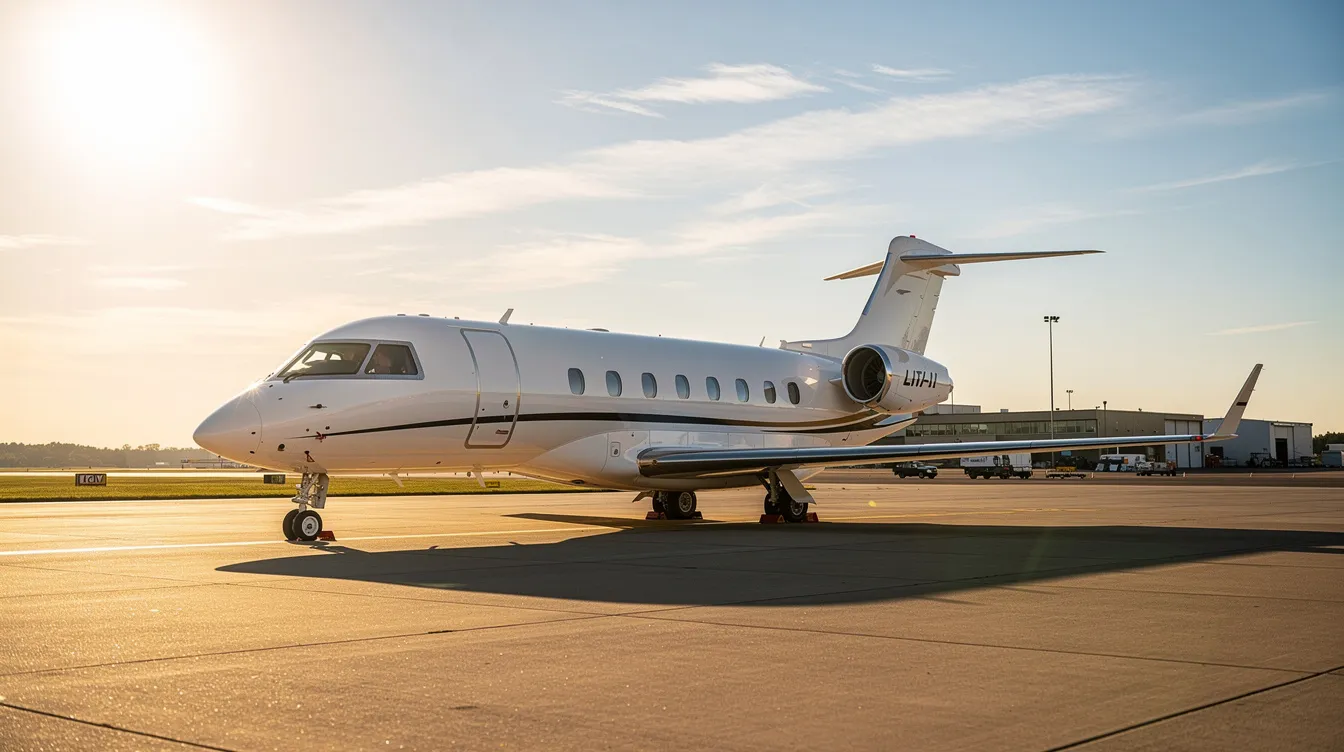
Private jet ownership used to mean one thing: you buy a plane, you fly a plane, you pay for everything that comes with it. That definition no longer holds. In 2026, "jet ownership" covers a wide spectrum - from whole aircraft ownership and fractional jet ownership to jet cards, on-demand charter, and flat-fee membership models that give you access to private aircraft without ever signing a title.
This article breaks down each model with real numbers, compares them head-to-head, and helps you figure out which one actually fits your flying profile and budget.
Key Takeaways
Traditional aircraft ownership comes with acquisition cost, monthly management fees, hourly rates, fuel surcharges, and resale risk that can stack up to several million dollars over just five years. Purchasing an aircraft includes not only upfront costs but ongoing expenses for management, maintenance, and operations that many buyers underestimate.
Fractional ownership lets multiple owners share one aircraft, lowering the entry point - but it still requires significant capital. In 2026, fractional shares typically cost $300,000 to over $3 million upfront, plus monthly fees and hourly charges that climb each year. Private jet ownership in this form still means managing ongoing operational costs.
For travelers who want private jet access without buying equity, paying hourly rates, or dealing with aircraft management, Hoppyn's $997/year membership offers a different path. Members browse global empty-leg flights, join waitlists, and fly without per-flight charges once confirmed. The rest of this article compares whole ownership, fractional programs, jet cards, and memberships so you can decide which model matches your needs.
1. What "Jet Ownership" Really Means in 2026
Aircraft ownership no longer just means buying a whole jet. It now includes lease arrangements, fractional shares, prepaid hour programs, and private jet memberships that completely remove the ownership component.
Here are the four main models you'll encounter in 2026:
Full aircraft ownership: You own 100% of a single aircraft. Multi-million-dollar acquisition. You handle crew, maintenance, insurance, regulatory compliance - everything. Whole ownership of a private jet means all associated costs sit on your balance sheet.
Fractional ownership: You buy a deeded share (commonly 1/16 or 1/8) in a specific aircraft type, receiving guaranteed flight hours annually. Entry starts around $300,000 and can exceed $3 million for large cabin aircraft.
Jet cards: You pre-purchase a block of hours (typically 25–100) at fixed hourly rates. Deposits range from $100,000 to $500,000. No equity, no asset ownership.
Membership / empty-leg access: Platforms like Hoppyn charge a flat annual fee ($997/year) for access to private jet flights that would otherwise fly empty. No hourly rates, no management fees.
The commitment levels vary widely - from multi-million-dollar financial commitment to under a thousand dollars a year.
2. Whole Aircraft Ownership: Maximum Control, Maximum Commitment
Whole ownership means you own 100% of the aircraft with all associated costs. Full ownership requires extensive financial and operational commitments, including crew management and maintenance. Owners can customize flight schedules for greater flexibility, choose the right aircraft for their mission, and maintain complete control over every detail of their private flight experience.
This model typically makes sense when you fly frequently - roughly 250 or more hours per year - or operate a corporate flight department with predictable routes. Here are ballpark acquisition cost ranges in 2026:
Light jets (Phenom 300, Citation XLS+): $9–15 million
Super-midsize jets (Challenger 350, Praetor 600): $25–35 million
Large cabin / transcontinental range (Gulfstream G450/600, Global series): $40–75 million+
Annual operating expenses can reach hundreds of thousands to well over a million dollars. Fixed costs include crew salaries, pilot training, pilot salaries for at least two qualified captains, ongoing maintenance, insurance, hangar space, navigation fees, and regulatory compliance. Regular inspections and compliance with safety regulations are mandatory for private jets. Aircraft typically incur significant depreciation in value over time, adding another layer of cost that's easy to overlook.
Chartering out your own aircraft when you're not using it can generate charter revenue, but it introduces Part 135 regulatory oversight, higher insurance premiums, and accelerated wear.
Best for: CEOs flying weekly between major hubs, companies with 300+ annual flight hours, families needing a personalized service experience on a single aircraft
Avoid if: You fly fewer than 200 hours per year, your routes are unpredictable, or you want to avoid the administrative costs and operational burden of running a flight department
3. Fractional Jet Ownership: Shared Equity in a Private Aircraft
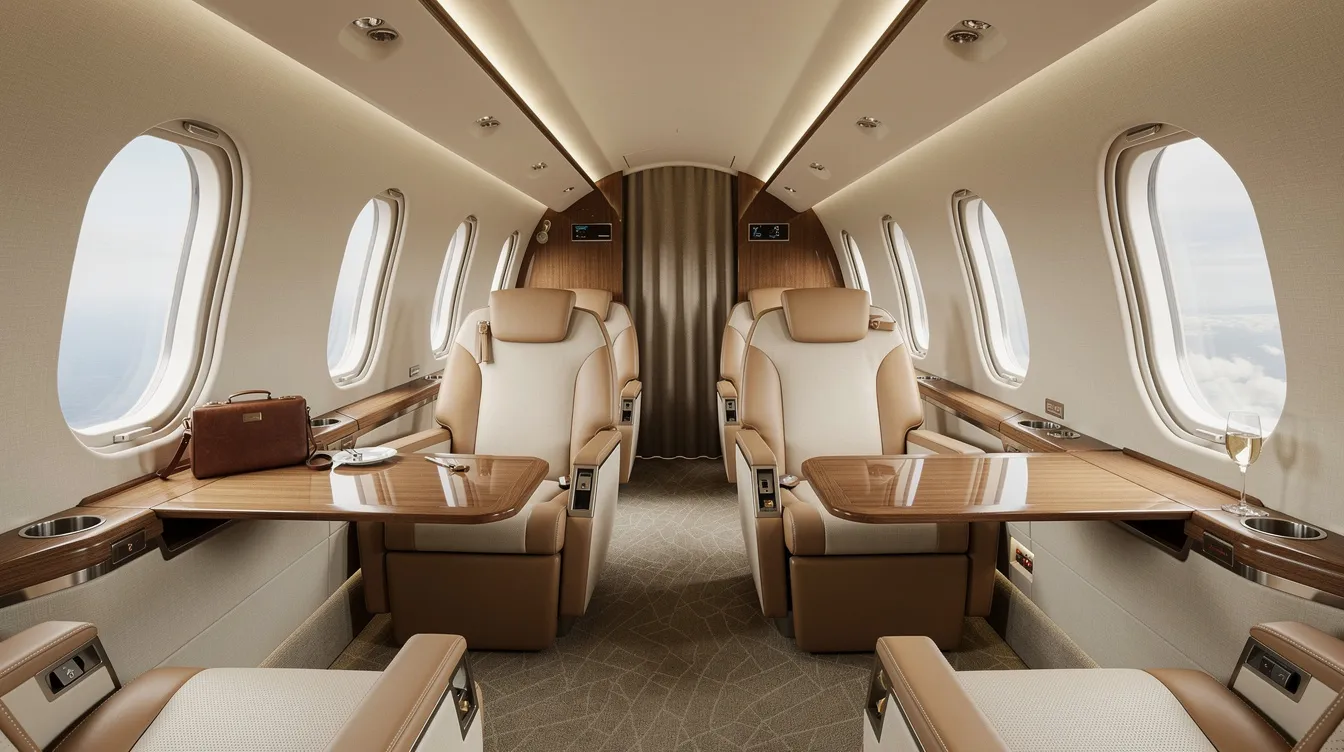
Fractional jet ownership means buying a deeded share in a specific aircraft - typically a 1/16, 1/8, or 1/4 share - and receiving guaranteed flight hours based on your share size; jet fractional ownership has followed this same shared-access model since it emerged in private aviation. Fractional ownership originated in the 1980s with NetJets and has since become a standard model in private aviation.
Fractional ownership operates under FAA Part 91K regulations, which set consistent safety and operational standards across all fractional programs. This means fractional owners get access to a diverse fleet with predictable service quality. Fractional ownership guarantees access to specific aircraft types and allows access to a wider range of airports than commercial carriers, since private aircraft can use thousands of smaller fields.
Typical use patterns in 2026: a 1/16 share gives roughly 50 hours per year, a 1/8 share about 100 hours, and a 1/4 share around 200 hours annually. Most contracts run five years. Fractional ownership allows multiple owners to share one aircraft as an ownership program for buyers who want shared access without full ownership, while still receiving guaranteed availability 355 days a year.
Advantages: Predictable access to the same aircraft type, consistent cabin classes, potential tax benefits including depreciation deductions, fleet flexibility across multiple aircraft when your jet is in maintenance
Downsides: Significant capital commitment locked up for years, depreciation and residual value risk, fixed costs whether you fly or not, early exit fees, and less schedule flexibility than you might expect compared with charter or private jet fractional ownership
4. The Real Cost of Fractional Jet Ownership
Fractional jet ownership cost breaks into three layers: acquisition cost, monthly management fees, and occupied hourly rate - plus extras like fuel surcharges and peak day surcharges that often catch buyers off guard.
Acquisition costs for fractional shares range from $300,000 to $3 million depending on aircraft class and share size. A 1/16 share in a light jet runs roughly $130,000–$300,000. Super-midsize or large cabin aircraft shares can reach $1.4M–$3.8M or more. Fractional ownership requires a minimum investment of $300,000 in most programs.
Monthly management fees typically range from $4,000 to over $28,000 depending on the aircraft type. Light jets sit around $6,000–$10,000/month. Midsize and super-midsize jets run $10,000–$20,000. Large cabin aircraft push $18,000–$30,000+ per month - and these fees escalate 3–6% annually.
Occupied hourly rates can vary from $2,000 to over $10,000 per hour. In 2026, light jets typically bill $4,000–$6,000/hr, super-mids around $7,000–$9,500/hr, and heavy or long-range jets $10,000–$14,000+/hr. Fractional ownership typically includes fixed hourly rates, but fuel surcharges often add $200 to $800 per flight hour on top.
Costs that get buried in the fine print:
Peak day surcharges: Higher rates during holidays and major events
Annual fee escalators: Management fees often climb 15–25% over a five-year term
Repositioning fees: If the aircraft must fly empty to reach you, you may pay for that deadhead leg
Depreciation: Fractional shares can depreciate by 35% to 60% over five years - a $1M share might buy back at only $400,000–$650,000
Early exit fees: Breaking a contract before term can trigger penalties and remarketing costs
A real-world example: a 1/16 share in a Phenom 300 at ~$800,000 acquisition, $13,000/month management, and $3,900/hr occupied rate totals roughly $2.15 million over five years - about $8,620 per effective flight hour.
5. Jet Cards and On-Demand Charter: Pay-As-You-Fly Models
Jet cards provide access to flights based on prepaid hours without ownership burdens. You purchase a block of 25–100 hours at fixed hourly rates, get guaranteed availability or scheduling priority, and avoid any equity position. Typical deposits in 2026 run $100,000–$500,000 depending on aircraft types and provider.
On-demand charter allows for renting a private jet only when needed without upfront commitments. Charter flights operate under FAA Part 135 regulations and offer access to private jets without ownership responsibilities. Charter pricing fluctuates based on market demand, aircraft availability, and routing - variable costs that can swing dramatically during peak seasons.
Common fees across both models include fuel costs beyond base pricing, Federal Excise Tax (7.5% in the U.S.), peak-day premiums, cancellation penalties, and minimum flight time per leg (often one hour). These aren't hidden fees exactly, but they add up fast if you're not watching.

Best for: Travelers flying under 25–75 hours per year, those with varied missions across multiple aircraft sizes, or anyone in the "testing private jets" phase who wants to fly private before committing capital
Avoid if: You need guaranteed access to one specific aircraft, or your number of flight hours consistently exceeds 150 per year - at that point, fractional ownership offers or structured programs may deliver better economics
6. Fractional Ownership vs Jet Cards vs Membership: Which Is Cost Effective?
The cost effective choice depends almost entirely on how many hours you fly annually - and how honest you are about that number. Utilization rates significantly impact the cost-effectiveness of owning a jet, and most owners overestimate their future usage.
At 50 hours per year, a fractional share in a midsize jet can cost $1–2 million over five years when you add acquisition, management fees, hourly rates, and fuel surcharges. A jet card covering the same 50 hours might run $350,000–$500,000 total. Hoppyn's empty-leg membership costs $997/year with no hourly charges.
At 100–200 hours per year, fractional and even whole ownership start to compete on a per-hour basis - but the all-in effective rate (including depreciation and fixed costs) still often lands between $7,000 and $12,000 per hour for midsize jets. Jet card effective rates cluster in a similar range for comparable cabin classes. Unused hours in a fractional contract are essentially money left on the table.
Capital risk and lack of flexibility in fractional contracts can outweigh benefits for travelers under roughly 150–200 hours per year
Frequent flyers above 200 hours annually with predictable routes may find fractional private jet ownership or full ownership more efficient
Hoppyn's model eliminates acquisition and management fees altogether - shifting the conversation from "ownership vs." access to pure, transparent access
7. Aircraft Ownership vs Access: Where Hoppyn Fits In
Here's the core contrast: aircraft ownership (whole or fractional) means equity, responsibility, and complex cost structures. Membership programs for private jets offer flexibility and access without ownership responsibilities. With Hoppyn, you don't own an aircraft. You don't manage one. You fly on ones that exist already.
Traditional ownership models tie you to a specific aircraft, a single provider, multi-year contracts, and rising management fees. Access via empty-leg flights lets you take advantage of private aircraft that would otherwise reposition empty - a significant advantage for anyone who values global access without capital commitment.
Hoppyn's core offer: a $997/year private jet membership. Members browse daily-updated empty-leg flights worldwide, join waitlists, and once confirmed, fly without paying per-flight charter fees, hourly rates, or fuel surcharges. No hidden fees. No asset ownership risk.
Hoppyn does not sell fractional shares, jet cards, or charters - we connect members with under-used capacity across existing private aircraft
Exclusive access to thousands of routes updated daily, with 24/7 member support
Consider Hoppyn if you're: an occasional luxury traveler, a flexible entrepreneur, a remote worker, or someone exploring the best seat on a private plane for the first time
8. How Hoppyn's Empty-Leg Membership Works (Step by Step)
An empty-leg flight is a repositioning flight where a private jet flies without paying passengers - returning to base or moving to its next pickup. These flights happen daily between popular city pairs like New York–Miami, London–Nice, and Los Angeles–Las Vegas. Without passengers, they're wasted capacity.
Here's how it works on Hoppyn: you join as a member for $997/year. You log in and browse empty-leg flights updated daily across a global flight board. You join waitlists for routes and dates that match your plans. When a flight confirms, you're on it - no management fees, no hourly rates, no fuel surcharges on top.
Global coverage: Thousands of private aircraft across continents, not locked to one operator
Unlimited free flights once confirmed within your membership year
24/7 member support handling logistics and coordination
Flexibility required: Empty legs follow operator schedules, so dates and routes aren't always a perfect match - some scheduling adaptability helps
Hoppyn works best as a complement to your broader travel strategy. Use commercial flights or charter for fixed-date, mission-critical trips. Use empty legs whenever timing and routing line up - at zero flight cost beyond your membership. You can browse available flights any time.

9. Choosing the Right Private Jet Solution for Your Flying Profile
The right solution depends on your annual flight hours, route patterns, scheduling flexibility, and whether you value equity or pure access. There's no universal answer - but there are clear patterns.
Simple rules of thumb for 2026:
200+ hours per year with predictable routes: whole or large fractional aircraft ownership may deliver the lowest per-hour cost, especially across large cabin aircraft with transcontinental range
75–200 hours per year: Fractional, an ownership program, or structured jet cards often make sense, particularly for travelers who fly frequently on consistent corridors and need guaranteed access to multiple aircraft
Under 75 hours: Jet cards, on-demand charter, or membership models like Hoppyn are almost always more cost-effective- fewer fixed costs, no capital at risk
Before signing any fractional contract, map your last 12–24 months of travel: number of trips, average distance, how often you changed plans, and how many peak-season trips you took. Compare that reality to what fractional jet ownership marketing materials promise.
Business users should consult aviation-savvy tax advisors about potential tax advantages like bonus depreciation and interest deductions - owners benefit from tax advantages like bonus depreciation, but these don't apply equally to everyone
Hoppyn is a low-risk way to start: minimal upfront cost, no long contracts, the ability to cancel after a year if it's not the right fit, and you can request a flight for specific routes you're interested in
Frequently Asked Questions
Is fractional jet ownership actually cheaper than just chartering or using a membership?
Fractional ownership can be cost-effective above roughly 150–200 hours per year, especially when you fully use your hours and leverage tax benefits. But the all-in effective hourly rate - including acquisition, depreciation, monthly management fees, occupied hourly rates, and fuel surcharges - often ends up significantly higher than the headline number. Travelers flying under 25 hours per year almost always benefit from charter instead.
For travelers under about 150 hours annually, jet cards, on-demand charter, or a private jet membership like Hoppyn are usually more cost-effective. They avoid large upfront acquisition costs and ongoing management fees, letting you fly private without the financial commitment of owning a depreciating asset.
What are the highest hidden costs of aircraft ownership that people overlook?
Owners and fractional owners often underestimate depreciation, annual fee escalations (3–6% per year compounding), peak-day surcharges, fuel surcharges, de-icing, repositioning fees, and early termination penalties. These variable costs add up quickly beyond the headline acquisition and hourly figures.
Consider this: a $1 million fractional share might lose 40–50% of its value over five years, returning only $500,000–$600,000 at buy-back. Meanwhile, you've paid five years of monthly management at $13,000–$15,000/month, plus hourly rates and surcharges. The real lifetime cost can easily double the original share price.
Can I combine fractional ownership or a jet card with a membership like Hoppyn?
Yes - and many frequent flyers do exactly that. They maintain a jet card or fractional share for critical, time-sensitive trips requiring guaranteed availability, and layer on Hoppyn for flexible, opportunistic travel on empty-leg flights at no flight cost. This hybrid approach captures savings without sacrificing reliability.
Because Hoppyn's annual fee is just $997 - with no hourly or management commitments - adding it alongside an existing aviation strategy doesn't require more capital commitment. It's pure upside: if a route and date match, you fly for free. If not, your existing solution fills the gap.
Do I need to worry about aircraft management or crew if I use Hoppyn?
No. Hoppyn members do not own aircraft, so they have zero responsibility for hiring pilots, managing ongoing maintenance, arranging insurance, or securing hangar space. All of that remains with the operators and owners of the jets. With Hoppyn, you focus on choosing flights, not managing an asset.
How do I get started if I'm not sure whether I want ownership or just access?
Start by tracking your actual travel over a few months: how many trips, how long, how flexible your dates are. Experiment with access-based solutions first - commercial, charter, and empty-leg memberships - before committing to jet ownership or purchasing an aircraft.
Joining Hoppyn is a practical, low-risk way to experience private jet travel in 2026 without locking into multi-year contracts. Try it for a year, see how often empty legs match your plans, and build your data. Ready to start? Join Hoppyn today and browse flights that are flying anyway - with or without you.
Conclusion: Navigating Jet Ownership and Access in 2026
Choosing the right private jet option in 2026 comes down to your flying habits, budget, and desire for control versus flexibility. Whole aircraft ownership offers maximum customization but demands a significant financial and operational commitment, best suited for those flying 250+ hours annually. Fractional ownership provides shared access with guaranteed hours and potential tax benefits but requires substantial upfront investment and ongoing fees, making it ideal for frequent flyers between 75 and 200 hours per year.
Jet cards and on-demand charter offer flexible, pay-as-you-fly options without ownership burdens, fitting travelers flying fewer than 75 hours annually or those who need varied aircraft types. Meanwhile, Hoppyn’s flat-fee private jet membership unlocks access to thousands of empty-leg flights worldwide for just $997 a year, eliminating hourly rates, management fees, and ownership risks. It’s a smart, transparent way to fly private for less, especially if you value flexibility and want to avoid high capital commitments.
Ultimately, the best choice balances your travel frequency, scheduling flexibility, and financial goals. Whether you opt for ownership, charter, or membership, understanding the full cost picture and operational realities empowers you to fly private smarter and more affordably in 2026 and beyond.
Ready to explore affordable private jet access? Join Hoppyn today and start browsing empty-leg flights flying worldwide.




Unlock Your Private
Jet Experience
Join our exclusive membership for
free flights today!

Explore More
Blogs


Join Our Exclusive
Newsletter
.png)






