
Personal Jets: A Practical Guide to Modern Private Aviation


Think personal jets are only for tech billionaires and heads of state? That hasn't been true for a while. Today, the world of private aviation spans everything from compact four-seat aircraft to intercontinental long-range business jets - and the ways to access them have expanded well beyond outright ownership. Whether you're exploring a charter, fractional share, or a flat-fee membership that puts you on empty leg flights, this guide breaks down what you actually need to know.
Key Takeaways
Personal jets are smaller aircraft owned or chartered by individuals or companies for private travel, ranging from very light jets like the HondaJet Elite II to ultra-long-range models like the Bombardier Global 7500.
Jet categories - VLJs, light jets, super midsize jets, and large cabin jets - differ in passenger capacity (2 to 19 passengers), range, and mission suitability, so matching the right plane to your trip matters.
You don't need to own or charter a private jet to fly on one. Services like Hoppyn use empty leg flights to make personal jets accessible through a flat annual membership of $997/year.
Personal jets offer privacy, flexibility, and faster travel times compared to commercial flights, with passengers bypassing terminal crowds and TSA lines.
The business aviation market now includes enough variety in aircraft and access models that cost-conscious travelers can find practical entry points.
What Is a Personal Jet?
A personal jet is a privately operated, jet-powered aircraft used by individuals, families, or small businesses for on-demand travel. Unlike commercial airline service, personal jets fly based on the passenger's itinerary using direct routing - you choose when to leave, where to go, and which airport to use.
Types of Personal Jet Access
The term covers a wide spectrum: private jets owned outright, fractionally owned business jets, and chartered private aircraft used for leisure or business trips. What ties them together is control. You set the schedule. You skip the connections. You access smaller regional and private airfields closer to your final destination, often arriving minutes before departure rather than hours.
Cabin and Passenger Experience
Personal jets accommodate anywhere from 2 to 19 passengers with compact cabins that prioritize luxury and customization over the density and capacity of commercial airplanes. The main categories include very light jets, light jets, super midsize jets, and large long-range business jets - each suited to different missions.
Matching Jet to Mission
Concrete examples: a light jet handles a quick New York to Miami weekend. A super midsize jet covers Los Angeles to Aspen for ski season. An ultra-long-range business aircraft connects London to Dubai nonstop. The right personal jet depends entirely on the trip.
Categories of Personal Jets: From Very Light to Long Range
Jet categories are defined by weight, cabin space, and range. Understanding these tiers helps you evaluate what you're flying on - whether you're booking a charter or catching an empty leg flight through a membership.
Category | Passengers | Typical Range | Example Models |
|---|---|---|---|
Very Light Jets (VLJs) | 4–6 | 1,325–1,610 nm | HondaJet Elite II, Cirrus Vision SF50, Embraer Phenom 100 |
Light Jets | 6–8 | 1,900–2,100 nm | Embraer Phenom 300E, Cessna Citation CJ3+/CJ4, Pilatus PC-24 |
Midsize / Super Mid Size Jets | 8–12 | 3,000–4,500 nm | Bombardier Challenger 3500, Gulfstream G280, Embraer Praetor 600 |
Long Range / Ultra-Long Range | 12–19 | 5,500–8,000+ nm | Bombardier Global 7500, Gulfstream G700/G800, Dassault Falcon 8X |
Very Light Jets (VLJs)
Very light jets typically seat 4 to 6 passengers and are ideal for short family day trips or regional hops under 1,200 miles. VLJs are certified for single pilot operations, which helps reduce operating costs. The Cirrus Vision Jet features an airframe parachute system - unique in its class. New VLJs cost between $1.5 million and $3.5 million.
Light Jets
Light jets offer more cabin comfort and range, making them the default for regional business travel.
Midsize / Super Midsize Jets
Super midsize jets bridge the gap to true transcontinental capability with stand-up cabins and the widest cabin options in the midsize segment.
Long Range / Ultra-Long Range Jets
Large cabin long range jets are built for intercontinental missions, often carrying cargo, full galley services, and onboard sleeping areas.
Light Jets: The Workhorses of Personal and Business Travel
Light jets sit at the sweet spot between affordability and capability for both personal and business jets. They're the aircraft you'll see most often in charter fleets and empty leg inventories - common, reliable, and efficient enough to cover most regional missions.
Typical performance: ranges around 1,900 to 2,100 nautical miles, cruise speed near 430–450 knots, and the ability to operate from shorter runway lengths at smaller airports. Ideal missions include Chicago to Denver, London to Málaga, or any route under about four hours of flight time.
Popular models include:
Embraer Phenom 300E - consistently the best-selling light jet in the world, with modern avionics, a spacious interior for its class, and strong fuel efficiency.
Cessna Citation CJ3+ - a proven workhorse with good range and low operating costs.
Pilatus PC-24 - notable for rough-field capability, making it suitable for airports other small jet types can't access.
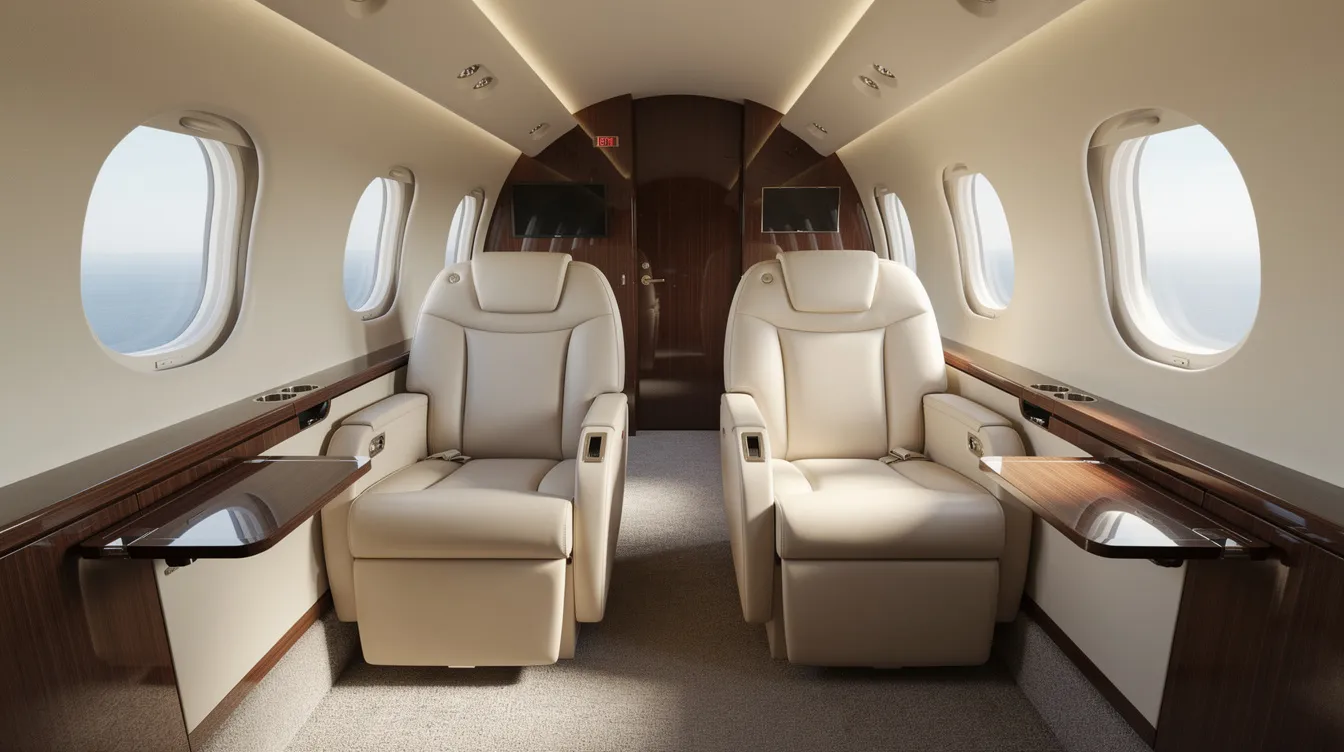
Cabin layouts typically include club seating for four to six passengers, a small galley, an enclosed lavatory, and available wi fi. Baggage capacity is modest but adequate for weekend bags. Private jets in this class can be equipped with Wi-Fi for connectivity, keeping you productive in the air.
Hourly operation for light jets ranges from $1,700 to $2,200 - considerably lower than larger business aircraft - which is why they dominate the charter and empty leg market. Travelers in major hubs can often tap into discounted one-way empty leg flights from their departure city.1
Super Midsize Jets and Long Range Options
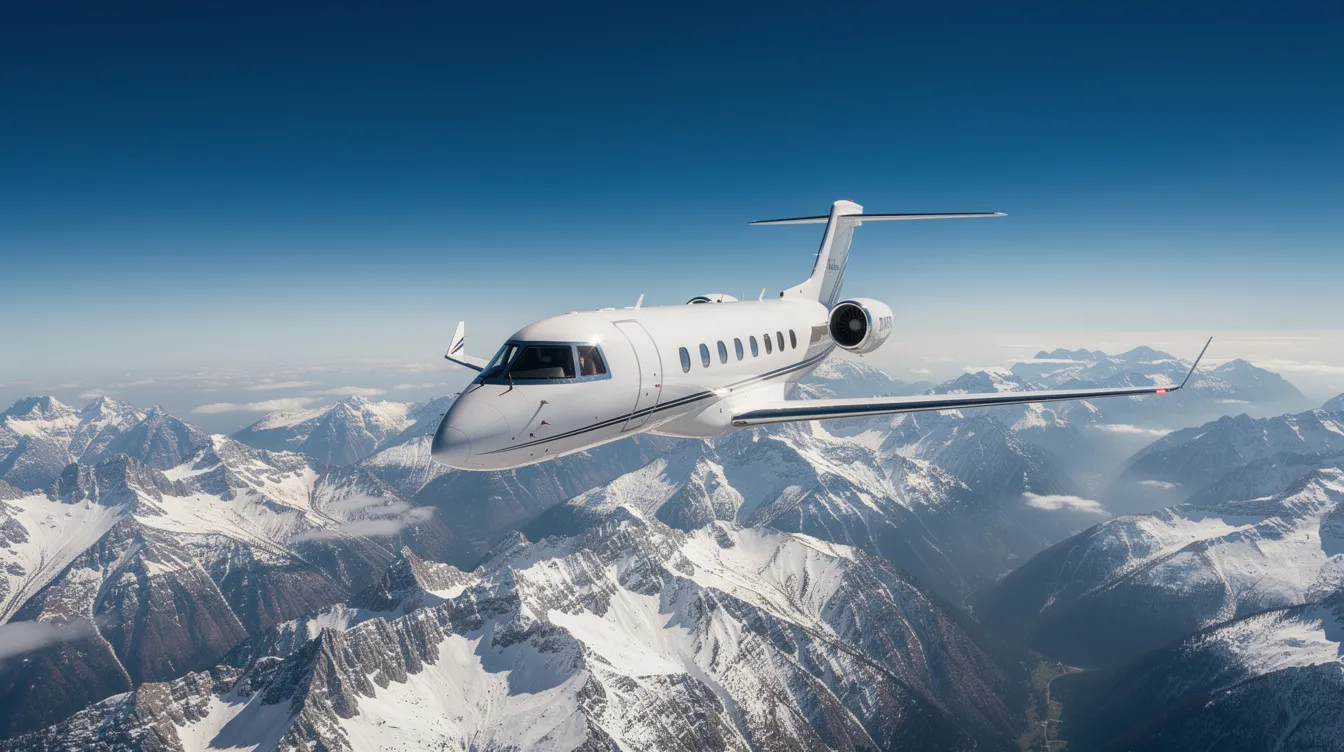
Super midsize jets bridge the gap between midsize and large cabin jets, often delivering true transcontinental or transatlantic capability. If you're flying nonstop New York to Los Angeles, London to Dubai, or São Paulo to Miami - routes common in South America and transatlantic corridors - this is the category that opens up.
Key metrics: typical range from 3,000 to 4,500 nautical miles, seating for 8 to 12 passengers, and cruise speeds around Mach 0.80. Cabin comfort improves significantly here, with stand-up headroom, dedicated work areas, and enough cabin space for business meetings that can't wait until you land.
Notable super midsize jets include:
Bombardier Challenger 3500 - a refined cabin with the widest cabin in its class and a range exceeding 3,400 nm.
Gulfstream G280 - excellent speed and efficiency with a 3,600 nm range.
Embraer Praetor 600 - intercontinental reach at about 4,000 nm.
For ultra-long-range missions, the Gulfstream G700 and Bombardier Global 7500 push past 7,000 nm - enough for nonstop flights across the Pacific. These are expensive to own and charter, but they do appear as empty leg flights. When a Global 7500 needs to reposition, that's a rare, high-value opportunity to fly on a world-class aircraft for a fraction of typical cost through a membership model.1
Key Manufacturers and Notable Personal Jet Models
Manufacturer | Notable Models | Key Features |
|---|---|---|
Bombardier | Global 7500, Global 8000, Challenger fleet | Ultra-long range (7,700–8,000+ nm), Mach 0.94 top speed, super midsize and large cabin options |
Gulfstream | G700, G800, G500 | Signature oval windows, large cabins with multiple living zones, efficient engines, super midsize jets |
Embraer | Praetor 500/600, Phenom 300E | Intercontinental range in super midsize, best-selling light jet, modern avionics |
Cessna (Textron Aviation) | Citation Latitude, CJ3+, CJ4 | Midsize and light jet staples, global charter presence, reliability |
Dassault | Falcon 7X, 8X | Trijet reliability, challenging airport access, active in Sustainable Aviation Fuel testing |
Honda Aircraft Company | HondaJet Elite II | Over-wing engine mount, low cabin noise/vibration, innovation in general aviation |
What matters to you as a traveler: cabin comfort, range for your typical routes, speed, and whether the fleet of your chosen operator or platform includes models that match your mission. If you're comparing specific models, it can help to contact a knowledgeable team for model-by-model guidance.
How Personal Jets Are Operated: Ownership, Charter, and Membership
Most travelers don't need to own a private jet. They access personal jets through charter, jet cards, fractional ownership, or membership models. Understanding these options saves you from overspending.
Outright Ownership
Outright ownership provides guaranteed availability and customization unlike charter options - but it comes at a steep price. Acquisition costs range from roughly $3 million for a VLJ to over $70 million for a flagship long range jet. Fixed annual expenses for a midsize business jet - crew salaries, hangar, insurance, maintenance - often run $700,000 to $1.2 million before fuel. Private aircraft depreciate based on age, total airframe hours, and market conditions. Full ownership becomes financially practical when flying 350 to 400 hours annually.
On-Demand Charter
On-demand charter through an air charter service works well if you fly fewer than 150 to 250 hours per year, avoiding massive upfront capital. Personal jets involve high costs related to charter or ownership calculated per hour or share, so annual flight volume is critical for determining whether to buy or charter. Private jets operate under different regulations than commercial airline flights, including FAA Part 135 for charters. Owner-operators flying under Part 91 face fewer regulatory requirements but still must meet airworthiness standards.
Fractional Ownership and Jet Cards
Fractional ownership and jet cards offer blocks of hours with more predictable scheduling - but they lock you into commitments and still carry high per-hour costs.
Membership-Based Access
Membership-based access is the newest model. Platforms like Hoppyn charge a flat annual fee and connect members with empty leg flights rather than selling charter hours. Private jets can operate from general-aviation airports that may not have scheduled service, and membership models open up those same airports.
Empty Leg Flights: The Hidden Side of Private Jets and Aviation
An empty leg flight is a repositioning flight - it occurs when a jet returns empty after a booked flight or must travel to pick up a charter client. The aircraft has to move regardless. The question is whether anyone is on board.
These flights exist because of route imbalance. Many one-way winter charters fly New York to Florida, for example, meaning jets need to fly back north empty. Seasonal demand, scheduling constraints, and fleet positioning across global private jet fleets all create supply.
Empty leg flights are discounted private jet flights - often significantly cheaper than regular charters. Operators price them to recover at least some cost rather than flying completely empty. Industry data shows savings of 35% to 80% below standard charter rates, and empty leg flights can save travelers up to 75% on costs. A recent index of over 5,600 listings found a median price of roughly $3,500 for the entire aircraft.
The trade-offs are real: routes are fixed, departure times can shift, and these flights are often available on short notice. You can't set a custom destination.
This is where a platform matters. Travelers can access empty leg flights through membership services. Waitlist booking allows access to empty leg flights, reduces costs for private jet travel, and provides flexibility in travel planning. Rather than searching dozens of broker sites, members can browse a single updated board and join waitlists for flights that match their plans.

Hoppyn's Membership Model: Affordable Access to Personal Jets
At Hoppyn, we built a subscription-based travel club that turns wasted empty legs into an opportunity for members. Instead of paying thousands per hour for charter, you pay once and fly.
Here's how it works: members pay a flat annual fee of $997 and can request or join waitlists for available flights globally. Hoppyn offers unlimited free flights once confirmed - no per-flight cost, no surge pricing. Transparency in pricing is a key feature of Hoppyn, and Hoppyn emphasizes no hidden fees in its services. You can learn more about the process on our How It Works page.
Key features of the membership:
Global private aircraft access across light jets, super midsize jets, and larger business jets
New flights added daily across popular corridors
Dedicated 24/7 customer support - private jet travel offers dedicated 24/7 support for members
Travelers can access real-time flight updates during their journey
Cabin crew provide personalized service throughout the flight
Private jet services often include ground transportation arrangements
Operationally, Hoppyn is not an air charter service or operator. We partner with licensed charter operators who retain operational control and manage all regulatory and safety obligations, and provide resources for charter operators to connect fleets and list empty legs. You can read more about our approach.
Real scenarios: a member catches a last-minute empty leg from Los Angeles to Las Vegas on a light jet for a weekend getaway. Another spots a super midsize jet repositioning from London to Rome and uses it for a business meeting. Travel memberships can reduce overall travel costs significantly when you're willing to match your schedule to available flights.
Choosing the Right Personal Jet for Your Trip
You don't need to be an aircraft expert. But understanding basic categories helps you evaluate options when browsing flights or talking to charter operators.
Route Length
Short hop under 1,200 miles? A VLJ or light jet is suitable. US coast-to-coast or Western Europe to the Middle East? Super midsize. Intercontinental? Long range.
Passenger Count
A turboprop aircraft or small jet handles 4–6 people; a large cabin jet can carry 12–19.
Baggage Volume
Light jets carry weekend bags; larger jets handle golf clubs, ski equipment, and cargo.
Workspace Needs
If you need to run business meetings in the air, look for super midsize or larger with dedicated work zones and wi fi.
Airport Constraints
Short runways, high-altitude fields, or remote airstrips may require specific aircraft capabilities.
Travel needs should define passenger capacity, trip length, destinations, and airport access when choosing a jet. A well-maintained 10-year-old light jet operated by a reputable team can be a smarter choice than a rare model with limited maintenance support. Prioritize safety and operator reputation. You can always request a specific flight if you have a particular route in mind.
Costs, Value, and When Membership Beats Traditional Charter
Let's put numbers in context. Charter hourly rates for light jets typically land in the $3,000–$5,000 range per hour. Super midsize jets run $7,000–$10,000. Heavy long range aircraft can exceed $12,000–$18,000 per hour.
Total cost of ownership is another world. A new VLJ like the Cirrus Vision Jet costs around $3 million to acquire. A midsize business jet runs $20–$22 million new, with annual fixed costs of $700,000 to $1.2 million. Over five years, total ownership cost for a midsize jet can reach $10–$15 million.
Now compare: a traveler flying 20–50 hours per year on charter might spend $100,000 to $250,000 annually. A Hoppyn membership costs $997/year. If that member catches even two or three empty leg flights in a year - flights that would have cost $5,000–$15,000 each on the open market - the return on that flat fee is enormous.
The trade-off is flexibility. Empty leg flights require you to adapt your schedule and routes. But the effective per-flight cost often approaches - or drops below - the price of a premium commercial ticket. For travelers with flexible plans, the math is hard to argue with. Evaluate your own patterns: frequency, route preferences, and willingness to adjust timing. That tells you whether ownership, classic air charter service, or membership access through Hoppyn delivers the best value.
Safety, Regulations, and Operational Control in Private Aviation
Safety standards for private jets are heavily regulated. In the US, charter flights fall under FAA Part 135, which governs crew qualifications, aircraft airworthiness, maintenance programs, and insurance requirements.
Operational control - the legal responsibility for a flight's safety, crew, and compliance - sits with the certified air carrier, not the membership platform. When you fly through Hoppyn, the licensed operator manages everything from pilot training to maintenance schedules. Hoppyn connects members with flights operated by licensed carriers, while those carriers retain full operational control.
What to ask about before any private flight:
Operator certifications (FAA Part 135 or equivalent)
Third-party safety audits (ARGUS, Wyvern)
Pilot experience and training hours
Aircraft maintenance history and the role of programs like Honeywell MSP for engine coverage
Modern business jets - from light jets to super midsize jets - feature advanced modern avionics, redundant engines, and safety systems that often exceed commercial airline equipment levels. Whether you're on a Cessna Citation or a Gulfstream, the technology powering these aircraft is built to the highest standards in aviation.
Environmental Impact and the Future of Personal Jets
Private jets have a higher per-passenger carbon footprint than commercial airlines. That's a fact worth acknowledging directly.
But the industry is moving. Sustainable Aviation Fuel is being tested and delivered by manufacturers like Dassault and engine makers partnering with fuel producers. Newer engines and lighter composite materials improve fuel efficiency with each generation. Early research into hybrid-electric and hydrogen propulsion is underway, though these technologies are more promising for shorter-range, smaller aircraft for now.
One of the most practical steps? Filling empty leg flights rather than letting planes fly without passengers. Every empty leg that carries a member instead of flying empty reduces wasted emissions per mission. It won't solve the carbon problem alone, but it's a meaningful improvement in how the existing fleet is operated.
Travelers can also make conscious choices: select modern, fuel-efficient aircraft types, consolidate trips where possible, and support operators that invest in SAF and carbon reporting. The demand signal from passengers matters.
Frequently Asked Questions
Can I choose any route I want with an empty leg membership like Hoppyn?
Empty leg flights follow the aircraft's required repositioning route, so members can't set fully custom routes. Instead, you browse available flights and join waitlists for those that match or come close to where you need to go. Many members plan flexible trips around attractive routes - timing a New York to Miami visit, for example, when a suitable light jet appears on the board. For specific dates and routes where no empty leg exists, traditional charter or commercial services may still be necessary.
How far in advance are personal jet empty leg flights usually listed?
Many empty leg flights surface only a few days before departure - sometimes just 24 to 72 hours ahead. Some repositioning segments can be visible a week or more in advance. Hoppyn updates flights daily, so members who check the board often or set alerts have the best chance to catch attractive long range or regional opportunities. If you need firm, far-in-advance planning, consider combining empty leg flying with other travel options for maximum coverage.
What happens if the operator changes or cancels an empty leg flight?
Because operational control lies with the certified operator, they may adjust times, aircraft type, or routing as their primary charter missions change. In such cases, Hoppyn notifies members promptly and helps them explore alternatives on the platform. Since members aren't paying a per-flight fare, there's no flight-cost financial loss. This variability is part of why empty leg access is far cheaper than standard charter - flexibility is part of the deal.
Do personal jets offer Wi‑Fi and the same amenities as commercial business class?
Most modern business jets - especially super midsize jets and larger - offer high-speed wi fi, power outlets, and quiet cabins designed for work or rest. Amenities on light jets and VLJs can vary: some have full connectivity, while others focus on efficient, comfortable seating and may lack full galleys. Check specific aircraft details when joining a waitlist if a particular amenity is critical. For more on maximizing comfort, see our guide on the best seat on a private plane.
Is a membership like Hoppyn only useful for frequent flyers?
The value of a flat-fee membership depends less on total hours flown and more on flexibility. Travelers who can go off-peak, have adaptable weekend or business schedules, or already spend heavily on premium commercial tickets tend to see the most benefit. Even catching two or three empty leg flights per year can return multiples of the $997 annual fee in savings. Compare your recent travel costs and patterns with the membership price to see whether it makes practical sense - then join Hoppyn and start browsing what's available today.
Conclusion
Personal jets have evolved from exclusive assets for the ultra-wealthy into accessible options for a broader range of travelers. Whether you choose to own, charter, or join a membership like Hoppyn, understanding the types of jets, operational models, and cost structures empowers you to make smarter travel decisions. Empty leg flights, in particular, unlock private jet travel at a fraction of traditional costs, making it practical and realistic for many.
With a flat annual membership fee, global flight options updated daily, and no hidden fees, Hoppyn offers a transparent, affordable path to experience the benefits of personal jets. If flexibility fits your schedule and you value convenience, privacy, and speed, the world of personal jets is within reach. Ready to explore? Join Hoppyn today and start flying private for less.




Unlock Your Private
Jet Experience
Join our exclusive membership for
free flights today!

Explore More
Blogs


Join Our Exclusive
Newsletter
.png)






