
Private Air Flights: How to Fly Private for Less with Empty Legs and Memberships


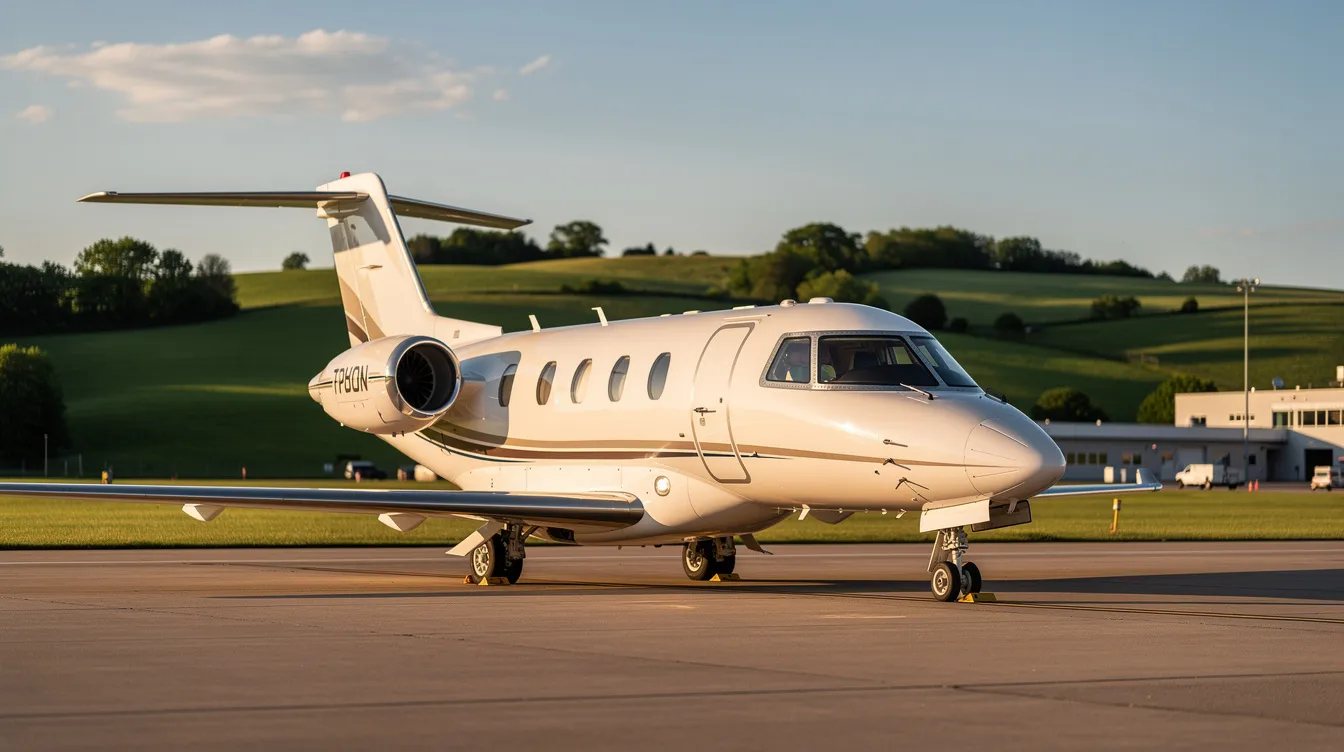
Think private air flights cost $5,000+ per hour? That used to be the only option. Not anymore. Empty leg flights and membership models have opened private jet travel to a much wider group of travelers—without the traditional per-flight sticker shock.
Key Takeaways
Private jet charter costs start at $4,000 per hour, but empty leg flights can slash that by 30–75%. A membership like Hoppyn removes the flight cost entirely for a flat $997/year.
Empty legs are repositioning flights that would otherwise fly without passengers. They exist on busy corridors like New York to Las Vegas and New York to Key West every single day.
Hoppyn members pay one annual membership fee, browse a global board of empty legs updated daily, and fly with no per-flight charges and no hidden fees once confirmed.
Aircraft types range from light jets seating 4–8 passengers to heavy jets handling up to 19, so there's a fit whether you're a solo traveler or coordinating a small group trip.
Flexibility is the trade-off: empty legs come with fixed departure windows and routes, so the more adaptable your schedule, the more value you get.
Ready to see how it works? Skip ahead to learn how Hoppyn membership works.
What Are Private Air Flights Today? (Beyond the Billionaire Stereotype)
Private air travel used to conjure images of movie stars and Fortune 100 CEOs stepping off Gulfstreams. That picture is outdated. Today, founders, remote workers, families, and small business teams all fly private—often paying less than you'd expect.
Private air flights involve chartering or owning an entire aircraft, giving you control over time, routing, privacy, and logistics. The category now breaks into three main models:
On-demand charter flights: Rent the whole plane for a specific trip. You pick the route, date, and aircraft. Flexible but expensive.
Jet cards and fractional ownership: Buy blocks of flight hours or a share of an aircraft. More commitment, more predictability.
Empty leg and membership-based access (like Hoppyn): Access repositioning flights worldwide for a flat annual fee. Maximum savings, requires schedule flexibility.
Here's what makes private flights compelling compared to commercial airlines:
Commercial | Private | |
|---|---|---|
Airport arrival | 1.5–3 hours early | 15–20 minutes before takeoff |
Airport access | Major hubs only | Over 3,000 airports worldwide, including smaller regional fields |
Schedule | Fixed timetable | Personalized, no layovers |
Time savings | - | Reduces total travel time by 2–4 hours per trip |
Security | Long TSA lines | Quick, private terminal process |
Privacy | Shared cabin | Exclusively your chosen guests |
Private aviation is typically more expensive than commercial travel for individual travelers. But that cost gap shrinks fast when you split an aircraft among a group—or when you fly empty legs.
Charter Flights 101: How Traditional Private Jet Charter Works
A private jet charter service means renting the entire aircraft for a specific route, date, and time. You pay for the plane, not a seat. Charter flights operate based on your schedule rather than a fixed timetable—departure times are set entirely by you.
Booking a private charter flight can be done in three steps: request a quote, compare aircraft and operators, then confirm and fund. Most charters can be arranged with as little as 24 hours' notice, and private jet charters can even be booked with as little as 2 hours' notice in some cases.
Charter aircraft can often fly nonstop where scheduled airlines do not, which makes them appealing for routes with poor commercial connections.
Core price drivers for charter flights:
Distance and route: Longer flights cost more; international routes add complexity.
Aircraft type: A turboprop costs far less per hour than a heavy jet.
Passenger count and luggage: Affect aircraft selection and weight calculations.
Crew costs: Overnights, duty-day limits, and multi-day trips add crew expenses.
Repositioning legs: If the jet needs to fly empty to reach you, that cost often lands on your invoice.
Charter flight pricing varies based on aircraft type and distance. A light jet from New York to Las Vegas might run $25,000–$40,000 one way, while New York to Key West in a similar aircraft could land between $20,000–$35,000 depending on the operator and season.
Flight Cost Breakdown: What Really Drives the Price of a Charter Flight
No two private flights cost the same because every itinerary is custom. Understanding what goes into the invoice helps you spot where empty legs and memberships cut costs.
Key flight cost components:
Hourly aircraft rate: The biggest line item. Light jets typically cost around $6,000 per hour to charter. Average hourly rates for heavy jets start at $10,000. Ultra-long-range jets can cost $12,000 per hour or more.
Fuel surcharges: Jet-A prices fluctuate, and operators pass volatility along.
Landing and handling fees: Every airport charges for ramp access and ground services.
Crew expenses: Overnight stays, meals, ground transport for pilots.
De-icing: Seasonal in northern airports, not optional.
Repositioning legs: If the jet starts in Dallas but you need it in New York, you may pay for that empty flight too.
Private jets can fly at altitudes up to 15.5 km, above most weather and commercial traffic, which helps with speed and fuel efficiency—but the hourly meter is still running.
Sample scenario: New York to Key West (light jet)
Imagine chartering a Citation CJ3 for a nonstop flight from Teterboro (New York area) to Key West. Flight time is roughly 3–3.5 hours. At approximately $6,000–$7,000/hour, the base rate alone runs $21,000–$24,500. Add fuel surcharges, landing fees at both ends, handling, crew overnight in Key West, and federal excise tax, and the total can push $28,000–$35,000 for a one-way trip.
Important: quotes for private flights may not include all potential fees and costs. Always ask for an all-in figure.
This is exactly where empty legs and membership models flip the math. If that same aircraft is already heading to Key West for another client's charter, the repositioning leg back might be available at a fraction of the cost—or at no flight cost through a membership.
Instant Pricing vs Traditional Quotes: How Modern Platforms Have Changed Charter
The old way of booking a private charter flight involved phone calls, back-and-forth emails, and waiting hours (sometimes days) for a quote. That's changing.
Today, instant pricing is available for private jet bookings online. Modern platforms show estimated aircraft options, near-all-in quotes, and live availability indicators. Some services like Jettly connect travelers to over 20,000 aircraft worldwide and display pricing within seconds.
What instant pricing usually includes:
Estimated hourly or total trip cost
Aircraft category and model suggestions
Availability windows for your route
Itemized or bundled fee breakdowns
What it doesn't always cover:
Peak-day surcharges and event-driven demand spikes
Operator confirmation (the quoted aircraft may not be the final one)
Last-minute additions like catering, ground transportation, or de-icing
Travelers used to Uber-style booking now expect the same immediacy for private air flights. That consumer shift is pushing the entire industry toward transparent pricing and faster confirmations.
Hoppyn takes a different angle: instead of competing on per-flight charter rates, we give members a global board of empty legs with no per-flight cost. But understanding charter economics helps you appreciate how much value each empty leg represents.
From Charter Flights to Empty Legs: The Hidden Side of Private Aviation
Here's a fact that reshapes how you think about private aviation: nearly 40% of all private jet flights fly empty. That's an enormous amount of aircraft moving through the sky with zero passengers on board.
An empty leg—also known as a deadhead or ferry flight—is a repositioning flight without passengers. It happens when an aircraft needs to return to its base or fly to the location of its next paying charter.
Why empty legs happen:
A client charters a jet from New York to Las Vegas but only needs a one-way trip. The aircraft must fly back to New York empty the next day.
A jet based in Miami picks up a charter in Dallas. It flies empty from Miami to Dallas to start the job.
Seasonal demand shifts: winter creates waves of southbound charters to places like Key West and South Florida, generating northbound empty legs.
Empty legs vs standard charter at a glance:
Standard Charter | Empty Leg | |
|---|---|---|
Route | You choose | Pre-set by operator |
Schedule | Your preferred time | Fixed departure window |
Price | Full hourly rate + fees | 30–75% discount, or $0 via membership |
Flexibility | High | Limited |
Availability | On demand | Based on repositioning needs |
These flights can offer significant savings on private jet travel because the operator's costs are already partially covered by the original charter client. Empty leg flights are often available at discounted rates, and booking an empty leg flight can be done through digital platforms—no phone tag required.
Empty Legs vs Traditional Charter Flights: Cost and Flexibility Compared
Let's put real numbers on the comparison. According to Solusjet's price tracking, the median empty leg price across 521 tracked listings is about $8,063 for the whole aircraft, and 79% of listings are priced under $10,000.
Route-level examples (charter vs empty leg):
Chicago → Teterboro (New York): Charter $10,500–$19,500 vs. empty leg $4,500–$9,000
Chicago → West Palm Beach: Charter $16,500–$33,500 vs. empty leg $6,500–$15,000
Chicago → Aspen: Charter $14,000–$28,000 vs. empty leg $6,000–$13,000
Advantages of empty legs:
Dramatically lower flight cost—sometimes 75% or more below full charter
Access to larger or newer aircraft types at a fraction of normal rates
Ideal for travelers with greater flexibility on dates and times
Limitations to know:
Fixed departure windows that the traveler can't shift
Pre-set origin and destination airports
Potential schedule changes if the underlying charter shifts or cancels
Typically one-way only
Now, here's where Hoppyn's model reshapes the conversation. Instead of paying a discounted (but still substantial) empty leg price, members pay a flat $997/year and fly with no per-flight charges. The question shifts from "What does this flight cost?" to "Is there a suitable empty leg on my route?"
A traveler planning a New York to Key West weekend could watch the Hoppyn flight board for southbound legs, flex their departure by a day or two, and potentially fly on an aircraft that would otherwise carry zero passengers.
Aircraft Types Explained: From Turboprop to Light Jet and Beyond
The aircraft type you fly on determines everything: speed, range, cabin comfort, and flight cost. Here's what you'll encounter in private aviation and on Hoppyn's empty leg feed.
Turboprop (e.g., Pilatus PC-12)
Seats: 6–9 passengers
Range: Short to medium (up to ~1,500 miles)
Best for: Regional hops, small airports with shorter runways
Empty leg cost range: As low as $1,500 for short flights
Light Jet (e.g., Citation CJ3, Citation M2)
Seats: Light jets accommodate 4 to 8 passengers for short regional hops
Range: Up to ~2,000 miles nonstop
Best for: City pairs like New York–Miami, Dallas–Houston
Typical charter rate: ~$6,000/hour
Midsize / Super-Midsize (e.g., Lear 45, Challenger 350)
Seats: Midsize jets offer more comfort for 6 to 10 passengers on longer flights
Range: Transcontinental capability (2,500–3,500 miles)
Best for: Coast-to-coast business travel, groups needing cabin space
Heavy / Long-Range (e.g., Gulfstream G450, Global 6000)
Seats: Heavy jets can handle cross-continental or international travel for up to 19 passengers
Range: 5,000+ miles nonstop
Best for: International routes, large groups, maximum comfort
Typical charter rate: $10,000–$18,000/hour
Private jets provide superior comfort and customized amenities across all categories. Even a light jet offers leather seating, climate control, and refreshments that commercial airlines reserve for first class.
Hoppyn members see a diverse fleet across these categories in the empty leg feed, from small, efficient aircraft for quick regional trips to larger cabins suited for families or business teams, and can explore empty leg flights from Toronto as a dedicated starting point for many popular routes.

Planning Routes: Popular Private Flight Corridors Like New York, Las Vegas, and Key West
Not all routes produce equal empty leg volume. The busiest private aviation corridors generate the most repositioning flights, which means more opportunities for flexible travelers.
High-demand corridors and why they're busy:
New York ↔ South Florida (Miami, West Palm, Key West): Year-round business traffic plus massive winter seasonal demand. One of the richest empty-leg corridors in the U.S.
New York ↔ Las Vegas: Weekend leisure, conventions, entertainment events. Frequent repositioning in both directions.
Los Angeles ↔ Las Vegas: Short hop, very high frequency. Light jets dominate this route.
Northeast ↔ Aspen/Vail: Ski season creates predictable inbound/outbound patterns from November through March.
Dallas ↔ Houston: One of the most frequent business shuttle routes in private aviation.
Members based near hubs like New York, Miami, Dallas, or Los Angeles will see the widest variety of empty legs. But repositioning flights also pop up in secondary markets-an aircraft returning from a one-off charter in Nashville or Bozeman still needs to get home, and city-focused tools like the City Hub empty leg deals page make it easier to spot spontaneous one-way opportunities from your departure city.
According to EmptyJet Research, about 3,480 empty leg offers departed from North American airports in September alone, with 83% originating in the U.S. and a median price near $7,945.

Traveling Solo vs Large Groups: Matching Aircraft and Pricing
Private air flights are priced per aircraft, not per seat. That single fact changes the math dramatically depending on your group size.
Per-person cost comparison (hypothetical New York–Miami, light jet charter ~$15,000):
Group Size | Cost Per Person |
|---|---|
2 passengers | $7,500 each |
4 passengers | $3,750 each |
8 passengers (midsize) | ~$2,500 each |
For large groups—wwedding parties, corporate offsites, sports teams-chartering a midsize or heavy jet and splitting the cost can rival business class commercial fares. And when those groups can match an empty leg, the per-person economics become extraordinary.
Luggage policies vary by aircraft but are generally more accommodating than commercial airlines, which matters when traveling with golf bags, ski gear, or production equipment. A good booking matches the mission with the right aircraft and operator.
Hoppyn is well-suited for individuals, couples, and small groups who can stay flexible. But when the right aircraft and route line up, larger groups benefit too. The key is matching your travel needs to what's available on the board.
How Hoppyn Works: Private Jet Travel by Membership, Not Hourly Charter
Hoppyn is a subscription-based private jet membership—not a charter broker, not a jet card. You pay a flat $997/year and then access empty-leg private flights with no flight cost once confirmed, without long-term commitments.
How the member experience works:
Join: Sign up for the annual membership at Hoppyn.
Browse: Log in and explore the global empty leg board, updated daily with new flights.
Waitlist: Found a flight that fits? Join the waitlist for that specific leg.
Confirm: Hoppyn notifies you when your flight is confirmed.
Fly: Show up at the private terminal and board. No invoice at the gate.
The platform also helps members plan their next private flight by providing access to a vast network across the world.
Membership services provide access to over 20,000 aircraft. Members can book flights with no hidden fees. Members enjoy unlimited free flights once confirmed. This model also appeals to luxury travel customers who want premium private flying without long-term commitments. And private jet memberships include 24/7 customer support-so if something shifts, you have a real person helping you navigate it.
Learn more about the process on the How It Works page.
Connecting Travelers to Empty Legs: Finding and Booking the Right Flight
Hoppyn aggregates empty legs from operators worldwide and surfaces them in a digital flight board, providing access to aircraft options across a vast network around the world that you can browse by date, route, and region, while dedicated resources for charter operators help partners list and manage their available flights efficiently.
Finding your flight:
Filter by origin and destination (New York, Las Vegas, Key West, or any airport in the network)
Narrow by date range and aircraft type
View flight details including departure airport, estimated time, and aircraft category
Joining a waitlist:
When you spot a match, join the waitlist for a digital experience that feels close to instant booking. Hoppyn manages multiple interested members and follows clear confirmation rules. You'll receive notifications via email or in-app messaging. Most empty legs are confirmed 24–72 hours before departure.
Not every desired route will have an empty leg at the perfect time. That's the honest trade-off. But frequent flyers who check the flight board regularly and stay flexible find multiple opportunities each month, connecting travelers to flights that would otherwise carry empty seats.
Competitive Pricing Reframed: Comparing Membership to Traditional Charter
Forget comparing hourly charter rates. Hoppyn's competitive pricing works differently: it collapses per-flight costs into a single annual fee.
What these flights would cost as traditional charters:
Route | Charter Cost (Light Jet) | Hoppyn Member Cost |
|---|---|---|
New York → Las Vegas | $25,000–$40,000 | $0 flight cost |
New York → Key West | $20,000–$35,000 | $0 flight cost |
Los Angeles → Aspen | $14,000–$28,000 | $0 flight cost |
Simple ROI model:
If a typical charter leg costs $10,000–$15,000 and you fly just 2–3 times per year on empty legs through Hoppyn, you're getting $20,000–$45,000 in flight value for $997. Even a single flight can return more than 10x the membership fees.
This isn't hypothetical supply. Availability is driven by real repositioning needs—operators already have these flights on their schedule. Your flexibility is the trade-off for significant savings. If the leg exists and you can match it, you fly. That's the deal.
The question isn't "Can I afford to fly private?" It's "Can I match my schedule to what's already flying?"
Planning and Flexibility: How to Make Private Air Membership Work for You
The key to extracting maximum value from empty leg access is flexibility on dates, times, and sometimes departure airports within a region. Private flight schedules can be adjusted with minimal hassle when you're working within the empty leg framework.
Practical strategies:
Watch seasonal patterns: New York to Florida legs spike in winter. West Coast to Las Vegas surges around weekends and major events. Plan trips around these flows.
Stay airport-flexible: A leg might depart from Teterboro instead of Westchester, or Van Nuys instead of Burbank. Being open to nearby departure airports widens your options.
Think one-way: Empty legs are usually one-way. Combine an empty leg outbound with a commercial return, or catch a second empty leg back on a different day.
Set alerts and check often: The members who fly most are the ones who browse the board regularly.
Playbook example: A remote worker in New York wants monthly trips to Miami. She checks the Hoppyn board every few days, watching the New York–South Florida corridor. In a typical month, several southbound empty legs appear. She picks one that aligns within a two-day window, flies private for no flight cost, and books a $150 commercial ticket home. Total monthly air travel spend: $150 plus the prorated membership.
Treat empty leg membership as a travel strategy—not an on-demand replacement for every itinerary — and use it to plan your next private flight around available routes. That mindset shift is what separates members who love the model from those who feel frustrated by it.
Comfort, Safety, and Service Standards on Private Air Flights
Flying on an empty leg doesn't mean flying on a lesser aircraft. You're onboard the same professionally operated jet that a full-price charter client would use.
Safety and operations:
Private aircraft have specific FAA certification and operational requirements (Part 135 in the U.S., EASA in Europe).
Most jet operations carry two pilots on every flight.
Operator safety ratings should be checked before booking. Look for ARGUS, Wyvern, or IS-BAO certifications. Passengers should also inquire about the aircraft's maintenance status and operator safety records.
The onboard experience:
Passengers can arrive just 15 to 20 minutes before takeoff at private terminals-no long security lines.
Private flights can often bypass lengthy airport processes and security checks entirely.
The cabin environment is exclusively for your chosen guests. Private flights provide a quieter traveling environment for meetings and work.
Companion animals can travel in the cabin with owners on private flights.
Private aviation uses a larger network of airports, including regional fields. Private jets can utilize thousands of smaller regional airports, and smaller airports can reduce congestion and offer closer access to destinations.
For tips on making the most of your in-flight experience, check out The Best Seat on a Private Plane.
Hoppyn provides dedicated 24/7 support to help members coordinate with operators, handle last-minute changes, and ensure a seamless travel experience from boarding to landing. Our aviation experts are available whenever you need them.

Private Air Flights and Sustainability: Considering Your Impact
Private aviation carries a higher per-passenger carbon footprint than commercial air travel. That's a fact worth acknowledging honestly.
But here's the sustainability argument for empty legs: those flights are happening regardless. The aircraft is already burning fuel to reposition. By filling an otherwise empty cabin, you're not adding emissions—you're reducing waste by making productive use of a flight that would carry zero passengers.
Common sustainability measures gaining traction in private aviation include carbon offset programs, adoption of Sustainable Aviation Fuel (SAF), and fleet modernization toward more efficient aircraft types. Membership platforms with scale are better positioned to push operators toward these practices.
You can also make conscious choices: combine trips, fly with a full cabin when possible, and choose an efficient aircraft type for the distance. Every improvement compounds when multiplied across thousands of flights.
Is Private Air Membership Right for You?
Not every traveler is the right fit for empty leg membership. Here's a quick self-assessment.
Hoppyn likely works well if you:
Travel 2+ times per year on routes that overlap with busy private aviation corridors
Can flex departure dates by a day or two without major consequences
Value the travel experience of flying private but don't want to pay full charter options
Enjoy exploring popular destinations accessible by private jet (New York, Las Vegas, Key West, Miami, and beyond)
It may not be ideal if you:
Must lock exact departure times weeks in advance for every trip
Fly only once a year and can't justify even the $997 membership
Travel exclusively to remote destinations with minimal charter activity
The framework is simple: if you fly multiple times per year, can adjust around empty legs, and like the concept of access without per-flight pricing, this model delivers. If you need on-demand certainty for every journey, pair Hoppyn trips with traditional charter or commercial flights when timing is critical.
How to Get Started with Hoppyn
Getting started takes minutes, not meetings.
Visit Hoppyn.com and review how the membership works.
Sign up for the annual membership ($997/year).
Browse the empty leg board immediately-filter by your preferred routes and dates.
Set alerts for corridors you fly often (New York, Las Vegas, Key West, and others).
Join a waitlist for your first flight and experience the full flow.
First 30 days playbook: Spend the first few weeks learning which routes appear frequently. Practice joining waitlists. Aim to complete at least one empty leg trip to see how itfeels—from the private terminal to the cabin to the destination.
You can also request a flight if you want Hoppyn's team to help match your travel needs with upcoming availability.
Ready to browse private air flights with no flight cost? Join Hoppyn today.
Frequently Asked Questions
Do I pay anything beyond the Hoppyn membership for each flight?
Hoppyn members do not pay traditional per-flight charter costs or hourly rates for empty leg flights. The $997/year membership covers access and booking rights. However, items—like optional items—such as ground transportation, catering upgrades, or special handling may carry additional fees billed separately and disclosed clearly at booking. Taxes or regulatory fees, if applicable in specific jurisdictions, will be transparently shown before a flight is confirmed. There are no hidden booking surcharges.
How often do empty leg flights appear on popular routes like New York to Las Vegas?
Frequency depends on overall charter demand. Busy corridors such as New York to Las Vegas, New York to South Florida, and LA to Las Vegas see more empty leg activity—especially around weekends, holidays, and major events when repositioning spikes. There are no guarantees for a specific route on a specific day, but frequent travelers who check the platform regularly generally find multiple opportunities within any given month. Seasonal trends (winter in Florida, ski season in Colorado) create predictable surges.
Can I use Hoppyn if I always need to depart at a specific time?
Empty leg flights come with pre-set departure windows tied to the original charter, so they work best for travelers who can adjust within a few hours or shift dates. If you must depart at an exact time-say for a scheduled flight connection or critical appointment-treat empty legs as a bonus option and keep a backup plan. Highly time-sensitive travelers can mix Hoppyn trips with scheduled flights or traditional charter when exact timing matters most. Travel insurance for your commercial backup is also worth considering.
What happens if the original charter changes and my empty leg is affected?
Empty leg schedules can shift or cancel if the underlying charter client changes their plan. This is part of why the flight cost to members is so low-flexibility goes both ways. Hoppyn notifies members as early as possible, helps explore alternative empty legs, and advises on backup options. For mission-critical trips, it's smart to maintain flexibility or pair empty legs with refundable commercial fares as a safety net. The strong safety record of the platform's communication means you won't be left guessing.
Can I bring friends, family, or colleagues on an empty leg flight?
When a member is confirmed on an empty leg, they typically have the entire aircraft, subject to the operator's maximum passenger capacity and safety limits based on the aircraft type; for groups larger than a single aircraft can accommodate, support may involve coordinating multiple aircraft or sourcing a larger jet through the partner network. Additional passengers must be listed in advance with full names and any required documentation (passports for international routes). Bringing more people does not change the cost; whether you're a couple heading to leisure in Key West or a round-trip planning team of six, the per-flight charge remains zero. The only limits are the aircraft's seating capacity and weight restrictions, so for something like a wedding party or a corporate function, the setup depends on the aircraft available for that route.
Conclusion: Fly Private Without the Premium Price Tag
Private air flights no longer have to mean sky-high hourly rates and rigid schedules. Thanks to empty leg flights and innovative membership models like Hoppyn, flying private is now accessible, affordable, and flexible for a broader range of travelers. By leveraging the underutilized repositioning flights already happening in the skies, you can enjoy the convenience, comfort, and privacy of private aviation without paying full charter prices.
Whether you're a frequent traveler who can flex your schedule or a small group looking to maximize value, empty leg memberships offer a smart way to fly private for less. With global access to thousands of aircraft, transparent pricing through a flat annual fee, and dedicated support, Hoppyn empowers you to take control of your travel experience.
Ready to ditch commercial hassles and discover private air flights that work for your lifestyle? Join Hoppyn today and start browsing empty leg flights worldwide with no per-flight cost. Your next private jet trip is closer than you think.




Unlock Your Private
Jet Experience
Join our exclusive membership for
free flights today!

Explore More
Blogs


Join Our Exclusive
Newsletter
.png)






