
Private Aircraft: How to Access Private Jets Without Paying Charter Prices


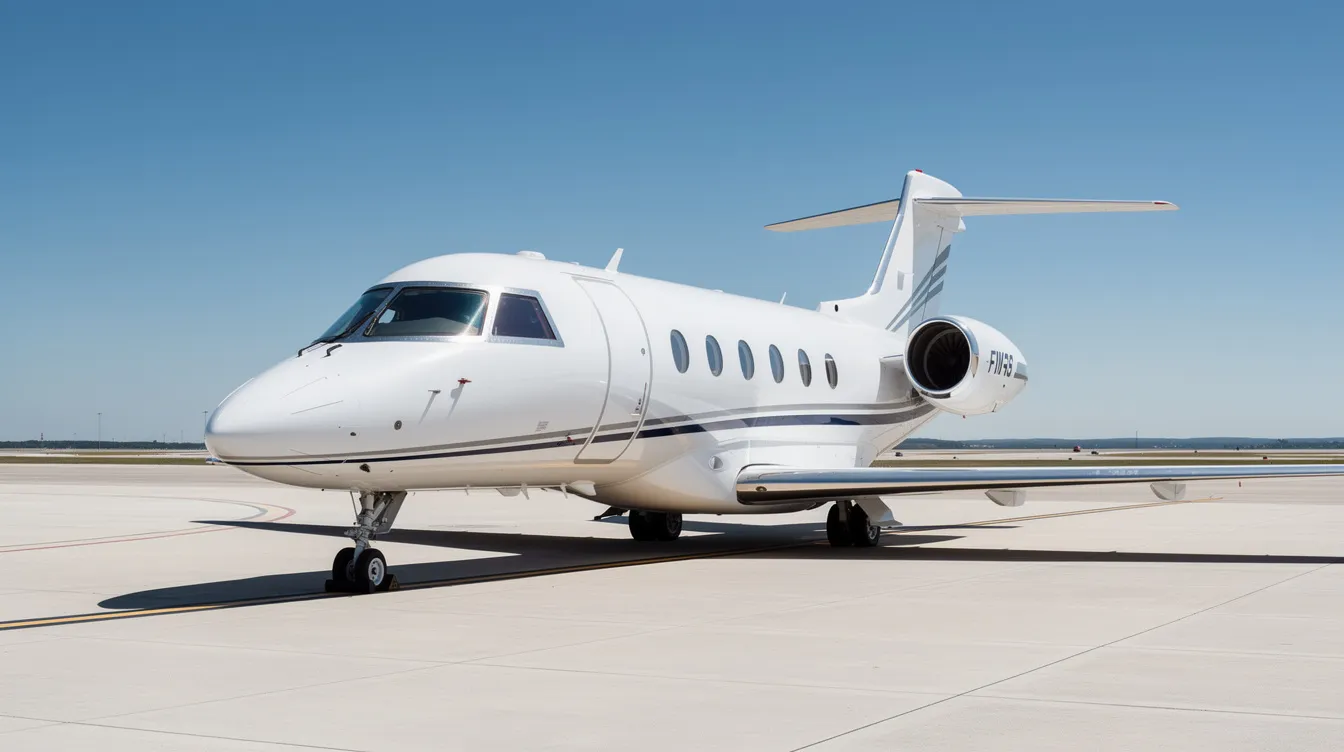
Think flying private means spending $10,000 or more per flight? For decades, that was the reality. But the way people access private aircraft has changed — and you don't need to own a jet or pay charter rates by the hour to experience it.
This guide breaks down how private aviation actually works, what aircraft types are available, and how empty-leg flights let you fly the same jets for a fraction of traditional costs.
Key Takeaways
Private aviation covers everything from very light jets to ultra-long-range aircraft — and the majority of these are available not just to owners, but through charter and membership models.
Traditional private jet charter costs between $4,000 and $15,000+ per flight hour in 2025–2026, depending on aircraft size and route.
Empty-leg flights — jets repositioning without passengers — offer the same cabin, crew, and aircraft at dramatically lower effective costs. Travelers can save up to 75% on empty-leg flights compared to standard charter pricing.
Hoppyn's membership model gives you access to these empty-leg private flights for a flat $997/year with no per-flight cost once confirmed.
You'll learn the difference between full private jet charter, jet cards, fractional ownership, and empty-leg membership — and when each makes sense.
What Counts as a Private Aircraft Today?
Private aircraft refer to any non-commercial aircraft used for private or corporate travel. Unlike commercial airliners that operate fixed routes on rigid schedules, private jets serve the people who book them - on their terms.
Here's how the fleet breaks down by size and range:
Very light jets (e.g., HondaJet): typically seat 4 to 6 passengers, built for short hops between regional destinations.
Light jets (e.g., Embraer Phenom 300E): ideal for short to medium-range flights, seating up to 8.
Midsize jets (e.g., Cessna Citation Latitude): can accommodate 6 to 8 passengers comfortably with more cabin room and range.
Super midsize jets (e.g., Gulfstream G280): offer more space and range than midsize jets, suited for cross-country or transatlantic routes.
Heavy jets (e.g., Bombardier Challenger 650): designed for long-range travel with larger capacities and full-size cabins.
Ultra-long-range
Ultra-long-range jets (e.g., Bombardier Global 7500, Gulfstream G700): can fly over 7,000 nautical miles non-stop and reach speeds up to Mach 0.925. The Bombardier Global 8000 boasts an impressive range of 14,800 km, making it ideal for the longest routes.
The Gulfstream G700 and Bombardier Global 7500/8000 are among the fastest private jets, reaching speeds close to Mach 0.925.
Very Light Jets (e.g., HondaJet): typically seat 4 to 6 passengers and are perfect for quick regional hops.
Light Jets (e.g., Embraer Phenom 300, the world’s best-selling private jet): ideal for short to medium-range flights with seating up to 8 passengers.
Midsize Jets (e.g., Cessna Citation Latitude): accommodate 6 to 8 passengers comfortably, offering a balance of cabin space and range.
Super Midsize Jets (e.g., Gulfstream G280): provide more space and range than midsize jets, suitable for cross-country or transatlantic flights.
Heavy Jets (e.g., Bombardier Challenger 650): designed for long-range travel with larger passenger capacities and full-size cabins.
Cessna's Citation range covers from Very Light Jet to Super Midsize, offering versatile options for different trip lengths and passenger counts.
Dassault Aviation, founded in 1929, specializes in business jets and is a historic leader in private aviation.
Airbus Corporate Jets entered the private aviation market in 1997, providing widebody aircraft options for corporate and government clients.
Empty leg flights are discounted private jet flights that occur when a jet returns empty after completing a charter. These repositioning flights offer travelers access to luxury travel at significantly lower costs, with savings of up to 75% compared to traditional charter pricing.
Empty leg flights are often available on short notice, providing flexibility and affordability.
Private flights allow for same-day returns and direct routing without overnight stays, offering unmatched scheduling flexibility compared to commercial flights.
Private aircraft provide enhanced privacy with cabins designed for meetings and personal space.
Travelers can arrive at private terminals just 10 to 20 minutes before departure, bypassing long security lines and congested commercial terminals.
Private jets can land at over 5,000 airports in the U.S., reaching destinations that commercial airlines do not serve.
Private aircraft generally have more flexible luggage allowances and can accommodate pets in the cabin, unlike commercial flights.
Platforms like Jettly offer access to over 20,000 aircraft worldwide, making booking private jets more accessible and sometimes more cost-effective than commercial flights.
Private jet charters provide superior flexibility in scheduling and routing.
Empty leg flights offer significant savings on private travel, making private aviation more affordable.
Travel memberships provide access to these private jet flights, allowing members to browse and join waitlists for flights, while charter operators use dedicated resources to connect their fleets and publish empty legs efficiently.
Annual membership fees typically hover around $997, often including 24/7 customer support.
Members enjoy unlimited free flights once confirmed, making private jet travel more accessible and transparent.
Private aircraft encompass any non-commercial aircraft used for private or corporate travel.
Overall, private aviation offers enhanced privacy, productivity, and comfort compared to commercial airlines, transforming how travelers experience air travel. Jets (e.g., Bombardier Global 7500, Gulfstream G700) can fly over 7,000 nautical miles non-stop. The Gulfstream G700 and Bombardier Global 7500/8000 reach speeds of Mach 0.925, and the Bombardier Global 8000 has a range of 14,800 km.
Turboprop aircraft (e.g., Pilatus PC-12): slower but cost-effective for shorter distances, capable of landing on a shorter landing strip.
Cessna's Citation range covers very light jet to super midsize categories. Dassault Aviation, founded in 1929, has specialized in business jets for nearly a century. Airbus Corporate Jets entered business aviation in 1997, adding widebody options for corporate and government clients.
Many of these same aircraft used by ultra-high-net-worth owners are also available for private jet charter and empty-leg flights.
How Private Aviation Works Behind the Scenes
Most private flights are operated by certified charter companies under FAA Part 135 in the United States, or equivalent EASA rules in Europe. These regulations govern crew training, aircraft management, maintenance cycles, and safety standards.
Here's who's involved behind every flight:
Aircraft owner: The individual or company that owns the jet. Many put their aircraft into a managed fleet to generate revenue when they're not using it.
Management company: Operates the aircraft day-to-day—hiring pilots, scheduling maintenance, handling ground handling logistics.
Charter broker or platform: Matches available aircraft with travelers. This is where platforms like Hoppyn, providing access to empty-leg flights, come in.
Traveler: Books either a full private charter or an empty-leg seat through the broker or platform.
Schedules are built around client demand. When a charter client books a one-way trip - say, New York to Miami, Florida — the jet often needs to reposition empty to its next job or home base. These repositioning flights create empty legs between cities across North America, Europe, Latin America, Canada, the Middle East, and beyond.
Private jets use FBOs (fixed-base operators) and private terminals, allowing fast check-in and departures without the congestion of commercial airports. Safety is regulated through mandatory maintenance cycles and crew rest limits, and reputable operators often hold third-party safety ratings like ARGUS, Wyvern, or IS-BAO.
Private Jet Charter vs. Membership vs. Ownership
In 2025–2026, there are three main ways to use a private aircraft: own one, charter one, or join a membership that gives you access to flights others have already paid for.
Aircraft ownership: Buy a jet outright — a pre-owned Citation XLS+ runs several million USD. Annual fixed costs for crew, hangar, insurance, and maintenance often exceed $500,000 to over $1 million. This makes sense only if you fly hundreds of hours per year.
Traditional private jet charter: Pay hourly for each flight. Light jet private charter runs $4,000–$7,000 per hour. Super midsize jets cost $8,000–$12,000 per hour. Ultra-long-range aircraft can exceed $15,000+ per hour on routes like New York–London. Private jet charters provide flexibility in scheduling and routes, but the cost adds up fast.
Jet cards and fractional ownership: Pre-purchase blocks of 25–50 flight hours on specific aircraft types, or buy a fractional share. Buy-in commitments typically start at six figures. These programs work for consistent travelers who want guaranteed availability but can stomach the upfront commitment.
Membership and empty-leg access: Pay a flat annual fee and fly when empty-leg flights match your plans. No hourly rate, no per-leg invoice. You adapt to available routes and timing instead of dictating them. Hoppyn is the standout example — learn how the model works.
Commercial flights operate on strict, fixed timetables that passengers must adhere to. Private aviation gives you control. The question is which model fits your budget and travel culture.
What Is an Empty-Leg Private Jet Flight?
An empty-leg flight — also called a ferry flight or deadhead — happens when a private jet flies without passengers to reposition for its next paying private charter client or to return to base. Empty-leg flights are discounted private jet flights that exist because the aircraft has to move regardless.
Here's a concrete example: a Gulfstream G650 is chartered London–Dubai on 15 March. The jet may need to fly empty from Geneva to London before the trip, and then Dubai to Riyadh afterward. Both segments are empty legs — and both can carry passengers if someone claims them.
They occur when a jet returns empty after a charter, and the operator needs to cover the repositioning cost. For decades, these flights were shared quietly by brokers through last-minute emails or phone calls. Today, tech platforms publish them on live boards for members to search and book.
Empty leg flights are often available on short notice. They provide access to luxury travel at lower costs, and they give you access to larger, more capable aircraft than you might normally charter — because the aircraft type is determined by the original client's booking, not yours. Dedicated empty leg flight memberships can unlock these repositioning segments for a flat annual fee.
How Hoppyn Uses Empty Legs to Make Private Jets Accessible
Hoppyn is a subscription-based travel club built around private jet empty-leg flights - not traditional per-hour private charter. Travel memberships provide access to private jet flights that would otherwise fly empty, with the main benefits centered on flexibility, transparent pricing, and lower-cost access.
Here's the model: members pay $997/year (as of 2026) for a transparent annual membership, and those benefits show up in practical ways — no additional flight cost on available empty-leg bookings, flexible browsing and waitlists, and no hidden surcharges. Members enjoy unlimited free flights once confirmed. Annual membership fees can be around $997 — flat, with no hidden surcharges.
Key features include:
Global access to private aircraft via partner operators across North America, Europe, the Middle East, and more
New empty-leg private jets and routes added daily to the flight board
Ability to browse, join waitlists, and confirm when operators approve the leg
Travel memberships often include 24/7 customer support — Hoppyn's dedicated team helps with aircraft type questions, cabin details, and logistics
The difference from standard private jet charter or jet cards: there is no hourly rate, no per-leg charter invoice, and no multi-year contract. The primary trade-off is flexibility - you adapt to available routes and timing. If you're interested in exploring this model, the personalized service and support team make it straightforward to get started.
Types of Private Aircraft You Can Fly on Through Hoppyn
Hoppyn does not own aircraft. It connects you to a wide range of certified operators and aircraft types used across the general aviation and business aviation industry.
Here's what you might see on the empty-leg flight board:
Light jets like the Embraer Phenom 300E (the world's best-selling private jet) or Cessna Citation CJ3+ for regional trips — Dallas–Aspen, London–Geneva.
Midsize jets such as Cessna Citation XLS Gen2 for cross-country flights - Miami–Chicago, Toronto–Vancouver.
Super midsize/large cabin aircraft like Gulfstream G280 or Bombardier Challenger 3500 for longer routes - New York–Los Angeles, Paris–Dubai.
Ultra-long-range on select legs, such as Bombardier Global 7500 or Gulfstream G700 repositioning between major hubs.
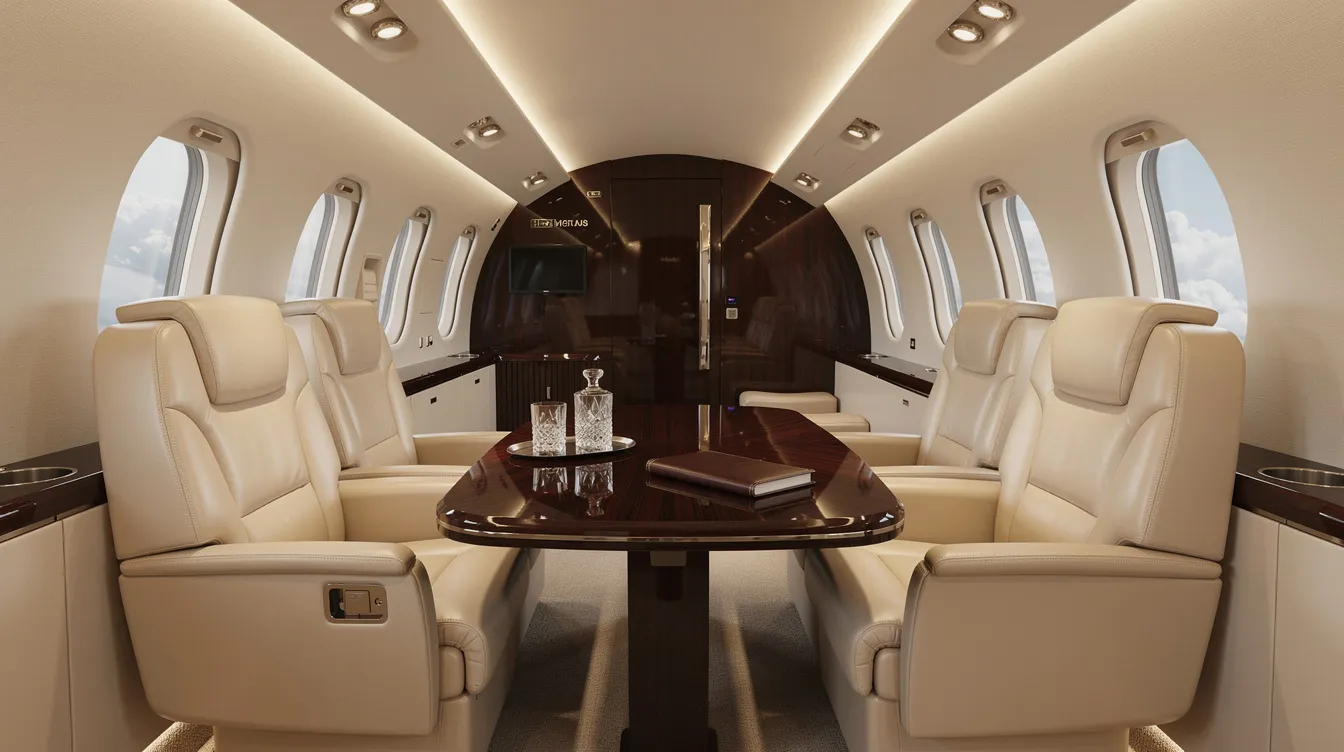
Cabins are typically equipped with leather seating, work tables, Wi-Fi on many aircraft, and state-of-the-art amenities. You'll depart from private terminals with fast check-in - the same experience as a full private charter.
Specific aircraft availability changes daily. One day you might see a heavy jet on a cross-Atlantic leg; the next, a light jet hopping between cities in Europe. That's the nature of empty-leg flying.
Comparing Private Jet Charter Prices to Empty-Leg Membership
Traditional private jet charter is priced per flight hour. Empty-leg access through Hoppyn reshapes the cost structure entirely.
Charter benchmarks (2025–2026):
Light jet private charter (e.g., Phenom 300E): $4,000–$7,000 per flight hour in the US or Europe
Super midsize jet (e.g., Challenger 3500): $8,000–$12,000 per hour
Ultra long-range (e.g., Global 7500): exceeds $15,000+ per hour on long-haul routes like New York–London
Real-world comparison: A typical New York (Teterboro) – Miami private jet trip on a light jet might cost $20,000–$25,000 as a one-way private charter in high season. The same route may appear as an empty-leg repositioning flight on Hoppyn's board; a member pays no per-flight cost beyond the already-paid $997 annual fee.
Effective cost per flight: If a member takes 6–10 empty-leg flights in a year, their effective cost per private jet trip drops to under $170 per flight. Booking private jets through empty legs can be more cost-effective than even some commercial first-class tickets. Empty leg flights can offer significant savings on private travel — aviation experts estimate discounts of 30–75% relative to standard charter.
The trade-off is real: empty-leg availability isn't guaranteed for specific dates or routes. Traditional private charter still wins when reliability on an exact schedule is non-negotiable.

How to Use Hoppyn to Book Private Aircraft Empty Legs
The process is simple: join, browse, waitlist, confirm, fly. Members can browse and join waitlists for flights through a straightforward process.
Join the membership: Sign up online, pay the flat annual fee securely, and create your profile with name, contact info, and basic travel preferences.
Browse flights: Log in to see a live list of empty-leg private jets worldwide. Filter by departure region (Europe, North America, Middle East, and beyond), date range, and number of passengers.
Join a waitlist: When you spot a flight - for example, Los Angeles–Las Vegas on a Citation Latitude this Friday — tap to join the waitlist. Multiple members can join the same leg.
Confirmation: Once the operator confirms the empty leg can carry members, Hoppyn notifies you. Your seat is secured at no extra flight cost.
Pre-flight and day-of travel: You receive the exact FBO address, recommended arrival time (usually 20–30 minutes before departure), baggage guidance, and ID requirements.
It's that direct. No haggling over hourly rates, no back-and-forth with brokers. You search, you waitlist, you fly.
When a Traditional Private Charter Still Makes Sense
Empty-leg membership is a powerful tool - but it's not a total replacement for every private air travel need.
You may still choose a full private charter for:
Non-flexible business trips with critical meeting times where you can't afford schedule uncertainty
Complex multi-stop itineraries - London–Munich–Rome in a single day, for example
Destinations with very limited private jet traffic or seasonal demand, where empty legs simply won't appear in advance
Many Hoppyn members still occasionally charter when they need to control every detail of their journey. The smart approach is blended: use membership for opportunistic, cost-effective routes and on-demand private charter for mission-critical flights where convenience and reliability outweigh cost.
Think of it this way: empty legs handle the majority of your private travel, and charter fills the gaps.
How Private Aircraft Improve the Travel Experience
Beyond cost, the main reason travelers look at private aviation — whether via charter or Hoppyn membership — is the practical benefits: time savings, comfort, privacy, and the ability to stay productive in transit. Private aviation provides enhanced privacy, productivity, and comfort compared to commercial airlines.
Here's what changes when you fly private:
Travelers can arrive at private terminals just 10 to 20 minutes before departure — not 90+ minutes at a commercial hub
Private aircraft typically bypass long security lines and congested terminals
Private cabins offer privacy for meetings and personal space - your cabin becomes your office in the sky
Private aircraft have more flexible luggage allowances compared to commercial flights
Private aircraft can accommodate pets in the cabin, unlike most commercial flights - great for family trips
Private jets can land at over 5,000 airports in the U.S., reaching destinations commercial airliners simply don't serve, and city-based empty leg hubs make it easy to grab spontaneous one-way deals from your home airport
Private flights allow for same-day returns and direct routing without overnight stays
Private jet charters can reduce travel time significantly on routes where commercial connections add hours
Picture a Tuesday morning: you leave your home, arrive at a private terminal, board a light jet, and land in Boston 45 minutes later — door-to-door in under two hours. Try that on a commercial flight with check-in, security, boarding, and taxi time. The convenience is hard to overstate.
Hoppyn members enjoy this same experience. The aircraft, the terminals, the ground handling - it's identical to what a full-charter client gets, because it's the same jet on the same route.
Is Private Aircraft Travel Sustainable and Safe?
Private aviation raises fair questions about safety standards and environmental impact. Here's where things stand in 2026.
Safety:
Private jets operating under charter rules follow strict maintenance and crew training regulations enforced by the FAA, EASA, or local civil aviation authorities. Safety oversight covers everything from engine cycles to crew rest limits.
Reputable operators hold third-party safety ratings (ARGUS, IS-BAO, Wyvern), and Hoppyn works only with properly certified partners.
The history of modern private aviation shows that safety standards in the industry often meet or exceed those of commercial airlines.
Sustainability:
Per-passenger emissions on private jets are typically higher than on commercial airlines — that's a fact worth acknowledging honestly.
Operators are taking concrete steps: adoption of Sustainable Aviation Fuel (SAF) blends, carbon offset programs, and newer fuel-efficient models like the Embraer Praetor 500 or Gulfstream G500.
Empty-leg utilization inherently reduces waste by putting passengers on flights that would otherwise travel empty, improving seat-mile efficiency. Every filled empty leg is one fewer pointless emission.
This isn't greenwashing. It's about better utilization and forward progress. The industry has led meaningful investments in cleaner technology, and platforms that fill otherwise wasted flights are part of that shift.
Frequently Asked Questions
Do I get to choose the exact private jet model when I book an empty leg?
Empty legs are tied to specific aircraft already scheduled for another private charter. The aircraft type — say, a Phenom 300E, Citation XLS Gen2, or Challenger 3500 — is usually fixed. The flight listing on Hoppyn shows the aircraft category and often the exact model, so you know what cabin and range to expect before joining a waitlist. If the operator changes aircraft for operational reasons, members are informed, and the replacement is typically of similar or higher category.
Can I bring friends or colleagues on a private aircraft empty-leg flight?
In most cases, Hoppyn members can bring additional passengers up to the aircraft's available seat count, as long as everyone is registered and meets ID and security requirements. Some legs may have seat limits, clearly shown on the listing. Splitting the membership's effective cost across multiple trips and travelers makes flying private even more economical per person — bring your family, colleagues, or travel partners along.
How far in advance are private jet empty-leg flights typically posted?
Many empty legs appear on the board a few days to a couple of weeks before departure. Last-minute posts within 24–48 hours are common when charter bookings shift. Check the platform frequently or enable notifications for your preferred regions — US East Coast, Western Europe, the Middle East — to catch high-value routes. Explore what's available regularly, since the art of empty-leg flying rewards those who stay attentive.
What happens if the charter client cancels and the empty leg disappears?
If the primary private charter is canceled or rescheduled, the associated empty leg may change or be removed. In that case, Hoppyn members pay no per-flight fee, so there's nothing to refund. You're notified promptly so you can adjust plans or watch for alternative legs. This is one reason empty-leg flying works best for travelers who keep some flexibility - it makes sense to have a backup plan for time-sensitive trips.
Can I use Hoppyn instead of a traditional private jet charter for all my business trips?
Many members significantly reduce their annual private aviation spend by using empty legs for a large share of their trips. But when you need a guaranteed aircraft at an exact time and destination, standard private charter is still the right call. The recommended strategy: use Hoppyn's empty-leg access for flexible trips - long weekends, repositioning routes you can plan around — and fall back on charter when timing is non-negotiable. Understanding where each option fits is the whole point.
Conclusion
Private aircraft travel no longer has to mean sky-high charter prices or ownership headaches. Thanks to innovations like empty-leg flights and membership platforms such as Hoppyn, flying private is now accessible, flexible, and affordable. By tapping into repositioning flights that would otherwise fly empty, you get the same premium jets, crew, and service at a fraction of traditional costs.
Whether you’re a seasoned private flyer or exploring private aviation for the first time, Hoppyn’s transparent flat annual membership offers a smart alternative to hourly charter or fractional ownership. You gain global access to a wide range of aircraft, daily updated flight options, and dedicated support — all without hidden fees or per-flight charges.
Private aviation is about control, convenience, and comfort. With empty-leg memberships, you can enjoy these benefits while saving thousands per trip. Ready to fly private for less? Join Hoppyn today and unlock the door to affordable private jet travel.




Unlock Your Private
Jet Experience
Join our exclusive membership for
free flights today!

Explore More
Blogs


Join Our Exclusive
Newsletter
.png)






