
Private Airplanes Cost: From Ownership Bills to Empty-Leg Deals


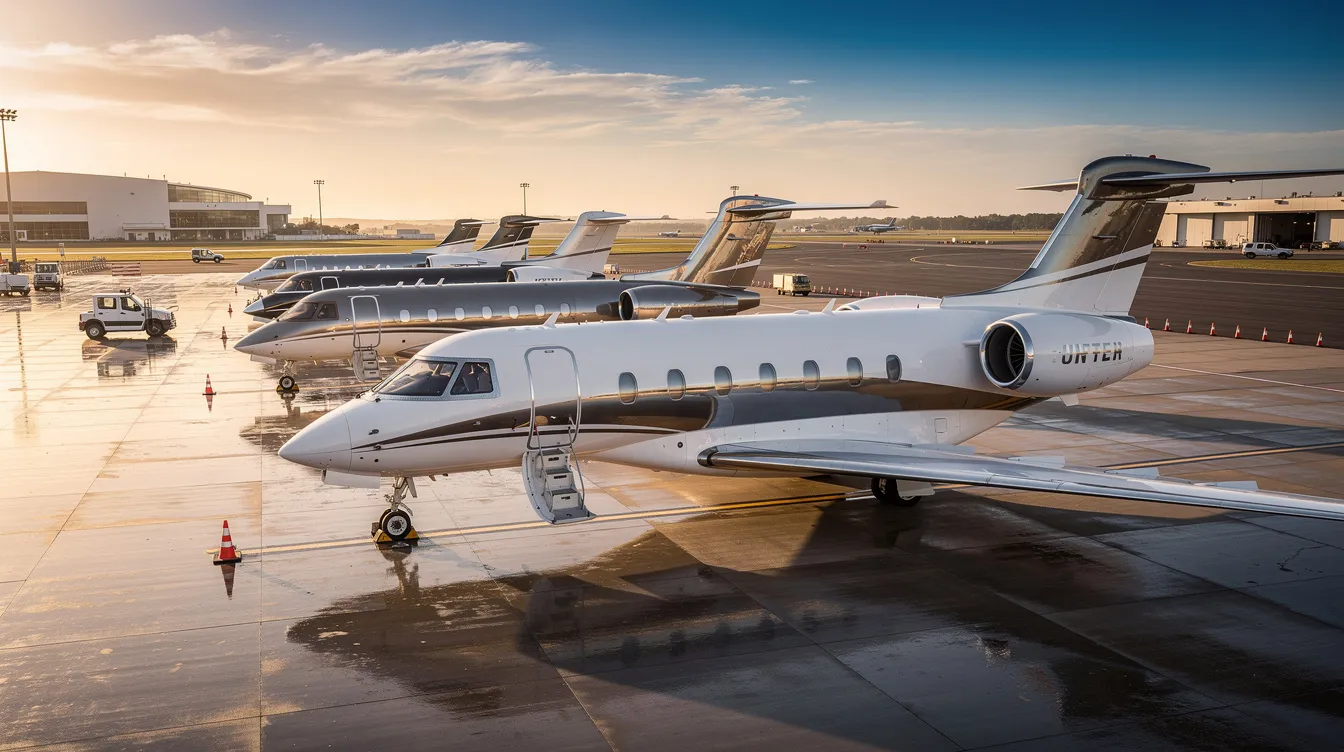
Think flying private means spending $50 million on an aircraft? Not anymore. Whether you want to buy, charter, or catch a repositioning flight, the real cost of private aviation depends on how you access it.
This guide is for anyone considering private aviation—whether you're a business traveler, a prospective jet owner, or simply curious about the real costs of flying private.
Understanding the full range of costs helps you make smarter decisions about whether to buy, charter, or use alternative access models.
Key Takeaways
Private jet ownership costs range from $2 million to $100 million for the aircraft alone, but you don't have to buy a plane to fly on one. Charter, jet cards, and empty-leg memberships give you access to the same aircraft without the capital commitment.
In 2026, chartering a private jet costs between $2,300 and $17,000 per flight hour depending on aircraft category. Meanwhile, annual fixed costs for private jet owners often run $500,000 to $2 million or more — regardless of how much the aircraft flies. That's a bill that shows up whether you're in the air 300 hours a year or zero.
Light jets sit at the lower end of both purchase price and operating costs, making them the entry-level business jets for owners and the most affordable charter option for travelers. On the opposite end, large and ultra-long-range jets carry the highest acquisition and running costs, with new flagships regularly exceeding $70 million.
Here's where it gets interesting: empty-leg flights — repositioning flights that would otherwise fly without passengers - can offer discounts of up to 75% off standard charter rates. Through a membership like Hoppyn's flat $997/year plan, you can access these flights globally with no per-flight cost once confirmed.
The rest of this article breaks down purchase price by jet category, operating costs (fixed and variable), private jet rental prices, and how strategies like empty-leg memberships can cut your cost per flight hour to a fraction of standard charter pricing.

How Much Does It Cost to Fly on a Private Airplane Today?
In 2026, chartering a private jet typically costs $2,300 to $17,000 per flight hour. VIP airliners cost between $18,000 and $23,000 per hour. These rates cover the entire aircraft, not a single seat - so you're paying for the whole plane regardless of passenger count.
Charter Cost Per Hour by Aircraft Category
Aircraft Type | Charter Cost Per Hour |
|---|---|
Turboprops | $2,300–$3,500 |
Very light jets | $2,750–$3,500 |
Light jets | $3,750–$4,600 |
Midsize jets | $4,700–$7,500 |
Super midsize jet | $5,500–$8,500 |
Large jets | $8,500–$17,000 |
Ultra long-range jets | Up to $17,000 |
VIP airliners | $18,000–$23,000 |
One thing most first-time flyers don't realize: one-way trips can approach round-trip pricing. That's because the aircraft often has to reposition (fly back empty) to its home base or next charter. Unless you catch an empty-leg flight, you're effectively paying for that deadhead segment too.
Key Points About Charter Pricing
Charter rates are for the entire aircraft, not per seat.
One-way trips can cost nearly as much as round-trips due to repositioning (deadhead) flights.
Empty leg flights can offer significant discounts—up to 75% off standard rates.
Chartering is ideal for those who want private access without the commitment of ownership.
Full ownership involves a large upfront purchase price plus ongoing fixed and variable operating costs that quickly dwarf what occasional charter spending looks like.
For example, a New York–Miami round trip on a light jet (roughly 2.2 hours each way) runs approximately $20,000–$25,000 one-way in 2026, or $40,000–$50,000 round trip.
Private Jet Price Ranges by Jet Category
The jet category you choose - very light, light, midsize, super midsize, large, or ultra long range - drives both the purchase price and every operating cost that follows.
Here are 2026 price bands for new versus pre-owned jets:
Very light jets: ~$2M–$5M new, $1M–$3M used
Light jets (e.g., Cessna Citation CJ series, Phenom 300): ~$3.5M–$9M new, $2M–$6M used
Midsize / super midsize: ~$5M–$30M new, varying widely used
Large cabin / ultra long range: ~$25M–$75M new; flagships like the Gulfstream G700 reach $70M–$90M+ before options
VIP airliners (converted commercial aircraft): $100M+ when new
Pre-owned jets can sell for 20–50% less than their new equivalents. But the original aircraft price isn't the whole story. Used aircraft may need avionics upgrades, interior refreshes, and engine program enrollment — all of which affect total ownership cost. Aircraft age and maintenance history heavily influence what a pre-owned jet actually costs to operate after purchase.
Passenger capacity and range are the core levers behind these price bands. Very light jets carry 4–6 passengers and fly roughly 1,000–1,500 nautical miles. Large cabin jets seat 12–19 and fly 6,000–8,000+ nautical miles nonstop. Buyers need to match their mission profile - typical trip length, destinations, and passenger count — with their acquisition budget to avoid overspending on capability they won't use.
Very Light and Light Jets: The Lower-Cost End of the Spectrum
Very light jets and light jets are the most common entry point to private jet ownership and the most accessible charter options on the market. If you're exploring private aviation for the first time, this is likely your starting category.
Typical specs:
Passengers: 4–8
Range: 1,000–2,000 nautical miles
Key advantage: able to access smaller airports with shorter runways, cutting ground transportation time significantly
Purchase prices in 2026: VLJs run about $2M–$5M new and $1M–$3M used. Light jets sit at roughly $3.5M–$9M new and $2M–$6M used. A Cirrus Vision Jet (VLJ) goes for around $3.2M–$3.6M new, while a used Phenom 300 light jet sits around $6M–$9M.
Operating costs per flight hour stay relatively manageable at this end: roughly $1,000–$1,500 in variable costs (fuel, routine maintenance, landing fees). That translates into retail charter pricing of about $3,750–$4,600 per hour for light jets.
Lower fuel burn and simpler systems keep annual maintenance costs and ownership costs down compared with midsize and ultra-long-range jets. The trade-off: cabin space is tighter, and range is limited. You won't fly nonstop coast-to-coast in most light jets, and forget about international flights over oceans without stops.
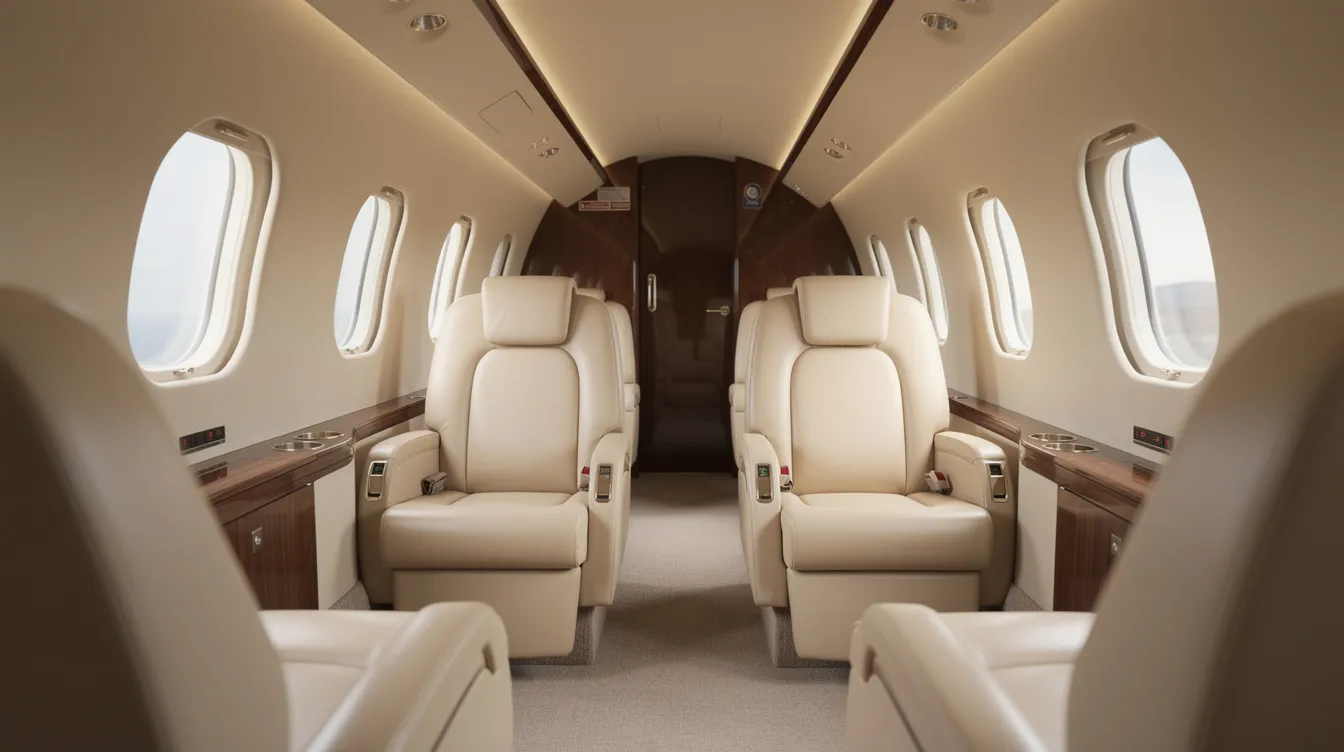
Midsize and Super-Midsize Jets: Cost vs Comfort Balance
Midsize and super midsize jets hit the sweet spot for travelers who need full stand-up cabins and longer range without ultra-long-range pricing. These are the aircraft that make coast-to-coast domestic flights and trans-European legs genuinely comfortable.
Key specs:
Passengers: 8–10
Range: 2,000–4,000 nautical miles
Features: stand-up cabins, improved fuel efficiency over older jets, onboard connectivity, sometimes lie-flat berths
Purchase prices in 2026 range between $5M and $30M depending on model and aircraft age. New super midsize jets like the Embraer Praetor 600 typically price around $21M–$25M. Pre-owned midsize jets can be had for several million dollars less, but inspection cycle and engine program status matter enormously.
Variable operating costs per flight hour for this class run approximately $2,500–$4,000+. Charter pricing typically falls in the $4,700–$7,500 per hour band for midsize jets, and $5,500–$8,500 for super midsize.
These larger aircraft demand higher crew costs — often two full-time pilots plus additional training. More advanced avionics, better connectivity systems, and higher private jet insurance premiums all feed into elevated ownership costs. But if you're flying 150+ hours a year across distances that would require fuel stops in a light jet, the midsize category can be the most cost-efficient option relative to comfort and productivity.
Large Cabin and Ultra Long Range Jets: Top-Tier Costs
Large cabin and ultra long range jets are built for nonstop intercontinental travel with 12–19 passengers in spacious, full stand-up cabins. Think New York to Dubai, Los Angeles to Tokyo, London to Singapore — without a fuel stop.
Purchase prices in 2026:
New large cabin jets: generally $25M–$75M
Ultra long range flagships (Gulfstream G700, Bombardier Global 7500, Dassault Falcon 10X): $70M–$100M+ configured
VIP airliners: $100M+
Variable costs can reach $5,000 per flight hour for larger jets, and charter rates sit in the $8,500–$17,000 per hour band. Ultra-long-range aircraft push toward $17,000 per hour. Annual ongoing costs can exceed $2 million for larger jets, covering crew salaries, private jet insurance, hangar fees, management, and training for what's often a team of three or more pilots plus cabin attendants.
Consider a concrete example: a large cabin jet flying Los Angeles to Tokyo nonstop (roughly 5,500–6,000 nautical miles) burns significant fuel, incurs overflight permits across multiple countries, and requires crew rest compliance - easily producing a one-way charter bill in the six figures. That's why these aircraft are practical mostly for corporations, governments, or ultra-high-net-worth private jet owners who fly hundreds of annual flight hours on long-haul flights.

Typical Ownership Costs: Fixed vs Variable
Aircraft ownership costs are split into acquisition, fixed annual costs, and variable operating costs. Understanding fixed and variable costs is essential for budgeting effective aircraft ownership expenses. Fixed annual costs occur whether the aircraft flies or not and include insurance, hangar fees, and maintenance. Variable operating costs scale directly with flight hours and include fuel, maintenance, and landing fees.
Fixed Costs (They Hit Whether You Fly or Not)
Hangar fees: $30,000–$300,000+ per year depending on location
Private jet insurance: $15,000–$100,000+ annually
Crew salaries and benefits: $150,000–$500,000+ per pilot
Management and dispatch fees: $3,000–$10,000+ per month
Training and recurrent certification: $20,000–$50,000+ per pilot
Subscriptions, regulatory fees, and data services
Total fixed costs for ownership typically range from $500,000 to $2 million depending on jet category.
Variable Costs (Scale with Every Hour in the Air)
Fuel
Maintenance
Landing fees
Handling charges
Navigation and overflight fees
De-icing
Catering
Fuel costs can constitute a large portion of variable operating expenses, especially for jets burning hundreds of gallons per hour. Fuel prices fluctuate regionally and seasonally, adding unpredictability.
For light jets, variable costs run roughly $1,000–$1,500 per flight hour. For large cabin jets, they can exceed $5,000 per hour.
Hidden Cost Drivers
Owning a private airplane involves significant ongoing financial commitments beyond the initial purchase price. Annual inspections are mandatory for maintaining airworthiness and can incur high costs. Engine maintenance reserves and scheduled overhauls — often $1M–$2M per engine on big jets - are a major hidden component that many buyers underestimate. Routine maintenance and unexpected repairs are ongoing considerations. Unplanned maintenance events can spike costs in any given year.
Depreciation reduces the aircraft's value over time, often a high hidden cost for owners. Total annual ownership expenses generally run 15% to 25% of the aircraft's hull value — meaning a $10M jet might cost $1.5M–$2.5M per year just to keep and fly.
Higher annual utilization (more flight hours) spreads fixed costs across more trips. A light jet with $700,000 in fixed costs flown 200 hours adds $3,500 per hour on top of variable costs. Flown only 50 hours? That's $14,000 per hour just in fixed cost allocation. The math gets painful fast.
How Many Private Jets Do People Actually Need?
Most individuals or small businesses that own a private aircraft operate one primary jet. The total ownership cost of a single aircraft is high enough that maintaining two becomes a serious financial decision.
Large corporations might keep 2–5 aircraft to cover different missions - a super light jet for short regional hops and a large cabin jet for international flights. But this is relatively rare outside Fortune 500 flight departments.
Many private jet owners supplement their primary aircraft with on-demand charter or jet cards when they need extra capacity, a different range profile, or when their same aircraft is in maintenance. Each additional private jet dramatically multiplies fixed and variable operating costs, so careful mission analysis is critical before adding fleet size.
For frequent travelers who don't want any ownership burden, chartering a private jet or catching empty legs removes the question entirely. You don't need to own how many private jets — you just need access to the right one at the right time.
Private Jet Rental Costs: What You Pay Per Flight Hour
Private jet rental - also called chartering a private jet — is priced per aircraft, per hour. You're renting the entire aircraft, not a single seat. That means filling more seats lowers the effective per-person price, especially on light jets where 4–6 passengers can split the cost.
Here are typical 2026 private jet rental costs by category:
Category | Cost Per Hour |
|---|---|
Turboprops | $2,300–$3,500 |
Very light jets | $2,750–$3,500 |
Light jets | $3,750–$4,600 |
Midsize jets | $4,700–$7,500 |
Super midsize | $5,500–$8,500 |
Large jets | $8,500–$17,000 |
Ultra long range | Up to $17,000 |
VIP airliners | $18,000–$23,000 |
Private jet rental costs range from $2,300 to $23,000 per hour across the full spectrum. Turboprop rentals start at $2,300 per hour. Aircraft category significantly influences rental pricing — the gap between a turboprop and a VIP airliner is roughly 10x.
These rates usually include the aircraft, crew, fuel, and insurance. They typically exclude certain taxes, airport fees, catering, and surcharges that get added on top. Also worth knowing: charter companies often bill a "billable flight hour" that includes taxi time, and many impose minimum daily flight hour requirements of 2–3 hours. Even if your flight is 45 minutes, you might be billed for two hours.
What Determines the Cost of Chartering a Private Airplane?
Private jet charter costs vary widely because multiple operational and market factors influence the total trip price. A simple "hours × rate" calculation rarely tells the full story.
Key cost drivers include:
Aircraft size and jet category: Larger aircraft cost more per hour
Distance and routing: Longer trips burn more fuel. Distance traveled affects the total cost of chartering. Overflight fees for international routes add up
Aircraft age and improved fuel efficiency: Newer jets burn less fuel per nautical mile
Local demand and seasonality: Peak corridors (NYC–Florida in winter, Aspen during ski season) push prices higher
Government taxes: A 7.5% US Federal Excise Tax applies to domestic flights. Domestic segment fees are $5.30 per passenger, per leg
Operational logistics can increase overall charter expenses. Positioning (ferry) flights, crew overnight stays, and de-icing during winter months all raise the final quote. If the same aircraft has to reposition from another city just to pick you up, that ferry leg gets factored into your price.
Safety and service standards also play a role. Top-rated operators with newer cabins, premium catering, and rigorous maintenance programs command higher private jet charter costs. Worth it? Usually yes, but always compare multiple quotes and ask exactly what's included before you commit.
Private Jet Purchase Price vs. Cost Per Flight Hour
Buying a private jet outright ties up millions in capital while also committing the owner to high annual fixed costs. The purchase price is just the opening act.
Here's the math that matters: a $5M light jet owner might spend $500K–$800K per year in combined fixed and variable expenses. If they fly 100 annual flight hours, their effective cost per flight hour is $5,000–$8,000 — before the cost of fuel. If they fly only 50 hours? Double that. Full ownership is economical for 200+ flight hours per year, and many analyses place the break-even point around 200–250 hours depending on jet category.
Compare that with private jet charter flights: paying $3,750–$4,600 per flight hour for a light jet with no long-term commitments, no residual value risk, and no surprise engine overhaul bills. For anyone flying under 150 hours annually, charter almost always wins financially.
And there's a third path. Membership models and empty leg flights can lower the effective cost per flight hour even further for travelers willing to flex on timing and routing. Which brings us to the alternatives.
Alternatives to Full Ownership: Charter, Jet Cards, and Memberships
You don't have to buy a jet to fly private. Most people who experience private aviation regularly use non-ownership options.
Here's a quick comparison of the main models:
On-demand charter: Pay per trip. No upfront commitment, but variable private jet pricing that can spike during peak demand. Good for infrequent flyers
Jet cards: Prepaid blocks of hours at fixed rates, typically with defined usage hours per year. You trade higher per-hour rates for pricing predictability and guaranteed availability. Think of it as a debit card for flight time
Fractional ownership: Fractional ownership allows sharing costs with 1/16th to 50% shares of a specific aircraft. You get a set number of hours per year and share the operating costs
Leasing: Leasing a private jet avoids high upfront costs and depreciation risks while giving you access to a specific aircraft
Membership programs: Membership programs offer subscription-based access to private jets, often with annual or monthly fees in exchange for special rates or charter access
All of these eliminate major ownership costs like hangar fees, long term maintenance costs, oversight, crew management, and residual value risk.
Empty-leg-focused memberships (like Hoppyn) sit in a distinct category: you pay a fixed annual fee instead of per-flight charter rates, and you access flights that would otherwise fly empty.
Empty Leg Flights: Cutting Private Airplane Cost with Repositioning Legs
An empty leg flight is a repositioning flight that a private jet has to fly without passengers between paid charter trips. These flights occur when jets return to base without passengers or need to reposition for their next booking. Operators discount them heavily because the alternative is flying the leg with zero revenue from the same aircraft.
Traditional charter brokers may offer empty legs at discounts of 50–75% off standard charter pricing. Empty leg flights can save up to 75% off standard rates, though 30–50% discounts are more typical when booking further out.
The limitations are real:
Fixed route and timing: You fly where and when the jet is going, not necessarily where you want
Schedule changes: The underlying charter can shift or cancel, which may affect your flight
Last-minute availability: Most empty legs appear 48–72 hours before departure, though some list 10–14 days out
Flexibility on dates is often required to consistently take advantage of these deals
Concrete example: a midsize jet repositioning Houston to Aspen that would normally cost ~$19,500 as a one-way charter might list as an empty leg at $8,500–$12,000. That's a meaningful savings on the direct cost.
Empty leg flights are available globally through various platforms. The challenge has always been finding them efficiently and matching them to your travel plans, while charter operators need tools and resources to list empty legs and optimize utilization. That's where structured membership platforms change the equation.
How Hoppyn Makes Private Flying Affordable: Membership Instead of Hourly Rates
Hoppyn flips the standard private aviation pricing model. Instead of paying thousands per flight hour every time you fly, you pay a flat $997/year membership that gives you access to empty leg flights with no per-flight cost once confirmed,d or to spontaneous discounted routes through options like the City Hub empty-leg flights. That's it. No hidden booking fees, no hourly surcharges.
Members can browse available flights on a live board showing global empty-leg private jets — including light jets, midsize jets, and even ultra-long-range aircraft. You join waitlists for flights that match your plans, and when you're confirmed, you fly.
The math speaks for itself. If you're paying $4,000+ per flight hour on standard private jet charter, and you fly even 3–4 empty legs per year through Hoppyn, your effective cost per flight hour drops to a fraction of what charter access costs. The membership fee stays the same whether you take 2 flights or 20 (subject to availability).
Compare this with private jet rental, where every single trip runs thousands: here, your annual cost is predictable and fixed. You get 24/7 support, transparent pricing, and the ability to explore private aviation without the massive ownership costs or long-term jet card contracts. Learn more about how it works.
Concrete Cost Comparisons: Charter vs. Ownership vs. Hoppyn Membership
Numbers tell the story better than theory. Here are two realistic scenarios.
Scenario 1: The Frequent Business Traveler
A consultant flies 6 round trips per year on short domestic routes—LA–Vegas, NYC–Miami, Dallas–Houston. Using light jet charters, total annual spend runs roughly $40,000–$60,000 across those trips.
With Hoppyn membership at $997/year, if they can adapt to available empty legs on similar routes (and these corridors are among the most active for repositioning flights), their total cost drops to under $1,000 per year. Even if only half those trips align with available empty legs, they're saving $20,000–$30,000 annually.
Scenario 2: The Small Business Considering Ownership
A company thinks about buying a $3.5M light jet. Annual ownership costs: $500,000–$700,000 including crew salaries, hangar fees, insurance, and variable costs. If the company flies 100 hours per year, that's $5,000–$7,000 per flight hour — well above charter pricing.
A better approach: use on-demand charter for time-critical meetings where they set their own schedule, and catch Hoppyn empty legs for flexible trips. Combined annual spend might land under $50,000 — a tenth of the ownership cost.
Ownership becomes efficient only above certain flight hour thresholds. For everyone else, a mix of charter and membership-based empty legs delivers better value per dollar spent.
Empty-leg-based flying won't replace every mission. When you need to depart at 6 AM sharp from a specific airport, charter or ownership might be the only answer. But for frequent flyers who can flex, it can dramatically slash average cost per private flight.
Factors Beyond Money: Time, Flexibility, and Airport Access
Private airplanes cost more than commercial tickets. That's obvious. What's less obvious is the value of what you get back.
Key non-monetary benefits:
Time savings: Skip long security lines, arrive 15 minutes before departure, and fly direct. No connections, no layovers
Airport access: Light jets and very light jets can access smaller airports with shorter runways — hundreds of secondary airports that scheduled airlines don't serve, cutting ground transportation time significantly
Schedule control: Depart on your own schedule, not the airline's. Cancel or adjust without rebooking penalties (in owned or chartered aircraft)
Privacy and productivity: Work, take calls, or rest without interruption. For executives, recovering 3–4 hours per trip translates directly into productivity and revenue
Hoppyn positions you to enjoy many of these benefits — private terminals, smaller airports, cabin space, no TSA lines — while keeping the direct out-of-pocket cost closer to a premium commercial travel budget than traditional private jet rental or ownership.
How Many Private Jets Are There, and What Does That Mean for Cost?
Global private aviation has grown steadily, with thousands of business jets in service worldwide spanning every aircraft category from very light jets to ultra-long-range aircraft. The United States alone accounts for the majority of the global fleet, with strong concentrations in Western Europe and the Middle East.
Higher fleet density means more competition among operators, which helps keep charter prices and operating costs more efficient than in regions with limited private aviation infrastructure. It also means more repositioning flights — and more empty legs available to travelers who know where to look.
As more private aircraft become connected to digital platforms, access to live empty-leg flights and transparent private jet pricing improves. Marketplaces and membership platforms tap into these under-utilized aircraft to unlock better prices.
You don't need to own a jet to benefit from this growing global fleet. You just need the right access model. Platforms like Hoppyn aggregate these opportunities so you can browse flights across a wide range of jet categories and routes.
Choosing the Right Jet Category for Your Mission and Budget
Picking the right jet category is central to balancing cost, comfort, and range. Oversizing — booking an ultra-long-range aircraft for a 45-minute hop—pushes per-flight costs up dramatically without meaningful added value.
Simple rules of thumb:
Light jets: Up to 4–7 passengers on 1–2 hour regional hops. Best value for short trips
Midsize / super midsize: 6–8 passengers across 3–5 hour flights. Good for coast-to-coast or European trips
Large cabin / ultra long range: 10–18 passengers or nonstop intercontinental trips. Only worth the cost for long-haul flights or larger groups
Consult with experts or membership support teams to match the right aircraft type to your typical trip profile. On empty-leg platforms, you'll often see a mix of jet categories available. Being flexible on size — accepting a midsize when you'd normally book a light jet — can open more low-cost opportunities and get you in the air faster.
The key takeaway: match the aircraft to the mission, not to your ego. A larger aircraft sitting half-empty on a short flight is just burning money.
Frequently Asked Questions
How much does it cost to buy a private airplane versus using empty leg flights?
Buying a private jet can require $2M–$100M+ upfront depending on category, plus $500K–$2M+ per year in operating costs. Using empty leg flights through a membership like Hoppyn typically means paying a flat $997/year with no per-flight cost once confirmed.
Ownership makes financial sense only at high annual flight hour usage — generally 200+ hours per year. Empty legs are ideal for flexible travelers who want access to private aircraft without capital outlay. They won't cover every itinerary (routes and timing depend on operator schedules), but they can meaningfully reduce your average travel spend if you adapt to available routes.
What's the cheapest way to experience flying on private jets at least a few times a year?
The lowest cash outlay per trip typically comes from either deeply discounted empty leg flights or an empty-leg membership model. Through Hoppyn, your annual cost is $997 regardless of how many flights you take.
Compare that with ad hoc charter, which costs thousands per flight hour even on light jets, or jet cards that require prepaying $50,000–$200,000+ for blocks of hours. If you can be flexible on exact departure times and sometimes on airports, membership-based empty leg access is the most affordable entry into flying private.
Do empty leg flights cover ultra-long-range routes or just short hops?
Empty legs exist across the full spectrum. You'll find short regional hops on light jets, cross-country midsize repositioning flights, and occasionally ultra-long-range legs on aircraft like Global 6000s or Gulfstreams.
Long-haul empty legs tend to be less frequent and more route-specific, but when they appear, they represent significant savings compared with standard charter rates for international flights. Hoppyn members can browse and join waitlists for both shorter and longer empty-leg flights globally as they appear on the platform.
How predictable are empty leg flights for regular business travel?
Empty legs are inherently opportunistic. They're driven by where and when paying charter clients fly, so routes and schedules can shift or be canceled. Cancellation rates for empty legs hover around 10–15%.
They work best as a supplement to a broader travel strategy — great for flexible trips, less suitable for immovable meetings where timing is critical. Hoppyn helps by letting you track new flights added daily and by offering 24/7 support, but some trips may still require traditional charter or commercial tickets for reliability.
How does Hoppyn make money if members don't pay per flight?
Hoppyn's revenue model is the flat annual membership fee — currently $997/year — not per-flight markups. There are no hidden fees or commissions charged to members.
Operators benefit because they fill empty legs that would otherwise fly with zero revenue. Members benefit from effectively zero-cost flights once they've paid their membership. This alignment encourages transparency and makes it easier for frequent flyers to plan private flying without worrying about individual trip bills. Ready to see what's available? Join Hoppyn today.
Conclusion: Making Private Jet Travel Work for You
Private airplanes cost far more than just the purchase price. Ownership involves substantial fixed and variable annual expenses, often totaling millions for larger jets. Chartering offers flexibility without ownership burdens but comes with high per-hour rates. Empty-leg flights and membership models like Hoppyn's provide a compelling third option — access to premium private jets at a fraction of traditional costs.
Whether you’re a frequent business traveler, a small business, or simply curious, understanding these cost dynamics empowers smarter decisions. If you fly under 200 hours per year, ownership is rarely cost-effective. Chartering or empty-leg memberships give you access to the right aircraft without the massive capital outlay.
Hoppyn’s flat $997/year membership unlocks thousands of empty-leg flights worldwide, letting you fly private for less with no per-flight fees once confirmed. This model makes private jet travel accessible and transparent, removing the complexity and unpredictability of hourly charter pricing.
Ready to browse empty-leg flights? Join Hoppyn today and discover how affordable private jet travel can be.




Unlock Your Private
Jet Experience
Join our exclusive membership for
free flights today!

Explore More
Blogs


Join Our Exclusive
Newsletter
.png)






