
Private Jet Flight Booking: From Traditional Charter to Empty-Leg Membership


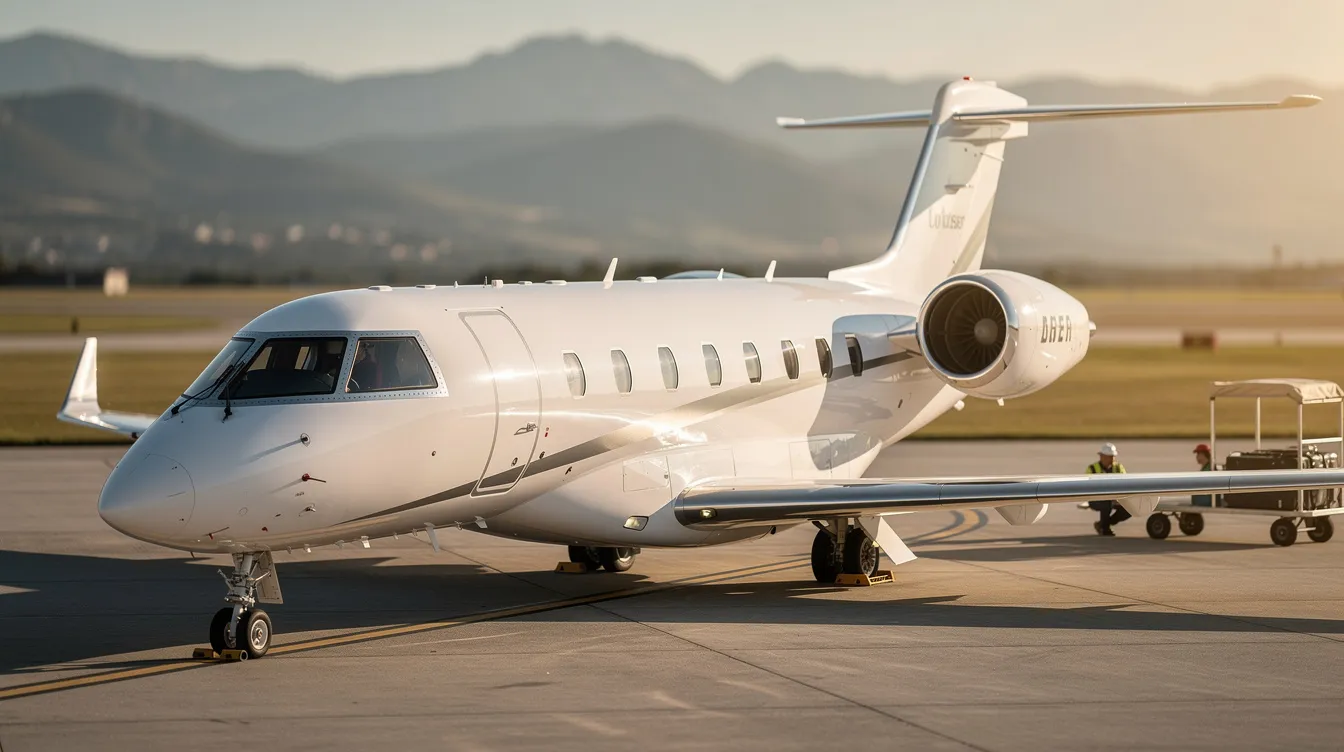
Think private jet flight booking always means paying $5,000 to $15,000 per flight hour? It doesn't. The industry has shifted, and there are now ways to fly private that don't involve five-figure invoices every time you step onto the tarmac. This guide breaks down exactly how traditional private charter works, what it costs, and how empty-leg memberships like Hoppyn are changing the math entirely. This guide is for travelers considering private jet options, whether for business or leisure, and anyone curious about how private jet booking works today. Understanding these options can help you save money and choose the best fit for your travel needs.
Key Takeaways
Most private jet flight bookings are priced per hour for the entire aircraft. In 2026, private jet charter costs range from $2,300 to $17,000 per hour depending on aircraft type and route. That means a single domestic trip can easily run $10,000 to $15,000, and a transatlantic flight can exceed $80,000 one-way. Hoppyn flips that model by giving members access to empty-leg private jets for no per-flight cost through a flat $997/year membership.
Empty-leg flights are repositioning legs that operators already need to fly—after dropping off charter clients or moving an aircraft to its next booking. These flights would otherwise fly completely empty. Hoppyn fills those seats instead of selling classic private charter flights, which means members can fly private without hourly rates, jet cards, or fractional ownership contracts, while charter operators use dedicated Hoppyn resources to connect their fleets and list these empty legs efficiently.
With Hoppyn, you browse a constantly updated global board of empty legs with no hidden fees. The membership covers your access. When you're confirmed on a flight, there's no invoice for the flight itself, no fuel surcharge, no landing fee surprise.
If you're flexible on date, time, and route, you can realistically fly on light jets, midsize jets, and even ultra-long-range private aircraft. The rest of this article compares on-demand private charter flights with the empty-leg membership model so you can decide which fits your travel style and budget.

What "Private Jet Flight Booking" Really Means Today
Private jet travel doesn't always mean six-figure annual commitments. While heavy and ultra-long-range jets still command $10,000 to $17,000+ per hour, light jets and turboprops operate for far less—and empty-leg models can eliminate per-flight cost altogether.
At its core, private jet flight booking means reserving an entire aircraft for your use, not just a seat. That reservation can happen through four different models: classic on-demand private charter, jet card programs, fractional ownership, or empty-leg access via a membership platform like Hoppyn.
Common use cases span everything from last-minute business runs between New York and Miami, to family holidays in the Caribbean in December, to ultra-long-range hops like New York to London. For many travelers, private aviation is an alternative to traditional air travel, with flexible scheduling that can adjust to your timeline while helping passengers avoid long security lines and layovers entirely. You can access over 5,000 U.S. airports compared to around 500 serviced by commercial airlines, and private jet charters offer access to over 10,000 airports worldwide. That reach means point-to-point travel without layovers, saving significant travel time on nearly every trip.
The rest of this article walks through step-by-step how booking works, what drives cost, and how Hoppyn uses empty legs to bypass traditional private jet rental pricing.
How Traditional Private Charter Flights Are Booked
The classic on-demand private charter process starts when you submit trip details: origin, destination, dates, passenger count, baggage requirements, and any special amenities. Private jet chartering involves providing these specific trip details to select the appropriate aircraft for your needs.
A broker or charter company then searches a global network—over 20,000 unique aircraft are available for charter worldwide—to find availability on your requested dates. For something like "Los Angeles to Aspen, February 15–18, 2026," the broker might pull options from dozens of operators across multiple aircraft categories.
You then receive several quotes covering different aircraft options, each with hourly rates, estimated flight time, repositioning costs, and surcharges. Booking a private jet requires comparing these detailed quotes and confirming the operator and aircraft before signing anything. Booking a private jet involves coordinating with brokers or operators to match itineraries and aircraft type to your specific needs.
You're charged for the entire aircraft, not per seat. Even flying solo, you pay the full bill. Add repositioning legs, minimum daily hours, and potential one-way surcharges, and total costs can climb quickly. Most private jet charters operate on a pay-per-trip basis.
The broker or operator organizes crew, catering, ground transportation, and airport slots. On popular domestic routes, confirmations can sometimes happen in under four hours. Charter flights can be arranged with as little as 24 hours' notice, and urgent charters may sometimes be arranged on very short notice, while private jet passengers can usually arrive just 10 to 20 minutes before departure.
Charter Pricing Basics: Aircraft Types, Hourly Rates, and Route
In standard private jet rental, price is mostly driven by aircraft type, flight time, and routing. Longer flights on larger jets cost exponentially more, and peak-season demand inflates everything further.
Here are approximate hourly rates for key aircraft categories in 2025–2026:
Aircraft Category | Hourly Rate Range | Typical Use Case |
|---|---|---|
Turboprops | $2,000–$3,500/hr | Regional hops, short runways |
Light Jets | $3,000–$6,000/hr | Short domestic flights (under 3 hrs) |
Midsize / Super-Midsize | $5,000–$12,000/hr | Cross-country US, shorter international |
Heavy / Ultra Long Range | $8,000–$17,000+/hr | Transatlantic, intercontinental |
Turboprop charters start at around $2,000 per hour. Heavy jet charters can cost closer to $10,000 per hour. Overall, private jet charter costs range from $2,300 to $17,000 per hour depending on the aircraft and mission.
To put this in real terms: a New York to Miami light jet charter (about 2.5 to 3 hours of flight time) might run $10,000 to $15,000 in total aircraft cost before fees. A New York to London ultra-long-range jet can easily exceed $80,000 one-way.
Peak dates—Christmas in the Caribbean, Monaco Grand Prix, Art Basel Miami, ski season in Aspen—push charter pricing up by 30% to 100%. Short-notice bookings do the same. Competitive pricing exists, but you have to know where and when to look.
Aircraft Types and Categories: From Turboprops to Ultra Long Range
Choosing the right aircraft is a trade-off between speed, range, comfort, and budget. Here's what you're choosing from:
Turboprops (Pilatus PC-12, King Air 350): The Pilatus PC-12 can carry 6 to 8 passengers with a range of 1,700 miles. Speeds around 300–350 mph. Best for regional hops and smaller airports with short runways. These are the most efficient aircraft for distances under 1,000 miles.
Very light jets (HondaJet, Vision Jet): Very light jets like the HondaJet accommodate 2 to 4 passengers. Great for quick domestic trips under two hours, often at competitive pricing. Good for solo business travelers or couples.
Light jets (Citation CJ3, Phenom 300, Learjet 45XR): Seat 5 to 8 passengers with a range of 1,200 to 2,000 nautical miles. Ideal for flights like Boston to Miami or Dallas to Denver.
Midsize / Super-midsize (Challenger 350, Gulfstream G280, Embraer Legacy 650): The Embraer Legacy 650 has a range of 3,900 nautical miles, making it suitable for coast-to-coast US flights and Caribbean or Central American international flights. These jets typically carry 7 to 10 passengers.
Large cabin jets: Large cabin jets can seat 10 to 13 passengers for up to 8 hours, covering most North American and transatlantic routes with comfort and space.
Ultra long range (Gulfstream G650ER, Global 7500): Ultra long range jets can fly for over 10 hours with 12+ passengers, handling routes like New York to Dubai or Los Angeles to Tokyo nonstop. These represent the top of the private aviation ladder.
Hoppyn's empty-leg board regularly includes a mix of these aircraft options, depending on what operators are repositioning on a given day. If you're flexible, you might find yourself on a midsize jet one week and a large cabin aircraft the next.

What Drives Additional Charter Costs and Hidden Fees
Many traditional charter quotes look comprehensive, but genuine extra charges can change your final bill substantially. Understanding the total cost and value when booking a private flight, including potential surcharges, is critical.
Typical additional fees include:
De-icing in winter: $1,500 to $15,000+ depending on aircraft size and location
Airport landing fees: $100 to $1,500 per flight
Overnight crew accommodation and per-diems for multi-day trips
Repositioning or ferry flights: when the aircraft must fly empty to your departure airport
Federal Excise Tax (FET) in the US and government taxes internationally
International fees: landing permits, overflight permits, customs processing
Short-leg fees for very short distances or remote airfields
Beyond the basics, extras like custom catering, Wi-Fi surcharges on longer flights, pet cleaning fee charges, hangar fees during snow and ice, and ground transport coordination can all add up. A fuel surcharge is standard on most charters and fluctuates with oil markets.
Hoppyn's model sidesteps this pricing uncertainty. Members pay a flat annual fee and see no per-flight hidden fees on confirmed empty legs. What you browse is what you get—no surprise invoice after landing.
Private Jet Rental vs Membership vs Fractional Ownership
There are three major models for recurring private jet access: on-demand private charter flights, jet card or membership programs, and fractional ownership. Each suits different flying habits and capital commitments.
Classic private jet rental works well for ad hoc trips. You pay per flight, you get exactly what you want, and there are no long-term commitments. But if you're flying 25 to 50+ hours per year, the costs stack up fast, which is why some travelers look at jet cards or fractional ownership.
Fractional ownership means buying a share in a specific aircraft—typically tied to 50 to 100+ hours of annual flight time. You pay a large upfront investment, monthly management fees, hourly rates, and carry ownership costs including maintenance, hangar, insurance, and pilot salaries. It's a serious financial commitment best suited for travelers logging 200+ hours a year who want guaranteed access to a specific private plane.
Hoppyn's membership sits in a completely different lane: a low-friction travel club focused on empty-leg private jets at a transparent $997/year. No hourly charter pricing, no multi-year contracts, no hidden fees, and no minimum hours. You browse, join waitlists, and fly when confirmed. The membership-based model for private jet travel provides access to flights at reduced costs compared to all three traditional alternatives.
What Are Empty-Leg Private Jet Flights?
Empty leg flights are repositioning flights that operators must fly anyway—typically after dropping off a charter client at their destination, or to reach the next booking at a different airport. These flights are also known as dead-heads or ferry flights in industry terminology.
Here's a concrete scenario: an operator flies a Gulfstream G-IVSP with clients from Dallas to Los Angeles. The next charter is scheduled out of Denver the following morning. That means the jet must reposition from LA to Denver with no passengers on board. That's an empty leg.
These empty segments used to fly with zero passengers aboard, representing a pure cost center for the operator. Now, platforms like Hoppyn and other charter companies offer them at deep discounts—or, in Hoppyn's case, free to members who've paid the annual fee. They provide a cost-effective way to fly privately.
Empty legs run on fixed dates, times, and routes determined by the operator's schedule. They can include everything from turboprops to ultra-long-range jets depending on fleet movement. A diverse fleet of aircraft cycles through repositioning daily, creating a constantly shifting board of opportunities for flexible travelers, especially on empty-leg flights from Toronto with Hoppyn membership.
Empty Legs vs Traditional Private Charter Flights
The core trade-off is straightforward: traditional private charter gives you complete flexibility and control over your schedule. Empty-leg flights give you affordability at the cost of that control.
With a standard charter, you dictate the departure airport, arrival city, time, and date. The operator builds the flight around your needs. With empty-leg private jets, the operator's schedule dictates the route and timing—you match your plans to existing aircraft movement.
The savings can be dramatic. Empty-leg flights can be discounted by 25% to 75% off standard charter rates when sold on the open market. That means a $15,000 light jet charter might drop to $3,750 to $11,250 on an empty leg. Hoppyn's model goes further: confirmed members pay $0 per flight after their annual fee—effectively turning that 25% to 75% discount into 100%.
The trade-off you accept: empty legs can change, cancel, or move if the underlying repositioning changes. If the original charter client shifts their schedule, the empty leg shifts too. Smart travelers keep backup travel plans, flexible hotel bookings, and a willingness to adjust by a day or two.
How Hoppyn's Private Jet Membership Works
Hoppyn is a subscription-based travel club specifically focused on private jet empty-leg flights worldwide, positioned as a more accessible form of luxury travel through a transparent membership model. It doesn't sell traditional charter hours. It doesn't operate aircraft. It connects travelers to empty-leg inventory through a transparent membership model.
Here's how the core mechanics work:
Pay a flat annual membership fee of $997/year
Log into the platform and browse daily updated empty-leg flights
Filter by region, date, aircraft type, and route
Join waitlists for itineraries that match your plans
When confirmed, fly with no flight cost, no hourly rates, and no fuel surcharges
Your membership fee covers access. The private jet experience provides tailored services including catering and seating arrangements that come standard with the aircraft. Hoppyn's team offers 24/7 personalized service, helps interpret aircraft options, and ensures there are no hidden fees. The result: private jets become accessible for travelers who don't want to manage per-trip charter logistics or negotiate with brokers for every flight.
Step-by-Step: Booking a Traditional Private Charter vs Booking Through Hoppyn
Traditional Private Charter Flow
You decide you need a private flight—say London to Nice on May 10, 2026. You contact a charter broker, submit trip details including passenger count, baggage, and amenities. The broker returns 3 to 5 aircraft types with quotes, each showing hourly rates, estimated flight time, repositioning, and surcharges. You select your preferred aircraft type and schedule. You sign a contract, wire funds, or provide card payment. The operator handles crew, catering, ground transport, and landing permits. On departure day, you show up at one of the private terminals and fly, typically with a smoother, less congested departure experience. The final invoice may include extras beyond the base quote. Passengers should clarify cancellation policies before committing to any private jet service.
Hoppyn Flow
You join Hoppyn's membership for $997/year. You log in and browse empty legs—maybe a New York to Nassau leg next week on a light jet catches your eye. You join the waitlist. If confirmed, you receive a notification, complete simple passenger details, and show up on departure day. No contract negotiation. No wire transfer for the flight. No hourly rate invoice.
The emotional difference matters. With charter, you start from your itinerary and build a flight around it—every detail is a decision and a cost. With Hoppyn, you start from existing empty legs and align your itinerary to them. You trade control for significant savings. Passengers have more control over their travel itinerary when flying privately in either model—you’re just choosing how much you want to pay for that control.

Booking Strategy: Matching Your Trip to the Right Aircraft Type
Smart private jet flight booking means aligning group size, baggage, route length, and weather with the right aircraft type—not always defaulting to the largest jet available.
Here are typical scenarios and the aircraft that fit:
2–4 people, Boston to Toronto: A turboprop or light jet handles this comfortably. Turboprops are cheaper and can access regional airports with shorter runways.
6 colleagues, Los Angeles to Chicago: A midsize jet provides the cabin space, speed, and baggage capacity for a business group on a cross-country flight.
10 family members, New York to St. Thomas: A large cabin aircraft is necessary for group size and range on this Caribbean hop.
Luggage logistics are generally simpler on private jets with no competition for overhead space. But you still need to think about how much luggage and special equipment you're bringing. Golf clubs, ski bags, camera gear, and surfboards may require aircraft with larger cargo holds. Cabin layout preferences—club seating, divan, enclosed lavatory—also factor into aircraft selection.
Hoppyn members can review aircraft options on each empty leg listing to decide if the configuration fits their party before joining a waitlist. You know what you're getting before you commit.
Popular Private Charter Routes and How Empty Legs Fit In
Certain business and leisure corridors on popular routes generate a high volume of private flights—and therefore a high volume of empty legs. The more traffic on a route, the more repositioning flights operators need to make.
High-traffic corridors include:
US domestic: New York to Miami, Los Angeles to Las Vegas, New York to Aspen, Teterboro to Palm Beach
Caribbean: New York to Nassau, Miami to St. Barts, Fort Lauderdale to the Bahamas
International: London to Nice, Zurich to Ibiza, and long-haul sectors like New York to London on ultra-long-range jets
Travelers in these markets can take advantage of City Hub spontaneous empty leg deals that offer discounted one-way private flights aligned with these high-traffic routes.
Peak seasonal flows amplify empty-leg availability. December through March sends jets south to the Caribbean, Aspen, and Vail—generating repositioning flights back north. June through September lights up Mediterranean routes. Private jet charters can access over 10,000 airports worldwide, meaning even smaller airports in resort destinations see regular traffic.
Hoppyn's daily updated board reflects these flows. Members who align domestic trips and international travel with high-traffic periods and corridors see the widest selection of scheduled flights. For less common routes, checking the board frequently and maintaining flexibility gives you the best odds.
Safety, Operators, and How Flights Are Vetted
Every private charter flight and every empty-leg flight is handled by a licensed operator. In the U.S., the direct air carrier operates the private flight under FAA Part 135 certification. International flights fall under equivalent authorities like EASA in Europe.
Operator vetting typically involves verifying a valid Air Operator Certificate, insurance coverage, and third-party safety audits. Safety certifications like ARGUS, WYVERN, or IS-BAO verify operators' compliance and safety standards. Not every operator carries all three, but reputable platforms require at least one verified audit.
Whether you fly on a standard private charter or an empty-leg private jet, the same crews, maintenance programs, and operating standards apply. The only difference is how the seats are filled. Empty-leg passengers sit in the same cabin, with the same safety ratings, as full-fare charter passengers.
Hoppyn works with reputable operators and ensures members always know which aircraft type and operator they'll be flying with before departure. You can review details about Hoppyn's approach before you book.
Who Private Jet Flight Booking Makes Sense For
Not everyone needs to own or fractionally own a jet. Many travelers are better served by occasional charter or empty-leg access, depending on how they fly.
Traditional charter fits these profiles:
Executives needing fixed schedules and city pairs every week
Sports teams or large groups moving 15 to 30 people on set dates
Medical, emergency, or time-critical missions where schedule flexibility is zero
Frequent flyers logging 25 to 50+ hours per year who benefit from jet cards with predictable costs
Hoppyn's membership fits these profiles:
Flexible entrepreneurs and consultants who can shift travel by a day or two
Remote workers who choose when and where they work
Frequent leisure travelers who value private travel without hourly charter invoices
Anyone who wants a quieter, less crowded environment compared to commercial airlines like Delta Air Lines or other commercial travel options
Private jets offer greater privacy and productivity for passengers compared to commercial flights. Passengers experience fewer interruptions and can hold meetings onboard. Flying privately can minimize exposure to germs compared to crowded airline travel. A private aircraft provides space, quiet, and control that commercial airlines simply can't match.
The smartest approach for many travelers: combine methods. Fly empty legs where possible through Hoppyn. Use traditional private charter flights or scheduled flights on commercial airlines when timing or routing is too specific.
How to Get the Best Value: Practical Booking Tips
Here are concrete ways to minimize cost whether you use classic charter or Hoppyn's membership.
Be flexible on departure airport. Choosing Teterboro instead of JFK, or Van Nuys instead of LAX, reduces repositioning fees. Fixed base operators at smaller airports often charge lower handling fees too.
Fly mid-week or outside peak holidays. Tuesday through Thursday flights offer better availability and competitive pricing on charter. The same windows produce more empty legs.
Book one-way intelligently. Round-trip charter pricing often bakes in repositioning for the return. Empty-leg private jets already factor that repositioning into the operator's schedule—you just ride along.
Flexibility in schedule is key to booking empty-leg flights. The more date and time flexibility you have, the more options appear.
Use Hoppyn's board actively. Check the platform a few times per week. Set alerts for preferred regions and routes. When a compelling empty-leg flight appears, be ready to move.
Consider flexible scheduling for meetings and hotels. If you can shift a meeting by one day, you might catch a free flight instead of paying $12,000 for a charter.
Chartering a private jet can save significant travel time compared to commercial alternatives with connections and layovers. But empty legs save both time and money—if you're willing to adapt.
Common Myths About Private Jets and Empty-Leg Flights
"Private jets are only for billionaires." Not true. Turboprops and light jets cost far less than most people assume, and empty-leg memberships like Hoppyn's put private flights within reach of a much broader group. A $997 annual fee is less than many first-class round trip tickets on commercial airlines.
"Empty legs must be unsafe or lower quality." Empty-leg passengers fly on the same private aircraft, with the same certified crew, under the same maintenance programs as full-fare charter clients. The aircraft doesn't know whether its seats were sold at full price or through a membership. Safety standards are identical.
"Membership programs always hide extra costs." Hoppyn's model is built specifically to avoid hidden fees: a single, published membership price, with no surprise invoices after you fly. Personal add-ons you request—like premium catering or separate ground transportation—are organized and paid directly by you, clearly disclosed upfront.
"You can only get small jets on empty legs." Empty legs exist across the entire spectrum. Operators reposition turboprops, light jets, midsize jets, and even ultra-long-range aircraft. If an operator needs to move a Global 7500 after a transatlantic charter, that leg might appear on Hoppyn's board for any flexible member to claim.
Choosing Between Traditional Charter, Jet Cards, and Hoppyn
This decision comes down to three variables: how often you fly, how fixed your dates are, and how much capital you want to commit.
A jet card with fixed hourly rates makes sense if you're flying 25 to 50 hours a year with predictable corridors—say, weekly New York to Washington or monthly Los Angeles to San Francisco. You'll lock in rates, get guaranteed availability, and avoid the uncertainty of empty-leg timing. Fractional ownership is warranted at 200+ flight hours annually with very specific aircraft requirements and long-term commitments.
For travelers flying a few to a couple dozen trips per year—especially those who can adapt to empty-leg availability—a low annual membership like Hoppyn often delivers more value than pre-buying hours or investing in shares. You avoid ownership costs, skip hourly rates, and only pay $997 for the entire year.
Here's a practical test: estimate what you spent (or would spend) on charter options in 2024–2025. Compare that total to a single $997 membership fee plus flexible planning. For most occasional-to-moderate private flyers, the math strongly favors the membership model.
Getting Started with Hoppyn: Your Next Steps
You don't need to understand every charter pricing nuance to benefit from empty-leg private jets. You just need flexibility and a membership.
Here's how to start:
Visit Join Hoppyn and review membership details
Pay the $997/year fee to activate your account
Immediately browse available flights by region, date, and aircraft type
Set preferences: favorite routes like Los Angeles to Las Vegas, Boston to Palm Beach, or New York to Miami; preferred aircraft categories; date windows
Join waitlists for flights that match your plans
When confirmed, complete passenger details and show up
Hoppyn adds new flights daily across a vast network of operators and routes globally. Whether you're a seasoned private flyer or someone exploring flying privately for the first time, the platform is the simplest way to start without hourly charter bills, long-term contracts, or air charter broker negotiations.
Ready to see what's available? Browse flights now or learn more about how it works.
Frequently Asked Questions
Is Hoppyn a charter broker or an aircraft operator?
Hoppyn is a membership platform—not a direct operator and not a traditional private jet charter service. It does not sell hourly rates or operate aircraft. All flights are operated by licensed third-party operators under FAA Part 135 or equivalent international certifications. Hoppyn focuses on connecting travelers to their empty-leg inventory through a transparent membership model at a flat $997/year fee.
Can I choose the exact time and route of my private jet flight with Hoppyn?
Hoppyn members select from pre-scheduled empty-leg flights, which have fixed routes and departure windows set by the operator. You browse what's available and join waitlists for flights that fit your travel plans. If you need a very specific schedule, multi-stop itinerary, or a custom city pair, you may still want to arrange a standard private charter flight for that trip while using Hoppyn for more flexible trips. You can also request a flight to signal interest in specific routes.
What happens if an empty-leg flight is changed or canceled?
Empty-leg flights depend on underlying operator schedules. If the original charter client changes their plans, the positioning flight may shift in time, route, or get canceled entirely. Hoppyn keeps members updated as flights evolve, helps rebook on alternative empty legs where possible, and recommends members maintain some flexibility in hotel bookings and meeting schedules. Having a backup plan—whether a different empty leg or a commercial alternative—is always smart. Some travelers also consider travel insurance for added protection against unexpected disruptions.
Are there any extra costs when I take an empty-leg flight as a Hoppyn member?
Hoppyn's promise is no per-flight cost and no hidden fees for confirmed empty-leg flights covered by membership. The flight itself, including the aircraft, crew, fuel, and standard operations, costs members nothing beyond the annual fee. Personal add-ons outside the flight—like premium catering at your request or separate ground transportation arrangements—are organized and paid directly by the member if desired. These are always optional and clearly disclosed.
Can I bring friends, family, or colleagues on a Hoppyn empty-leg flight?
Yes. As with typical private jets, members usually have access to the entire cabin capacity, subject to the aircraft's seating limits and safety rules. If you're confirmed on a light jet with 6 seats, you can bring up to 5 additional passengers. All passengers must be registered in advance, and everyone must comply with operator documentation and identification requirements—similar to any private charter flight. This makes empty legs ideal for couples, families, or small groups of colleagues traveling together.
Conclusion
Private jet flight booking has evolved beyond the traditional costly charter model. Whether you choose classic on-demand charters, jet cards, fractional ownership, or innovative empty-leg memberships like Hoppyn, the key is matching your travel style and budget to the right option. Traditional charters offer full control and flexibility at a premium cost, while Hoppyn’s membership model unlocks private jet access at a flat annual fee with no per-flight charges, leveraging empty-leg flights to deliver substantial savings.
If you value flexibility, affordability, and access to a global fleet of premium aircraft without the hassle of hourly rates or hidden fees, Hoppyn’s transparent membership is a smart way to fly private for less. By embracing empty-leg flights, you gain access to thousands of repositioning legs daily, making private jet travel more accessible than ever.
Ready to experience private jet travel on your terms? Browse empty-leg flights and join Hoppyn today to start flying private with confidence and savings.




Unlock Your Private
Jet Experience
Join our exclusive membership for
free flights today!

Explore More
Blogs


Join Our Exclusive
Newsletter
.png)






