
Private Jet Tickets: Costs, Aircraft Types & A Smarter Way to Fly


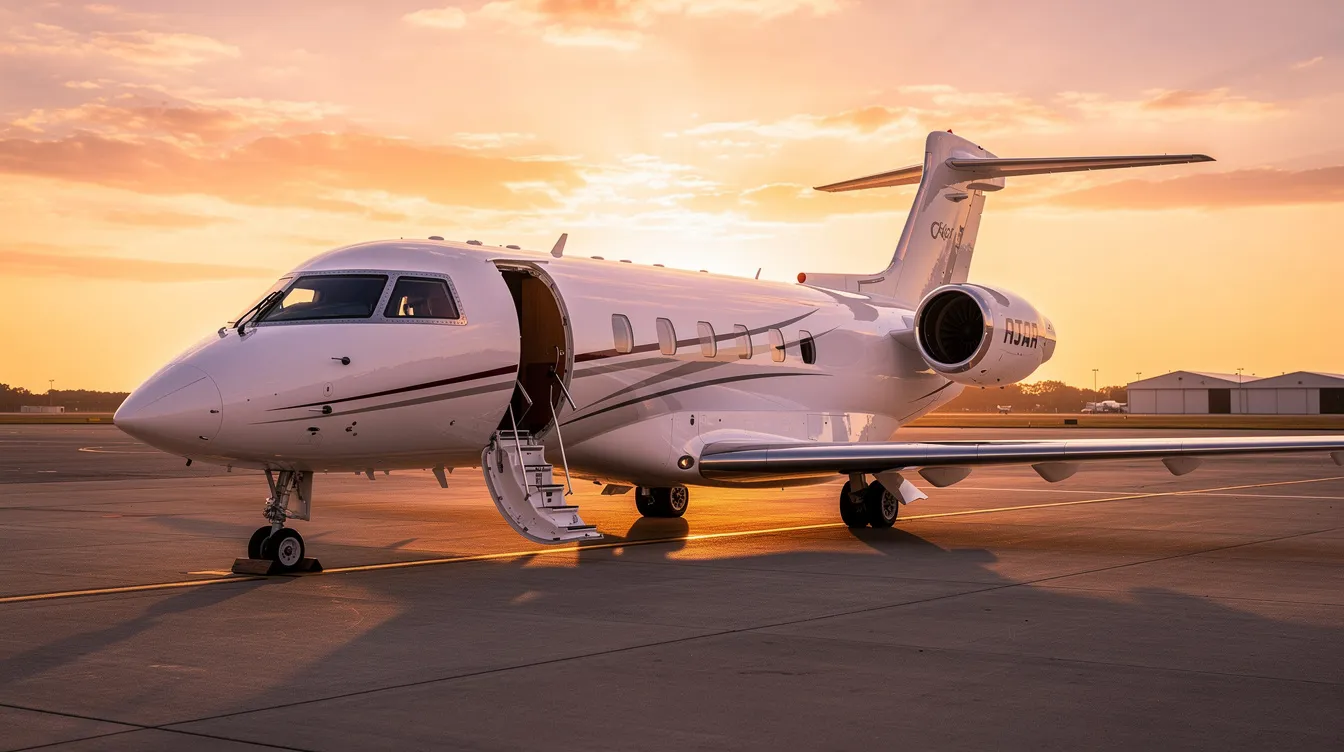
Think private jet tickets always mean five-figure invoices? That's one way to fly. But it's not the only way. This guide is designed for travellers considering private jet options for the first time, as well as frequent flyers seeking more cost-effective ways to book private jet tickets. Understanding the true costs and booking models for private jet tickets can help you avoid unnecessary expenses and make smarter travel decisions. Whether you're pricing your first private flight or looking for a smarter model than paying $8,000 an hour, this guide breaks down exactly what private jet tickets cost in 2026, what drives those prices, and how to sidestep most of them.
Key Takeaways
Traditional private jet tickets are priced per hour, ranging from roughly $2,300 to $23,000/hr depending on aircraft size, plus taxes and hidden fees that can add 15–40% to your final bill.
Hoppyn offers a flat $997/year membership that gives you access to empty-leg private jet flights worldwide with no per-flight ticket costs once confirmed.
Aircraft types range from very light jets (2–4 passengers, short hops) to ultra-long-range jets (12+ passengers, 10+ hour flights), each with different pricing and capabilities.
Empty-leg flights can save travellers up to 75% compared to standard charter rates because the aircraft is already paid for by another customer.
This article covers how to compare charter vs. empty legs, avoid hidden fees, choose the right aircraft type for your specific trip, and decide which booking model fits your travel patterns.
What Are "Private Jet Tickets" Today?
When people search for "private jet tickets," they're usually not looking for a boarding pass from an airline counter. In 2026, buying a private jet ticket means booking capacity on a private plane through a charter broker, a membership platform, or an empty-leg marketplace.
Here's how the main models break down:
Whole-aircraft private charter: You rent the entire aircraft for your trip. You pay hourly rates, fuel, crew, and positioning. Maximum flexibility, maximum cost.
Seat-based private jet services: Some platforms offer a private jet service that sells individual seats on private flights along fixed routes. Pricing is per person, but you share the cabin.
Empty-leg access via membership: This is where Hoppyn sits. You pay a flat annual fee and get access to repositioning flights that would otherwise fly empty, with no per-flight ticket cost.
Digital platforms have made private jet travel far more accessible than even five years ago, with seamless booking making the process faster and simpler. You don't need to spend tens of thousands per flight to experience flying private. Hoppyn is a subscription-based way to access private jets without paying traditional private jet rental costs every time you fly.
How Much Do Private Jet Tickets Cost in 2026?
Typical costs for private jet charters vary by aircraft category and flight duration. In 2026, private jet rental costs range from $2,300 to $17,000 per hour. VIP airliners can cost between $18,000 and $23,000 per hour.
Here's what the hourly rate landscape looks like by category:
Aircraft Category | Hourly Rate Range | Typical Passengers |
|---|---|---|
Very light jets | $2,300–$3,500/hr | 2–4 |
Light jets | $3,750–$4,600/hr | 4–7 |
Midsize jets | $4,700–$7,500/hr | 6–9 |
Large / ultra long range jets | $8,500–$17,000/hr | 10–16 |
VIP airliners (BBJ/ACJ) | $18,000–$23,000/hr | 16–50+ |
The pricing structure for private jets generally provides access to the entire aircraft rather than per seat. Those hourly rates are for the whole plane. If you're flying with six people on a midsize jet, you divide the total cost among yourselves to get a rough "per ticket" figure.
These rates also don't include the 7.5% federal excise tax on US domestic flights or the many add-on fees we'll cover below.
Compare that to Hoppyn's model: you pay a predictable $997/year membership and $0 for confirmed empty-leg flights, instead of calculating hourly rates and surcharges for every trip.
If you see a "ticket price" on another platform, it may be a prorated share of those hourly rates sold per seat on a scheduled private shuttle route.
Key Factors That Drive Private Jet Ticket Prices
Before you accept any quote, it helps to understand what's actually driving the number. Here are the factors that significantly affect your private flight cost:
Flight time and distance: The single biggest cost multiplier. More hours in the air means more fuel, crew time, and maintenance expense.
Aircraft size and age: Newer premium aircraft with advanced avionics cost more. Older planes may have higher fuel burn or maintenance surcharges.
Peak demand dates: Holiday weekends, major events, and seasonal migration patterns push rates up and aircraft availability down.
Airport choice: Landing fees and handling costs vary widely. Regional airports and smaller airports often charge less than major hubs.
Repositioning: Aircraft positioning fees can increase overall charter costs. If the jet has to fly empty to reach you, you may absorb that dead-leg expense.
International routing: Overflight fees, customs, and international head taxes add cost on international flights.
The base hourly rates multiply by total billable flight hours, including positioning, to form most of the total cost, and those rates are shaped by annual operating budgets that also cover crew salaries. In contrast, aircraft owners absorb those ongoing costs directly instead of paying charter pricing trip by trip. Understanding these drivers helps you spot overpriced offers and find value opportunities like empty legs or secondary airports.
Flight Time, Distance & Route Complexity
Flight hours are the single biggest driver of private jet ticket cost. Every additional hour in the air adds fuel, crew member compensation, and wear on the aircraft.
Here are a few concrete examples at 2026 rates:
Los Angeles → Las Vegas (~1 hour, light jet): Roughly $3,750–$4,600 for the aircraft. Short, popular, and frequently available as an empty leg after weekend charters.
New York → Miami (~2.5 hours, light or midsize jet): Expect $10,000–$18,000+ for the aircraft depending on category, plus taxes. This is one of the most popular routes in private aviation.
New York → London (~7 hours, ultra-long-range jet): A charter flight on this route can run $90,000–$140,000+ for the entire aircraft, including fuel and positioning. Flight distance and international fees stack up fast.
Longer flights also mean more considerations. International flights require customs stops, overflight permits, and sometimes a fuel stop. Multi-leg itineraries (say, NYC–Chicago–Dallas–NYC in one day) can trigger crew rest requirements, overnight crew accommodation, and short-leg fees for brief segments.
Empty legs usually follow specific, non-negotiable routes. That's exactly why they're discounted or, with Hoppyn, included in your membership. The route is set. You decide whether it works for you.
Aircraft Types: From Very Light Jets to Ultra Long Range
Aircraft types are grouped by cabin size and range. The category you choose directly affects both comfort and cost. Private jets range from turboprops to ultra-long-range jets, and each serves a different purpose.
Here's a quick breakdown:
Very light jets: Seat 2–4 passengers. Best for short hops under 800–1,000 miles. Think city pairs like Dallas–Houston or Boston–New York. Lower hourly rates, smaller aircraft, efficient for solo travelers or couples.
Light jets: Seat 4–7 passengers. Handle regional US and intra-Europe trips well. The workhorse of business travel and weekend getaways. A diverse fleet of models exists in this category.
Midsize / super-midsize jets: Accommodate 6–9 passengers for up to 4.5 hours nonstop. Coast-to-coast US flights, some transatlantic legs with a fuel stop. More cabin room, stand-up headroom, often a proper lavatory.
Large cabin jets: Usually seat 10–13 passengers for up to 8 hours. Comfortable for longer flights with more passengers.
Ultra long-range jets: Can fly over 10 hours with 12+ passengers. Nonstop routes like New York–London, Los Angeles–Tokyo, or Miami–São Paulo. These are the top-tier machines for ultra-long-range travel.
Bigger aircraft cost more per hour but can be cheaper per person when you fill the cabin. Eight people on a midsize jet can each pay less than a premium commercial ticket on some routes.
Private jets have access to more than 10,000 airports globally, including many smaller regional airports that commercial airlines cannot serve.. That access opens up destinations and reduces ground transportation time.
Hoppyn's empty-leg inventory can include everything from very light jets to ultra-long-range aircraft, depending on weekly aircraft availability across the platform, and charter operators can connect their fleets and list repositioning legs directly to increase that availability.

Common Fees Hidden Inside Private Jet Tickets
The headline hourly rate is only part of the story. Hidden fees can add 15–40% or more to the final ticket price. Here's what to watch for:
Landing fees: Charged by the airport authority at arrival and sometimes departure. Vary by airport and aircraft size.
Ramp and handling costs: Ground crew, parking, and facility use fees at the FBO (fixed-base operator).
Segment fees: Per-passenger, per-leg fees mandated by the government ($5.30 per segment domestically in the US).
Fuel surcharges: When fuel prices spike, some operators pass the difference through as a separate line item.
Overnight crew accommodation: If your trip requires the crew to stay overnight, you cover hotel and meals.
Deicing and hangar fees: Winter operations can add hundreds or thousands per flight.
Custom in-flight catering: Basic snacks are usually included; a full spread is extra.
Special cleaning: A pet cleaning fee or deep-clean charge after certain flights is common.
Short leg fees deserve their own mention. Flights under 60 minutes can trigger minimum charges because the fuel burn, maintenance cycle, and crew time don't scale down proportionally. Daily minimums typically require 2 to 3 billable hours per day even if you only fly for 45 minutes.
With Hoppyn, flights themselves are free once confirmed. There are no hidden flight fees layered on top of your membership. Members mainly cover their own ground transportation and any optional extras they choose.
Government Taxes: Federal Excise Tax, Segment Fees & More
Taxes are mandatory and frequently left out of advertised private charter pricing. They're not optional, and they're not small.
Here's what applies in the US:
Federal excise tax: A 7.5% tax applies to all US domestic flights, calculated on the flight portion of the private jet charter cost. On a $15,000 charter, that's $1,125 in tax alone.
Domestic segment fees: $5.30 per passenger per flight segment. A round trip with two passengers is $21.20 just in segment fees.
International head taxes: $23.40 per passenger for flights entering or leaving the US.
Alaska/Hawaii segments: $11.70 per passenger per domestic segment involving these states.
Many quotes display prices "plus applicable taxes," which can noticeably raise the final ticket total. Government taxes are real costs that you need to budget for.
For empty-leg tickets sold by most brokers, these taxes still apply. With Hoppyn, your membership fee is transparent, and taxes on individual empty-leg flights are handled as part of the operator's pricing structure, not added as surprise hidden fees to members.
Hourly Rates vs. "Per Ticket" Pricing Models
Most private jet services ultimately derive ticket prices from aircraft hourly rates. But how you pay varies a lot depending on the model.
Direct charter: You rent the entire aircraft by the hour. Want to know your "per ticket" price? Divide the total cost by your passenger count. A $12,000 charter split among six people is $2,000 each. Simple math, but the total cost still runs high.
Per-seat / private shuttle: Some platforms sell individual seats on fixed routes (like Los Angeles–Las Vegas) using chartered aircraft. You buy a ticket for one seat and share the cabin with other passengers. Instant pricing, but limited route options.
Jet card programs: You deposit money upfront (often six figures) to lock in fixed hourly rates. A typical jet card requires a 25-hour commitment and can run $150,000–$250,000+ depending on aircraft class. Better predictability, but massive capital tied up.
Membership models like Hoppyn: A flat annual fee for unlimited empty-leg flight access. This essentially drives the per-ticket cost toward $0 the more you fly. No hourly rates to negotiate, no short-leg fees to worry about. You trade scheduling flexibility for dramatic cost reduction.
On-demand charter allows renting an entire aircraft for specific trips without long-term commitment, which suits some travellers. But for those who fly frequently and can stay flexible, membership models offer a fundamentally different value equation.
Private Jet Tickets by Aircraft Category (With 2026 Examples)
This section helps you match your trip type to the right aircraft and rough cost range. All examples below are framed as whole-aircraft private charter costs.
Very light jets - Dallas → Houston (~1 hour): A Phenom 100 or similar smaller aircraft for 2–3 passengers. Expect $2,300–$3,500 for the aircraft, plus taxes and landing fees. The perfect plane for a quick business hop.
Light jets - Los Angeles → San Francisco (~1.2 hours): A Citation CJ3 or Phenom 300 carrying 4–6 passengers. Charter cost roughly $4,500–$5,500 for the leg. Popular for Bay Area–LA commuters.
Midsize jets - Chicago → Miami (~3 hours): A Hawker 800 or Citation Latitude for 7–8 passengers. Total cost in the range of $15,000–$22,000. Split among eight people, that's under $2,800 per person for a direct, private flight with no security lines.
Ultra long range - New York → London (~7 hours): A Gulfstream G650 or Global 7500 carrying 10–14 passengers. Six-figure all-in private jet charter cost, often $95,000–$140,000+ depending on operator and season. Longer flights at this level are a serious commitment.
Hoppyn members might see some of these same aircraft types appear as empty-leg opportunities on similar routes, available for $0 extra ticket cost once they've joined. Actual charter quotes always depend on aircraft age, operator, dates, and airport choices.
Keep in mind: a key hub like Teterboro (near New York) or Van Nuys (near Los Angeles) generates far more empty-leg inventory than a small regional airport.
What Are Empty-Leg Flights (and Why They're Cheaper)?
Empty-leg flights are repositioning segments with no passengers. When a client charters a jet from Los Angeles to New York, the aircraft often needs to fly somewhere else for its next booking. That repositioning flight, with an empty cabin, is an empty leg.
Because the aircraft is already paid for by the primary customer, operators sell remaining capacity at heavy discounts to cover marginal costs. Empty-leg flights can save travelers up to 75% compared to standard charter rates.
Here's a concrete example: a client books a private jet charter service from LA to New York. The jet's next job is in Miami. That New York–Miami repositioning creates an empty leg that might normally charter for $12,000–$15,000 but can be offered at $3,000–$5,000 through a broker, or free inside a membership like Hoppyn's.
Empty legs are typically one-way with fixed timing and routing. Flexibility is required to book empty-leg flights because you're fitting your plans around the aircraft's schedule, not the other way around. That trade-off is exactly why the savings are so large.
Hoppyn specializes in aggregating these empty-leg opportunities worldwide and presenting them to members in an easy-to-browse format, with new flights added daily.
Hoppyn's Take: Private Jet Tickets Without Paying Per Flight
We built Hoppyn because we think private jet pricing is broken for most people. You shouldn't need a six-figure deposit to experience flying private.
Hoppyn is a subscription-based membership. You pay a flat $997/year and get access to unlimited empty-leg flights with no per-flight ticket costs once confirmed. That's it. No hourly rates. No short leg fees. No surprise surcharges.
Instead of crunching private jet pricing spreadsheets every time you want to fly, you simply follow a seamless booking flow:
Log in and browse the live flight board
Join waitlists for routes you want
Confirm flights as availability opens up
Fly. Pay nothing extra for the flight itself.
Here's what sets the model apart:
Global aircraft availability: Empty legs from the US, Europe, and beyond, covering a diverse fleet of aircraft types.
New flights added daily: The board refreshes constantly as operators file new repositioning schedules.
Transparent membership fee: $997/year. That's the price. Membership includes 24/7 dedicated support with no hidden fees.
Designed for real flexibility: You're not locked into routes or dates. You browse, waitlist, and decide.
Hoppyn doesn't replace all charter options. If you need a complex multi-stop corporate trip with guaranteed availability on a specific date, traditional charter or a jet card is the right call. But for flexible travellers who want to fly private regularly without the traditional private jet charter cost, this model changes the math entirely.
Comparing Private Charter, Jet Cards & Memberships
Choosing the right model depends on how often you fly, how flexible you are, and how much you're willing to spend upfront.
Model | Upfront Cost | Per-Flight Cost | Flexibility | Best For |
|---|---|---|---|---|
On-demand charter | $0 | Full hourly rate + fees | Maximum | One-off or critical trips |
Jet card | $150,000–$250,000+ | Fixed hourly rate | High | 25+ hours/year flyers |
Fractional ownership | $500,000+ | Monthly mgmt + hourly | High | Very frequent flyers |
Empty-leg membership (Hoppyn) | $997/year | $0 per confirmed flight | Moderate (route-dependent) | Flexible, frequent travellers |
Traditional jet cards often start with six-figure commitments. A 25-hour light jet card averages around $215,000 at providers like NetJets, with all-in hourly rates near $8,600/hr. Compare that to Hoppyn's membership fee, which is under $1,000/year.
People flying under 25–30 flight hours per year often find membership or empty-leg models more economical than jet cards or fractional ownership. Hoppyn sits in the "membership + empty leg" category, not in the traditional jet card or full charter bucket. It's a different tool for a different kind of private flyer.
Booking a private jet through any model involves verifying safety credentials and the operator's certification. Hoppyn works with vetted operators to ensure safety ratings and compliance.
Popular Private Jet Routes & What Tickets Can Cost
Costs vary by route demand, aircraft type, and season. But real examples help frame expectations. All figures below are whole-aircraft charter estimates.
New York (Teterboro) → Miami (Opa-Locka) Light jet or midsize, ~2.5 hours. Charter cost: $10,000–$18,000 one-way. This route is a private aviation powerhouse, especially November through April. Empty legs frequently appear heading back north after weekend drop-offs.
Los Angeles (Van Nuys) → Las Vegas (Henderson): Very light or light jets, ~1 hour. Charter cost: $3,500–$5,500. Despite the short flight time, daily minimums and handling costs keep prices from dropping much lower. Las Vegas is a key hub for empty legs after events and conventions.
London (Luton) → Nice: midsize jet, ~2 hours. Popular European leisure route, especially during summer. Charter cost: €8,000–€14,000. Airport choice matters here—Luton vs Farnborough, Nice vs Cannes—each with different landing fees.
New York → London: ultra-long-range jets, ~7 hours. All-in charter: $95,000–$140,000+. This is where private aviation gets serious. International flights add customs, overflight fees, and crew logistics. Private jets can access over 10,000 airports worldwide, giving you options like landing at Farnborough instead of Heathrow.
Empty legs often appear on or near these popular routes after peak weekends or events. Hoppyn members can monitor routes and join waitlists for specific regions they care about, or use the City Hub to browse spontaneous one-way empty leg flights from their preferred departure city.
Aircraft Availability & How It Affects Ticket Prices
Aircraft availability in your region and on your dates is a major price lever. When demand outstrips supply, hourly rates climb, and charter options shrink.
High-density private aviation markets like the US Northeast, Southern California, and Western Europe usually offer more competitive pricing. More aircraft types, more operators, more competition. That keeps prices somewhat in check.
But during major events—Art Basel Miami, the Super Bowl, Monaco Grand Prix—availability tightens dramatically. Rates spike, daily minimums increase, and operators add premiums. Even private flyers with jet cards may face positioning delays.
Floating fleets and empty-leg repositioning improve aircraft availability for flexible clients. As operators move jets between hubs, they create empty-leg inventory that platforms like Hoppyn aggregate.
Hoppyn's value grows as aircraft availability increases globally. More operators generating more repositioning flights means more empty legs for members to choose from day to day. Private flights can be booked with as little as 2 hours' notice in some cases, especially on empty legs where the aircraft is already prepped.
What's Included (and Not) in a Private Jet Ticket
Inclusions vary by provider and contract. Reading the fine print isn't optional if you want to avoid bill shock.
Typically included:
Aircraft and crew (pilots, sometimes a crew member for cabin service)
Standard insurance
Basic in-flight catering (snacks, water, soft drinks) on many flights
Standard fuel at prevailing rates
Passengers on private jets often enjoy more luggage flexibility compared to commercial airlines
Often excluded (and charged extra):
Premium or custom catering (full meals, specific wine, dietary requests)
Last-minute schedule changes or route modifications
Extra ground handling at certain airports
Deicing during winter operations
Wi-Fi data overage charges on international routes
Private jets offer personalised in-flight services and amenities, but speciality items may carry surcharges
Always ask explicitly whether you're getting an "all-in" quote or a base rate plus surcharges. The difference can be thousands of dollars.
With Hoppyn, your membership covers access to flights with no hidden flight fees. Any third-party add-ons (like premium catering or special ground transportation arrangements) are clearly communicated before you fly.
How to Avoid Hidden Fees on Private Jet Tickets
Here's how to keep your final invoice aligned with the number you expected:
Request an itemised quote: Every line item should be visible. If a broker won't break it down, that's a red flag.
Ask about federal excise tax and segment fees: Confirm whether the 7.5% FET and per-passenger segment fees are baked into the quote or added later.
Clarify deicing, Wi-Fi, and cleaning policies: These "small" charges can add $500–$2,000+ per flight in winter or with pets.
Choose secondary airports: Landing fees and ramp fees at smaller airports like Teterboro (vs. JFK) or Van Nuys (vs. LAX) are often significantly lower. Private jets can access smaller regional airports that commercial airlines can't, and those airports frequently have lower overhead.
Avoid unnecessary short legs: Consolidate multi-stop itineraries when possible. Each extra segment triggers crew time, landing fees, and potentially short-leg fees.
Skip last-minute route changes: Repositioning charges and crew overtime pile up when plans shift mid-trip.
With Hoppyn, you're not negotiating hourly rates each trip. Your biggest "hidden fee defence" is the simple, upfront membership price. The booking process is straightforward: browse, waitlist, confirm, fly.
Flying Private for Less: Practical Strategies
You don't need to compromise on the flying experience to spend less. Here's an actionable checklist for budget-conscious frequent flyers:
Fill the cabin: A midsize jet with 8 people is dramatically cheaper per person than a light jet with 2. Passenger count directly affects your per-ticket math.
Be flexible on dates and times: Booking off-peak days (Tuesday through Thursday instead of Friday through Sunday) can lower hourly rates and improve aircraft availability.
Leverage empty legs: This is the biggest lever. Booking empty-leg flights can significantly reduce travel costs, sometimes to zero with the right membership.
Use secondary airports: Smaller airports mean lower fees, faster ground access, and sometimes shorter total travel time.
Position yourself strategically: If you live near or can easily reach cities where empty legs frequently start or end—like New York, LA, Miami, London, or Geneva—you'll see more opportunities.
Consider one-way bookings: A round-trip charter includes positioning costs. One-way empty legs eliminate that entirely.
Think of Hoppyn as an always-on tool in your travel toolkit. You check the empty-leg board regularly and act when the right routing appears. Empty-leg flights are often available at discounted rates through brokers, but with Hoppyn they're included in your membership.

Who Private Jet Tickets Make Sense For
Not everyone should be buying private jet tickets. It depends on your travel patterns, budget, and how much flexibility you have.
On-demand charter makes sense for:
Executives needing guaranteed departure windows for high-stakes meetings
Large jets carrying corporate teams on fixed schedules
Complex multi-stop trip type itineraries where timing can't flex
Anyone who values the ability to book private jets for a specific trip with full schedule control
Empty-leg-focused travel (and Hoppyn) makes sense for:
Frequent leisure travellers exploring new destinations
Digital nomads and entrepreneurs with flexible itineraries
Private flyers who want to reduce their carbon footprint by filling otherwise-empty aircraft
Families or groups who can plan around available routes
Anyone curious about flying private without committing tens of thousands upfront
Small businesses and startups can use a mix: traditional private charter for critical trips, and Hoppyn empty legs for opportunistic travel and team perks.
Flexibility is a key advantage of private jet travel compared to commercial airlines. Private jet charters eliminate long security lines and waiting times. Private jet travel can save hours compared to commercial flights. Be honest with yourself about how often you fly, how flexible you are, and whether a membership approach fits your lifestyle.
How Hoppyn Works Step-by-Step
Here's the full member journey, from signing up to stepping off the jet.
Join: Pay the annual $997/year membership fee online to unlock the platform. No long-term contracts, no six-figure deposits. Join Hoppyn here.
Browse: Log in to see the global board of upcoming private jet empty-leg flights for a seamless booking experience. Each listing shows aircraft types, routes, dates, and capacity.
Waitlist: Travellers can join waitlists for available empty-leg flights they're interested in. Flights are first-come, first-served as availability firms up. New empty-leg flights are added daily, so the board is always changing.
Confirm: When you're cleared on a flight, you pay $0 for the seat(s) on that leg. No hourly rates. No short leg fees. No surprise invoices.
Fly: Arrive at the private terminal (FBO), skip the security lines, and enjoy your private flight. Hoppyn's 24/7 support is on hand if you need anything before, during, or after the trip.
Members can access unlimited empty-leg flights and repeat this process as often as they like. There's no cap on the number of flights per year. The more you fly, the more value you extract from that single annual fee.
The natural beauty of this model is simplicity. One fee. Unlimited access. Zero per-flight cost.
Frequently Asked Questions
Are private jet tickets sold per seat or per aircraft?
Traditional private jet rental is priced per aircraft per hour. You're renting the entire aircraft, not buying an individual seat like a commercial flight. However, some platforms resell that capacity per seat on certain routes, particularly high-demand city pairs.
When you see a "ticket price" online, it may be your share of a whole-aircraft charter, a seat on a scheduled private shuttle, or access through a membership or empty-leg model like Hoppyn's.
Hoppyn members effectively pay per year, not per seat. Once you're a member, confirmed empty-leg seats cost you $0 on top of your annual membership. You can learn more about how it works here.
Can I choose any departure time with an empty-leg ticket?
No. Empty-leg flights usually have fixed departure dates and approximate times because they follow aircraft repositioning schedules. Operators may adjust departure windows slightly (30–60 minutes in some cases), but you generally can't move an empty-leg flight several hours for your convenience.
This is precisely why empty legs are cheaper or included in membership. You trade scheduling control for cost savings. If you need to depart at a specific time on a specific date, on-demand charter is the right tool.
What if I need to bring 6–8 people—are empty-leg tickets still an option?
Absolutely. Many empty legs operate on light jets, midsize, or even large jets. Seating for 6–8 people is often possible depending on aircraft type. When Hoppyn members book, they're typically reserving the cabin, not just one seat, so they can bring family, friends, or colleagues within the aircraft's capacity limits.
Groups who travel together frequently get especially strong per-person value from a membership model. Even a single group trip on an empty leg that would otherwise cost $10,000+ as a charter makes the $997 annual fee look like a rounding error.
Do private jet tickets include catering and Wi-Fi?
Basic snacks and beverages are usually included on many private charters. Full custom in-flight catering—think specific meals, premium wine, dietary menus—is typically an extra charge.
Wi-Fi availability depends on the aircraft. Some have complimentary satellite Wi-Fi; others bill by data usage, especially on international routes. For Hoppyn flights, what's included onboard depends on the underlying operator's standards. Hoppyn can help clarify those details before you fly.
Is a Hoppyn membership worth it if I only fly a few times a year?
It depends on your flexibility and how many empty legs match your plans. If you take even two or three meaningful trips on empty legs that would otherwise cost several thousand dollars each as standard charters, the $997/year fee effectively pays for itself many times over.
Consider your destinations, your timing flexibility, and your willingness to plan travel around available empty legs. If you're the kind of traveler who can say "I'd love to fly to Miami this month" without being locked to a specific Thursday at 2 PM, Hoppyn is built for you.
Ready to see what's available? Browse current empty-leg flights or join Hoppyn today to start flying private for less.
Conclusion
Private jet tickets in 2026 come with a wide range of costs and options, but flying private no longer means breaking the bank. Traditional charter pricing can be steep, with hourly rates and hidden fees adding up quickly. However, innovative models like Hoppyn’s flat-fee membership for unlimited empty-leg flights offer a smarter, more affordable way to access private aviation.
By understanding the factors that drive private jet ticket prices—including aircraft type, flight duration, and additional fees—you can make informed choices that fit your travel style and budget. Whether you choose on-demand charter for maximum flexibility or embrace empty-leg memberships for cost savings, private jet travel is more accessible and transparent than ever.
If you value flexibility, global access to premium aircraft, and want to fly private for less, Hoppyn’s membership model is a compelling alternative to traditional private jet tickets. Ready to experience private jet travel without the hefty price tag? Join Hoppyn today and start browsing empty-leg flights worldwide.




Unlock Your Private
Jet Experience
Join our exclusive membership for
free flights today!

Explore More
Blogs


Join Our Exclusive
Newsletter
.png)






