
Private Plane Flying: How to Fly Private More Cost-Effectively with Empty Legs


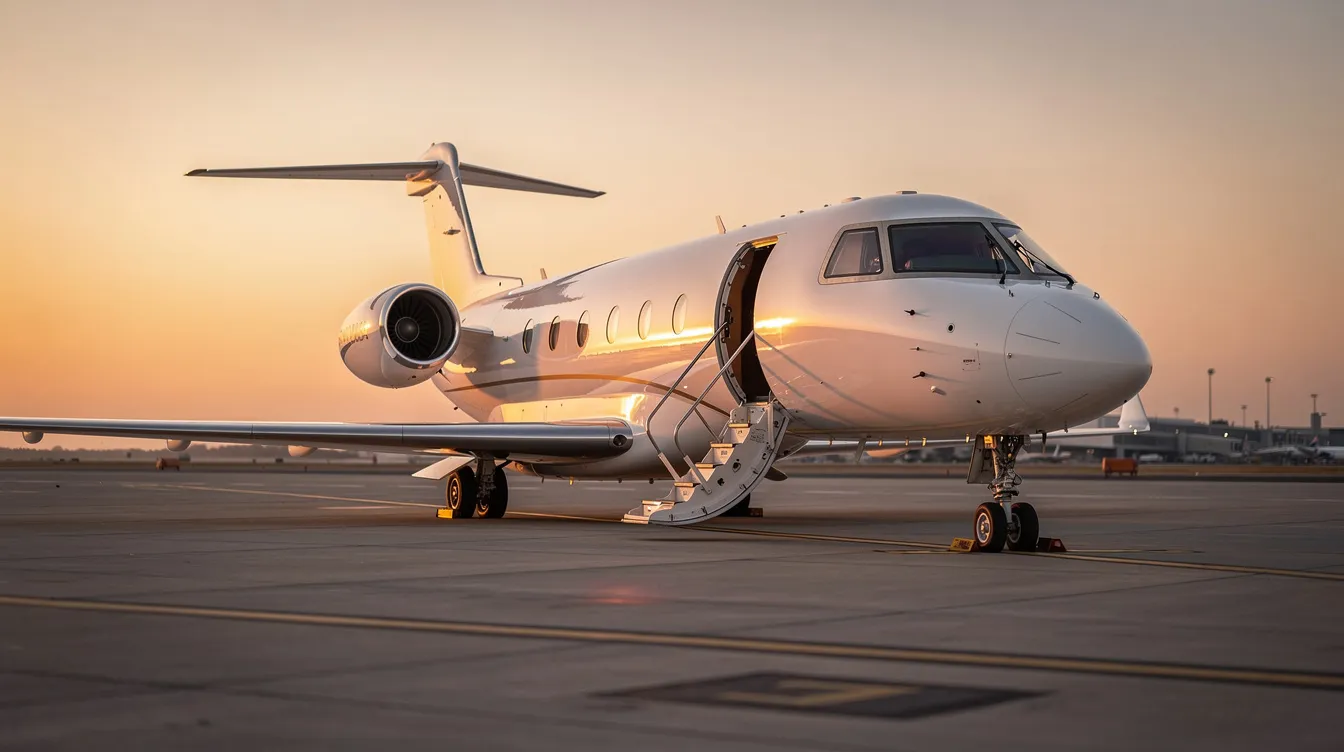
Think private plane flying costs $5,000 an hour minimum? That used to be closer to the truth. But in 2026, thousands of private jets fly empty every single day—repositioning between charter missions with zero passengers on board. Those flights still burn fuel, still pay crew, and still land at airports. The only thing missing is you.
That surplus capacity is called an empty leg, and it's quietly become the most cost-effective way to access private aviation without committing six figures to a jet card or fractional share. This guide breaks down exactly how it works, what it costs, and how Hoppyn's $997/year membership puts you in those empty seats.
Key Takeaways
Private plane flying no longer requires $2,300–$23,000/hour charter rates. Empty leg flights can save travelers up to 75% compared to standard charter prices, putting you on the same aircraft for a fraction of the cost.
Hoppyn is a $997/year private jet membership that gives members access to unlimited empty-leg flights worldwide with no per-flight cost—no deposits, no hourly rates, no hidden fees.
Traditional air charter and jet card models charge per hour of flight time, often requiring $150,000–$215,000+ upfront. Hoppyn's subscription model flips that: pay once per year, then fly when empty legs match your route.
Concrete use cases make this real: last-minute Las Vegas weekends, small business travel between regional airports, and repositioning flights for large groups are all scenarios where empty legs shine.
Ready to stop reading about it and start flying? Browse real empty-leg flights on Hoppyn's live flight board instead of requesting traditional charter quotes.
What "Flying Private" Really Means in 2026
Most people hear "fly private" and picture a billionaire stepping off a Gulfstream. That image is outdated. In 2026, the private aviation market has expanded well beyond ownership. Membership models, on-demand charter, and empty-leg platforms have opened the door for frequent flyers, entrepreneurs, families, and anyone who values their time over terminal crowds.
Flying private means something specific and practical:
Private terminals (FBOs): You skip the main commercial terminal entirely. No TSA lines, no gate changes, no boarding groups. Private travel often eliminates the need to arrive hours before departure and wait in lines.
Flexible departure times: Flights can be adjusted on short notice. You're not locked to an airline's schedule.
Aircraft selection: Choose from turboprop aircraft, light jets, midsize jets, super midsize jets, heavy jets, or large cabin jet configurations depending on your route and group size.
Privacy and productivity: Private jets offer a secure environment for confidential discussions and meetings. Your cabin is yours.
Better luggage handling: Luggage limitations on private jets are more relaxed than on commercial airlines. Bring the golf clubs, the skis, or the oversized carry-on without a second thought.
The shift accelerated after 2020. Health concerns, disrupted commercial routes, and demand for schedule control pushed a wave of new travelers toward private flights. The global private aircraft market is projected to grow from $29.87 billion in 2025 to $31.9 billion in 2026, roughly a 6.8% growth rate. Many of those new entrants aren't buying planes. They're buying access.
Today, the distinction between private plane flying and first-class commercial is stark. A New York to Miami trip on a commercial airline means arriving 90+ minutes early, security screening, possible connections, and 5+ hours door-to-door. The same trip on a light jet out of a regional airport? Around 2.5 hours total, including the drive. Los Angeles to Las Vegas is even more dramatic: 1 hour of flight time versus half a day of airline logistics.
How Private Plane Flying Traditionally Works (Charter & Jet Cards)
Before we get to the cost-saving part, you need to understand the traditional models so the contrast is clear.
On-Demand Charter
With a private charter, you're renting the entire aircraft for a specific trip. You pay per aircraft, not per seat. The private jet charter process involves four simple stages: request a quote, review options, confirm and fund, then fly.
Private jet rental costs range from $2,300 to $23,000 per hour depending on aircraft type. Here's what that looks like in practice:
A short flight in a small plane costs around $2,800
Midsize jets run roughly $5,000–$6,500/hour
Heavy jets and long-range aircraft push higher
VIP airliners cost between $18,000 and $23,000 per hour to rent
Aircraft category significantly influences rental pricing. Hourly rates include aircraft, crew, fuel, and insurance—but that's not the end of the bill. Private jet rental prices add a 7.5% US Federal Excise Tax. Government taxes can increase costs by 7.5% for domestic flights. Operational logistics can add $200 to $600 per crew member per night on multi-day trips. Newer aircraft can command a premium of $100 to $1,000 per hour. And positioning fees can significantly affect one-way rental costs.
A dedicated charter consultant assists throughout the booking process. That's helpful, but it doesn't change the math. A 2-hour light jet charter from Dallas to Las Vegas runs roughly $12,000–$16,000 all-in. A 1.5-hour flight in a midsize jet costs about $34,500.
Booking a private jet can often be done with just 24 hours' notice, which is a genuine advantage over commercial alternatives.
Jet Cards
Jet cards let you pre-purchase block hours—typically 25 to 100+ hours—at fixed or capped hourly rates. A 25-hour light jet card from major providers runs $170,000–$215,000. Hourly rates for light jets under jet cards hover around $7,900–$8,600/hour.
Advantages: Predictable pricing, guaranteed access, consistent service levels.
Downsides: Massive upfront outlay, long-term commitments, peak-day surcharges, and you're paying whether you fly or not.
Hoppyn is neither a charter broker nor a jet card. It's a fundamentally different approach—and the next two sections explain why.
Empty Legs: The Cost-Effective Secret Behind Affordable Private Flights
Here's the concept that changes the economics of private air travel entirely.
An empty leg is a flight without passengers for repositioning. When a charter client books a one-way trip—say, New York to Palm Beach—the jet has to get back to its base or fly to its next pickup. That return flight, or the positioning flight before a charter, would otherwise fly completely empty. Empty leg flights are also known as dead-heads or ferry flights.
Operators lose money flying empty. So they offer these empty leg flights at discounted rates to cover variable costs like fuel, crew, and landing fees rather than absorb the full loss.
Why empty legs are so cheap
Charter schedules rarely line up perfectly. A client charters a jet from Los Angeles to Las Vegas for a weekend, but there's no matching return charter. The plane has to fly back empty. That's an empty leg—same aircraft, same crew, same airports, but available at a fraction of the charter rate.
Empty legs typically cost 35% to 80% less than the equivalent standard charter flight. Empty leg flights can save travelers up to 75% compared to booking a standard charter on the same route.
Benefits and trade-offs
Benefits:
Significant savings on the same aircraft you'd charter at full price
Access to light jets, midsize jets, and heavy jets at a fraction of market rate
Reduces waste in the aviation system (those flights happen regardless)
Trade-offs:
Fixed routes and approximate departure times—you fly where and when the jet needs to go
Flexibility is required to book empty leg flights; the schedule can shift if the underlying charter changes
Last-minute availability means you can't always plan weeks ahead
Empty leg flights are often available at discounted rates on popular corridors like New York to South Florida, London to Ibiza, or Los Angeles to Las Vegas—routes with high charter traffic and frequent repositioning.
How Hoppyn Makes Flying Private Accessible via Membership
Here's where we come in.
Hoppyn is a subscription-based private jet membership that gives you access to global empty-leg flights for a flat annual fee. As of 2026, membership starts at $997/year. That's the entire cost of entry. There are no hourly rates, no per-flight ticket charges on confirmed flights, and no hidden fees.
Here's how it works:
Browse: Log in to the platform and explore a digital flight board showing available empty legs worldwide, sorted by date, region, and aircraft type.
Join a waitlist: Found a leg that matches your route? Join the waitlist. No payment beyond your membership.
Get confirmed: When the flight is confirmed to operate, you're cleared to fly. No additional charges.
Fly: Show up at the private terminal, board, and go.
How this compares to traditional models
Feature | On-Demand Charter | Jet Card | Hoppyn Membership |
|---|---|---|---|
Upfront cost | Per-trip quotes | $150,000–$215,000+ | $997/year |
Hourly rates | $2,300–$17,000+ | $7,900–$8,600 (light jet) | None |
Deposits | Varies | $100,000+ common | None |
Long-term contract | No | Yes | No |
Access to empty legs | Sometimes | Rarely included | Unlimited |
Transparent pricing | Varies widely | Moderate | Yes |
Hoppyn doesn't own or operate aircraft. We're providing access to a vast network of certified operators' surplus capacity, and resources for charter operators make it easy for those partners to connect their fleets and list empty legs efficiently. The result: you fly private on flights that would otherwise carry zero passengers, at a membership cost that's a rounding error compared to jet cards.
Private Plane Flying vs Commercial Airlines: Real-World Time Savings
The real value of flying private isn't the leather seats. It's the hours you get back.
Private flying reduces total travel time by minimizing airport delays. Private jets allow check-in just 15 minutes before departure—compare that to the 90+ minutes commercial airlines demand for domestic scheduled flights, or 2–3 hours for international travel.
Side-by-side comparison
Route | Commercial (door-to-door) | Private (door-to-door) | Time saved |
|---|---|---|---|
New York → Chicago | ~5.5 hours | ~3 hours | ~2.5 hours |
Los Ángeles → Las Vegas | ~4.5 hours | ~1.5 hours | ~3 hours |
London → Paris | ~5 hours (with Eurostar/flight) | ~2 hours | ~3 hours |
Private flights can often eliminate layovers and provide more direct routes. Instead of connecting through a hub, you fly point-to-point. Private jets can fly into thousands of smaller regional and local airports that commercial airlines don't serve, getting you closer to your final destination.
Private aircraft typically fly at cruising altitudes of 41,000 to 45,000 feet, above most commercial traffic and weather conditions, which often means smoother, faster flights.
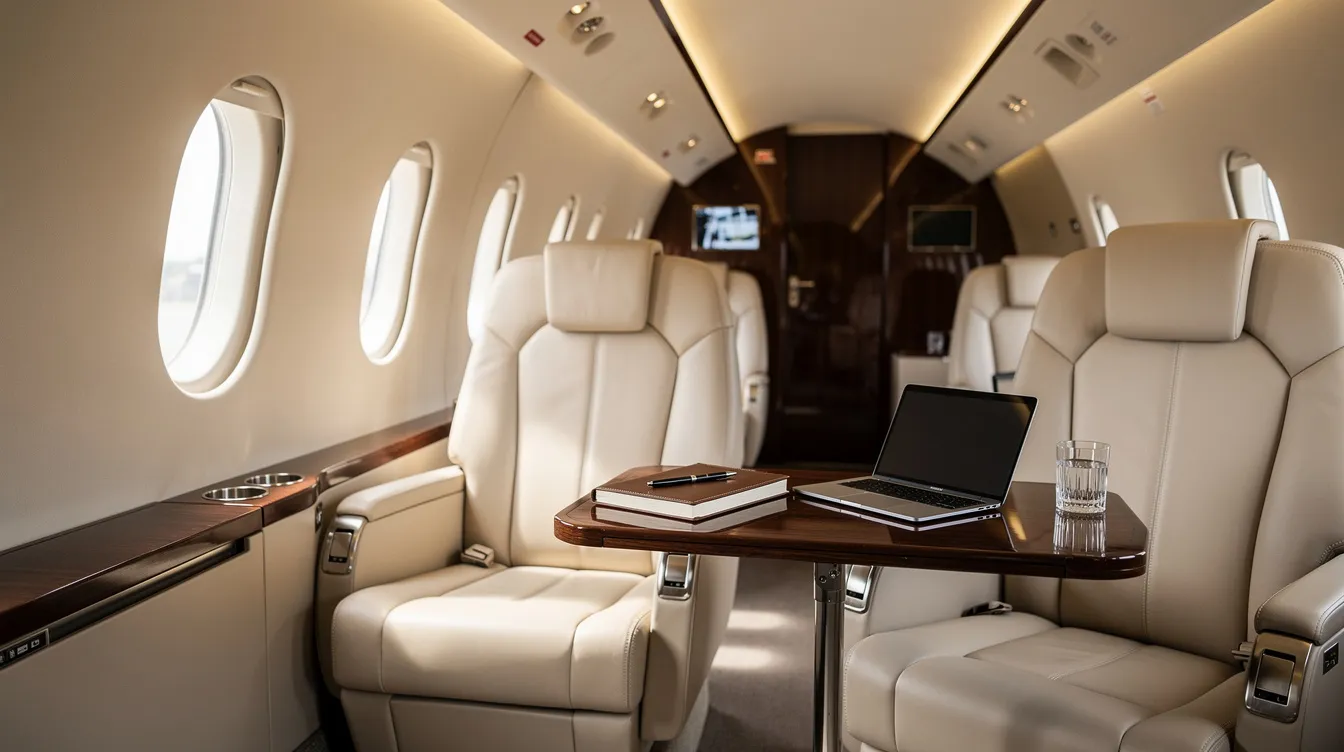
For business travelers, this is where the math gets interesting. A same-day round trip to a client meeting—out on a morning empty leg, back on an evening commercial flight—turns a two-day trip with hotel costs into a single productive day. Private aviation provides more comfort through customizable catering and spacious seating, so the flight time itself becomes work time, not dead time.
Choosing the Right Aircraft: From Turboprops to Light Jets and Beyond
When browsing empty legs on Hoppyn's flight board, you'll see many aircraft listed. Here's what the categories mean and which ones fit different trips.
Aircraft Type | Passengers | Typical Range | Best For | Charter Rate Range |
|---|---|---|---|---|
Turboprop (e.g., Pilatus PC-12) | 6–9 | 600–1,700 miles | Short regional hops | $2,300–$3,500/hr |
Light jet | 4–8 | 1,200–1,800 miles | East Coast shuttles, short trips | $2,800–$4,500/hr |
Midsize jet | 6–9 | ~2,450 miles | Cross-country, larger cabin | $5,000–$6,500/hr |
Super midsize jet | 8–10 | ~3,000 miles | Longer distances, more comfort | $6,500–$9,000/hr |
Heavy jet / Large cabin | 10–16 | Up to 7,000 miles | International travel, large groups | $10,000–$17,000/hr |
Turboprops are cost-efficient for distances of 600 to 1,000 miles. The Pilatus PC-12, for example, has a range of 1,700 miles and works well for regional airports with shorter runways. Light jets usually seat 4 to 8 passengers and are the workhorse for routes like Las Vegas to Los Angeles or New York to Nantucket. Midsize jets typically have a range of 2,450 miles—perfect for coast-to-coast. Heavy jets can fly up to 7,000 miles, making them the ideal aircraft for intercontinental routes.
On Hoppyn's board, you might see a Citation CJ3 (light jet) repositioning from Teterboro to Palm Beach, or a Hawker 800XP (midsize) heading from Dallas to Aspen. The aircraft type determines how many seats are available, what the luggage capacity looks like, and what the cabin experience feels like. For more on choosing the best seat, check out The Best Seat on a Private Plane.
Private jets provide more luggage space compared to commercial flights, but smaller aircraft types like turboprops and light jets still have physical limits. Plan accordingly.
Cost Breakdown: Charter Flights, Jet Cards, and Membership Compared
Let's put real numbers on the table.
Air charter costs
On-demand charter rates in 2026 for private jet rental range from $2,300 to $17,000 per hour, depending on aircraft category. Add to that:
7.5% Federal Excise Tax on domestic flights
Repositioning fees (if the aircraft isn't based near you)
Crew overnight costs ($200–$600 per crew member per night)
Landing and handling fees at airports
Potential peak-day surcharges
A specific trip example: chartering a light jet from Miami to New York (about 2.5 hours flight time) runs approximately $12,000–$18,000 all-in.
Jet card economics
A 25-hour light jet card costs $170,000–$215,000 upfront. That gives you fixed hourly rates around $7,900–$8,600/hour, plus fuel surcharges, FET, and peak-day uplifts that aren't always clear at purchase.
Hoppyn membership
$997/year. No hourly rates on confirmed empty-leg flights. No activation fees. No deposits.
Scenario comparisons
Scenario 1: You fly private 4 times per year on short routes (2 hours each). Charter cost: ~$48,000–$64,000. Hoppyn membership: $997.
Scenario 2: You fly 6 times per year, a mix of short and medium routes. Charter cost: ~$72,000–$120,000. Jet card: $170,000+ upfront. Hoppyn: $997.
Scenario 3: You fly once per year. Charter: ~$12,000–$18,000. Hoppyn: $997—but you'd need an empty leg to match your exact route and timing.
The breakeven is obvious. If you can fly even two or three empty legs per year, the membership pays for itself many times over compared to charter rates.
Flying Private to Popular Destinations (Including Las Vegas)
Empty legs cluster around high-traffic private aviation corridors. If you're flexible, these routes frequently show up on Hoppyn's flight board and in discounted spontaneous one-way flights from your city hub:
Los Angeles → Las Vegas: One of the busiest private jet corridors in the world. Charter clients fly in for weekends, events, and conferences, creating constant repositioning flights back to LA. Flight time is roughly 45 minutes.
New York area → Miami / Palm Beach: Seasonal demand (especially November through April) generates heavy East Coast to South Florida traffic. Empty legs heading north are common.
Dallas → Aspen / Vail: Ski season and summer create charter surges. Return legs to Dallas or Houston often fly empty.
London → Nice / Ibiza: European leisure travel peaks around summer festivals, creating repositioning opportunities.
West Coast hubs → Hawaiian Islands: Less frequent but occasionally available on heavy jets repositioning for charter clients.
Private aircraft can access over 5,000 public-use and private facilities across the U.S. Private jets can access over 3,000 airports worldwide. That means you're not limited to major hubs. You can land at regional airports closer to your final destination—think Van Nuys instead of LAX, or Teterboro instead of JFK.
The key to unlocking these routes is flexibility. Checking the board regularly and being willing to shift your departure by a day or two opens up dramatically more options.
A typical scenario: You want a weekend in Las Vegas. You check Hoppyn's board on Wednesday, see an empty leg from Los Angeles to Las Vegas on Friday afternoon. You join the waitlist, get confirmed Thursday morning, and by Friday evening you're poolside. The return? Either catch another empty leg back, or grab a short commercial flight.

Flying Private for Business: Time, Privacy, and Control
Private plane flying makes the most business sense when time has a dollar value—and it always does.
Common business use cases:
Multi-city days: An executive visits clients in two cities in a single day. Fly a morning empty leg into the first city, charter or catch another leg to the second, return that evening.
Investor pitches: Founders flying coast to coast for board meetings or fundraising. Private flights eliminate connection risk and arrive at airports closer to meeting locations.
Team gatherings: Remote teams gathering quarterly in one location. Empty legs on similar corridors can offset some travel costs for small groups.
The productivity angle is real. Quiet cabins on light jets or midsize jets function as flying conference rooms. No overhead announcements, no seatmates, no distractions. Private flying offers personalized travel experiences tailored to individual needs—whether that's a working breakfast at 6 AM or a red-eye with actual sleep.
Hoppyn's access model fits small businesses and consultants who can't justify a jet card but still need occasional private flights for crucial trips. At $997/year, the membership cost is a line item, not a capital allocation.
Flying Private for Leisure: Families, Friends, and Special Occasions
Leisure travel is where empty legs really shine, because leisure travelers tend to have more flexibility—the exact quality that makes empty legs work.
Common scenarios:
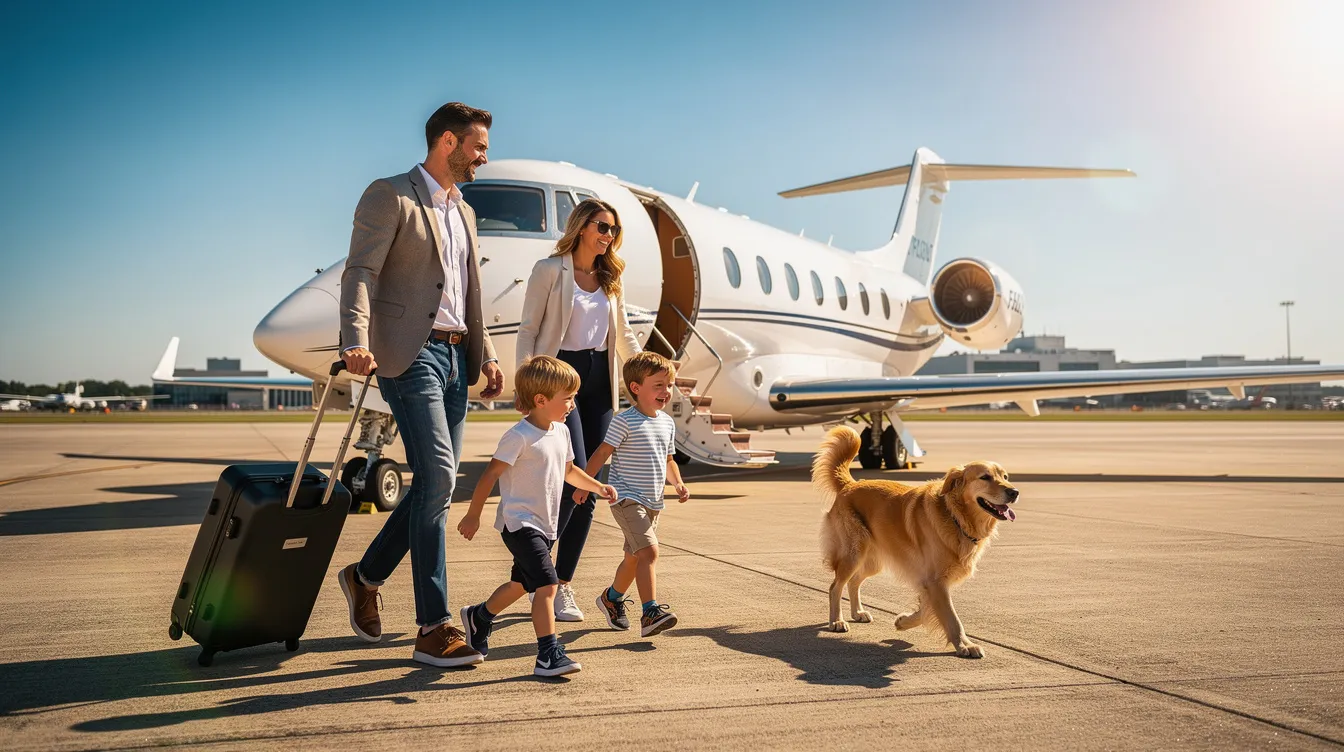
Family ski trips: Load the kids, the gear, and the dog onto a midsize jet heading to Aspen. No checked bag fees, no gate-checking skis, no layovers in Denver.
Destination weddings: A group of friends flying to a Caribbean island for a weekend celebration. An empty leg on a heavy jet can carry 10–16 passengers at once.
Milestone birthdays: Surprise your partner with a private flight to a favorite city. The spontaneity of empty legs makes this kind of gesture possible without the charter price tag.
Golf getaways: Fly with golf clubs, oversized bags, and sports equipment without worrying about airline damage or fees.
Private aviation allows for schedule flexibility whereby flights can be adjusted on short notice. For leisure, that flexibility runs both directions—operators can sometimes accommodate small timing shifts, and you can adjust your vacation plans around the best available legs.
Hoppyn members often combine empty-leg segments with scheduled and charter flights to build creative itineraries. Fly private one direction on an empty leg, return commercial. Or catch two separate legs that connect through an interesting stopover city.
Flying Private with Large Groups
In private aviation, "large groups" means anything from 8–16 passengers on a large cabin jet to 30–100+ on VIP airliners configured for private charter.
Empty legs can work for larger groups in several ways:
Multiple light jets or midsize jets sometimes appear on similar corridors on the same day
Operators repositioning larger aircraft (heavy jets, large cabin configurations) occasionally list those as empty legs
Corporate retreats, sports teams, band tours, and extended families traveling to events or holiday destinations can all benefit
Honest expectations: Large groups need more advance planning and cannot always rely solely on last-minute empty legs. But even covering one or two legs of a multi-segment trip via Hoppyn can deliver significant savings compared to chartering every segment at full charter rates.
For how many seats you need, check the aircraft type on the listing. Light jets typically carry 4–8 passengers. Midsize and super midsize jets handle 6–10. Heavy jets and large cabin jets accommodate 10–16 or more.
How Hoppyn Connects Travelers with Empty Legs Worldwide
Hoppyn's platform aggregates empty-leg flights from operators around the world and presents them in a single, member-only flight board. Think of it as connecting travelers with surplus capacity that already exists in the system.
Here's how it works at scale:
Global coverage: Routes span North America, Europe, the Caribbean, and other active private aviation regions. This isn't a small regional network—it's a vast network of operators.
Daily updates: New flights are added daily as operators confirm their charter schedules and identify repositioning needs.
Waitlist system: Multiple members can join waitlists for the same leg. Seats are allocated when that flight is confirmed to operate.
Alerts and tracking: Serious travelers check the board regularly or set alerts for favored routes—New York to South Florida, Los Angeles to Las Vegas, London to Mediterranean destinations.
The system is designed to feel tangible and straightforward. You see flight details—route, date, approximate time, aircraft type—and decide whether it fits your plans.
Step-by-Step: What It's Like to Fly Private with Hoppyn
Never flown private before? Here's exactly what to expect.
Step 1: Join Hoppyn. Sign up at Join Hoppyn. Complete your profile with basic traveler information. Membership activates immediately.
Step 2: Browse the flight board. Log in to the platform and browse flights. Listings show route, date, approximate departure time, aircraft type, and available seats. Filter by region, date range, or aircraft category.
Step 3: Join a waitlist. Found a leg that matches? Join the waitlist with your passenger count and basic details. No payment required beyond your existing membership.
Step 4: Get confirmed. When the operator confirms the flight will operate, you receive notification that you're cleared to fly. Booking a private jet involves reviewing safety standards and considering FAA regulations—Hoppyn handles the operator vetting on your end.
Step 5: Show up and fly. Head to the private terminal (FBO) at the departure airport. Private jet check-in can be as close as 15 minutes before departure. No security theater. No boarding groups. Walk to the aircraft, board, and go.
Concrete example: A member sees a light jet empty leg listed from Miami–Opa-Locka to Teterboro, New Jersey on January 15. She joins the waitlist on January 12. On January 13, she's confirmed. On January 15, she drives to Opa-Locka Executive Airport, checks in at the FBO at 8:45 AM, and is wheels-up by 9:00 AM. By 11:30 AM,By 11:30 AM, she's in a car heading into Manhattan. Total travel time: under 4 hours, door to door.
Empty leg flights, also known as dead-heads or ferry flights, can save travelers up to 75% compared to standard private jet charter costs. An empty leg is a flight without passengers used for repositioning the aircraft between bookings. These flights are often available at discounted rates but require flexibility in scheduling, as departure times and routes are fixed based on the primary charter.
Booking a private jet traditionally involves four simple stages: requesting a quote, reviewing options with the help of a dedicated charter consultant, confirming and funding the trip, and then flying. Private jet rental costs range widely—from about $2,300 to $23,000 per hour—depending on aircraft category, with operational logistics, government taxes (such as a 7.5% US Federal Excise Tax), and positioning fees potentially adding to the final cost. Newer aircraft may command a premium of $100 to $1,000 per hour.
Private jets provide access to over 3,000 airports in the U.S. and Caribbean, and more than 5,000 public-use and private facilities across the U.S. They offer significant advantages such as check-in as close as 15 minutes before departure, the ability to fly into smaller regional and local airports not served by commercial airlines, and more relaxed luggage limitations. Private flying reduces total travel time by minimizing airport delays and often eliminates layovers through more direct routes.
Aircraft options vary by range and passenger capacity: heavy jets can fly up to 7,000 miles and accommodate 10–16 passengers; midsize jets typically have a range of about 2,450 miles and seat 6–9 passengers; light jets usually seat 4–8 passengers; and turboprops like the Pilatus PC-12, which has a range of 1,700 miles, are cost-efficient for distances between 600 and 1,000 miles.
Private aviation also enhances comfort with customizable catering and spacious seating, provides a secure environment for confidential meetings, and offers personalized travel experiences tailored to individual needs. Booking can often be completed with just 24 hours' notice, with safety standards and FAA regulations carefully reviewed to ensure passenger security.
Hoppyn leverages the empty leg model by offering a $997/year membership granting access to unlimited empty-leg flights worldwide with no per-flight fees, deposits, or hidden costs. Members browse a daily updated flight board, join waitlists for matching routes, and receive confirmation when flights operate. This approach disrupts traditional private jet charter pricing and access, making private plane flying more affordable and accessible for frequent travelers, business users, and leisure flyers alike. She's in a car heading into Manhattan. Total travel time: under 4 hours, door to door.
Safety, Certification, and Travel Support When You Fly Private
Safety isn't something you should compromise on, regardless of how you book flights.
All empty-leg flights arranged through Hoppyn are operated by licensed third-party air carriers. In the U.S., these operators hold FAA Part 135 certificates, which require operations manuals, crew training programs, aircraft maintenance schedules, and safety management systems with federal oversight. International flights follow equivalent local aviation regulations.
Hoppyn partners only with operators that meet strict safety and maintenance standards. Industry safety rating programs like ARGUS and Wyvern provide additional layers of vetting. These are the same standards underlying traditional air charter—you're not trading safety for savings. Every operator in general aviation that carries passengers commercially must maintain a strong safety record and comply with ongoing regulatory requirements.
Members have access to dedicated, attentive service and 24/7 travel support before and during trips. Questions about terminals, luggage, pets, ground transportation, or schedule changes? The support team handles it. Private jets can access over 3,000 airports in the U.S. and Caribbean, and support can help you navigate which FBO to use at each.
Scheduling, Flexibility, and the Reality of Empty Leg Travel
Let's be straight about this: empty legs aren't for everyone, and they aren't without trade-offs.
What to expect:
Empty legs are tied to primary charter flights. If the underlying charter changes departure time, your empty leg shifts too. If the charter cancels, the empty leg may disappear.
Departure times are approximate, not guaranteed to the minute.
Routes are fixed. You can't reroute an empty leg mid-booking without converting to a full charter at market rate.
Who this works for:
Travelers who can be flexible by a few hours or even a day
People planning leisure trips where an exact departure hour matters less than arriving that day
Business travelers who build buffer time into their schedules
Backup planning:
Sometimes a leg cancels. Members should be prepared to switch to another empty leg on the board, book a traditional charter, or pivot to commercial flights.
We recommend maintaining some flexibility in hotel and ground arrangements when relying on empty legs as your primary travel option.
Consider travel insurance for important trips where weather conditions or charter changes could affect your plans.
This uncertainty is exactly why empty legs are so cost effective. You're accepting schedule flexibility in exchange for dramatically lower costs. That's the trade-off-and for most members, it's worth it.
Private Plane Flying Etiquette and Practical Tips
First time flying private? Here's a quick checklist so you look like you've done this before.
Arrival and timing:
Arrive at the FBO 20–30 minutes before departure. Not earlier, not later.
Communicate your group size accurately when joining the waitlist. Showing up with extra passengers creates real problems.
Luggage and gear:
Light jets handle standard luggage well but have limited cargo space. If you're bringing golf clubs, skis, or large musical instruments, let support know in advance.
Private jets provide more luggage space compared to commercial flights, but physics still applies on smaller aircraft types.
Onboard behavior:
Respect crew instructions. They're professionals, not service staff you can override.
Dress code ranges from business attire on corporate-style legs to smart casual on leisure routes. Read the room (or the cabin).
Food and drink:
Catering varies by operator and flight length. Short hops may have snacks and beverages. Longer flights may include meals.
If you want specific catering, request it through Hoppyn support in advance. Don't assume a charcuterie board appears on a 45-minute repositioning flight.
Tipping:
In the U.S., tipping pilots and crew $50–$100 per crew member is appreciated but not required. International norms vary.
Environmental Considerations When You Fly Private
Private jets have a higher per-passenger carbon footprint than most commercial flights. That's a fact, and pretending otherwise doesn't help anyone.
But here's the nuance: empty-leg flights exist whether you're on them or not. The aircraft is flying that route regardless. By filling seats on leg flights that would otherwise carry zero passengers, you're improving the utilization of an existing aircraft movement—not adding a new one.
That said:
Carbon offset programs are available through independent providers. Members can choose to offset their flights if desired.
Sustainable Aviation Fuel (SAF) is gaining traction in the industry, though adoption remains uneven across operators and regions.
Efficient aircraft design continues to improve fuel consumption, especially in newer turboprop and light jet models.
The most environmentally responsible way to use private aviation is to maximize occupancy on flights that are already happening. That's precisely what empty legs do.
Who Private Plane Flying with Hoppyn Is (and Isn't) For
Not every traveler is a fit. Here's who benefits most—and who might not.
Ideal members
The bi-coastal founder: Flies between New York and Los Angeles or San Francisco 6–8 times per year. Flexible on exact days. Catches empty legs in at least one direction regularly.
The Europe-based family: Visits the U.S. twice a year, combining empty-leg transatlantic positioning flights with domestic segments. Kids and pets travel without commercial airline hassles.
The leisure traveler: Loves Las Vegas and Miami. Happy to check the board weekly and jump on a deal. Values the experience of arriving at private terminals and skipping commercial chaos.
The consultant or small business owner: Needs occasional private flights for client meetings but can't justify a jet card. Membership at $997/year is a no-brainer for even 2–3 flights.
Who it's less ideal for
Travelers who need firm, non-negotiable departure times for every specific trip. If you can't tolerate a 2-hour schedule shift, empty legs will frustrate you.
People who fly private once every few years. The membership still costs less than a single charter flight, but you won't get the full value without regular usage.
Anyone expecting guaranteed scheduled service on a fixed route every week. That's a scheduled airline, not an empty-leg platform.
The $997/year membership makes the most sense when you plan to use multiple flights across the year. It's not a one-off experiment—it's a travel strategy.
How to Get Started: Joining Hoppyn and Planning Your First Private Flight
Ready to stop reading and start flying? Here's the path:
Sign up: Join Hoppyn online. Membership activates immediately at $997/year.
Complete your profile: Add your traveler details so you can book flights quickly when opportunities appear.
Explore the flight board: Browse flights and start tracking corridors that match your regular travel—home city to favorite destinations, business routes, vacation spots.
Book your first leg: Start with a short, familiar route. A quick hop between nearby cities gets you comfortable with FBOs, private terminals, and the boarding process before tackling longer distances.
Aviation experts and frequent flyers will tell you: the hardest part of flying private is doing it the first time. After that, you won't want to go back.
New flights are added daily. The best empty legs go fast. Start browsing, join a waitlist, and let the data rates of your checking habit pay off in flights that cost you nothing beyond membership.
Your next flight is already on the board. Go find it.
Frequently Asked Questions
Is Hoppyn a charter broker or an aircraft operator?
Hoppyn is neither. We're a membership platform that connects members to empty-leg flights offered by licensed third-party operators. Hoppyn does not own or operate aircraft. All flights are conducted by certified air carriers under relevant aviation regulations—FAA Part 135 in the U.S., or local equivalents abroad. This model lets us focus on sourcing cost-effective empty legs and supporting members rather than managing a fleet. Learn more on our About page.
Can I choose the exact departure time and route when flying on an empty leg?
Empty-leg flights have predetermined routes and approximate schedules based on the primary charter they're attached to. While small time adjustments are sometimes possible through coordination with the operator, you typically cannot redesign the route or drastically change departure times without converting to a full private jet charter at standard charter rates. If you need precise schedules for a specific trip, keep traditional charter options in mind—but use empty legs whenever timing and routes align with your plans.
What happens if an empty leg I'm waitlisted on is canceled or rescheduled?
If the underlying charter cancels or changes, the associated empty leg may also change or disappear. This is a known trade-off of the empty-leg model. Hoppyn notifies members promptly of any changes and helps them switch to another available empty leg or choose alternative plans. We recommend maintaining some flexibility in hotel bookings and ground transportation when relying on empty legs as your primary option.
Are pets allowed on private flights booked through Hoppyn?
Pet policies vary by operator and country. Many private operators are pet-friendly, especially on leisure routes, but capacity and cleaning requirements may apply on light jets and smaller aircraft. Members should check each flight's pet rules and any documentation requirements—health certificates, vaccination records, and similar paperwork may be needed. Contact Hoppyn support in advance when planning to bring pets so the team can confirm what's allowed on that specific empty leg.
Can I use Hoppyn for international flights, or is it only for domestic routes?
Empty legs can be both domestic and international, depending on where operators' charter demand takes their aircraft. Hoppyn's global reach means members regularly see empty-leg options between major international hubs and resort destinations throughout the year—across North America, Europe, the Caribbean, and beyond. You must still meet all immigration, visa, and customs requirements for the countries on your itinerary, just as you would on commercial flights. Request a flight if you're looking for a specific international corridor.
Conclusion
Private plane flying no longer has to be an exclusive luxury reserved for the ultra-wealthy. Thanks to empty leg flights and innovative membership models like Hoppyn’s, you can access private jets at a fraction of traditional charter costs. By leveraging the repositioning flights that operators must fly anyway, you gain access to premium aircraft worldwide with a transparent, flat annual fee and no per-flight charges.
This approach is ideal for travelers who value flexibility, time savings, and privacy but want a more affordable way to fly private. Whether you’re a business professional needing efficient multi-city travel, a family heading to a ski trip, or a group planning a special getaway, empty leg flights offer a compelling alternative to commercial airlines and costly jet cards.
With Hoppyn, you can browse a daily-updated flight board, join waitlists, and fly private without the traditional barriers. The future of private plane flying is accessible, flexible, and cost-effective—and it’s already here.
Ready to browse empty-leg flights? Join Hoppyn today and start flying private for less.




Unlock Your Private
Jet Experience
Join our exclusive membership for
free flights today!

Explore More
Blogs


Join Our Exclusive
Newsletter
.png)






