
Private Plane Ride: How to Fly on Private Jets Without Paying Charter Prices


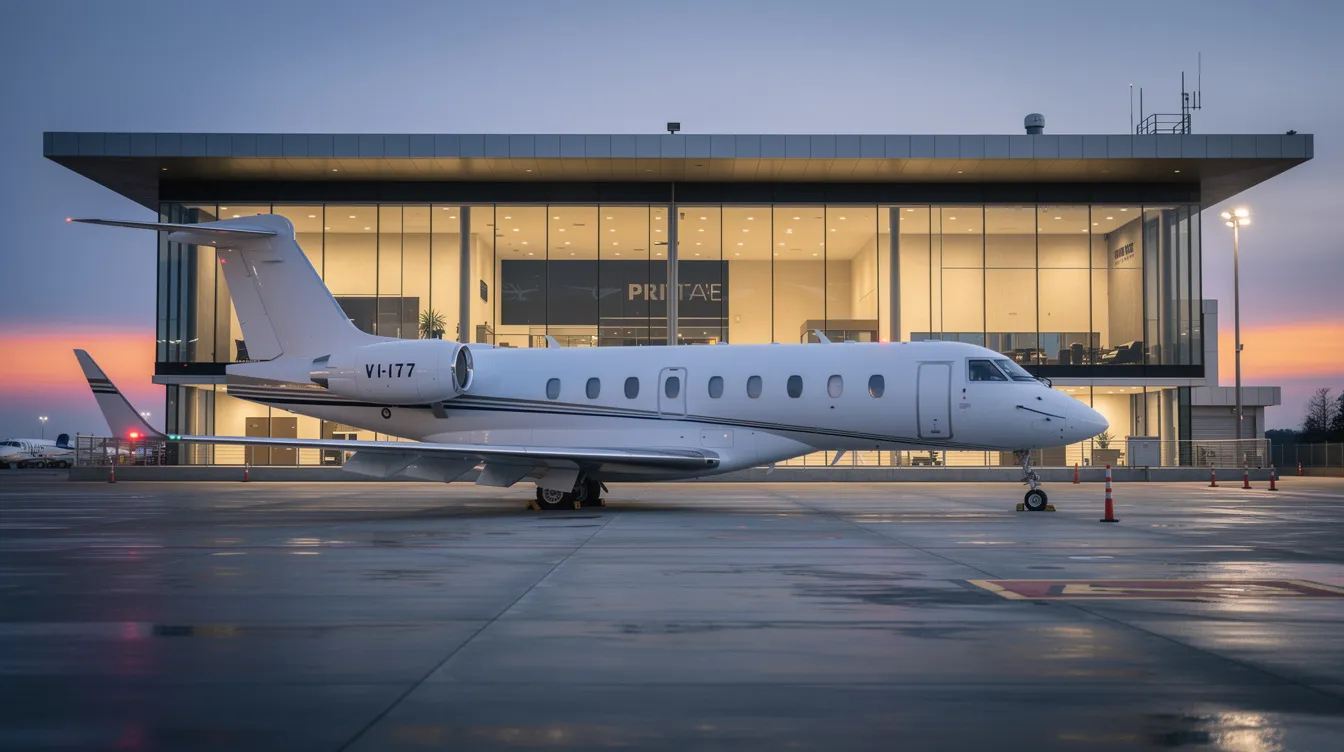
A private plane ride used to mean one thing: writing a check for tens of thousands of dollars. In 2026, that's no longer the only way in. Empty-leg flights — jets repositioning between paid missions — have opened a side door to private aviation that most travelers still don't know about. This guide breaks down exactly how private jet travel works today, what it really costs, and how a flat-fee membership can put you on the same aircraft for a fraction of the price.
Key Takeaways
A typical private jet charter costs $2,300–$17,000 per flight hour in 2026, but Hoppyn members can ride empty-leg flights for $0 per seat after a flat $997/year membership.
An empty-leg private jet flight is a repositioning flight that would otherwise fly empty. It makes a private plane ride dramatically cheaper than traditional private charter.
Members access a global mix of light jets, midsize jets, large cabin jets, and ultra-long-range aircraft types, added daily, with no hidden fees, short-leg fees, or federal excise tax surprises stacked on top of the membership.
A private plane ride through Hoppyn feels like a full-price charter - entire aircraft cabin, fast boarding, complete privacy — even though you only pay the annual fee, not per-flight private jet rental costs.
You can browse live empty-leg flights and start planning your first private plane ride right now.
What Is a Private Plane Ride Today? (And Why It's Not Just for Billionaires)
Here's what most people assume: flying privately costs $5,000–$10,000 per hour, minimum. That's not wrong for traditional charter. But in 2026, members are boarding private jets on empty-leg flights for the cost of a flat annual membership - no per-flight invoice, no hourly rate math.
A private plane ride means something specific:
You board via a private terminal (called a Fixed Base Operator, or FBO), not the main commercial airline terminal
There are no TSA lines - passengers typically arrive 15 to 30 minutes before departure for private flights
You get direct routing to regional airports closer to your actual destination, often bypassing crowded baggage claims entirely
You have access to the entire aircraft, not a single middle seat in row 34
Private jet travel prioritizes speed, privacy, and convenience over everything else
Booking a private flight often involves more direct access to airports compared to commercial airlines
At Hoppyn, we don't sell classic private charter. We sell access to existing private jet flights — empty legs — via a yearly membership. The planes are already flying. You're filling seats that would otherwise go empty.
How a Private Plane Ride Usually Works with Traditional Private Charter
If you've never chartered before, here's the standard process in 2026:
Request a quote. You contact a charter broker or operator, share your dates, route, and passenger count.
Choose your aircraft. Options range from turboprop aircraft for short regional hops to light jets, midsize jets, and ultra-long-range jets for transcontinental or international flights.
Receive a rate. Private jet pricing is often calculated by aircraft category and flight hours, typically quoted as an hourly rate.
Review the fine print. The quote includes the hourly aircraft rate, but often excludes positioning flights, taxes, and incidentals.
Sign and fund. You commit, wire the funds, and get your departure details.
With private jet charters, you're paying for the entire aircraft — crew members, fuel, insurance, and repositioning flights to get the plane to your departure point. Private jet charter cost is driven by flight distance, date, route demand, and aircraft size.
Private jet rental costs range from $2,300 to $17,000 per hour. Private jet charters typically include crew, fuel, and insurance in the base rate. But here's what catches new flyers off guard:
A 7.5% federal excise tax applies to all domestic flights in the U.S.
Per-passenger segment fees add $4–$5 per leg
Landing fees range from $100 to $1,500 per flight
Ramp and handling charges at fixed base operators
Short leg fees for very brief flights
Overnight expenses and crew rest costs on multi-day trips
Deicing charges in winter months
Fuel surcharges that fluctuate with fuel prices
Private jet costs can increase during peak demand periods, and booking 30 to 60 days in advance offers the best rates. The hourly rate you see in a charter quote is often only 60–70% of the total bill.
That complexity is exactly why a flat membership model exists.
How a Private Plane Ride Works with Hoppyn's Empty-Leg Membership
Here's how it works with Hoppyn:
You pay a flat $997 per year. Then you browse and join waitlists for empty-leg flights where confirmed seats cost $0. That's it.
These are real private jets - often the same aircraft types sold at $4,000–$15,000 per hour in private jet charters — flying empty to reposition between paid missions. Membership services provide access to over 20,000 aircraft globally, with new empty leg flights added daily for members.
The workflow is simple:
Sign up for your annual membership
Log in to the platform and filter empty legs by date, region, or aircraft type
Join waitlists for flights that match your plans
Get notified when a leg confirms — you'll receive the departure time and FBO address
Show up at the private terminal 20–30 minutes before departure for your private plane ride
No hidden fees. No short leg fees. No per-seat markups. No surprise federal excise tax added on top of the advertised membership. Airport transfers, special catering, or luxury ground transportation remain optional extras you arrange on your own.
Membership includes 24/7 dedicated support for travelers, so you're never guessing about logistics.
Empty-Leg Flights Explained: The Secret Behind Affordable Private Jets
An "empty leg" is a private jet repositioning flight that must move from Point A to Point B without a paying passenger. These flights occur when a private jet returns empty to its base or needs to move to its next charter pickup.
Why do empty legs exist?
One-way charters. A client flies New York to Miami but doesn't need the return. The jet flies back empty.
Schedule shifts. A last-minute charter change leaves an aircraft stranded at the wrong airport.
Positioning for next mission. An operator needs a jet in Los Angeles for a Monday charter, so it repositions from Las Vegas on Sunday night.
Empty leg flights are typically one-way journeys with no passengers. They happen every day, across thousands of routes worldwide.
Concrete examples of routes that frequently produce empty legs in 2026:
New York to Miami (and reverse) - light jets and midsize jets
Los Angeles to Las Vegas - short hops on efficient aircraft
London to Nice - popular seasonal corridor
Dubai to Malé - leisure repositioning after Gulf charters
East coast to west coast transcontinental legs
Empty leg flights can save travelers up to 75% off standard charter rates. Booking empty leg flights can significantly reduce private jet travel costs when your schedule allows flexibility.
Hoppyn aggregates these global empty-leg private jets and turns them into a browsable flight board for members — connecting travelers to flights that would otherwise fly with zero passengers, similar to how a city-based hub for spontaneous empty legs lets travelers pick a departure city and grab discounted one-way private flights.
What Does a Private Plane Ride Actually Cost in 2026?
Let's put real numbers on the table.
Traditional private jet rental prices by aircraft category:
Aircraft Category | Hourly Rate | Typical Use |
|---|---|---|
Turboprop | $2,300–$3,500/hr | Regional hops under 500 miles |
Light jet | $2,500–$6,500/hr | Short/medium flights, 2–3 hours |
Midsize jet | $5,500–$10,000/hr | Transcontinental, medium-haul |
Heavy jet charters | Up to $10,000/hr | Long-haul domestic, some international |
Large cabin / ultra long range | $12,000–$17,000/hr | Intercontinental missions |
VIP airliners | $18,000–$23,000/hr | Ultra-premium long-haul |
For a typical 2-hour private plane ride — say, New York to Miami — traditional private jet charter flights might quote $12,000–$25,000 all-in, depending on aircraft types, dates, and the 7.5% federal excise tax.
Now compare that to Hoppyn's model: a member pays $997/year, then flies multiple 1–4 hour empty legs without additional flight costs. Fly just three or four legs in a year, and your effective per-flight private jet cost drops to a few hundred dollars.
Hoppyn members still arrange their own hotels, ground transport, and optional extras. But the flight seat itself on the empty leg is included in the membership.
Quick comparison - four 2-hour flights in one year:
Traditional Charter (Light Jet) | Hoppyn Membership | |
|---|---|---|
Per-flight cost | ~$8,000–$12,000 each | $0 per flight |
Annual total (4 flights) | $32,000–$48,000 | $997 (membership) |
Extras | FET, landing fees, crew costs | Hotels, ground transport |
The math speaks for itself. |
Private Plane Ride vs Commercial First Class
Take a common route: Los Angeles to New York in 2026.
Commercial first class: $1,500–$3,000 round trip on major airlines
Traditional private jet charter: $35,000–$60,000 one-way on a super-midsize or large cabin jet
Hoppyn empty leg: Membership fee only (if a matching leg is available)
But price isn't the only difference. A private plane journey can save travelers substantial time compared to commercial flights:
Time at the airport: Arrive 20–30 minutes before departure at the private terminal, versus 2+ hours for commercial. Arrival at a private plane typically allows passengers to bypass crowded baggage claims.
In-flight privacy: In-flight privacy allows for personal conversations without public disruption - no strangers overhearing your calls or reading your screen.
Flexibility: Private planes generally allow for more flexible scheduling than commercial flights. No connecting flights, no layovers.
Luggage and pets: Bring golf clubs, skis, or your dog without the hassle of commercial restrictions.
Workspace: Quiet cabin for calls, reading, or resting.
Group economics: Private aviation can be more cost-effective for groups traveling together compared to buying individual commercial tickets.
Custom catering and affluent service distinguish private flights from commercial options. And passengers can often customize their in-flight experience, including seating and entertainment options.
When Hoppyn members fly multiple legs per year, their total trip cost competes directly with business or first-class commercial — with a dramatically better experience.
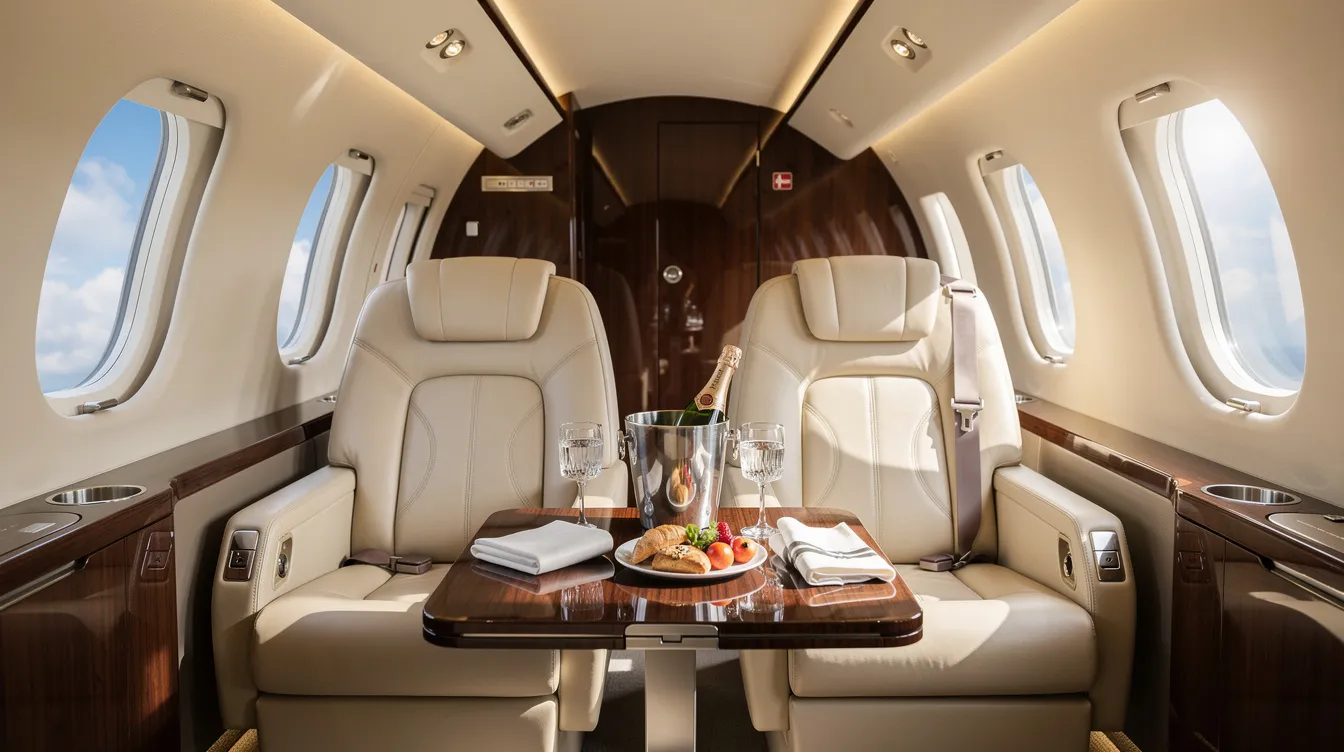
Aircraft Types You Can Experience on a Private Plane Ride
Not all private jets are the same. Here's what you might encounter as empty legs on the Hoppyn platform:
Turboprops (e.g., King Air 350, Pilatus PC-12): Ideal for short regional hops. Slower than jets but excellent for accessing smaller aircraft runways. Turboprop charters start at around $2,000 per hour.
Very light jets and light jets (e.g., Cessna Citation CJ3, Phenom 300): Light jets typically seat 3 to 6 passengers. Great for 2–3 hour flights up to ~1,500 miles.
Midsize jets (e.g., Citation Latitude, Learjet 45XR): Midsize jets can accommodate 7 to 10 passengers comfortably, with stand-up cabins and longer range.
Super-midsize (e.g., Gulfstream G280, Challenger 350): Transcontinental capability, more cabin space, better amenities.
Large cabin jets (e.g., Falcon 2000EX, Gulfstream G-V): Large jets usually seat 12 to 19 passengers. Full galleys, lie-flat options, multiple cabin zones.
Ultra long range jets (e.g., Global 7500, Gulfstream G650): Ultra-long-range jets can fly over 6,000 nautical miles - London to Tokyo or New York to São Paulo nonstop.
VIP airliners (e.g., Airbus A330 VIP configuration): VIP airliners can seat up to 50 passengers. Think corporate delegations or large families.
Hoppyn doesn't guarantee specific aircraft models, but members can see aircraft type, year, and configuration before joining a waitlist. For tips on getting the most comfortable spot, check out The Best Seat on a Private Plane.
Light Jets, Midsize, and Ultra Long Range: Choosing the Right Private Jet
Understanding aircraft categories helps you pick the right empty leg for your trip.
Light jets like the Citation CJ3 or Learjet 45XR are built for 2–6 passengers on flights up to roughly 1,500–2,000 miles. They're the workhorses of private aviation — efficient aircraft for popular routes like New York to Miami or Dallas to Houston. In the charter world, they carry a lower private jet cost per hour, typically $2,500–$6,500.
Midsize and super-midsize jets like the Gulfstream G280 and Challenger 350 are the go-to for 6–9 passengers on medium to long legs. Think Dallas to Seattle, Paris to Marrakesh, or anywhere you need 3–4 hours of flight time with a stand-up cabin and real luggage space.
Large and ultra-long-range jets like the Gulfstream G-V or Airbus A330-300 VIP serve 10–18+ passengers on long-haul international flights. New York to London, Los Angeles to Tokyo, or any mission where you need 7+ hours of nonstop range. These aircraft feature lie-flat seating, full galleys, and multiple cabin zones — the kind of ultra-long-range travel that makes business class feel cramped.
When you're riding as a Hoppyn member, you don't pay different per-hour rates based on aircraft size. But your experience — cabin space, range, amenities — changes dramatically with each category. A diverse fleet of empty legs means you might hop a turboprop one week and a heavy jet the next.
What's Included in a Private Plane Ride (And What's Not)
Typically included on the aircraft:
Aircraft and crew members (pilots, and sometimes a flight attendant on larger jets)
Basic in-flight snacks and beverages
Standard baggage allowance appropriate to the aircraft type
Wi-Fi on many modern jets (varies by aircraft)
Enclosed lavatory on most aircraft except very light jets
Private aviation utilizes Fixed-Base Operators (FBOs) instead of commercial airports, meaning private terminals with lounges, parking, and concierge services
Custom catering can be arranged for private flights based on preferences — from simple sandwich platters to multi-course meals. This is typically an optional add-on.
How billing differs:
Traditional Private Jet Charter | Hoppyn Membership | |
|---|---|---|
Aircraft & crew | Itemized hourly rate | Included in membership |
Fuel | Billed or surcharge | Covered by operator |
Federal excise tax | 7.5% added to invoice | Not stacked on membership |
Positioning flights | Billed separately | N/A (empty leg IS the positioning) |
Segment fees | Per-passenger, per-leg | N/A |
Landing fees | $100–$1,500 per flight | Operator's cost |
Hidden fees | Possible (short-leg fees, pet cleaning fee, crew overtime) | None from Hoppyn |
Luxury catering beyond basic provisions
Ground transportation (limousines, car services)
Hotel stays at destination
Destination activities or experiences
Passport/visa fees for international flights
Members still need to comply with crew safety rules, baggage limits for the specific aircraft type, and passport/visa regulations for international legs.
Common Private Jet Fees: How Membership Skips Most of Them
Here's the fee stack that traditional private charter clients face on every single trip:
Landing fees: $100–$1,500 depending on airport authority and aircraft size
Ramp and handling: $100–$500 at fixed base operators
Hangar and deicing: Hundreds to thousands in winter months
Federal excise tax: 7.5% on all domestic flights in the U.S.
Segment fees: ~$4–$5 per passenger per domestic leg
Short leg fees: Surcharges for very short flights (under 1 hour)
Crew overnight expenses and crew salaries for multi-day missions
Crew rest accommodations when duty limits require layovers
Pet cleaning fee: Some operators charge after animal transport
International fees for customs, overflight permits, and handling abroad
Additional costs may include fuel surcharges, landing fees, and crew expenses — and these can add 30–40% on top of the hourly rate you were quoted.
When you take a private plane ride via Hoppyn's empty-leg membership, the operator has already priced these items into their repositioning costs. The member doesn't see a per-trip invoice for these elements. You pay your annual membership, and the flight seat is covered.
Some trip-specific charges — like severe deicing on an unexpected snowstorm or a special catering request — may still apply and are communicated upfront when relevant.
Planning Your First Private Plane Ride: Step-by-Step
Here's your chronological guide as a Hoppyn member:
Sign up. Join Hoppyn and create your account. You gain access to the live empty-leg flight board within minutes.
Browse flights. Filter by date, region, aircraft type, or route. New flights are posted daily.
Join waitlists. Found a leg that works? Join the waitlist. You can be on several waitlists at once for flexibility.
Get confirmed. When a leg confirms, you'll receive a notification with the departure time and FBO address — for example, Signature Flight Support at Teterboro (TEB) or the private terminals at Harry Reid International in Las Vegas.
Confirm passenger details. Share names, IDs, and any passport info for international flights.
Show up. Arrive 25–30 minutes before departure at the FBO with your ID. That's it.
Practical tips:
Keep a bag packed and documents ready for spontaneous trips
Coordinate ground transportation to and from the private terminal in advance
For private jets landing at regional airports, you may be closer to your final destination than the main commercial airport
Etiquette basics: Communicate with crew members, treat aircraft interiors with care, and be on time - repositioning legs run tight schedules, and the plane won't wait like a commercial airline gate.
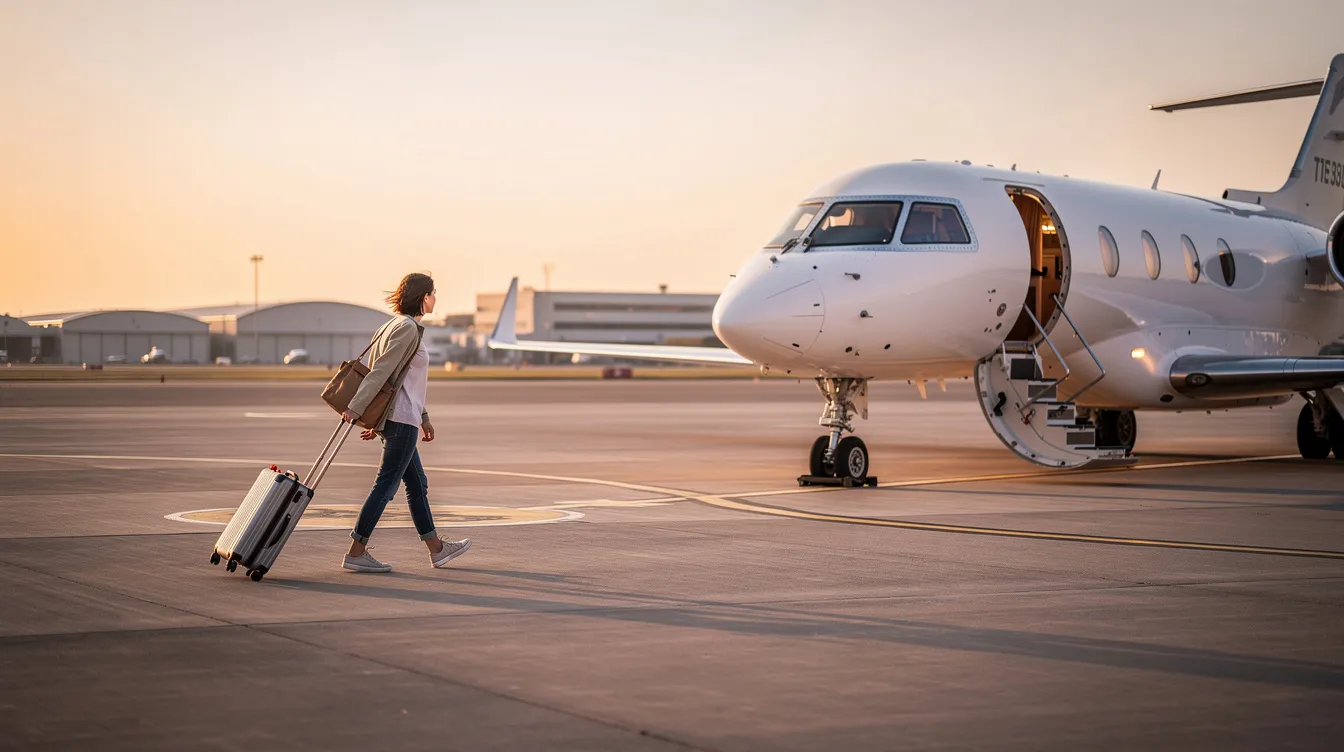
Popular Routes for a Private Plane Ride on Empty Legs
Some city pairs generate empty-leg flights far more frequently than others. Dedicated pages for empty-leg flights from Toronto and other hubs highlight just how often these routes appear. Here are the corridors worth watching in 2026:
New York–Miami (and reverse): One of the busiest private charter routes in the world. High volume means high empty-leg frequency on the East Coast.
Los Angeles–Las Vegas: A 40-minute hop that produces constant repositioning flights. Popular routes like this often have aircraft availability daily.
London–Paris and London–Nice: European business and leisure corridors with steady private jet service.
Dubai–Riyadh: Growing Gulf corridor with increasing charter and empty-leg activity.
Geneva–Nice: Seasonal European leisure route, especially in summer.
West coast ski routes: Los Angeles or San Francisco to Aspen, Sun Valley, or Mammoth during ski season.
Transatlantic legs: New York to London or Paris occasionally appear as ultra-long-range empty legs after one-way charters.
Business hubs (New York, London, Dubai, Singapore) and leisure hotspots (Mykonos, Ibiza, Aspen, Maldives gateways) see the highest volumes of scheduled flights and charter activity — which means more empty legs.
While members can't "order" specific routes, watching these corridors on the Hoppyn flight board increases your chance of catching a match.
Short Hops vs Ultra Long Range: How Distance Changes the Experience
A 40-minute hop from Los Angeles to Las Vegas on a light jet feels completely different from a 7–8 hour ultra-long-range flight from New York to London in a large cabin jet.
Short hops:
Quick boarding, fast climb, short cruise, rapid descent
Less cabin time means you're basically stepping into a taxi with wings
Traditional operators sometimes charge short-leg fees for brief flights because takeoff and landing consume disproportionate fuel and maintenance — fees Hoppyn members avoid seeing directly
Private jets can react more noticeably to turbulence due to their size and weight, especially smaller aircraft on short flights
Ultra long range legs:
Lie-flat seating, full galley with meal service potential, multiple cabin zones
Time to work, sleep, or hold meetings - turning flight time into productive hours
Many travelers prefer them to business class on commercial airlines for the privacy and personal space
These flights on ultra-long-range jets cover 6,000+ nautical miles nonstop
Empty legs exist across both short-hop and ultra-long-range routes. Flexibility in travel dates is often required for empty leg flights, but the payoff is access to aircraft that would otherwise cost tens of thousands per flight hour.
Timing and Availability: Why Flexibility Matters for Empty Legs
Empty-leg private jets are inherently opportunistic. Operators publish them when charters book one-way trips or schedules shift. Most empty legs appear within a window of 3–10 days before departure, though some long-range repositioning flights may be listed a few weeks ahead.
Key realities:
Dates and departure times can move slightly as the underlying charter route changes. Hoppyn members are notified of any adjustments.
Aircraft availability on popular routes tends to be better than on remote or niche corridors.
The closer you get to departure, the larger the discount tends to be - but also the higher the cancellation risk if the underlying charter shifts.
Treat empty-leg private plane rides like heavily discounted standby on premium aircraft. Fantastic value if you can adapt your schedule.
Frequent flyers should track routes they care about — for example, New York to Florida in winter 2026 — and keep bags and documents ready for spontaneous trips.
Who a Private Plane Ride on Empty Legs Is Best For
The Hoppyn membership model works best for specific traveler profiles:
Remote founders and executives flying monthly between hubs like San Francisco, New York, Austin, or Miami
Digital nomads hopping across regions with flexible schedules
Couples or families with open vacation dates who want to upgrade from commercial to private without the per-trip cost
Small teams visiting clients or attending events, where the whole group rides one aircraft
Frequent flyers currently spending $2,000–$5,000 per trip on business or first class, who could redirect that spend toward a membership and fly private instead
It's less ideal for rigid, must-fly-at-9 am-Monday schedules where on-demand, full-price private charter or commercial scheduled flights may still be the right choice. If you need total control over timing and route, you charter a private jet. If you want the private jet experience at membership pricing, you adapt to what's available.
Business Trips by Private Plane: Turning Travel Time into Work Time
A private plane ride isn't just about comfort — it's about productivity.
Executives and teams use private flights to hold in-flight meetings, review presentations, or rest before landing for a full day of work. In-flight privacy allows for personal conversations without public disruption, making the cabin a genuine mobile office.
Real-world examples:
A founder flies from San Francisco to Austin for a 2026 product launch, catching an empty-leg light jet that departs at 6 PM and arrives by 10 PM, skips a hotel night, and walks into meetings fresh the next morning.
A founder flies from San Francisco to Austin for a 2026 product launch, catching an empty-leg light jet that departs at 6 PM and arrives by 10 PM, skips a hotel night, and walks into meetings fresh the next morning.
Leisure Trips by Private Plane: Weekends, Events, and Family Travel
This is where empty-leg membership gets fun.
Spontaneous weekend: An LA-based couple spots a Saturday morning empty leg to Las Vegas. They're poolside by noon.
Family ski trip: A family of four catches a midsize jet from New York to Aspen. Skis, poles, boots — all loaded without the $200-per-bag airline surcharge.
Summer getaway: A last-minute London-to-Nice empty leg opens up on a Thursday. Two friends grab it and spend a long weekend on the Riviera.
Family-friendly benefits are real: easier air travel with kids (no security lines, more space), flexible baggage for sports gear, and the ability to bring pets more comfortably than on a commercial airline.
With Hoppyn, once the membership is paid, adding one more leisure trip has an effective flight cost of $0. "Why not go?" becomes a realistic question rather than a fantasy.

Safety, Operators, and Regulations for Your Private Plane Ride
Safety isn't optional. Here's how the system works:
Legitimate charter operators must meet strict regulatory requirements for safety and operations. In the U.S., safety standards for private aviation fall under specific FAA regulations, specifically Part 135 certification for on-demand charter. This imposes rigorous pilot training standards, aircraft maintenance programs, duty/rest limits, and operational control requirements.
Outside the U.S., equivalent regulatory bodies enforce similar standards. The Federal Aviation Administration and its international counterparts audit operators regularly.
Hoppyn connects members to flights from vetted operators. The operators provide aircraft, pilots, and maintenance meeting regional safety ratings and standards. Hoppyn does not operate the aircraft — it provides the membership platform and access, supported by dedicated resources for charter operators that help them seamlessly list and manage empty legs on the platform.
Aircraft and crew must comply with duty limits, maintenance schedules, and weather minima. This can occasionally cause schedule adjustments or cancellations. Safety comes before convenience — a professional private plane ride might be delayed for deicing or rerouted for weather, even when the cabin feels informal.
Taxes and Regulations: Federal Excise Tax and Beyond
A 7.5% federal excise tax applies to all domestic flights in the U.S. under IRS rules, plus domestic segment fees of approximately $4–$5 per passenger per leg. These government taxes apply to private jet charter flights operated under Part 135.
On a traditional private jet rental, FET and head taxes are clearly itemized line items that add to the final private charter flight cost. For a $20,000 charter, that's an extra $1,500 in FET alone.
Hoppyn's membership pricing is designed to be transparent: members see the yearly fee up front and don't receive a surprise stack of tax and fee line items after each private plane ride.
International flights bring additional considerations: customs fees, overflight permits, airport authority charges, and sometimes government taxes specific to the destination country.
We're not tax advisors. If you're expensing your membership or writing off business travel, consult your tax professional for specific guidance on accounting treatment.
How Much Does It Cost to Charter a Private Jet vs Join a Membership?
Let's run a simple scenario. A traveler takes four 2-hour flights in 2026:
New York to Miami
Miami to New York
Los Angeles to Las Vegas
Las Vegas to Los Angeles
Traditional light-jet charter:
Hourly rate: ~$4,000–$5,000/hr
Per-flight cost: ~$8,000–$10,000 (2 hours + fees, FET, landing fees)
Four flights: $32,000–$40,000
Plus: positioning, crew overnight, segment fees, and any hidden fees
Hoppyn membership:
Annual fee: $997
Per-flight cost: $0 (empty-leg seat included)
Personal extras: hotels, ground transportation, optional catering
Four flights: $997 total (plus personal travel expenses)
That's significant savings — potentially saving you tens of thousands per year. Even if you only catch two empty legs in a year, you're still far ahead of a single charter flight.
How to Maximize Value from a Private Jet Membership
To get the most from your Hoppyn membership:
Set a target. Plan for 3–6 private plane rides per year. Even two or three quickly surpass the membership cost versus typical business-class fares.
Stay flexible on timing. Being open to departing a few hours earlier or later dramatically increases your empty-leg options.
Consider nearby airports. Private jets can land at smaller regional and municipal airports near final destinations. A flight into Teterboro or White Plains might work better than JFK for a New York trip.
Check the flight board regularly. New legs appear daily. The earlier you spot one, the better your chances.
Combine business and leisure. Add a weekend stop after a work trip when an empty leg appears on the right route.
Match aircraft types to needs. Traveling with gear or pets? Look for midsize jets or larger. Solo? A light jet or very light jets work perfectly.
Use the Request a Flight feature to signal interest in specific routes.
Realistic Limitations of Empty-Leg Private Plane Rides
Transparency matters, so here's what to know:
No guarantee. If the underlying paid charter cancels or shifts, the empty leg may vanish or change date/time. Max passengers on a given leg depend on the specific aircraft.
Routes aren't on-demand. Corridors are determined by where paying charter clients are flying, not by where members would ideally like to go. Creative trip planning helps.
Seat limits. A smaller aircraft may only offer 4–6 seats, and how many seats are available on popular routes can vary. Active waitlists are common.
Passenger count matters. Larger groups may need to wait for a large cabin jet with more capacity.
Schedule flexibility is essential. Flexibility in travel dates is often required for empty leg flights to work.
Think of Hoppyn membership as an opportunity engine — not a replacement for every single trip. When your schedule is rigid, traditional charter services or commercial flights remain valid options.
How to Get Started: Your Next Private Plane Ride with Hoppyn
For a predictable annual fee, you can access unlimited empty-leg private jets with no per-flight cost. Members can access unlimited free empty-leg flights, ride on the same aircraft that charter clients pay thousands per hour for, and experience private aviation without the traditional private jet cost.
Here's how to start:
Visit the Join Hoppyn page
Choose your membership ($997/year)
Create your account
Access the live empty-leg flight board immediately
Start joining waitlists for flights that match your plans
You can browse upcoming empty-leg flights right now - filter by date and region, and see what's available for 2026.
If you already take a few premium trips a year, there's no reason those trips shouldn't be on a private plane. The aircraft are flying anyway. The only question is whether you'll be on board.
Ready to fly private? Join Hoppyn today and start browsing empty-leg flights.

Frequently Asked Questions
How far in advance can I see and book a private plane ride on an empty leg?
Many empty legs appear 3–10 days before departure, though some long-range repositioning flights may be listed a few weeks ahead depending on the underlying charter schedule. Hoppyn members can join waitlists as soon as flights appear and are notified promptly when a leg confirms or changes. Checking the flight board regularly is the best way to catch attractive routes early. For more details, visit the Hoppyn FAQs page.
Can I choose the exact departure time and airport for my empty-leg private plane ride?
Empty-leg schedules and airport pairs are set by the operator's repositioning needs, so members cannot customize time or origin/destination the way they could with a full private jet charter. In some cases, operators may have slight flexibility on departure time windows, but it's not guaranteed. If you require exact timing and routing, comparing a traditional private charter flight cost alongside membership-based flying privately is a smart approach.
Can I bring friends, family, or colleagues on an empty-leg flight through Hoppyn?
In most cases, once a member is confirmed on an empty leg, they can bring additional passengers up to the aircraft's allowed capacity, as long as passenger details are provided in advance. All passengers must comply with ID requirements and, for international flights, passport/visa rules. Always check each flight's specific passenger limits and max passengers before inviting others.
What happens if my empty-leg private jet flight is changed or canceled?
If the underlying charter changes, the empty leg may shift in time or route, or be canceled entirely. Members are notified as soon as the operator updates the schedule. Because empty legs are opportunistic, Hoppyn does not guarantee replacement flights on the same route and time — but members can immediately pivot to other available legs. Travelers with must-attend events should keep a commercial backup option in mind.
Do I still earn airline miles or loyalty points when I take a private plane ride?
Private jet flights, including empty legs, do not typically earn commercial airline miles because they are operated outside standard airline loyalty programs. However, some travelers pay for their Hoppyn membership with rewards credit cards, indirectly turning card points toward the cost of private plane rides via the membership fee. It's a trade-off: fewer airline miles, but a significantly upgraded travel experience. As a leading provider of empty-leg access, Hoppyn focuses on making private flights accessible rather than replicating commercial loyalty structures.
Conclusion
Flying private no longer means breaking the bank. Thanks to empty-leg flights and Hoppyn's innovative membership model, you can enjoy the speed, privacy, and convenience of a private plane ride for a fraction of traditional charter costs. With a transparent flat annual fee and access to thousands of empty-leg flights worldwide, private jet travel is now within reach for more travelers than ever before. Whether for business or leisure, Hoppyn empowers you to fly private on your terms—no hidden fees, no surprises, just seamless access to premium aircraft. Ready to elevate your travel experience? Join Hoppyn today and start browsing empty-leg flights for your next private plane ride.
A three-person sales team travels London to Berlin on a midsize jet, rehearsing their pitch deck in complete privacy during the 90-minute flight.
Avoiding overnight stays by catching evening empty legs can reduce hotel and per diem costs, often offsetting the membership fee in a single trip.
Some aircraft types include Wi-Fi; others may charge per megabyte or have limited connectivity. For critical calls, confirm in advance. Advanced technology in newer jets means bandwidth is steadily improving, but it's not universal across most aircraft.




Unlock Your Private
Jet Experience
Join our exclusive membership for
free flights today!

Explore More
Blogs


Join Our Exclusive
Newsletter
.png)






