
Private Plane Seats: How to Fly on Private Jets by the Seat (Without Paying Charter Prices)


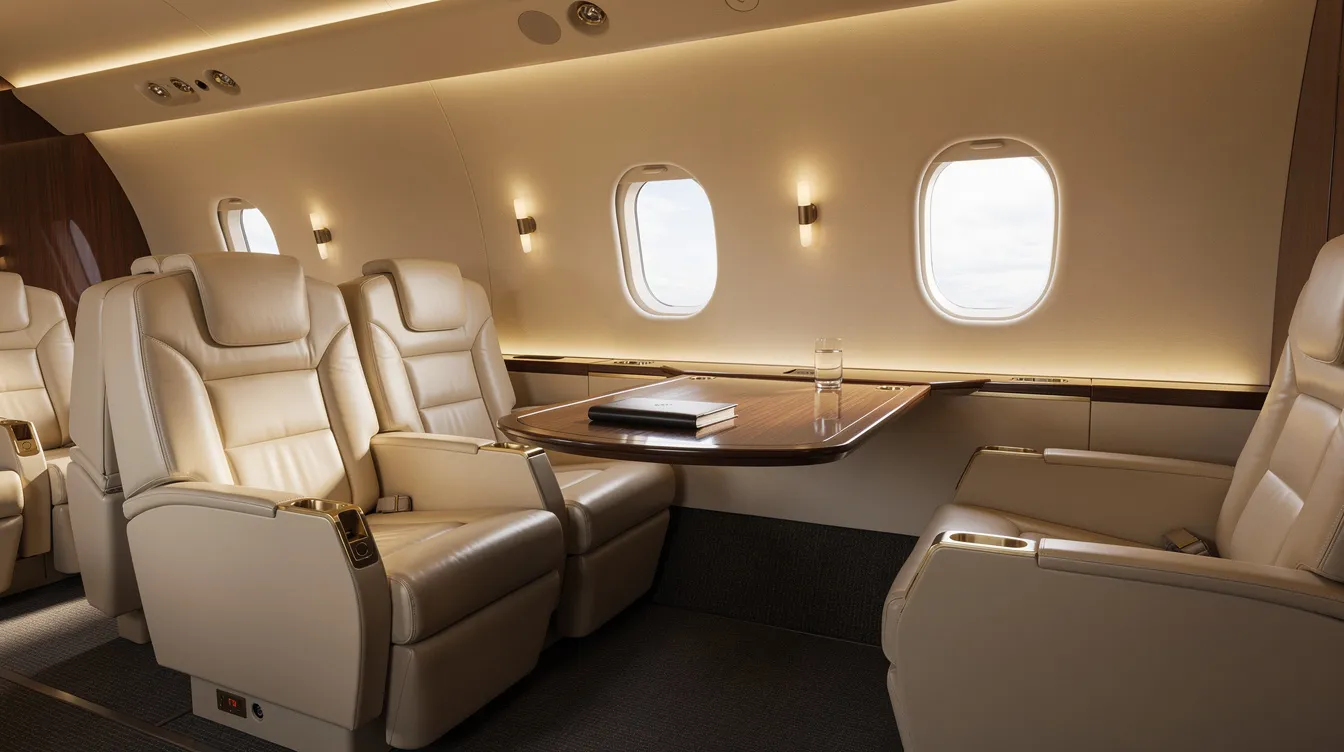
Think private jet travel means dropping $10,000+ every time you fly? Not anymore. A growing number of services now let you buy individual seats on private jets - sometimes for less than a last-minute business class ticket on a commercial airline. Here's exactly how that works, what the seats look and feel like, and how to start flying private for a fraction of charter prices.
Key Takeaways
You can now buy individual private jet seats instead of chartering an entire aircraft, often saving 30% to 75% compared to full charter prices.
Empty leg charter flights - repositioning flights that would otherwise fly empty - offer the deepest discounts in private aviation, and Hoppyn turns them into unlimited free flights for a flat $997/year membership.
Your main options for flying private by the seat include spare seats on shared flights, semi-private carriers, membership programs, and fractional ownership programs.
Private jet seats differ dramatically across aircraft types: light jets seat 4–8 with compact cabins, while heavy jets offer 12–16+ seats with lie-flat divans and multi-zone layouts.
If you want to start flying private for less right now, a membership like Hoppyn lets you skip per-seat pricing entirely and access premium aircraft globally for one annual fee.
What Does "Private Plane Seat" Really Mean Today?
"Private plane seats" used to be a contradiction. You either chartered the entire jet or you didn't fly private. Today, the phrase means exactly what it sounds like: buying a single seat on a private flight without paying for the whole aircraft.
This shift started gaining momentum around 2018 when operators realized they could sell spare seats on shared flights, offer empty leg flight access to individuals, and run semi-private carriers on popular routes. The result is a broader private aviation industry where a seat purchase competes directly with business or first class on a commercial airline - in both price and convenience.
The models vary. A private jet charter still means renting the entire aircraft, and a charter flight can still refer to booking the whole plane. But shared jet services, semi-private carriers like JSX, and membership programs like Hoppyn now sell individual seats. Some focus on scheduled flight routes between major cities. Others, like Hoppyn, built their model around empty leg charter flights - repositioning flights that jets must fly anyway - and pass the savings to members.
Types of Private Plane Seats Across Aircraft Categories
Not all private jet seats are created equal. Private planes feature distinct seating configurations based on the size of the aircraft, and what you experience onboard a four-seat turboprop is nothing like a 16-seat heavy jet. Private aviation offers a variety of tailored seating configurations, so understanding the differences helps you pick the right flight.
Turboprops and Light Jets (4–8 Seats)
Light jets typically have tighter space and fewer amenities than larger jets. Think club seating for four to six passengers, maybe a forward-facing seat or two, a small galley area, and a curtained lavatory. Cabin height on a light jet like the Cessna Citation CJ3 is about 4 feet 9 inches - enough to sit comfortably but not stand fully upright.
Club Seating and Standard Seats
Standard club seats are common on light and midsize jets. Club seating fosters face-to-face interaction and is ideal for small groups traveling together. Aircraft like the Embraer Phenom 300 and Citation CJ3 typically configure six to eight passengers plus crew. These work well for short hops under two hours where more cabin space isn't essential.
Midsize Jets (7–10 Seats)
Step up to a midsize jet and you get stand-up cabins, enclosed lavatories, better luggage capacity, and room to work or rest. Models like the Hawker 800XP or Citation XLS+ seat seven to nine passengers with configurations that include executive recliners, which offer more personalized movement than standard seats.
Conference Seating and Ergonomic Chairs
Conference seating is convenient for in-flight meetings and team collaboration - a layout you'll find on many midsize and super-midsize aircraft. Ergonomic adjustable chairs are commonly used in private jet interiors at this level, and the cabin space allows for a genuine work-friendly environment. Private jet interiors are designed for flexibility, comfort, and productivity.
Heavy and Ultra-Long-Range Jets (12–16+ Seats)
Larger jets like the Gulfstream G450, G650, or Bombardier Global 6000 redefine what a private jet seat means. These aircraft offer 12 to 16+ seats across multiple cabin zones. Divans provide a more relaxed environment and can convert into beds - they're designed to accommodate two to three people or convert into a bed for overnight flights.
Multi-zone Cabins and Lie-flat Berths
Multi-zone cabins enhance privacy and functionality by separating work and rest areas. Lie-flat berths are used for long-haul flights to provide sleep capability, giving you a genuine resting surface rather than a reclined chair. Private aviation seating at this level maximizes flexibility, ergonomics, and space utility, with customizable layouts tailored to comfort and functionality. You might find a forward lounge, a mid-cabin conference area, and an aft stateroom with entertainment systems - all on a single aircraft.
Ways to Access Private Jet Seats (From One-Off Seats to Memberships)
You can access private jet seats through four main paths: shared private jets, empty leg charter flights, semi-private carriers, and subscription-based membership programs. Each trades off cost, flexibility, and control differently.
Shared Flights
Shared jet services allow booking single seats on private jets. An operator or broker sells the extra seats on an already chartered private jet, splitting costs among multiple passengers. These services provide access to more airports than commercial flights and offer a more flexible travel schedule. You can book single seats through shared charter services or apps, and booking a single seat can save 30% to 75% off charter prices.
Semi-private Carriers
Companies like JSX fly set routes between popular city pairs using small jets from private terminals. Think of them as boutique airlines operating from FBOs instead of commercial airports. Public charters under Part 380 rules govern most of these operations.
On-demand Charter
Booking a full private jet charter is often more straightforward - you pick your aircraft, route, and time. But you pay for the entire jet, which makes sense for larger groups, not solo travelers.
Membership Programs
This is where Hoppyn fits. Instead of paying per seat or per hour, you pay a flat annual fee and access empty leg flights globally. More on this in a moment.
Empty Leg Flights: The Cheapest Route to Premium Private Plane Seats
Empty leg flights are discounted one-way trips for repositioning jets. When a charter operator drops passengers in Miami, operators often have to plan the return journey separately, so if the aircraft needs to get back to New York, that repositioning leg may be sold at a discount instead of flying empty. These flights occur when jets reposition for their next charter, and operators discount them heavily because the plane is flying regardless, especially when they use Hoppyn resources for charter operators to list and manage these empty legs efficiently.
Empty leg flights can save travelers up to 75% compared to standard charter rates. They're typically one-way trips at discounted rates with a fixed origin, destination, and departure date. Prices for empty leg flights range from $3,000 to $40,000 for the whole aircraft depending on jet size and route, according to current market data, and dedicated empty leg flight membership options from Toronto show how powerful this savings model can be for frequent flyers.
The trade-off is clear: booking an empty leg flight requires flexibility in travel plans. You adapt to the route and timing, not the other way around. But unlike semi-private carriers, you get the full private jet experience - private terminals, fast boarding, small groups, and sometimes exclusive use of the aircraft.
Here's where it gets interesting for seat buyers: instead of paying per-seat empty leg prices, Hoppyn members pay a flat annual fee to access spare seats on these repositioning flights with no extra flight cost.

How Hoppyn Turns Spare Seats on Empty Legs Into Unlimited Private Flights
Hoppyn is a private jet membership built around empty leg charter flights - not a typical per-seat private jet charter company. The model is straightforward.
Members pay one transparent annual fee of $997/year and then can book or waitlist empty leg flights worldwide without paying per-flight fares. Here's how it works: Hoppyn fills otherwise empty seats on repositioning private jets, giving members access while helping operators recover costs on flights that would fly empty anyway.
New empty leg flights are added daily to the platform, covering major private aviation corridors - New York to South Florida, LA to Las Vegas, London to Nice, and hundreds more, especially when you browse city-specific deals through the City Hub empty leg listings. Members get:
Unlimited free flights once confirmed
No hidden fees beyond the annual membership
Global access to premium aircraft
24/7 dedicated support
Real-time availability on a live flight board
The math is simple. If you'd otherwise pay $1,000 to $5,000+ per seat on two or three empty leg flights a year, Hoppyn's $997 membership pays for itself on the first trip. Learn more about Hoppyn and what makes it different from traditional charter companies.
Private Jet Seat Pricing Models Compared
Private jet seat costs depend heavily on whether you buy one seat, charter the entire aircraft, or hold a membership with fixed annual pricing.
Model | Typical Cost | Best For |
|---|---|---|
Single seat (shared flight) | $1,000–$10,000 per seat | One-off trips, trying private travel |
Semi-private carrier | $800–$2,500 per seat | Regular routes, predictable schedules |
Full charter (light jet) | $2,000–$6,000/hr | Groups, complete control over schedule |
Full charter (heavy jet) | $7,000–$15,000+/hr | Large groups, long-haul domestic flights |
Jet card (25 hrs, light jet) | $183,000–$215,000 | Heavy users, guaranteed access |
Fractional ownership | $220,000–$700,000+ share | 50+ hrs/year, own jet share |
Hoppyn membership | $997/year, no per-flight cost | Flexible for frequent travelers |
Private jet hourly rates range from $2,000 to $15,000 or more, and booking a private jet seat can save 30% to 75% compared to full charters. Fractional ownership programs and jet cards require large upfront investments - designed for people flying 50+ hours annually who need guaranteed aircraft access.
Membership programs like Hoppyn operate on a fundamentally different cost structure: flat annual fee versus variable per-seat or hourly rates. For someone flying three to five empty leg flights per year, the significant cost savings over repeated seat purchases or charter bookings add up fast. According to industry pricing data, the median whole-aircraft empty leg price sits around $3,500, meaning even splitting one flight among a few passengers exceeds Hoppyn's annual fee.
How Many Seats Are in a Private Jet? Capacity Basics for Trip Planning
Understanding how many seats a private jet has helps you match aircraft types to your group size and comfort expectations.
Very light/light jets: 4–8 seats
Midsize jets: 7–9 seats
Super-midsize jets: 8–10 seats
Heavy / ultra-long-range jets: 10–16+ seats
Seat count isn't just a number. Cabin layout - club seating versus divans versus conference tables - changes how social or private your experience feels. Private jet seating arrangements facilitate either social interaction or individual focus, depending on configuration. Passenger count and group dynamics depend on purpose, such as work or rest.
Flight duration influences the choice between standard and berthing seats. A two-hour hop on a light jet with six club seats is perfectly comfortable. A five-hour cross-country flight on the same plane? You'll wish you had lie-flat seating.
Some private jets officially seat more passengers than they comfortably carry for long flights, so recommended capacity may be lower than maximum certified seats. Booking considerations should include actual seating layout and passenger needs - not just the number on a spec sheet.
For per-seat models, more seats on larger jets can mean more availability for shared flights, but also a higher base charter cost without a membership to offset it.
Private Plane Seats vs. Commercial Airline Seats
The difference between flying private and flying on a commercial airline comes down to time and friction, not just leg room.
Boarding and security. Private jet travel allows arrival just 15 to 30 minutes before departure. You show up at a private terminal (FBO), not a commercial airport. ID checks happen quickly. No TSA lines. No removing shoes. You walk from your car to the aircraft in minutes. Shared jet services provide access to more airports than commercial flights - including private airports and smaller nearby airport options closer to your final destination.
Onboard. Fewer other passengers, a quieter cabin, personalized service, the ability to move around freely, and direct conversation with the crew. In-flight amenities vary by operator and aircraft but often include Wi-Fi, catering, and entertainment systems. Booking a seat on a private jet offers a more exclusive experience than commercial flights, even when you're sharing the cabin.
Schedule control. Full charters and some membership flights offer far greater flexibility than a fixed scheduled flight. Empty leg flights still have fixed routes and departure times, but the boarding experience and cabin comfort remain firmly in private territory. On certain routes and travel dates, a private jet seat can be priced close to - or below - last-minute business class on a commercial airline, especially on empty leg flight deals.

Step-by-Step: How to Book a Private Plane Seat Through Membership and Other Options
The booking process for a private plane seat is now as simple as booking air travel on a commercial airline - if you use the right platform.
Booking through Hoppyn:
Join the membership ($997/year)
Browse the live empty leg flight board - updated daily with available flights
Join waitlists for routes and travel dates you like
Get notified when a seat is confirmed
Show up at the FBO and fly
The whole process takes just a few taps from your phone or laptop.
Booking shared or semi-private flights:
Choose your route, departure date, and destination options
Pick specific private jet seats from available aircraft
Enter passenger and flight details
Pay per-seat fare
Receive confirmation and FBO instructions
Set up alerts for favorite routes so you catch last-minute empty leg charter flights or newly listed shared flights. Before booking, have your IDs, group size, luggage details, and any special requests ready. Most platforms let you complete everything in under ten minutes.
Choosing the Right Private Jet Seat for Your Trip
Not all private jet seats are equal. The perfect jet depends on several key factors: distance, group size, budget, and how much flexibility you have. Factors to consider when choosing a seat include flight duration and trip purpose.
Short Regional Trips
Short regional trips (under 2 hours): Turboprops and light jets keep costs low. Seating is compact but comfortable for quick hops. A light jet between nearby cities is cost-effective and gets you there faster than driving or connecting through commercial airports.
Medium-range Flights
Medium-range flights (2–4 hours): Midsize jets with more legroom, work-friendly layouts, and enclosed lavatories are worth the step up. Routes like New York to Dallas or LA to Denver fall here.
Long-haul and Transatlantic
Long-haul and transatlantic: Heavy or ultra-long-range jets with lie-flat options, larger lavatories, and multiple zones for sleep and meetings. For these, choosing the right seat matters even more.
If you're unsure which available aircraft fits your route and passenger count, Hoppyn's 24/7 support team or operator advisors can match you to the right aircraft types and seat layouts.
Safety, Comfort, and Etiquette When Sharing a Private Jet
Shared flights and spare seats mean you may fly with other passengers you don't know. Safety and etiquette matter.
Safety Standards
Safety standards. Private aviation is governed by stringent safety regulations set by the FAA. Private jets undergo rigorous maintenance checks mandated by aviation authorities. Pilots in private aviation must have extensive training and certifications. Comprehensive insurance coverage is required for all private jet operators, and reputable operators must meet the Wyvern Wingman Standard for safety compliance. These aren't optional - they're baseline requirements.
Comfort
Comfort. Seat pitch, recline, Wi-Fi, snacks, and catering differ by aircraft size and charter operator. On a shared flight, expect the same cabin quality as a full charter - the aircraft doesn't change because seats are shared.
Etiquette Basics
Etiquette basics:
Arrive on time at the FBO (15–30 minutes before departure)
Respect shared cabin space
Keep noise levels reasonable
Follow crew instructions
Membership programs like Hoppyn vet operators and flights, and offer support if you have questions about what to expect on a specific flight leg.
Tips to Get the Best Value on Private Plane Seats
Timing and flexibility are the biggest levers you control when trying to reduce private jet seat cost.
Be flexible on airports. Fly from Van Nuys instead of LAX, or Teterboro instead of JFK. Departure and arrival airports on empty legs may not be major commercial hubs - that's a feature, not a bug. You skip crowded commercial airports and often end up closer to your final destination.
Watch for last-minute deals. About 27.8% of empty leg listings surface within 72 hours of departure. If you're open to a last-minute trip, these often carry the steepest discounts.
Use a membership for repeat trips. If you plan ahead for multiple private flights per year, a flat annual fee from a membership like Hoppyn undercuts repeated per-seat purchases every time.
Track core routes. If you regularly fly New York to Miami, London to Ibiza, or LA to Las Vegas, monitoring these corridors helps you learn typical pricing and spot strong value quickly.
Travel mid-week. Flights booked on Tuesdays or Wednesdays tend to have more available flights with fewer competing passengers.
Passengers can save 30% to 75% compared to full charters by combining these strategies. A shared flight on a one-way trip that aligns with your travel plans can deliver a private jet experience at commercial travel prices.
Who Private Plane Seats Are Best For (And When Full Charter Makes More Sense)
Buying a private jet seat is not always the right answer. Sometimes a full private charter is smarter.
Per-seat models and empty leg memberships work best for:
Solo travelers, couples, and small teams with flexible schedules
People who want to try flying private for less without massive upfront cost
Frequent travelers who value cost-effective access over complete control
Anyone willing to adapt travel plans to match available flights
Full charter makes more sense when:
Your group is 8–12+ people (you'll likely fill the entire aircraft anyway)
You have strict schedules and can't adjust departure and arrival airports
The destination is remote with limited empty leg availability
You need full privacy for sensitive meetings or personal reasons
Businesses can combine both: using private jet seats or membership flights for routine domestic flights, and full private jet charter only when control and privacy are critical.
Hoppyn is built for readers who want frequent access to private aviation without committing to fractional ownership programs, jet cards, or multi-year contracts. One flat fee. No per-flight cost. Access to premium aircraft worldwide.
Ready to see what's flying? Browse available empty leg flights on Hoppyn or join the membership today for $997/year.
Frequently Asked Questions
How much does a private plane seat usually cost compared to Hoppyn's membership?
Per-seat prices on private jets commonly range from $1,000 to $10,000 each way depending on route, aircraft type, and demand. Compare that with Hoppyn's flat $997/year membership where you don't pay per-flight fares for empty leg flights once you're a member. Two or three typical one-way private jet seats in a year can easily exceed $997, making membership more cost effective for anyone flying private more than once annually.
Can I choose my exact seat on a private jet like on a commercial airline?
Most private jets don't have formal seat maps the way commercial airline cabins do. Cabins are small and all seats are usually premium. You normally book "a seat" or "a spot" on the aircraft and then choose any available seat once onboard, unless the operator assigns seats for weight and balance. On some semi-private carriers, you may see labeled seats in the booking interface, but in true private aviation this is uncommon.
Are empty leg flights and private jet seats reliable, or do they get canceled often?
Empty leg flights exist because of another charter, so if the primary client changes plans, the empty leg can be moved or canceled. Industry cancellation rates for empty legs sit around 10–15%. Plan ahead with some flexibility and always have a backup, and on one-way empty legs you may need to book the return journey separately if plans are time-sensitive. Hoppyn members can join multiple waitlists and rely on 24/7 support to find alternative private jets or help re-plan when an empty leg changes.
Do I need to go through security if I'm just buying a single private jet seat?
All passengers on private jets must comply with aviation security rules, but the process happens at private terminals (FBOs) and is dramatically faster. Typical arrival times are 20–30 minutes before departure, with ID checks and simple screening instead of long TSA-style queues. The experience is streamlined whether you have a whole jet charter or just one seat on a shared private flight. Ground transportation can often pull up directly to the FBO entrance.
Can I use private jet seats and empty leg flights for international travel?
Yes. Many private jets and empty leg flights operate internationally, including popular routes like London–Nice, New York–Nassau, and dozens of cross-border European corridors. Passports, visas, and customs rules still apply just as on a commercial airline - confirm entry requirements before booking. Hoppyn and reputable operators can assist with basic guidance on documents and timing at international FBOs. Request a specific route if you don't see it on the board.
Conclusion
Flying private no longer means breaking the bank or chartering an entire jet. With private plane seats available through shared flights, semi-private carriers, empty leg flights, and membership models like Hoppyn, you can experience the convenience, comfort, and exclusivity of private aviation at a fraction of traditional costs. Understanding the types of aircraft and seating options helps you pick the right flight for your needs, while flexibility with routes and timing unlocks the best deals.
Hoppyn’s flat annual membership fee turns empty leg flights into unlimited private jet access without per-flight charges, making private aviation accessible and transparent. Whether you’re a solo traveler, a small group, or a frequent flyer, booking private plane seats through modern platforms offers a smarter, more efficient way to fly private.
Ready to elevate your travel? Join Hoppyn today or browse available empty leg flights and start flying private for less.




Unlock Your Private
Jet Experience
Join our exclusive membership for
free flights today!

Explore More
Blogs


Join Our Exclusive
Newsletter
.png)






