
Rent Private Plane: How to Fly Private Without Paying Charter Hourly Rates


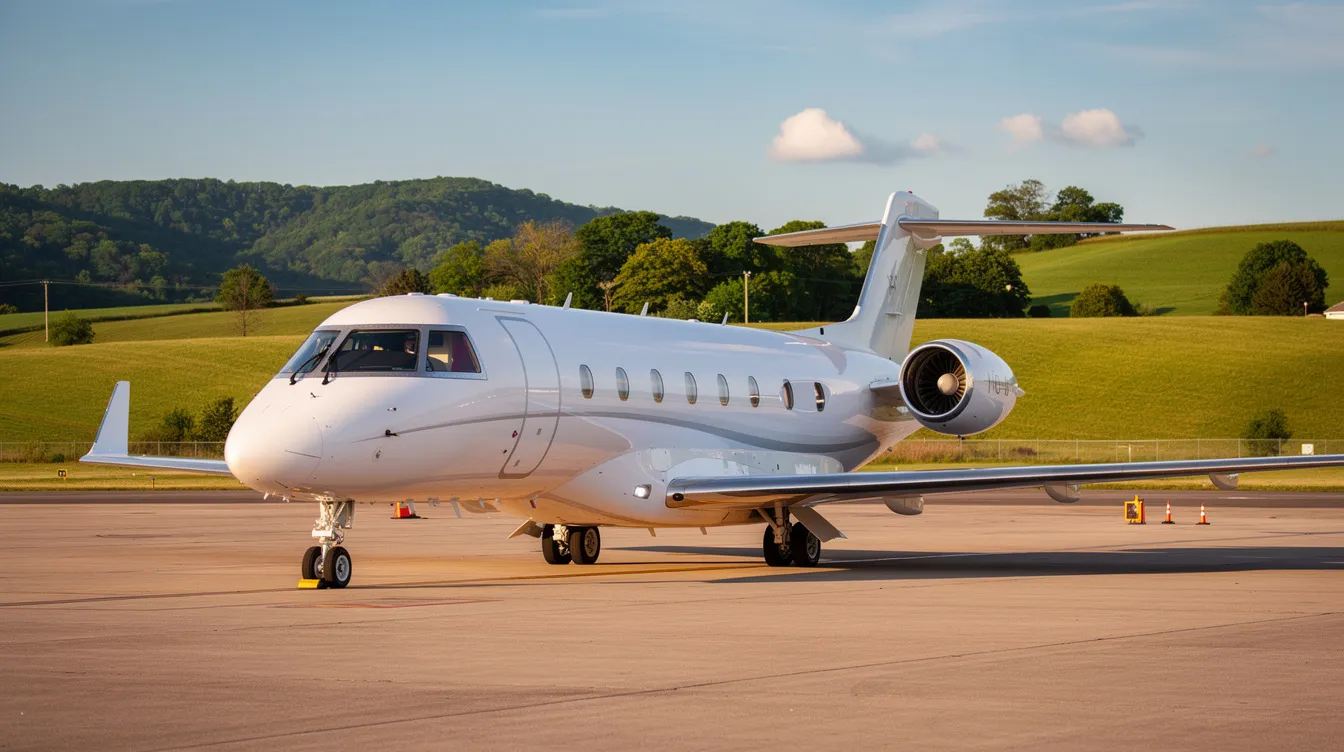
Think renting a private plane means spending $5,000 to $17,000 per hour? For most people, that assumption keeps private aviation permanently out of reach.
This guide is for travelers interested in private jet rental options, especially those seeking affordable alternatives to traditional charter rates. Understanding these options can make private aviation accessible to more people.
But there's a structural inefficiency in the industry that smart travelers are using to fly private for a fraction of that cost: empty-leg flights. An empty-leg flight is a flight that occurs when a private jet repositions without passengers.
This guide breaks down exactly what it costs to rent a private plane in 2026, explains every line item that inflates your charter invoice, and shows you how Hoppyn's membership model sidesteps most of those charges entirely.
Key Takeaways
Renting a private plane by the hour typically costs between $2,300 and $23,000 per hour depending on aircraft type. Hoppyn members access many of the same jets via empty leg flights for a flat $997/year membership—no per-hour or per-seat fare.
Empty-leg flights are repositioning flights that would otherwise fly empty. These flights occur when a private jet repositions without passengers. Members pay no hourly charter rate; just their annual membership and standard government taxes like the federal excise tax where applicable.
You don't need to understand every private jet cost component. With Hoppyn, you browse available routes, join waitlists, and fly when an empty leg matches your plans.
Empty legs can include light jets, midsize jets, and ultra-long-range aircraft, often on high-demand routes like New York to Miami or London to Nice. Empty leg flights can save up to 75% on costs compared to standard charter rates.
Ready to start browsing global empty-leg private charter options? Join Hoppyn today and see what's flying this week.
How Renting a Private Plane Traditionally Works (and Why It's So Expensive)
Hourly Charter Rates by Aircraft Type
When you rent a private jet through a traditional on-demand charter, you're paying for the entire aircraft. You pick your origin, destination, schedule, and aircraft type. The operator quotes you an hourly rate, and you pay that rate multiplied by your flight hours, plus a stack of taxes, fees, and surcharges.
Charter hourly rates can vary significantly depending on the aircraft and trip details. Typical 2026 hourly rates break down roughly by aircraft class:
Turboprops: $2,300 to $3,500 per hour
Light jets: $3,000–$4,600 per hour
Midsize jets: $4,700–$7,500 per hour
Heavy jet charter options: $8,500–$11,000 per hour
Ultra-long-range jets: $11,000–$17,000 per hour
VIP airliners: $18,000 to $23,000 per hour
Those hourly rates include aircraft, crew, fuel, and insurance, but total pricing also changes with flight distance. A 7.5% federal excise tax applies to domestic flights in the US, segment fees add up per passenger per leg, and costs like deicing, crew overnights, landing fees, and positioning charges push the final number well beyond the headline rate. According to industry data, between 65–80% of a charter cost comes from flight time alone, with the remaining 20–35% from add-ons.
Why Traditional Pricing Is Complex
This complexity is exactly what Hoppyn's membership model is designed to simplify. Instead of calculating hourly rates, surcharges, and positioning costs, traditional shoppers often start with a charter flight cost calculator before comparing alternatives, while Hoppyn replaces that process with one annual fee and access to flights that already need to happen.
What It Actually Costs to Rent a Private Plane by the Hour
Here's a concise breakdown of private jet rental prices by category in 2026:
Turboprops: $2,300 to $3,500 per hour. Regional workhorses for shorter domestic flights.
Very light jets: $2,900 to $4,600 per hour. Compact cabins, ideal for 2–3 hour hops.
Midsize jets: $4,700 to $7,500 per hour. More range, more comfort, more fuel burn.
Large jets (heavy): $8,500 to $17,000 per hour. Nonstop transcontinental capability.
VIP airliners: $18,000 to $23,000 per hour. Full-size cabin aircraft for ultra-long-haul or large groups.
These private jet rental rates usually include the aircraft, fuel (plus any fuel surcharge), basic catering, flight crew, and insurance. What they typically exclude: government taxes, many airport-related fees, crew overnight costs, deicing, and custom catering.
Here's how fast it adds up. A simple two-hour hop on a light jet at $4,000 per hour means $8,000 in base cost. Add the federal excise tax at 7.5%, segment fees, landing charges, and handling—and you're looking at $10,000 to $15,000 all-in for a flight that takes less time than a long lunch.
Instead of paying these hourly charter rates every time you fly, Hoppyn members pay a flat yearly fee and then fly empty-leg segments at no incremental flight cost.
Cost Drivers: Why One Private Jet Trip Can Cost $6,000 and Another $60,000
Key Cost Drivers
Four main levers explain most private plane rental price differences:
Flight time: More hours in the air means more fuel, more crew time, and more maintenance cost baked into the rate.
Aircraft size: A light jet burns a fraction of what an ultra-long-range jet consumes per hour.
Route and region: Fuel prices, local taxes, airport fees, and aircraft availability all shift by geography.
Operational logistics: Positioning flights, crew overnights, daily minimums, and weather-related charges.
Longer flights consume more fuel, increasing costs proportionally. Aircraft positioning fees can add to the total rental cost when the jet has to fly empty to reach your departure city.
A New York to Boston charter on a light jet might cost $6,000–$8,000 total. A New York to London transatlantic flight on a heavy jet could exceed $60,000 one-way—and cross $140,000 round-trip with all surcharges.
Many of these cost drivers also exist behind the scenes on empty-leg flights. The difference: the operator bears them, not a Hoppyn member.
Flight Time and Distance: The Foundation of Private Jet Pricing
How Flight Time Impacts Price
Private jet charters are billed per hour and per leg, so total flight time largely dictates what you pay. This is the single biggest variable in any private charter quote.
Longer routes mean more fuel burn, additional crew duty time, and sometimes mandatory fuel stops that add ground time and fees. A Los Angeles to San Francisco flight might clock 1.2 hours. Los Angeles to Honolulu pushes past 5 hours, with dramatically higher fuel consumption and potentially requiring a different, more expensive aircraft class. Light jets are ideal for 2.5 to 4.5-hour itineraries, but anything beyond that range often demands a midsize or heavy jet.
Billable time isn't just wheels-up to wheels-down. It can include taxiing, repositioning, and any required minimums—often 1.5 to 2 hours per day. Fly a 45-minute hop and you may still be billed for a full billable flight hour block of 2 hours.
Private jet charters can reduce travel time significantly compared to commercial alternatives, especially when you factor in eliminating layovers, security lines, and connecting flights. But that convenience comes at a steep per-hour price.
Empty-leg flights follow the same physics. The difference for a Hoppyn member: the billable flight time is already paid for by the primary charter customer. You don't see a per-hour charge.
Aircraft Size and Type: Light Jets vs Heavy Jets vs Ultra Long Range
Aircraft Categories Explained
The type of aircraft you fly determines fuel burn, crew size, maintenance costs, and ultimately the private jet cost per hour.
Here's how aircraft options break down:
Light jets (e.g., Citation CJ3, Phenom 300): 4–7 seats, lower hourly rates, efficient for regional routes. Limited luggage capacity and range.
Midsize jets (e.g., Learjet 60, Gulfstream G280): More cabin space, longer range, faster cruise speeds. Costs jump meaningfully.
Heavy jets (e.g., Gulfstream G-IV, Falcon 2000EX): Nonstop transcontinental capability, larger cabins, higher fuel burn.
Ultra long range (e.g., Gulfstream G650, Global 7500): Nonstop intercontinental flights like New York to London or Dubai to London. Top-tier pricing.
Aircraft age can increase rental costs by $100 to $1,000 per hour, since newer models often command premium rates for updated avionics, cabin finishes, and efficiency. Private jets offer access to over 20,000 aircraft worldwide across these categories, giving charter clients and membership platforms alike a diverse fleet to draw from.
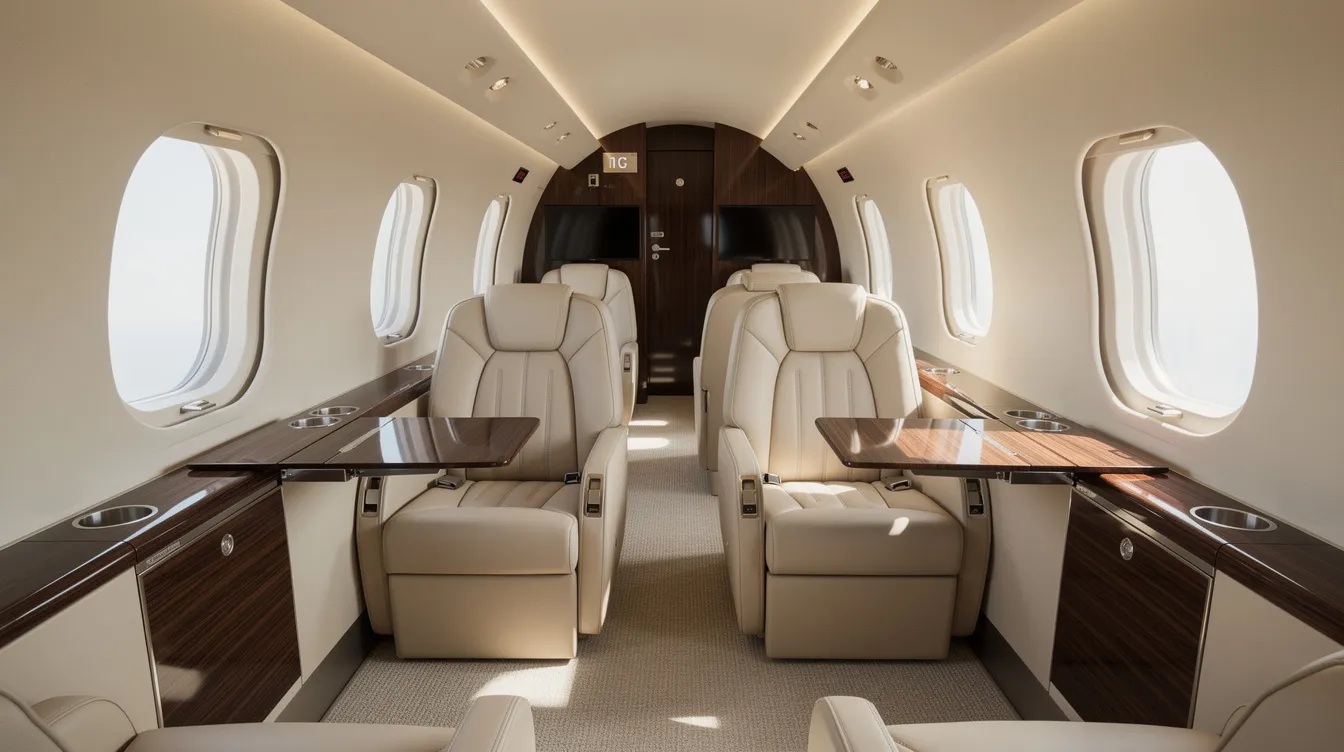
The trade-off is straightforward: smaller aircraft have lower hourly rates but limited range and luggage capacity. Larger aircraft cost more but handle longer flights without stops. If you're curious about the best seat on a private plane across different cabin sizes, the experience varies meaningfully by category.
Hoppyn members see a mix of all these aircraft types among available empty legs—from short regional light jets to long-haul ultra-long-range flights—all accessible without paying category-specific hourly rates.
Route, Region, and Airport Choice: How Location Affects Price
Airport Choice and Fees
Regional factors make private jet travel cheaper in some markets and noticeably pricier in others.
Commercial airlines operate at about 500 airports in the United States. Private aviation accesses over 5,000. Globally, private jets can access over 10,000 airports, including small regional airports, private airfields, and executive terminals that commercial flights never touch. This means private planes can bypass crowded commercial terminals entirely—but it also means pricing varies wildly by location.
Busy hubs like New York (Teterboro, White Plains), London (Luton, Farnborough), and Miami have competitive private charter pricing because of high aircraft availability. Fuel prices, operator density, and local demand all work in the traveler's favor.
Using secondary airports can lower landing and ramp fees compared to major international hubs. But flying into a smaller field sometimes requires a longer positioning flight that offsets the savings.
Here's a concrete example: the same Challenger 604 might be cheaper to rent per hour in the US than in South America, where fuel costs run 15–25% higher and operator options are thinner.
Hoppyn's empty-leg inventory is global. Members see flights linking major private aviation hubs—London to Nice, New York to Miami, Los Angeles to Las Vegas—and seasonal hotspots like Aspen in winter or Ibiza in summer, and can also browse spontaneous one-way empty-leg deals from their nearest city hub.
Taxes and Mandatory Government Fees: Federal Excise Tax, Segment Fees, and More
Beyond hourly charter rates, every private jet flight is subject to mandatory government charges that no one—charter client or membership platform—can waive.
In the US, the federal excise tax is typically 7.5% on domestic private jet travel, applied to the transportation cost of every charter flight. On top of that, per-passenger segment fees of roughly $5.30 per takeoff or landing segment are collected by the airport authority. Short-leg fees apply to flights under 60 minutes, where operators may impose additional charges to offset the disproportionate cost of very brief missions.
For international flights, the picture gets more complex. Cross-border trips out of the US carry international head taxes of approximately $23.40 per passenger. Flights to Alaska and Hawaii have special reduced rates. In Europe, similar levies exist—VAT in some countries, Air Passenger Duty in the UK, and various overflight and arrival taxes.
While Hoppyn members don't pay charter fees per leg, applicable government taxes may still apply based on the jurisdiction and the operator's rules. These are standard across all private jet charters and memberships—there's no way around them, and any platform that claims otherwise should raise a red flag.
Airport and Ground Fees: Landing, Ramp, Handling, and Hangar Costs
Airport-related charges show up on nearly every private charter invoice and can add hundreds to thousands of dollars per flight.
The main categories:
Landing fees: Typically $100–$1,500 depending on aircraft weight and airport. Busy airports like JFK, Miami International, and London Heathrow charge significantly more than smaller regional airports that cater heavily to private jets.
Ramp and handling fees: $100–$500+ per stop for ground handling, marshaling, and FBO services.
Parking or hangar fees: Especially relevant in winter conditions or multi-day stays. Hangar space at popular FBOs can run several hundred dollars per night.
Operators sometimes waive certain fees when minimum fuel purchases are met at an FBO, but charter clients still see these costs baked into their total cost quote.
Booking floating-fleet aircraft—jets that are based across multiple locations rather than a single home base—can cut repositioning fees by 30%, which in turn reduces the airport-related charges that stem from extra legs.
Hoppyn members don't negotiate these line items directly. They're handled between the operator and the primary charter client. However, taxes and certain surcharges may still show up where required by law.
Operational Extras: Short Leg Fees, Minimums, and Positioning Flights
Operational Surcharges
These are the charges that make charter invoices balloon beyond the advertised hourly rate.
Short leg fees are extra charges operators apply when you book brief flights—typically under 60 minutes. The rationale: short hops create disproportionate fuel burn during takeoff and climb, plus landing wear on brakes and tires. On larger aircraft especially, these fees can add $500–$2,000 per leg.
Daily flight minimums are another surprise. Many operators require at least 1.5 to 3 billable hours per day, regardless of actual air time. Fly a 40-minute hop from Teterboro to Philadelphia? You might still be billed for 2 flight hours.
Positioning or ferry flights are the big one. If the private aircraft isn't already at your departure airport, the operator repositions it—and charges you the same hourly rate for that empty leg. A one-way charter from Miami to Atlanta can cost nearly the same as a round-trip once the jet's positioning flight from its home base is included.
Here's the key insight: these positioning requirements are exactly what generate empty-leg opportunities. When another client's specific trip creates a repositioning need, that leg can appear on Hoppyn for members to book with no per-hour charge.
First-time renters should seek clarity before signing contracts and making payments. Ask for a fully itemized quote that breaks out positioning, minimums, and short leg fees separately.
Crew-Related Costs: Flight Crew, Overnights, and Duty Limits
The flight crew—captain, first officer, and sometimes a cabin attendant—is always included with a private jet rental. You never hire pilots separately for a charter flight or a Hoppyn empty leg.
But crew costs don't end at the cockpit door:
Overnight charges: When itineraries require multi-day stays, operators bill $200–$600 per crew member per night for hotels and per diems.
Crew duty limits: Aviation regulations cap duty time at around 14 hours. Longer mission days may require an extra crew, adding thousands to the invoice.
Crew rest: On ultra-long-range flights, a third pilot may be required for nonstop legs, increasing crew salaries baked into the hourly rate.
Operating under FAA Part 135 ensures safety and regulatory compliance for private charters in the US. Equivalent regulations (EASA AOC in Europe, for instance) govern crew qualifications, rest requirements, and training standards everywhere.
Hoppyn members don't see line-item crew charges on empty-leg bookings. These costs are part of the operator's underlying commercial model and are absorbed by the primary charter arrangement.
Additional Services and Surcharges: Catering, Wi‑Fi, Deicing, and More
Private charter bills frequently include optional extras that go well beyond the basic flight:
Custom in-flight catering: Basic snacks and beverages are often included. Premium catering—hot meals, specific dietary requests, champagne service—adds $200–$2,000+ depending on the flight and provider.
Ground transportation: Arranged car service to and from the FBO. Can range from $100 for a sedan to $500+ for premium vehicles.
Wi-Fi: On long-haul international flights, satellite Wi-Fi access may carry a per-flight or per-hour charge, sometimes $500–$1,500 for intercontinental routes.
Deicing: Winter operations can add $1,000 to tens of thousands of dollars on large aircraft depending on weather conditions and aircraft size.
Pet cleaning fee: Some operators charge for deep cleaning after flights with pets, typically $200–$500.
Many "all-inclusive" quotes still exclude weather-dependent charges like deicing or extraordinary cleaning.
Because empty-leg flights operate on tight schedules, catering and ground transfers may be simpler than a fully customized charter experience. That said, members can sometimes arrange extras directly with the operator or through Hoppyn's 24/7 support where available.
Comparing Private Jet Rental Models: On-Demand Charter vs Membership
There are three dominant models for flying privately. Each serves a different type of traveler.
On-demand charter: You define the trip origin, destination, aircraft type, departure date, and pay the full per-trip cost. Complete control, maximum flexibility, highest price. Charter brokers facilitate the booking process for private jet rentals, handling the logistics between you and the operator. The charter process involves defining trip details and confirming aircraft logistics. Chartering a private jet allows for flexible scheduling and routes, but you pay for every hour.
Jet cards: You prepay for a block of flight hours (typically 25–50+) at fixed hourly rates. Better predictability, preferential scheduling, but requires a large upfront deposit—often $100,000 to $250,000+. Best for frequent flyers logging serious hours annually.
Empty-leg membership (Hoppyn model): Hoppyn is a private jet service built around access to a global inventory of empty-leg flights, and you pay a flat annual fee to use that inventory. No per-hour charge, no jet card deposit. The trade-off: you adapt your schedule to what's available instead of dictating every detail. Learn more about how it works.
Hoppyn is especially attractive for travelers who fly 3–10+ times per year and can adapt trips to match available empty-leg routes and departure dates. If you need complete control over every aspect of every flight, traditional charter still has its place. But if flexibility is your superpower, the math changes dramatically.
What Is an Empty-Leg Flight and Why It's the Key to Affordable Private Jet Travel
An empty-leg flight is a repositioning leg flown without paying passengers. These flights occur when a private jet repositions without passengers—either returning to base after dropping off a charter client, moving to pick up the next booking, or shifting between seasonal markets.
Why do operators offer these seats? Because the flight is happening regardless. The fuel gets burned, the crew gets paid, the landing fees get charged. Rather than fly an empty cabin, operators make these legs available at steep discounts—sometimes up to 75% off standard charter rates.
Empty legs happen across all aircraft sizes. A light jet repositioning between regional airports after a weekend charter. A midsize jet flying empty from Nice back to London after summer clients disembark. An ultra-long-range jet crossing the Atlantic to pick up its next booking. In Europe alone, approximately 41% of private jet flights are empty-leg repositionings.
The trade-off is real: routes and times are set by the primary charter, so flexibility in travel dates is required for empty leg flights. They are often available on short notice, depending on the route. Empty leg flights can significantly reduce travel costs for one-way trips.
Here's where Hoppyn changes the equation: instead of selling each empty leg flight at a separate discounted price, we aggregate global empty-leg inventory into a membership platform where flights themselves carry no incremental fare.
Members often have access to empty leg flights at significantly reduced costs—in Hoppyn's case, reduced to zero beyond the annual membership fee and applicable taxes.
How Hoppyn's Membership Works Differently from Traditional Private Charter
Hoppyn's core offer is straightforward: for a flat annual membership fee of $997/year, members browse a global board of private jet empty-leg flights and request seats without paying per hour, per seat, or per leg flight costs.
Hoppyn Membership Workflow
Sign up and create your member profile.
Log in to view current and upcoming empty-leg routes.
Filter by departure date, region, or aircraft type.
Join waitlists for flights that match your schedule.
Confirm when a flight becomes available—and fly.
Hoppyn focuses on transparency. No hidden hourly rates, no surprise repositioning fees, no per-leg pricing. Reputable charter services offer transparent pricing that includes all fees, and Hoppyn follows that principle by making the membership fee the only cost under your control. Any applicable taxes or minor operator-specific extras are clearly indicated.
Because flights are empty legs, flexibility is part of the deal. Schedules can shift or cancel if the primary charter changes. Hoppyn mitigates this by adding new flights daily—fresh inventory appears constantly across global routes.
Members also get access to 24/7 support for questions and trip planning around confirmed empty legs, helping build itineraries around these high-value segments. Booking in advance helps secure better aircraft selection and pricing, so check the board regularly rather than waiting for last-minute options.
Who Should Rent a Private Plane via Empty Legs (and Who Shouldn't)
Ideal profiles for Hoppyn:
Entrepreneurs and remote workers whose schedules bend easily
Frequent leisure travelers planning flexible getaways
Couples or families who don't need to land at a precise airport on a precise day
Small business teams that can arrange meetings around available departure dates
Private jet travel offers privacy and exclusivity for passengers. If you value that but have always been priced out of $5,000–$10,000 per flight hour, this model opens a door.
Flexibility in travel plans can optimize booking options for private flights. That means being willing to shift a departure by a day or two, or starting from Fort Lauderdale instead of Miami, or Luton instead of Heathrow.
Who should stick with traditional charter:
Travelers with rigid same-day meeting schedules who can't shift even by hours
Large delegations needing a guaranteed aircraft type and exact timing
Sensitive cargo or medical missions requiring specific aircraft configurations
Anyone who needs complete control over every detail of the flight
Hoppyn doesn't replace all forms of private jet charters. It opens a new, more affordable lane into private jet travel for people traditionally priced out of the market.
Real-World Cost Comparisons: Charter vs Hoppyn Empty-Leg Membership
Let's put real numbers to this.
Example 1: New York (TEB) to Miami (OPF) – Light Jet
A traditional private jet charter on a Citation CJ3 for this roughly 2.5-hour route would run about $4,000 per hour base. That's $10,000 in flight time alone. Add federal excise tax at 7.5% ($750), segment fees, landing fees, handling, and potential fuel surcharges—and the total cost lands around $13,000–$15,000. A Hoppyn member who grabs an available empty leg on this same route pays $0 in flight cost after their $997/year membership, plus any applicable government taxes.
Example 2: London (Luton) to Nice – Midsize Jet in Summer
Peak summer demand drives charter rates on this popular route well above standard pricing. A midsize jet charter might quote $25,000–$30,000 for the round trip, factoring in high-season surcharges and European VAT. A Hoppyn member who secures a repositioning leg from Luton to Nice—created when a jet drops off a charter client and needs to return or move south—pays no per-flight cost beyond their membership.
Example 3: New York to London – Ultra Long Range Transatlantic
This is where the numbers get dramatic. A Gulfstream G650 flying roughly 8 hours nonstop at $14,000 per hour produces a base cost near $112,000 one-way. Add international fees, crew overnight charges, fuel surcharges, and handling—the return flight total cost can exceed $140,000. Crossing the Atlantic on a repositioning flight as a Hoppyn member? Same cabin, same crew, no per-hour charter cost.
Even two or three empty-leg trips per year can pay back the membership fee many times over if you're flexible enough to match available routes.
Sharing costs among passengers reduces per-person rates significantly even on traditional charters. On a Hoppyn empty leg, bringing guests along makes the per-person value almost incomprehensibly good.
Planning Around Empty Legs: How to Make the Model Work for You
Empty-leg travel rewards a different kind of trip planning. Here's how to make it work:
Watch routes regularly. The best empty legs appear and disappear quickly. Check the Hoppyn flight board daily or set alerts for your preferred corridors. Booking 30 to 60 days in advance secures better rates and better selection—even in the empty-leg world, early awareness creates opportunities.
Plan around private aviation hubs. Flights are densest between high-traffic cities: New York, Miami, Los Angeles, London, Nice, Geneva. If you're flexible on which hub you use as a starting point, your match rate goes up.
Use commercial flights or trains as connectors. Fly commercial to a city where an empty leg departs, then fly private onward. A $200 train from Brussels to London plus a free empty leg from London to New York beats any first-class transatlantic ticket.
Keep a shortlist of acceptable airports. Within the New York area alone, there's Teterboro, White Plains, Republic, Morristown. The Los Angeles basin has Van Nuys, Burbank, Long Beach, Santa Monica. Multiple acceptable departure or arrival points dramatically increase your chances of finding a match.
Hoppyn's daily-updated flight board and waitlist functions are designed to support exactly this kind of flexible planning.
Understanding Availability: Light Jets, Heavy Jets, and Ultra Long Range Options on Hoppyn
The mix of aircraft that appear as empty-leg flights shifts daily and seasonally.
Members can typically expect to see:
Light jets and midsize jets on regional routes—the most common category, covering domestic flights and shorter international flights across North America and Europe
Heavy jets on intercontinental and premium domestic routes, especially during seasonal repositioning periods (think: jets moving south for winter, north for summer)
Ultra-long-range aircraft on transatlantic and long-haul repositioning legs, less frequent but extremely high value when they appear
You'll encounter well-known aircraft families—Citation, Gulfstream, Learjet, Falcon, Embraer—across the diverse fleet of operators connected to the platform. You're not booking a specific tail number or owner directly. You're taking a seat or cabin on a leg already committed for repositioning.
Safety ratings from organizations like ARGUS or WYVERN are important for choosing private jet services, and a thorough vetting process for operators and brokers is essential for safety and compliance. The operators behind Hoppyn's empty legs meet these standards.
The cabin experience on these jets is comparable to what full-fare private charter clients receive, even though Hoppyn members are not paying private jet cost per hour.
Selection varies seasonally and by region. Check the platform frequently—what's available today may not be there tomorrow.
What's Included (and Not Included) When You Fly a Hoppyn Empty Leg
Included with your membership:
Access to the private aircraft cabin for the listed leg
Standard flight crew (captain, first officer, cabin attendant where applicable)
Basic onboard amenities as configured by the operator
No separate flight price, hourly rate, or private charter invoice from the operator
Potential exclusions:
Bespoke catering beyond what's already stocked
Premium ground transportation arrangements
Pet cleaning fee or extraordinary cleaning charges
Applicable government taxes such as the federal excise tax in the US
Operator-specific surcharges disclosed before travel
There is no separate flight price, hourly rate, or private jet charter service invoice from the operator to you as a member. The membership fee covers flight access.
Review each flight's notes on the Hoppyn platform for any operator-specific conditions. Comprehensive services and personalized service touches depend on the specific operator and aircraft.
Safety, Operators, and How Hoppyn Fits into the Private Charter Ecosystem
Safety and Operator Standards
Hoppyn partners with established charter operators who already run these aircraft commercially under relevant aviation regulations. In the US, that means FAA Part 135 certification. In Europe, operators hold EASA AOCs. These certifications govern safety, maintenance, flight crew qualifications, and training, supported by dedicated resources for charter operators that streamline integration and empty-leg listing.
Hoppyn's role is as a membership-based connector between travelers and under-utilized repositioning capacity—not as the aircraft operator itself.
You're flying on the same types of jets, flown by the same flight crew, maintained to the same standards, as travelers paying full private jet charter cost. The difference is purely commercial: you're accessing a flight that was going to happen anyway.
Private aviation operates under strict regulatory oversight. The operators Hoppyn works with go through vetting processes, and members fly with the same safety assurance as any charter client.

How to Get Started: From Signup to Your First Private Flight with Hoppyn
Getting from signup to your first flight is simpler than most people expect:
Join Hoppyn online and create your member profile.
Browse current empty-leg flights on the flight board, filtered by date, region, or route.
Set alerts for routes or regions you travel frequently.
Join waitlists for flights that match your upcoming windows.
Confirm when a flight becomes available—receive departure FBO details, any ID or arrival-time requirements, and pack your bag.
Many empty legs appear days or weeks before departure, with final confirmations sometimes occurring close to the travel date. The timeline varies by route and season.
Picture this: a member spots a light jet empty leg from Los Angeles to Las Vegas for a weekend getaway. No hourly charter cost. No fuel surcharge invoice. No line-item landing fees. Just the membership they already paid and whatever they spend at the hotel.
Ready to see what's available? Browse flights now and start building your first private trip.
Tips for Keeping Overall Trip Costs Low When You Rent a Private Plane
Whether you're using Hoppyn or mixing in traditional charter options, these strategies keep your total cost under control:
Stay flexible on dates. Shifting by even one day can open up an empty-leg route that saves you thousands.
Fly from secondary airports. Smaller fields often have lower landing fees, cheaper FBO rates, and less congestion.
Travel light. Fitting into a smaller aircraft category—when the option exists—keeps costs down on traditional charters and increases your match options on Hoppyn.
Plan open-jaw trips. Start in one city, end in another. This aligns naturally with how jets reposition and maximizes your chances of catching useful empty legs.
Bring companions. On traditional charters, sharing the cabin among friends or colleagues drops the per-person rate dramatically. On a confirmed Hoppyn empty leg, inviting guests increases the value of that single flight to near-absurd levels compared to buying commercial first-class tickets.
Avoid repositioning complexity. If you ever mix in traditional private charter alongside Hoppyn flights, choose itineraries that minimize overnight crew stays and longer flights back to home base.
You can't avoid mandatory government taxes. But you can structure your travel to minimize every other variable.
Frequently Asked Questions
Do I still pay anything per flight with Hoppyn, like hourly rates or private jet cost per seat?
Hoppyn's model is based on a flat annual membership fee of $997/year, which covers access to eligible empty-leg flights. Members do not pay hourly rates, per-seat fares, or traditional private jet rental charges for these legs. There are no hidden short-leg fees, repositioning charges, or fuel surcharges billed directly to you on top of the membership. Applicable government taxes or optional extras may still apply in some jurisdictions. Flight access itself is priced at $0 beyond the membership once a leg is confirmed.
Can I choose any route and time I want, like a normal private charter?
Unlike a full private charter where you set the itinerary, empty-leg flights are fixed repositioning routes with predetermined departure windows. Hoppyn members select from existing routes instead of designing their own from scratch. This is why the membership is so affordable compared with traditional charter—you trade some schedule control for massive savings. Travelers who absolutely need fully custom schedules may want to combine Hoppyn empty legs with occasional on-demand private charter or commercial flights for maximum flexibility. You can also request a flight to express interest in specific routes.
What happens if the primary charter cancels and my empty-leg flight disappears?
Empty-leg availability depends on the underlying charter. If that client changes or cancels their trip, the repositioning leg may also change or vanish. In these cases, Hoppyn notifies members as early as possible and encourages them to rebook onto other available empty legs. Because there's no per-leg fare paid, members aren't seeking flight refunds—instead, they rely on the breadth of other empty-leg opportunities added daily. Flexibility and backup options are important when planning around any empty-leg platform.
Can I bring guests with me on an empty-leg flight booked through Hoppyn?
In many cases, members can bring friends, family, or colleagues as long as the total passenger count stays within the aircraft's permitted capacity and the operator's rules. How many seats are available depends on the aircraft type—light jets typically accommodate 4–7 passengers, while larger aircraft offer more. Specific guest policies, including any fees for pets or special cleaning, are set by the operator and will be visible or confirmable before travel. Bringing several guests can dramatically improve the effective value of a single empty-leg flight, compared to paying tens of thousands of dollars for a similar private charter. Confirm guest counts with Hoppyn support ahead of time for smooth operations.
Is Hoppyn available only in the United States, or can I rent private planes worldwide via empty legs?
Hoppyn's empty-leg inventory is global, with flights appearing across North America, Europe, the Middle East, and other major private jet travel regions. Availability is densest in areas with high private jet traffic—US East Coast, US West Coast, and Western Europe—but members also see long-haul and ultra-long-range repositioning flights connecting continents. Members are responsible for any visas, entry requirements, and local regulations when using international flights. Browse the current global flight board after joining to see what's available right now.
Why Empty-Leg Flights and Memberships Make Private Jet Travel Affordable
Empty-leg flights can save you up to 75% on costs compared to traditional private jet charters. These flights happen when a private jet repositions without passengers, so the operator offers these legs at steep discounts rather than flying empty. This means you avoid paying the full hourly charter rate, which typically ranges from $2,300 to $23,000 per hour depending on aircraft type.
Sharing the cost among passengers also reduces the per-person rate significantly, making private jet travel accessible for groups. For example, while turboprops rent for $2,300 to $3,500 per hour, and very light jets for $2,900 to $4,600, splitting the cost among family or colleagues can bring prices closer to business-class commercial fares.
Booking floating-fleet aircraft—jets already positioned near your departure—can cut repositioning fees by about 30%, further lowering costs. Also, using secondary airports instead of major hubs can reduce landing and ramp fees, which often add hundreds or thousands to your charter invoice.
Planning ahead is key: booking 30 to 60 days in advance secures better rates and aircraft selection, even on empty-leg flights. Flexibility in travel dates is required since empty legs follow the primary charter's schedule and are often available on short notice.
Understanding Aircraft Types and Pricing
Private jets vary widely in size, range, and cost:
Turboprops: $2,300 to $3,500 per hour, ideal for short regional trips.
Very Light Jets: $2,900 to $4,600 per hour, best for 2.5 to 4.5-hour itineraries.
Midsize Jets: $4,700 to $7,500 per hour, offering more range and comfort.
Large Jets: $8,500 to $17,000 per hour, capable of nonstop transcontinental flights.
VIP Airliners: $18,000 to $23,000 per hour, for ultra-long-haul or large groups.
Aircraft age affects pricing too, with newer jets commanding $100 to $1,000 more per hour due to advanced features and better fuel efficiency.
Why Location and Airport Choice Matter
Commercial airlines operate at about 500 airports, but private jets can access over 5,000 airports in the US and more than 10,000 worldwide. This flexibility lets private planes bypass crowded commercial terminals, save time, and fly closer to your destination.
However, airport fees vary. Choosing secondary airports with lower landing and ramp fees can reduce your total cost. Busy hubs like New York's Teterboro or London's Farnborough often have higher fees but more aircraft availability, which can mean better pricing due to competition.
Safety and Transparency in Private Jet Rentals
Safety is paramount. Reputable charter services operate under FAA Part 135 regulations, ensuring strict compliance and safety standards. Organizations like ARGUS and WYVERN provide safety ratings that help travelers choose trustworthy operators.
Transparent pricing is equally important. Reliable brokers include all fees upfront—hourly rates cover aircraft, crew, fuel, and insurance, while mandatory government taxes like the 7.5% Federal Excise Tax on US domestic flights and passenger segment fees are clearly disclosed. First-time renters should always seek a fully itemized quote before signing contracts or making payments.
How Hoppyn Simplifies Private Jet Access
Hoppyn's membership model offers a flat annual fee of $997, granting access to a global inventory of empty-leg flights without per-flight hourly charges. Members browse, join waitlists, and fly on available empty legs, saving thousands compared to traditional charters.
This model suits travelers who can be flexible with dates and destinations and want to enjoy the privacy, speed, and convenience of private jets without the typical price tag.
Conclusion
Renting a private plane doesn’t have to mean paying sky-high hourly charter rates. By leveraging empty-leg flights through Hoppyn’s transparent membership model, you gain access to premium private jets worldwide for a flat annual fee, avoiding the usual surcharges and hidden costs. Whether you’re flying light jets for quick regional trips or ultra-long-range jets for international journeys, empty legs unlock significant savings—often up to 75% off traditional charter prices.
Flexibility is key: embracing available routes and dates lets you experience the convenience, privacy, and speed of private jet travel without the hefty price tag. With a constantly updated global flight board, 24/7 support, and no per-flight fees, Hoppyn empowers you to fly private on your terms.
Ready to stop overpaying for private flights? Join Hoppyn today and discover how empty-leg flights can transform the way you travel.




Unlock Your Private
Jet Experience
Join our exclusive membership for
free flights today!

Explore More
Blogs


Join Our Exclusive
Newsletter
.png)






