
Small Aircraft Charter & Empty-Leg Private Jets: How to Fly Private for Less


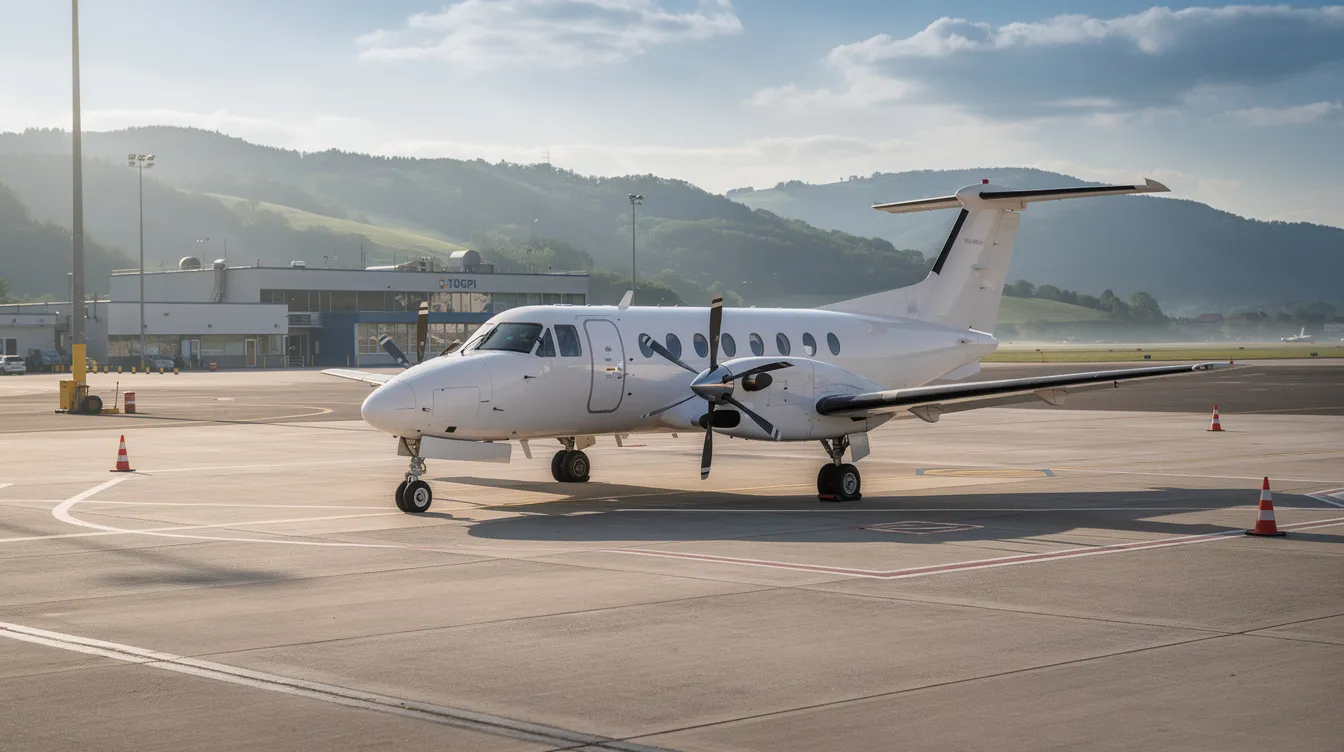
Think private air travel means spending $5,000+ per flight hour? It doesn't have to. Small aircraft charter has quietly become one of the smartest ways to move between cities, access remote airports, and skip the chaos of flying commercial. And when you combine small aircraft with empty-leg private jets, the math changes completely.
This guide is designed for business travellers, leisure seekers, and frequent flyers who want to experience the convenience and comfort of private aviation without the traditional high costs. Small aircraft charter and empty-leg flights matter because they offer significant cost savings, unmatched flexibility, and access to thousands of airports that commercial airlines simply don’t serve. Whether you’re looking to save time on business trips, enjoy spontaneous weekend getaways, or maximise your travel options, understanding these alternatives can transform the way you fly.
This guide breaks down exactly what small aircraft charter is, what it costs, how empty-leg flights work, and why a flat-fee membership like Hoppyn can replace the unpredictable hourly bills that keep most people from ever trying private aviation.
Key Takeaways
Small aircraft charter typically charges by flight hour—often $1,800 to $5,700+ depending on aircraft type—while Hoppyn offers unlimited empty-leg flights worldwide for a flat $997/year membership with no per-flight cost.
"Small aircraft" in private aviation means everything from Cessna Caravans and Pilatus PC-12 turboprops to light jets like the Phenom 300 and Citation CJ series, typically carrying 1–8 passengers on regional trips.
Empty-leg flights on small aircraft can cut typical private charter prices by 25–80%, and through a membership model like Hoppyn, that savings compounds with every flight you take.
Regional routes like New York–Nantucket, Miami–Nassau, and LA–Las Vegas are prime territory for small aircraft charter and empty legs, with high repositioning activity creating frequent opportunities.
Hoppyn positions itself as the alternative to traditional private jet charter services—giving you private charter-style travel through empty-leg flights instead of renting entire aircraft at hourly rates.
What Is Small Aircraft Charter?
Small aircraft charter is on-demand private flight using smaller fixed-wing planes—typically piston, turboprop, or light jets—carrying 1 to 8 passengers. Unlike commercial airlines that operate fixed schedules between major hubs, charter flights move on your timeline, your route, between airports you actually want to use, and that broader category can also include air taxis for short, flexible private trips.
Traditional private charter flights are priced per aircraft per flight hour, not per seat. That pricing model works well for short-haul routes up to roughly 1,500 miles, where small aircraft shine. Small aircraft can land at thousands of regional and local airfields, connecting travellers to places commercial airlines don't serve. They can also connect businesses with locations lacking commercial service entirely.
Common aircraft types in this category include the Cessna 172, 182, and Caravan; the Pilatus PC-12 and Beechcraft King Air for turboprops; and the Phenom 100, Citation CJ series, and similar models for light jets. Small aircraft charters enable flexible routing and multi-stop itineraries that would be impossible on a fixed airline schedule.
Hoppyn doesn't sell classic private jet charter services by the hour. Instead, we give members direct access to empty-leg private jets and small aircraft legs that would otherwise fly empty—turning wasted repositioning flights into real travel opportunities.
Small Aircraft vs Standard Private Jets: What Counts as "Small"?
The term "small aircraft" covers a broad range, and it helps to understand where these planes sit relative to the larger private jets most people picture. The differences come down to size, range, cabin comfort, and flight cost.
Very small piston aircraft carry 2 to 4 passengers with shorter range and minimal cabin amenities. Think Cessna 172s or similar propeller aircraft. These are the workhorses of flight training and personal flying, but they see limited charter use because they're often unpressurized, noisier, and more weather-sensitive.
Turboprops like the Pilatus PC-12 and King Air 200/350 seat 6 to 9 passengers, carry meaningful luggage, and offer short-field performance that lets them access runways as short as 3,000 feet. They're slower than jets but remarkably efficient aircraft for regional trips under two hours. Many operators in the U.S. and Europe actually use turboprops more often than tiny Cessna pistons for charter, thanks to better comfort and easier compliance with charter certification rules.
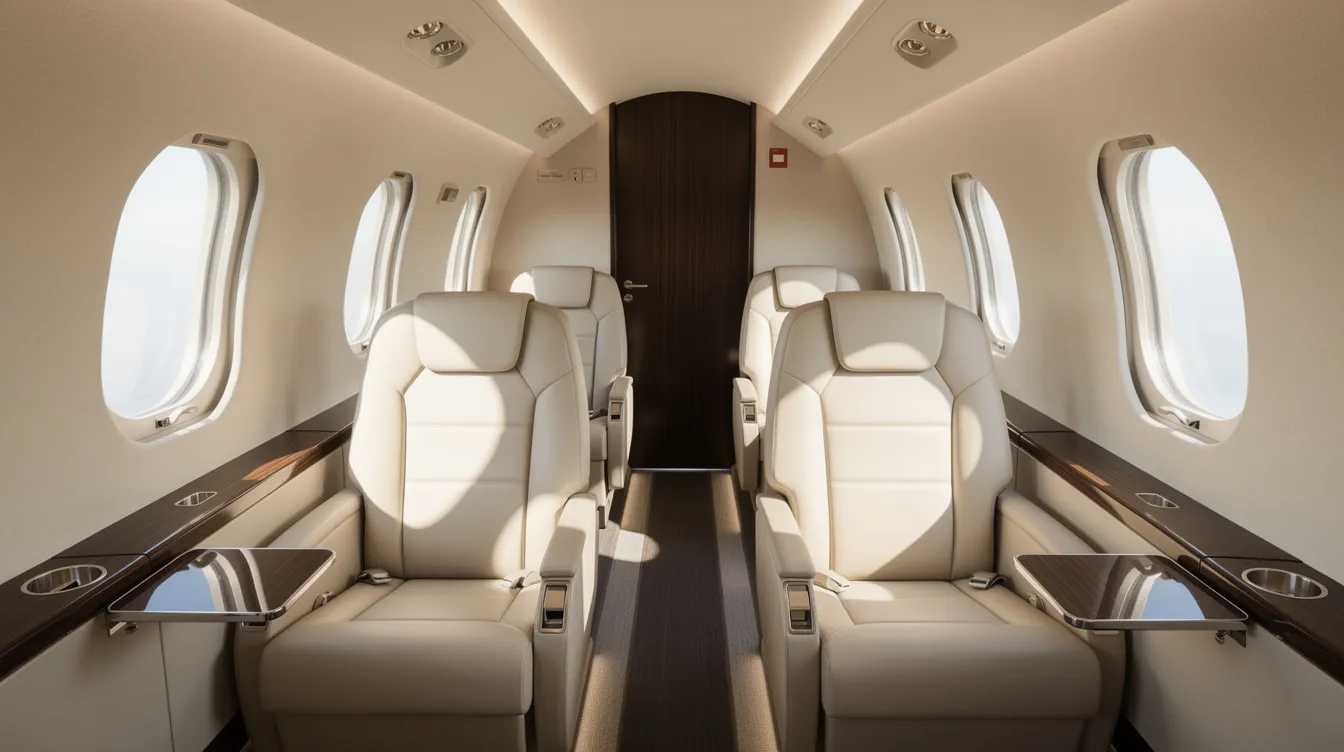
Light jets—the Citation CJ2, CJ3, Phenom 300, and similar models—seat 4 to 7 passengers with pressurised cabins, faster cruise speeds, and cabin layouts designed for productive or relaxing mid-range trips. The smallest end of this category is often referred to as very light jets. These are the sweet spot for passengers who want speed and comfort without the cost of heavy jets.
The entire cabin in a small aircraft is private and secure, whether you're holding a meeting or simply travelling without strangers next to you. Luggage capacity and cabin amenities must be considered when choosing your aircraft type, especially on shorter turboprop flights where cargo space is tighter.
Hoppyn members will most often see empty-leg availability in turboprops and light jets—not tiny two-seat planes—because these are the aircraft types operators use for revenue charter and need to reposition regularly.
How Traditional Small Aircraft Charter Pricing Works
Private jet rental and small aircraft charter are usually priced in hourly rates, with per-leg minimums plus taxes, fuel surcharges, and airport fees stacked on top. Understanding the quote is essential for transparency in charter pricing, because the final cost often surprises first-time buyers.
Here's the typical range for 2025-2026:
Piston singles: $600–$900 per flight hour
Turboprops (PC-12, King Air): $2,000–$4,500 per flight hour
Light jets (Citation CJ, Phenom): charter costs for light jets range from $1,800 to $3,300 per hour on the low end, scaling to $4,500–$7,000+ depending on aircraft and mission length
Midsized jets: midsized jet charter rates range from $3,200 to $4,400 per hour
Super-midsize jets: cost between $3,600 and $6,000 per hour
Large cabin jets: start at $10,000 per hour for charter
Ultra-long-range jets: start at $12,000 per hour for charter
Overall, private jet rental prices vary widely, typically ranging from $1,800 to $18,000 per hour depending on the class of aircraft.. And that's before extras. A charter flight cost calculator can help travellers generate a quick estimate before requesting a formal quote.
Common costs beyond the base hourly rate include repositioning fees to get the aircraft to your departure airport, crew overnight and per diem charges, de-icing in winter, international fees and handling for cross-border flights, and the 7.5% Federal Excise Tax on domestic U.S. charter. These hidden fees can inflate a seemingly reasonable quote by 20–40%.
Hoppyn's model is the opposite of this: instead of paying per hour or per leg, members pay a single annual membership fee and fly confirmed empty legs with no charter bill attached. No hourly rates, no repositioning fees, no surprise surcharges.
Empty-Leg Flights: The Smart Alternative to Paying Hourly
An empty leg flight is a repositioning flight without passengers. It happens when a private jet drops off charter clients at their destination and must fly back to base—or reposition to another airport for the next booking—with an empty cabin. Empty leg flights can also be called dead-heads or ferry flights within the industry.
Empty leg flights occur when a jet returns to its base or heads to its next pickup point. Because the aircraft has to fly regardless, operators would rather sell those seats at steep discounts than earn nothing. These flights are frequently offered at substantially discounted rates—generally 25% to 75% less than standard charter prices, and occasionally up to 80% off.. Travellers can access discounted rates on empty leg flights that make private jet travel genuinely comparable to premium commercial airline tickets.
Hoppyn leverages these empty legs worldwide and turns them into a membership benefit. Instead of buying a single discounted empty leg from a broker for $4,000–$9,000, Hoppyn members get spontaneous one-way empty leg flights at up to 75% off standard rates with unlimited confirmed flights for a flat $997/year. Here's how it works: join, browse the live board, join waitlists, and fly when confirmed—with no per-flight or per-seat cost.
Consider a concrete scenario: a typical Pilatus PC-12 retail charter from White Plains (HPN) to Nantucket (ACK) runs roughly $5,700+ one way. If that same aircraft needs to reposition back empty, a Hoppyn member could fly that identical route for $0 in flight cost—just the annual membership. Even one flight like this pays for the membership several times over.
When a Small Aircraft Charter Makes the Most Sense
Small aircraft shine on short-haul trips under 2–3 hours, into regional or remote airports, on limited runways, or when your group is just 2 to 6 passengers. Chartering can provide time savings by flying point-to-point, skipping connections, layovers, and hub-and-spoke routing entirely. Private jet travel can cut travel time in half when you factor in the door-to-door equation.
Real routes where this matters most:
New York–Martha's Vineyard or Nantucket: 45-minute hop versus a 5+ hour drive-and-ferry combo
Miami–Key West or Nassau: quick Caribbean hops where commercial options are limited
Los Angeles–Las Vegas: one of the busiest repositioning corridors in the country
Seattle–Friday Harbour or San Juan Islands: virtually no commercial service
Intra-Caribbean: routes like San Juan–St. Barths where larger jets can't land
Turboprops like the PC-12 and King Air can access small fields-like St. Barths (SBH) or East Hampton (HTO)-that larger private jets can't reach easily. Private jets access over 7,000 airports worldwide, and travellers can book private flights to over 3,000 airports in the U.S. alone. That's the advantage: you bypass long security lines and crowded terminals, arriving at smaller airports minutes from your actual destination.
Hoppyn's empty-leg board often features these high-demand regional routes because operators reposition aircraft between leisure and business hotspots constantly.
Key Aircraft Types Commonly Used for Small Charter
Here's a quick guide to the aircraft options you'll encounter most frequently in small charter and on Hoppyn's empty-leg board.
The Cessna Caravan handles rugged short strips and remote fields. It's a turboprop workhorse carrying up to 9 passengers, favoured for bush flying, island hopping, and utility routes where pavement is optional.
The Pilatus PC-12 is arguably the king of single-engine turboprops: 6–8 passengers, generous luggage space, a larger cabin than most turboprops, and impressive short-field performance. It's a go-to for leisure travel and corporate shuttles into smaller airports.
The King Air 200/350 offers a twin-engine turboprop platform with strong range and payload. It's a reliable choice for corporate hops between secondary cities, carrying 7–9 passengers comfortably.
Light jets like the Phenom 300 or Citation CJ3 bring speed into the equation—400+ knot cruise speeds, pressurised cabins, and enough range for 3-hour flights. These efficient aircraft serve the sweet spot between turboprop economy and larger cabin jet pricing.
Monarch Air Group offers a range of aircraft from turboprops to luxury jets, and Airshare has a diverse fleet and access to thousands of additional aircraft. These operators—and many like them—generate the empty-leg inventory that feeds platforms like Hoppyn. Private jets offer personalised in-flight services tailored to passengers, and even on a repositioning leg, you get the same aircraft and cabin quality.
Hoppyn's empty leg flights originating from Toronto inventory spans many aircraft types—turboprops, light jets, and mid-size jets—so members can routinely experience aircraft usually reserved for full-price charter clients.
How Aircraft Availability Really Works in Small Charter
Aircraft availability is dynamic. Small aircraft move constantly to match seasonal demand: Northeast-to-Caribbean corridors light up in winter, Mediterranean routes peak in summer, and business hubs like Teterboro, Van Nuys, and London Oxford see heavy repositioning Monday through Thursday.
Traditional private charter services handle aircraft availability through broker networks, operator fleets, and floating aircraft sold per trip or via a jet card. Tradewind Aviation connects travellers to over 3,000 airports. Linear Air offers access to over 7,000 available aircraft. Jettly provides access to over 20,000 unique aircraft worldwide. Private jet charters allow access to over 7,000 aircraft globally—it's a vast network, but navigating it as a consumer typically means calling brokers, getting quotes, and waiting.
On the Hoppyn platform, members log in to see live empty-leg availability updated daily. You can filter by region, date, and aircraft type, and join waitlists for flights that fit your plans. Browse the current board to see what's available right now.
Most private charters can be arranged with 24 hours' notice, and charter flights can accommodate urgent meetings and changing itineraries. But empty-leg private charter flights cannot guarantee exact times or routes like a bespoke charter. The trade-off is straightforward: you accept some flexibility on timing in exchange for massive savings.

Small Aircraft Charter Costs vs Hoppyn Membership
Let's make this concrete. A 2-hour light jet charter at $3,500 per flight hour easily exceeds $7,000 for a single one-way trip—before fuel surcharges, landing fees, and taxes push the final cost higher. A full year of Hoppyn membership is $997.
Here's how sample itineraries compare:
Route | Approx. Charter Cost (One-Way) | Empty-Leg Market Price | Hoppyn Member Flight Cost |
|---|---|---|---|
LA → Las Vegas (~1 hr, light jet) | $11,000–$15,000 | $4,500–$7,200 | $0 beyond membership |
New York → Nantucket (~0.7 hr, turboprop) | $7,500–$10,000 | $2,800–$4,500 | $0 beyond membership |
Miami → Nassau (~1 hr, light jet) | $8,000–$12,000 | $3,500–$6,000 | $0 beyond membership |
If a member takes just two or three empty-leg flights per year on routes like these, the $997 membership fee delivers significant savings compared to paying charter rates—or even discounted empty-leg broker prices.
Hoppyn doesn't quote hourly rates. There is no private jet rental invoice for members on confirmed flights. You pay the flat annual fee and nothing tied to flight hours or aircraft size. Members remain responsible for personal choices outside the flight itself, like ground transportation or hotel stays, but the flight itself is covered.
For travellers who would otherwise fly private 2–6 times per year and are tired of unpredictable charter bills and opaque pricing, Hoppyn is built exactly for you.
How to Book a Small Aircraft Empty Leg with Hoppyn
The member journey is simple. Join Hoppyn, log in to the platform, browse the live empty-leg board, and book flights once you find a suitable option. Filter by date, region, or aircraft type to find flights that match your schedule. When you find a match, join the waitlist.
Once an empty-leg flight is confirmed and a seat is assigned, there are no charter service charges or aircraft hourly rates. Members fly at $0 flight cost. Booking a private charter flight can be done in three steps—and with Hoppyn, the process is even simpler since pricing is already settled by your membership.
New flights are added daily as operators finalise charter bookings and reposition plans. Checking frequently—or using alerts—increases your odds of catching the small aircraft routes you want. If you have a specific route in mind, you can also request a flight and the team will look for matching opportunities.
Hoppyn's 24/7 support team is ready to answer questions on routes, airport access, luggage limits, and what to expect on specific aircraft types. Reach out via the contact page any time.
Small Aircraft Charter Safety, Regulations, and Limits
Charter services for small aircraft must operate under commercial regulations—FAA Part 135 in the U.S., EASA rules in Europe—which is why true "super small Cessna charter" is relatively rare outside specialised regions. Safety certifications like FAA Part 135 are crucial for charter operators, and they cover everything from aircraft maintenance schedules to pilot training minimums and operational standards.
Operators must meet strict maintenance standards, pilot experience thresholds, and recurrent training requirements regardless of aircraft size. Every commercial pilot flying charter holds the necessary certifications and type ratings for their specific aircraft. Independent safety ratings from organisations like ARGUS or Wyvern provide additional verification—look for these when evaluating any operator.
Realistic operational limits exist. Small aircraft have strict weight and balance limitations for safety; weather sensitivity is higher for very small planes; some turboprops have runway length requirements that vary by aircraft; and passenger count limits typically run 4–8 for small aircraft. Private aviation eliminates ownership responsibilities like maintenance and staffing—that's the operator's job—but passengers should still understand what constraints apply.
Hoppyn only partners with vetted operators, and all empty-leg private charter flights booked through the platform are run by fully certified commercial operators meeting industry standards, while dedicated resources for charter operators help fleets integrate, list empty legs efficiently, and maximise utilisation.
Best Use Cases: Business, Weekends, and Special Trips
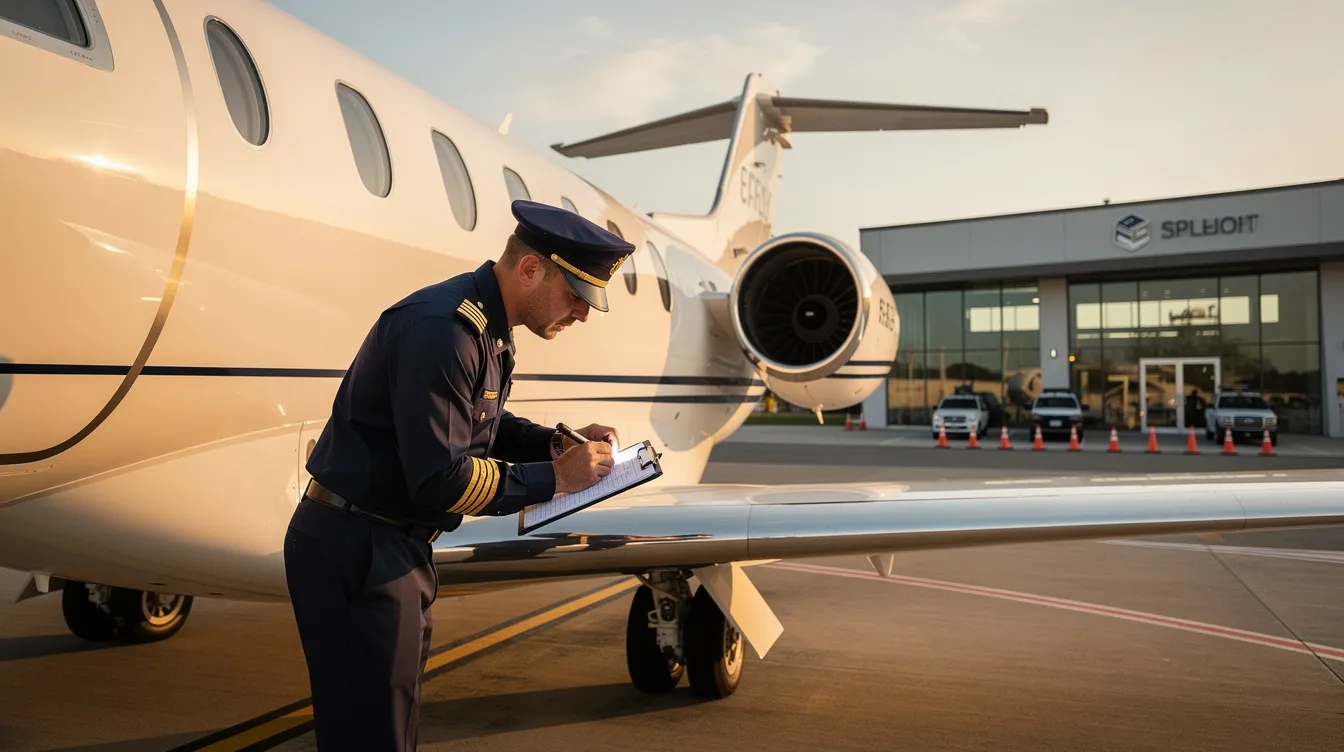
Business travellers use small aircraft to hop between secondary cities, visit manufacturing sites, or complete same-day regional tours that are impossible on commercial schedules. Flying private allows for flexible scheduling without long waits, and private jets provide enhanced privacy compared to commercial flights—critical when discussing sensitive deals in transit.
Leisure scenarios are equally compelling. Weekend getaways—New York to Nantucket in June, Denver to Aspen in winter—become effortless. Weddings, golf trips, family visits to small towns with regional airports: these are all trips where small aircraft and empty legs make the most sense. Luxury travellers and frequent flyers alike benefit from skipping major hubs entirely.
Small aircraft often reduce total door-to-door time because they use airports like Teterboro (TEB) instead of JFK on the east coast, or smaller fields closer to resorts and private communities. This is where time savings compound: 15 minutes at an FBO versus 2 hours navigating a commercial terminal.
Hoppyn empowers these trips differently. Members watch for empty-leg flights aligned with personal calendars and build flexible, high-value private jet travel around them. Whether you're a consultant connecting travellers across three cities in a week or a couple looking for spontaneous weekend escapes, the model works the same way.
Pros and Cons of Small Aircraft Charter vs Empty Legs
Traditional private charter gives you complete control over schedule and route. You choose the aircraft type, the departure time, and the origin airport. Group charters and large group bookings work smoothly because you're hiring the whole plane on your terms. Airlines operate on fixed schedules; charter gives you the opposite. The downside is cost. Hourly rates, repositioning fees, crew charges, and surcharges make the charter flight cost unpredictable and expensive, especially for frequent flyers.
Empty-leg travel through Hoppyn flips the equation. The pros: dramatically lower effective pricing, access to the same premium private jets and turboprops, and identical FBO experiences with private terminals and instant access to the ramp. You still bypass the crowded commercial terminal. The cons: routes are fixed by the operator's repositioning needs, flexibility is limited compared to bespoke charter, and flights can shift or cancel if the primary charter client changes plans (industry-wide cancellation rates run roughly 10–15%).
Many Hoppyn members blend both approaches: using empty-leg flights whenever routes align with their plans and booking standard small aircraft charter through other charter options when a mission demands a custom schedule with no long-term commitments. Private jet booking offers flexibility with no long-term commitments either way—you're not locked into fractional ownership or multi-year contracts.
Practical Tips for Your First Small Aircraft or Empty-Leg Flight
Arrive 20–30 minutes before departure at the FBO. Bring government-issued photo ID. Confirm baggage limits in advance, especially on turboprops where cargo space is tighter than on a jet. For tips on choosing the best seat, cabin comfort, and what to expect on various aircraft, it pays to do a few minutes of homework before your first flight.
Wear comfortable layers—cabin temperatures on small planes can vary more than on commercial airlines. Noise levels differ by aircraft type: turboprops are louder than jets, and smaller cabins mean you'll feel vibrations more. None of it is uncomfortable, just different.
You'll board through private terminals (FBOs) like Signature, Atlantic, or regional equivalents. No TSA lines, no gate announcements, no boarding groups. You walk from your car to the aircraft in minutes. This is how private air travel is supposed to feel.
For Hoppyn members specifically: monitor notifications for schedule changes, keep backup routes in mind, and stay flexible on departure times to maximise the value of empty-leg private charter flights. The more adaptable you are, the more flights you'll catch.
Who Is Hoppyn Best For Compared to Traditional Private Charter Services?
Hoppyn's ideal member is someone who travels a few to dozens of times per year, has flexibility on exact timing, and wants to experience private jets without paying traditional private jet rental prices. If you're comfortable adapting your schedule to what's available—rather than demanding a specific aircraft at a specific time—you'll extract enormous value.
Traditional users of on-demand private charter services or a jet card are typically executives who need guaranteed availability, instant pricing, fixed pricing per flight hour, and on-demand aircraft options in any city. That's a different product for a different need, and it comes with a price tag to match.
Hoppyn is not a replacement for every mission. It's a high-leverage tool for connecting travellers who can plan around available empty legs and extract substantial value from the membership. Think of a consultant stringing together multiple regional empty legs over a quarter or a couple of months using empty-leg deals for spontaneous weekend trips between business hubs and leisure destinations.
A business traveller doing East Coast hops three times a month could realistically catch 6–10 empty-leg flights per year through Hoppyn, turning a $997 membership into what would have been $30,000–$60,000 in charter costs. That's competitive pricing by any standard.
How Hoppyn Fits into the Private Jet Travel Landscape
Hoppyn is not a broker selling charter at competitive pricing per leg. It's not a fractional ownership program. And it's not a traditional jet card with fixed hourly rates and long-term commitments.
Hoppyn monetises access, not flight hour billing. One flat annual fee gives you unlimited access to a constantly updating board of empty-leg private charter flights worldwide. Transparent pricing means the membership fee is the membership fee—no hidden fees, no surprise surcharges, no per-seat upcharges. Learn more about us and what drives the model.
The broader ecosystem benefits everyone: operators reduce waste by filling empty seats on repositioning legs, travellers gain affordable access to private jets that would otherwise fly empty, and airports see better utilisation of small aircraft traffic. It's a model that didn't exist at scale a decade ago, and it's growing fast—with over 5,000 live empty legs globally from 900+ certified operators at any given time.
Whether you're exploring private flights for the first time or you're a seasoned private jet traveller looking to cut costs, Hoppyn offers a fundamentally different way into the sky.
Ready to see what's flying near you? Browse the live empty-leg board or join Hoppyn today and start flying private for $997/year.

Frequently Asked Questions
Can I choose the exact route and time on an empty-leg flight?
Empty-leg flights follow the operator's repositioning needs, so routes and departure times are mostly fixed. They can shift if the primary charter booking changes—this is a trade-off for the dramatically lower cost. If you need a fully custom schedule with complete control over origin, destination, and timing, traditional small aircraft charter is still the right option. Hoppyn focuses on leveraging existing empty legs, which means flexibility on your part translates directly into savings.
Are very small planes like two-seat Cessnas available through Hoppyn?
Most empty-leg flights on Hoppyn involve turboprops and jets, not tiny training aircraft or a small plane with just two seats. Commercial charter operators prioritise aircraft with sufficient comfort and range for paying clients, so the repositioning legs that become empty legs are typically on aircraft seating 4–8+ passengers. Expect pressurised cabins, reasonable luggage space, and a diverse fleet of aircraft suitable for regional and medium-haul private jet travel—not a cramped cockpit experience.
How often do new small aircraft empty-leg flights appear on Hoppyn?
New empty-leg private charter flights are added daily as operators finalise charter itineraries and reposition aircraft across North America, Europe, the Caribbean, and other active regions. High-demand routes—like the East Coast leisure corridors or Las Vegas runs—see particularly frequent inventory. Checking the platform regularly and using alerts is the best way to catch attractive small aircraft routes before they're claimed by other members.
Do I still pay anything per flight as a Hoppyn member?
Hoppyn's core promise is no per-flight or per-seat cost for confirmed empty-leg flights. Members pay a flat annual membership fee of $997 and nothing tied to flight hours or aircraft size. You remain responsible for personal travel choices outside the flight—things like ground transportation, hotel stays, or optional in-flight catering upgrades if offered by the operator. But the flight itself? Covered by your membership.
Is Hoppyn available worldwide or just in the United States?
Hoppyn focuses on global empty-leg access, with strong activity in the U.S., Europe, and popular leisure regions like the Caribbean and Mexico. Coverage depends on operator networks in each region, and international flights are increasingly common as the platform grows. Browse the live flights board to see current small aircraft and private jet routes available from your nearest airports—you might be surprised what's departing tomorrow.
Conclusion
Small aircraft charter and empty-leg private jets offer a practical, cost-effective way to experience private aviation without the hefty hourly bills typical of traditional charter services. By leveraging underutilized repositioning flights, Hoppyn’s flat-fee membership model unlocks access to premium aircraft worldwide at a fraction of the usual cost. Whether you're a frequent business traveler, a weekend getaway seeker, or someone curious about flying private for less, small aircraft and empty-leg flights deliver flexibility, convenience, and significant savings.
With thousands of airports accessible and a constantly updated flight board, Hoppyn empowers you to fly private on your terms. Say goodbye to unpredictable charter costs and hello to transparent pricing, unlimited confirmed flights, and a seamless booking experience. Ready to take off? Join Hoppyn today and start flying private for less with empty-leg flights.




Unlock Your Private
Jet Experience
Join our exclusive membership for
free flights today!

Explore More
Blogs


Join Our Exclusive
Newsletter
.png)






