
Timeshare for Private Jets in 2026: Fractional Ownership, Jet Timeshares & Smarter Ways to Fly Private


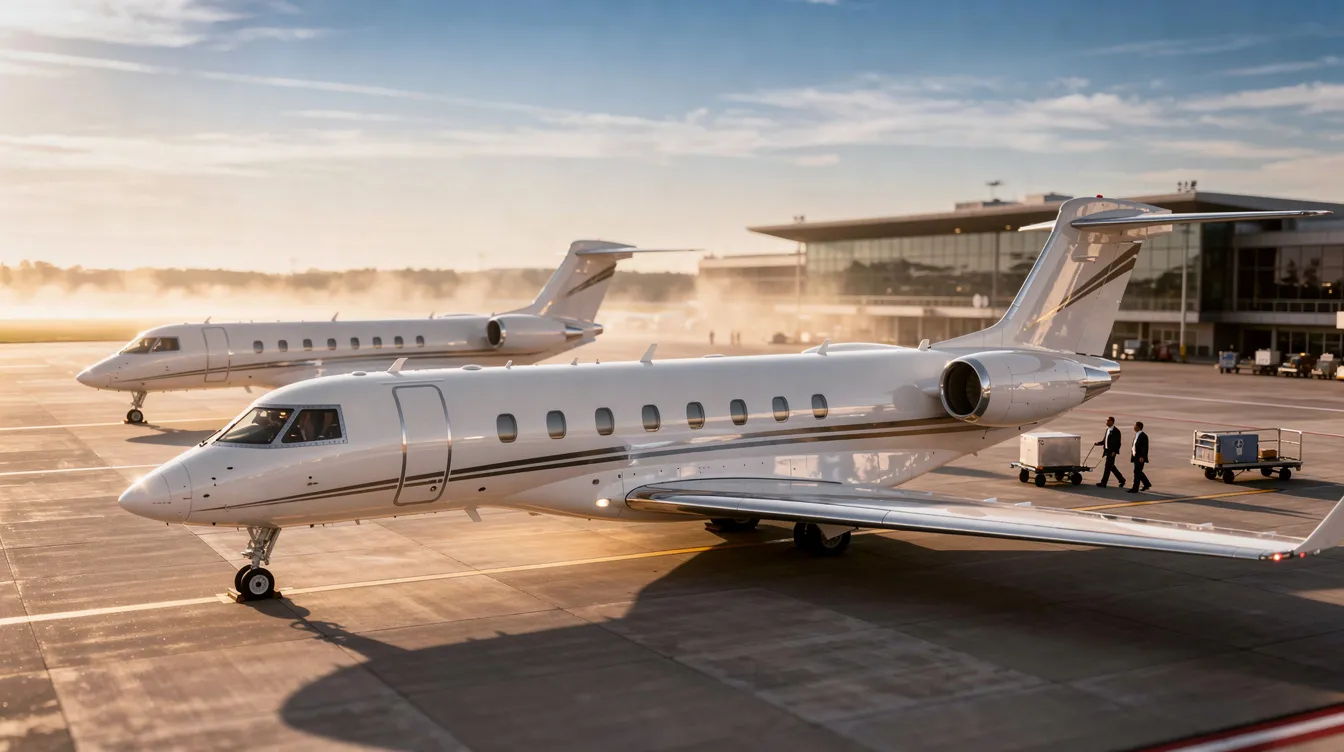
Think you need to spend millions to fly private? That assumption keeps most people stuck in commercial aviation — even when there are far more accessible ways to get on a private plane.
A private jet timeshare allows shared ownership of an aircraft, spreading the financial burden across multiple owners while improving the overall travel experience.
A "private jet timeshare" is the non-technical term most people use for fractional jet ownership and similar shared aircraft ownership models in private aviation. In these programs, you buy a fractional share of an aircraft (or fleet) and receive a fixed number of flight hours per year, plus guaranteed access within the program's rules and the ability to tailor flight options within those limits. Private jet timeshare allows shared ownership of an aircraft, spreading the financial burden across multiple owners while improving the overall travel experience.
But fractional ownership isn't the only path. Today you can also consider full aircraft ownership, jet cards, on-demand chartered flights, or empty-leg membership models like Hoppyn. This article breaks down the costs, ongoing expenses, aircraft types, and alternatives so you can decide if a jet timeshare is truly cost-effective for your travel needs.
Key Takeaways
A private jet timeshare is usually a fractional ownership program where you purchase a share (1/16 to 1/2) of a specific aircraft and receive guaranteed flight hours annually — typically 50 to 200 hours. Initial acquisition costs range from $275,000 to over $1.2 million, with monthly management fees of $8,000–$15,000 and hourly flight fees from $1,800 to over $8,000.
Fractional jet ownership makes financial sense if you fly roughly 100–200+ hours per year. Below that threshold, you're likely overpaying through fixed costs that don't scale down when you don't fly.
For travelers who want to fly private without the capital commitment, Hoppyn offers a flat $997/year membership that gives you access to empty-leg private jet flights with no per-flight cost once confirmed — no ownership, no hourly rate, no hidden fees.
Here's a quick comparison of private aviation models in 2026:
Model | Upfront Cost | Ongoing Costs | Best For |
|---|---|---|---|
Full aircraft ownership | Millions | All operational costs | 250+ hrs/year |
Fractional ownership | $275K–$1.2M+ | $8K–$15K/mo + hourly rate | 100–200+ hrs/year |
Jet cards | $180K–$220K per block | Per-hour charges | 25–100 hrs/year |
On-demand charter | None | Pay per trip | Occasional flyers |
Hoppyn membership | $997/year | $0 per confirmed flight | Flexible travelers |
How Private Jet Timeshares (Fractional Ownership) Actually Work
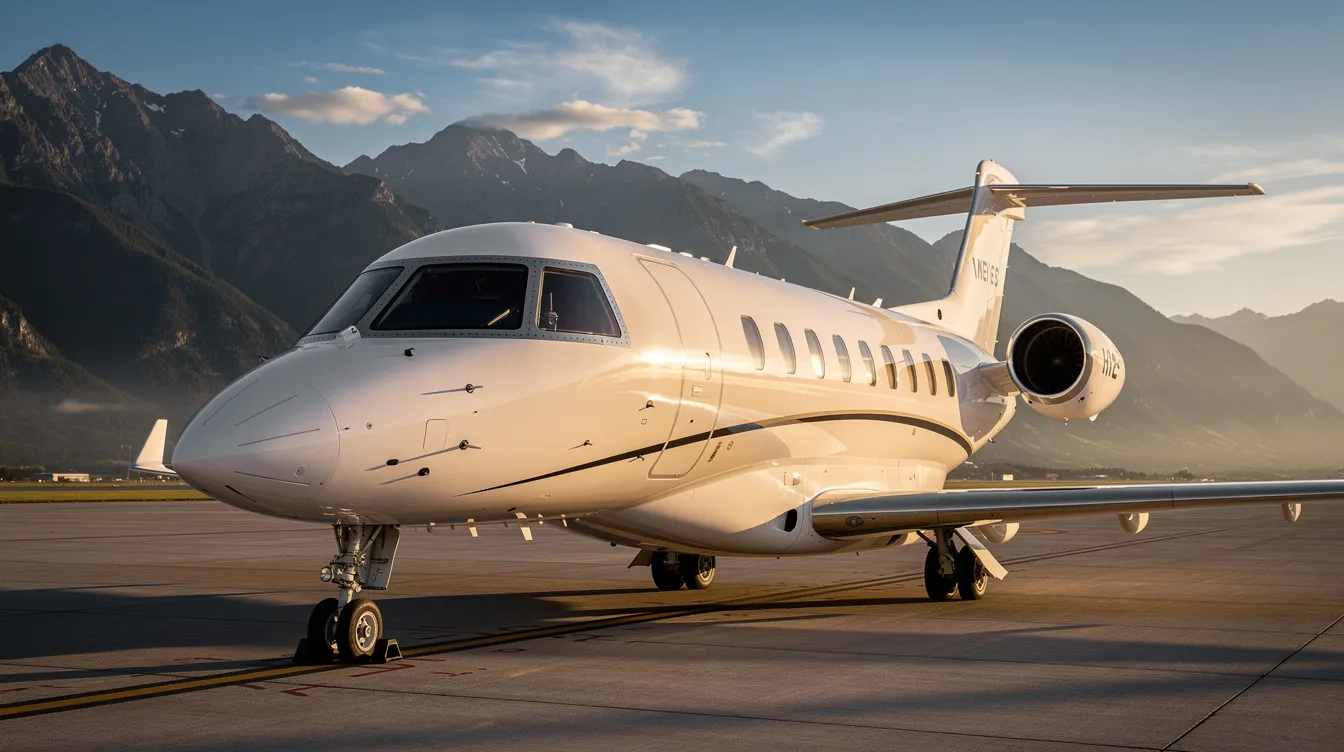
Fractional ownership works like a timeshare for aircraft — except you hold true aircraft ownership of a percentage share. Fractional ownership programs began in the late 1980s and have evolved into structured fleet operations run by major providers like NetJets, Flexjet, and AirShare.
Owners typically purchase a fractional share for flight hours. Common share sizes in 2026:
1/16 share → ~50 flight hours per year
1/8 share → ~100 hours
1/4 share → ~200 hours
1/2 share → ~400 hours
Fractional ownership allows 50 to 200 flight hours annually for most buyers. Each program has three main cost components: the initial acquisition cost (your buy-in), a monthly management fee covering crew, insurance, maintenance, and hangar fees, and a variable hourly rate when you actually fly.
Operationally, fractional ownership offers guaranteed aircraft availability with 4–6 hours' notice. Most providers handle booking windows, peak-day rules, and aircraft interchange so you can upgrade or downgrade between aircraft types. The fleet handles crew, maintenance, insurance, scheduling, and highly trained pilots — that's the professional management services layer that makes this different from owning a plane outright.
The FAA regulates fractional ownership under Part 91 Subpart K, which sets specific operational and safety standards.
Timeshare vs. Fractional Ownership vs. Leases: Clearing Up the Terms
The phrase "timeshare for private jets" gets thrown around loosely. Depending on the provider and legal structure, it can mean very different things.
In true private jet fractional ownership, you own an undivided interest in an N-numbered aircraft. You have legal rights, possible tax advantages, and a share that can be sold later. This is real ownership — not just access.
Contrast that with timeshare-style access programs: block-hour leases, club memberships, or jet cards where you get usage rights but no equity in the plane. These are closer to prepaid service plans than ownership.
In the U.S., "time sharing agreements" under FAA Part 91 are specific legal structures — not the same as consumer "jet timeshare" marketing language. Always clarify with your provider whether you're buying ownership, leasing hours, or joining a membership. This affects your costs, liabilities, responsibility, and exit options.
Costs of a Private Jet Timeshare in 2026
Transparency matters here. Let's break costs into three buckets: acquisition, ongoing expenses, and flight usage charges.
Acquisition costs (initial purchase of your fractional share) vary by aircraft type:
Light jets: ~$275,000–$850,000 for a 1/16 share
Midsize jets: ~$800,000–$1.2M+ for a 1/16 share
Long-range jets: well into the millions
Monthly management fees typically range from $8,000 to $15,000+, covering hangar rent, pilot salaries, training, insurance, scheduled maintenance, and administration. This is a fixed cost you pay whether you fly or not.
Hourly flight fees vary from $1,800 to over $8,000 depending on the jet, and while some programs advertise low hourly rates, buyers should verify which surcharges and extras are excluded:
Light jets: ~$2,000–$4,000/hr
Midsize/super-midsize: ~$4,000–$7,500/hr
Heavy/long-range: $9,000–$14,000+/hr
Watch for additional cost items: fuel surcharges, deicing, catering upgrades, international handling, and repositioning fees. These can push a trip's total well beyond the advertised hourly rate. Fractional ownership reduces unpredictable costs like standalone maintenance and hangar fees by bundling them — but it doesn't eliminate all surprises.
Ongoing Expenses & Responsibilities Compared to Full Aircraft Ownership
Full aircraft ownership means full responsibility: financing or depreciation, hangar fees, crew salaries and training, maintenance reserves, insurance, navigation subscriptions, plus annual inspections. Aircraft owners who go this route carry every operational cost alone, and lost productivity from managing logistics adds up fast.
A fractional ownership program bundles many of these into the monthly management fee and variable hourly rate, spreading costs across other owners. This makes things more cost-effective for moderate flyers. Professional management covers maintenance, insurance, and crew training — saving you time and operational headaches.
Fractional ownership reduces operational costs compared to full ownership. But owners are still exposed to market risk on their share's resale value. Contract terms often include depreciation exposure and exit strategies — typically providers repurchase shares at 50–70% of the original acquisition cost after a 5-year term. Whole aircraft ownership only starts to make financial sense at 250+ flight hours per year with specific aircraft and route preferences.
Aircraft Types in Jet Timeshares: Matching the Jet to Your Mission
Choosing the right aircraft types is as important as choosing the right program. Paying for a long-range heavy jet when you only fly 2-hour hops wastes money on an unnecessarily high hourly rate.
Light jets (e.g., Phenom 300, Citation CJ3): 6–7 seats, ideal for 2–3-hour trips like LA–Denver. Lower hourly rates but limited range and baggage.
Midsize jets (e.g., Hawker 800XP, Citation XLS+): 7–8 seats, 3–5-hour missions like New York–Aspen. Balanced cabin comfort and cost efficiency.
Super-midsize and long-range jets (e.g., Challenger 3500, Gulfstream G450): 8–12+ seats, coast-to-coast or transatlantic capability. Higher hourly rates but more range.
Fractional owners can interchange hours into different aircraft types. Most fractional programs allow you to swap between categories, but conversions adjust your effective hourly rates — 1 hour in a large jet may cost 1.5+ hours from a light-jet share. Fractional fleets adhere to commercial-grade airline safety protocols, so you expect consistent standards regardless of which plane you board.

Is a Private Jet Timeshare Really Cost-Effective? Who It's For (and Who It's Not For)
Fractional ownership is a powerful tool for discerning travelers — but it's overkill for many and too rigid for some. Here's a flight-hour guide:
Under ~25 hrs/year: On-demand charter or commercial. Fractional programs are a financial burden at this volume.
25–75 hrs/year: Jet cards or memberships. Predictable costs without capital lock-up.
100–200+ hrs/year: Fractional jet ownership starts to pay off. Guaranteed availability, a diverse fleet, and professional management justify the buy-in.
250+ hrs/year: Full aircraft ownership may make sense for frequent flyers with specific route needs.
Fractional aircraft programs typically require a multi-year commitment (3–5 years) and a long-term commitment of capital. If your schedule is flexible and you care about value per seat, empty-leg solutions can be far more cost-effective than a classic jet timeshare.
Jet Timeshare vs. Empty-Leg Memberships like Hoppyn
Empty-leg flights are repositioning flights that private jets must perform — for example, dropping passengers in Miami and flying empty back to New York. Operators release these seats because the plane is flying anyway. The median advertised empty-leg price is roughly $3,500 for a whole aircraft — a fraction of typical charter rates.
The economic contrast is stark. A jet timeshare means a six-figure acquisition, $8,000–$15,000+/month in ongoing costs, and per-hour charges. Hoppyn offers a flat annual membership fee for access to empty-leg flights — $997/year with no per-flight cost when you snag a confirmed seat. Membership services in private aviation often emphasize transparency and no hidden fees, and that's exactly how Hoppyn operates.
Who does this fit? Travelers with flexible dates and destinations, remote workers, leisure travelers, and businesses that can adapt schedules to available routes. You browse a global flight board, join waitlists, get notified when flights confirm, and fly private without paying per-hour charter rates or taking on aircraft ownership obligations, while charter operators use dedicated resources to list and manage their empty legs.
The trade-off is honest: no guaranteed access on specific dates, routes follow operator needs, and you need to stay flexible. But waiting lists for empty-leg flights and city-based empty-leg hubs offering discounted one-way flights can provide additional opportunities for private travel at a radically lower cost.
How to Choose the Right Private Aviation Model for You
Start with data, not aspirations. Look at your actual travel patterns from the last 12–24 months.
Key questions to answer:
How many flight hours per year do you realistically need?
What are your typical routes — domestic hops or long-haul?
Can you be flexible on dates and times?
How many passengers travel with you?
Do you need guaranteed availability, or can you plan around what's available?
Estimate your total annual cost across models. Involve trusted aviation, legal, and tax advisors before signing multi-year fractional ownership contracts. And if you're exploratory or price-sensitive, start with a lower-commitment option. You can always move to fractional ownership after confirming you consistently fly enough hours to justify it.

Ready to try private aviation without the six-figure buy-in? Join Hoppyn today and start browsing empty-leg flights worldwide for just $997/year.
Frequently Asked Questions
Is fractional jet ownership the same as a private jet timeshare?
Most people use "private jet timeshare" to describe fractional ownership, where you own a percentage of a specific aircraft. But not all programs marketed as "timeshares" involve real ownership. In true fractional programs, you receive a contract-backed ownership interest plus defined annual flight hours. Some "timeshare-style" clubs simply sell access with no equity. Always ask your provider whether you're purchasing ownership, leasing hours, or joining a membership.
What is typically included in the monthly management fee?
The monthly management fee generally covers pilot and crew salaries, recurrent training, hangar and parking, routine maintenance and inspections, insurance, scheduling staff, and fleet management overhead. Some providers bundle catering basics and navigation subscriptions; others bill them separately. Request a line-item breakdown to compare programs accurately and see which ongoing expenses remain variable.
Can I choose different aircraft types when I own a fractional share?
Yes. Many fractional programs allow "interchange," letting you upgrade or downgrade from your primary aircraft type to others in the fleet. Interchange uses a conversion formula that adjusts your effective hourly rates or debits extra hours for larger jets. Confirm how interchange works in your region and whether peak-day restrictions apply before you purchase.
How does Hoppyn's model differ from fractional ownership or a jet card?
With Hoppyn, you do not buy aircraft ownership or block hours. You pay a flat annual membership fee ($997/year) to access a global board of private jet empty-leg flights. Once confirmed, flights come with no added per-flight cost — unlike jet cards or charter that charge per occupied flight hour. See how it works. Hoppyn is ideal for flexible travelers seeking the most affordable way to experience private aviation.
What if I'm not sure how many hours I'll fly private this year?
Start with lower-commitment options: on-demand charter, small jet cards, or an empty-leg membership like Hoppyn. Track all your private and commercial flights for 6–12 months — routes, dates, passenger counts — to build a data-backed profile of your real travel needs. Then revisit your plan annually, adjusting between membership, charter, and ownership models as your business or lifestyle evolves.
Conclusion: Is a Private Jet Timeshare Right for You?
Private jet timeshares, or fractional ownership, offer a compelling way to access private aviation without the full financial burden of owning an entire aircraft. They provide guaranteed flight hours, professional management, and access to a diverse fleet, making them ideal for travelers flying 100–200+ hours annually who value flexibility and predictability.
However, timeshares come with high upfront costs, ongoing monthly fees, and hourly flight charges that may not suit everyone. If you fly less frequently or need more flexibility without ownership commitments, alternatives like jet cards, on-demand charter, or Hoppyn’s flat-fee empty-leg membership can be smarter, more affordable choices.
Hoppyn’s model disrupts traditional private jet access by leveraging empty-leg flights through a transparent, flat annual membership fee ($997/year) with no per-flight costs once confirmed. This approach empowers travelers to fly private for less, with global access and no hidden fees—perfect for those who can adapt their travel plans to available routes. Learn more about empty leg flights and how private jet membership works.
Ultimately, the best private aviation solution depends on your travel frequency, flexibility, budget, and desire for ownership versus access. Start by analyzing your actual travel patterns and consider consulting aviation and financial advisors to find the right fit. Whether you choose fractional ownership or a membership like Hoppyn, private jet travel is more accessible than ever—empowering you to fly private on your terms. Check out our FAQs for more details or browse flights to see current options.
Ready to explore affordable private jet flights? Join Hoppyn today and start browsing empty-leg flights worldwide for just $997/year.




Unlock Your Private
Jet Experience
Join our exclusive membership for
free flights today!

Explore More
Blogs


Join Our Exclusive
Newsletter
.png)






