
Transatlantic Private Jet Flights: How to Cross the Atlantic (Often for Less Than You Think)


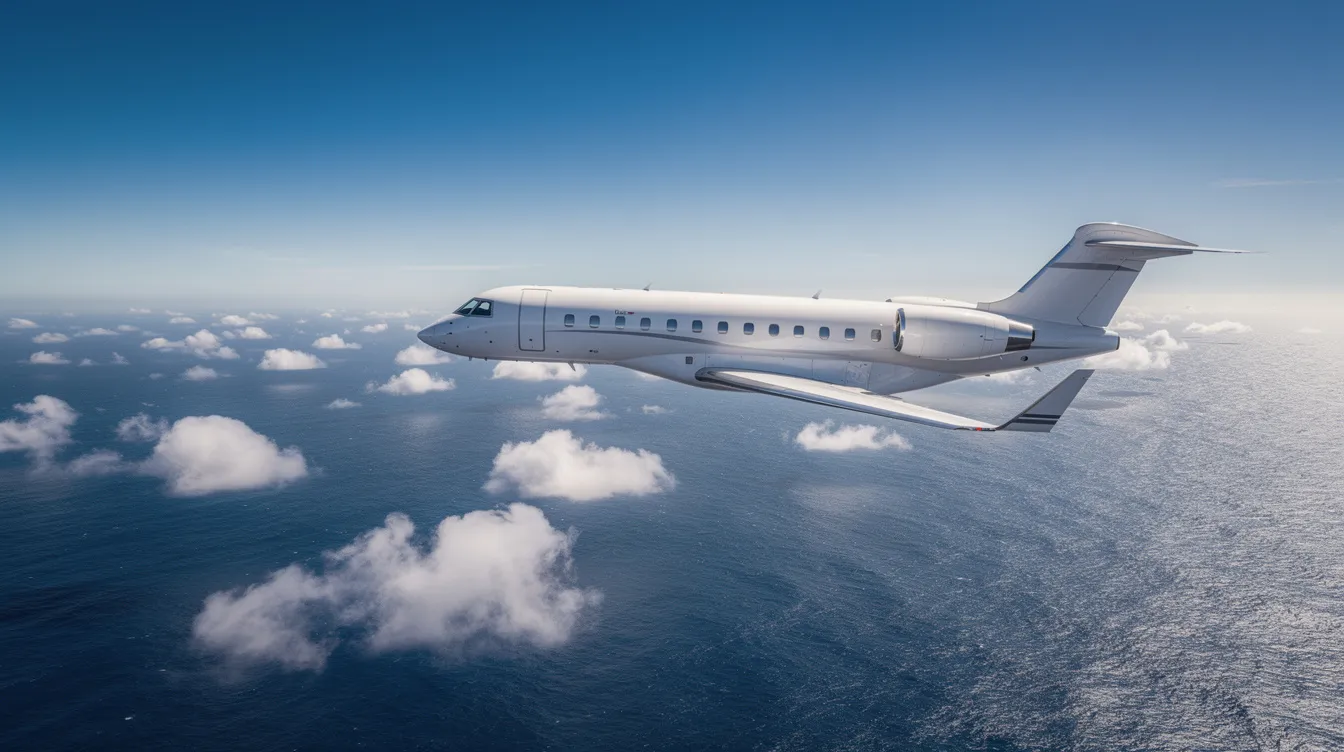
Most people assume a transatlantic private jet flight is strictly a billionaire move — something reserved for heads of state and Fortune 100 CEOs. The reality? Transatlantic private jet charters cost between $100,000 and $250,000 one way through traditional brokers. That's real money. But it's not the only way to fly private across the Atlantic. Empty leg flights can save up to 75% off standard rates, and with the right approach, you can cross the ocean on a heavy jet without the heavy price tag.
Here's everything you need to know about aircraft, routes, costs, and how to actually make it happen.
Key Takeaways
Most nonstop transatlantic private jet flights rely on heavy and ultra-long-range jets like the Gulfstream G550/G650ER, Bombardier Global Express, or Dassault Falcon 7X/8X, with ranges from roughly 3,500 to 7,700+ nautical miles.
Traditional charter for a one-way transatlantic private flight often runs $100,000–$250,000+, but transatlantic empty legs can cut that by 50–75% if you're flexible on dates and airports.
Hoppyn doesn't sell charters. Members pay a flat $997/year to access unlimited empty leg flights — including transatlantic routes — with no per-flight cost.
Typical flight times for popular transatlantic routes: New York to London in 6–7 hours, Miami–Paris in 8–9 hours, Los Angeles–Geneva in 10–11 hours. Private terminals shave 2–4 hours off total trip time compared to commercial flights.
Private aviation often reduces total travel time significantly compared to commercial flights, and you'll fly on aircraft equipped with ETOPS certification, proper permits, and experienced crews who handle North Atlantic Tracks (NATs) daily.
What Is a Transatlantic Private Jet Flight?
A transatlantic private jet flight is exactly what it sounds like: a private jet crossing the Atlantic Ocean between North America and Europe (or Africa). Think New York to London, Miami to Paris, or Los Angeles to Rome. These are long-haul flights that cover thousands of miles of open ocean on a private aircraft.
Don't confuse "transatlantic" with "transcontinental." A flight from New York to Los Angeles is transcontinental — coast to coast, no ocean. A transatlantic private jet flight specifically means crossing the Atlantic, connecting continents separated by water.
Most nonstop flights on these routes are operated by long-range jets and heavy jets with ranges above 3,500–4,000 nautical miles, since these crossings are a subset of international flights with added range and operational requirements. Ultra-long-range aircraft are designed specifically for long-distance missions across the Atlantic. Transatlantic flights generally require heavy jets or ultra-long-range jets for the performance needed to handle wind, fuel reserves, and regulatory requirements.
Private jets can fly nonstop across the Atlantic on the right aircraft type — typically ultra-long-range or heavy jets.
Shorter-range aircraft, including very light jets and most light jets, can still go across the Atlantic with one or more fuel stops via Iceland (Keflavik), Greenland, or the Azores. For example, a light jet might route New York → Goose Bay → Reykjavik → London.
"Transatlantic" covers both directions — eastbound (typically faster due to tailwinds) and westbound (slower, fighting jet streams).
Popular Transatlantic Private Jet Routes and Typical Flight Times
Private jets usually fly more direct flight routes than airlines and use less congested airports, which dramatically cuts total door-to-door time. Private passengers experience significant time savings by avoiding large commercial terminals, and private flights provide access to fixed-base operators offering a more streamlined travel experience.
Here are the key transatlantic routes with realistic flight times on long-range jets:
New York (KTEB/KHPN) – London (EGGW/EGKB): ~6–7 hours on a Bombardier Global Express or Gulfstream G650ER. New York to London flights typically take 6 to 7 hours eastbound.
Miami (KOPF) – Paris (LFPB): ~8–9 hours on a Falcon 8X or comparable ultra-long-range aircraft.
Washington, D.C. – Madrid: ~7.5–8.5 hours on a Gulfstream G550.
Los Angeles – Geneva: ~10–11 hours on a Global 7500 or G650ER.
Shannon – Gander as a "pure Atlantic crossing" example at ~3.5 hours — useful for understanding the core oceanic segment.
Weather patterns and jet streams across the Atlantic can add or subtract 30–60 minutes to flight time, especially on westbound flights where headwinds are strongest. Weather can affect flight times significantly depending on season and altitude.
Flying via private terminals can save 2–4 hours compared to commercial travel, thanks to minimal check-in, faster immigration, and direct access to the aircraft. Private jets can access over 5,000 U.S. airports, many of which commercial airlines never serve.
Aircraft Types for Transatlantic Private Jet Flights
Choosing the right private jet for a transatlantic journey comes down to four categories: light jets (with fuel stops), super-midsize jets, heavy jets, and ultra-long-range jets. Each trades off between cost, comfort, and nonstop capability.
Light jets:
Usually under ~2,000–2,500 nautical miles of flight range.
Not suitable for nonstop transatlantic routes but can sometimes cross with multiple fuel stops.
Better for regional hops on either side of the ocean — connecting to a departure airport or covering ground transportation gaps.
Super-midsize and long range midsize jets:
Range roughly 3,000–4,500 nautical miles. The Embraer Praetor 600 has a range exceeding 4,000 nautical miles.
Can handle New York–Western Europe with favorable winds or one short fuel stop.
Good balance of operating cost and comfort for 6–9 passengers.
Heavy jets:
Examples: Gulfstream G450/G550, the Bombardier Global aircraft family such as the Global 6000, and Challenger 605.
Typical range: 3,800–6,700+ nautical miles; comfortable cabins for 10–14 passengers.
Often used by business executives, families, and groups for transatlantic journeys.
Ultra-long-range jets:
Examples: Gulfstream G650ER/G700, Bombardier Global 7500, Dassault Falcon 7X/8X.
The Gulfstream G650ER has a range exceeding 7,500 nautical miles and can cruise at speeds up to Mach 0.85. The Bombardier Global 7500 boasts an industry-leading range of 7,700 nautical miles. The Dassault Falcon 8X offers a range of 6,450 nautical miles.
It is capable of nonstop flights like Los Angeles–Paris or New York–Dubai.
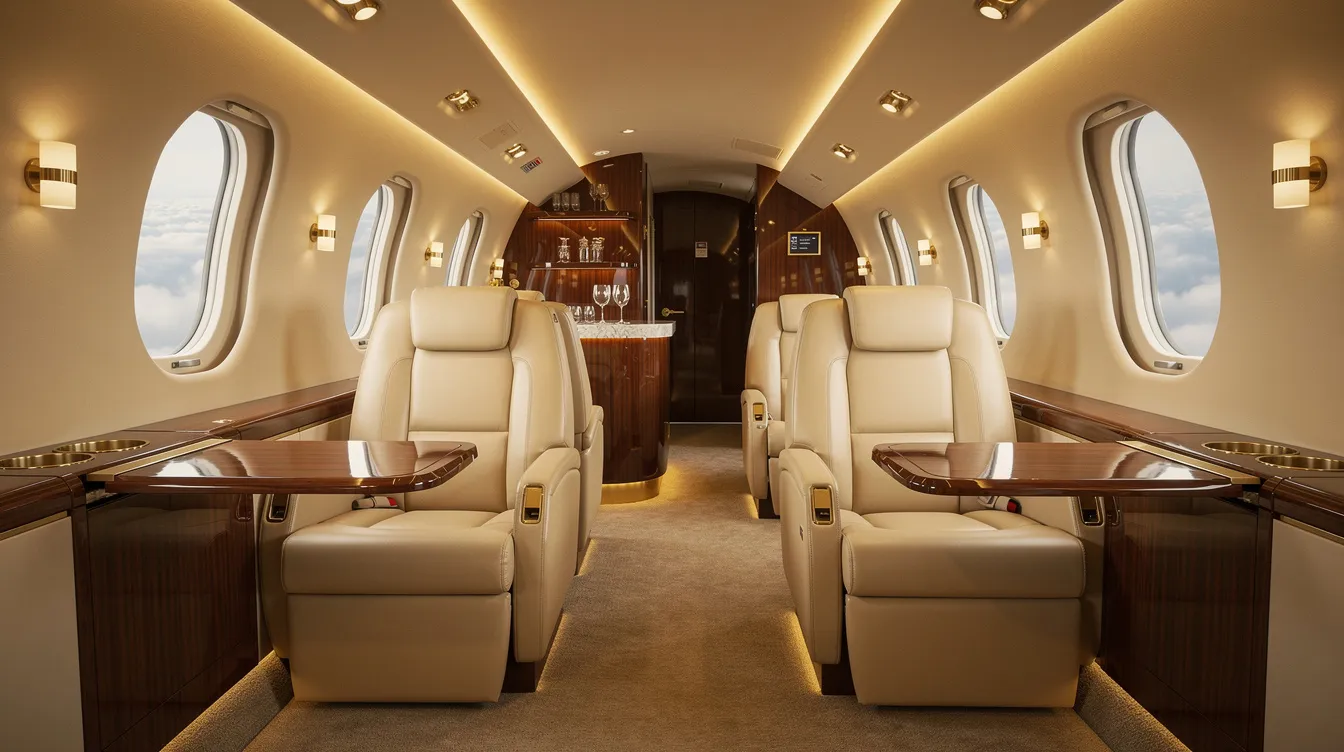
Larger private jets in this category may offer lie-flat sleeping areas, separate zones for work and dining, and significantly more personal space. A spacious cabin makes all the difference on extended flights.
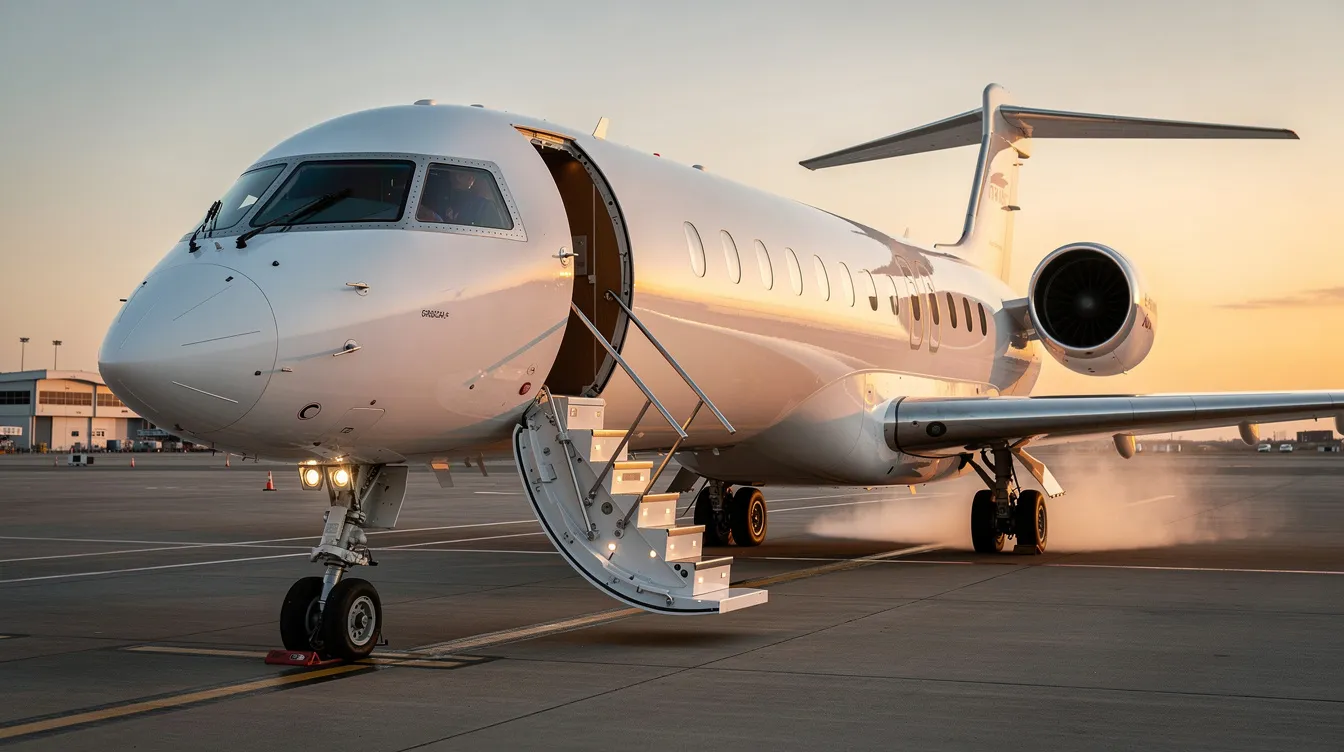
Range, Routing, and Nonstop Capability Across the Atlantic
Published range numbers look great on spec sheets, but they assume ideal conditions — light payload, favorable winds, and standard fuel reserves. In practice, usable range is often 5–15% less once you account for weather and operational constraints that can affect Atlantic crossing plans, alternate airport requirements, and passenger/baggage weight.
~3,500 nautical miles is the practical minimum flight range for East Coast U.S. to Western Europe with careful flight planning.
4,000+ nautical miles is recommended for flexibility and headwinds on core transatlantic routes.
North Atlantic Tracks (NATs) are updated daily by air traffic control. These oceanic routing corridors can lengthen or shorten the route depending on jet streams and weather patterns, and efficient use of these routes is one way charter operators can optimize and market their fleets on Hoppyn.
For shorter-range aircraft, fuel stop options include Iceland (BIKF), Greenland (BGTL), or Newfoundland (Gander/Goose Bay). These reduce open-water time and provide emergency diversion options.
Ultra-long-range nonstop capability on aircraft like the G650ER or Bombardier Global 7500 enables flights like New York–Rome or London to New York without a single fuel stop — the longest-range private jets make these sectors routine.
Costs: Traditional Charter vs Empty Leg Transatlantic Flights
The total cost of a transatlantic private jet flight depends primarily on the aircraft size and route. Booking a transatlantic private jet is a charter process requiring aircraft hire for a specific route, and quotes for private jet charters typically include aircraft details, flight time estimates, and additional charges.
Here's what the numbers look like for traditional private jet charter, with transparent quotes for private charter flights:
Typical heavy jet or ultra-long-range charter: $8,000–$15,000 per flight hour.
New York–London on a Bombardier Global Express: roughly $70,000–$90,000 one way. A one-way flight from London to New York starts at approximately £62,000, with a round trip from London to New York costing approximately £95,000.
Los Angeles–Paris on a G650ER: often $120,000–$170,000+ one way.
What drives charter price:
Aircraft category, aircraft age, and brand (a newer aircraft like the Global 7500 vs. an older GIV).
Route length, positioning flights, and flight length.
Seasonal demand and short-notice bookings — fashion weeks, summer peaks, and major events inflate pricing.
Landing fees, fuel surcharges, overflight permits, and crew expenses including overnights.
Operational costs scale with aircraft size and international operations complexity.
Chartering a private jet is often more practical for occasional travellers than fractional ownership, but charter flights still carry hefty price tags. Enter empty legs:
Empty-leg transatlantic private jet flights occur when an aircraft repositions empty — for example, a jet flies London–New York with a client, then must return to Europe without passengers. Hoppyn also offers unlimited empty leg flights from Toronto for a fixed yearly membership, giving frequent travellers another way to capitalise on repositioning flights.
Realistic savings of 50–75% compared to standard charter on those sectors, if you can match the date and route.
With Hoppyn, you don't pay per flight. You pay a flat $997/year membership and then fly confirmed empty legs with no additional flight cost.
Some of these empty legs are full transatlantic routes, turning what is normally a $70k+ charter flight sector into a flight-cost-free trip once you're a member.
How Transatlantic Private Jet Flights Are Planned and Operated
Permits and Regulatory Requirements
Crossing the Atlantic in a private jet is highly regulated and carefully planned, even if it feels effortless to the passenger. Every transatlantic private flight involves layers of coordination that happen behind the scenes.
Overflight permits are essential for transatlantic flights — each country's airspace requires authorization. Landing permits must be secured at the destination and any intermediate stops.
ICAO standards govern international safety regulations for flights, with compliance required under FAA, EASA, or both depending on aircraft registration.
ETOPS/EDTO planning for twin-engine jets ensures safe distance to alternate airports across oceanic routes.
Airport slots ensure takeoff and landing availability at busier international airports.
Flight Planning and Routing
Dispatch teams use North Atlantic Tracks, altitude selection, and detailed fuel planning to manage jet streams and optimise fuel burn.
Routes balance safety, time, and operational costs — choosing between different NATs based on daily wind data.
Transatlantic flights can be planned with short notice when operators and permits allow.
Communications and Navigation
HF radios or satellite communications are required in oceanic airspace where radar coverage doesn't reach.
Modern long-range jets use ADS-B, CPDLC, and advanced avionics for position reporting and controller communication.
Crew and Rest
Transatlantic flights typically require three pilots for long-haul operations — a Captain, First Officer, and relief pilot.
Duty time management and mandatory rest policies maintain safety across extended flights.
Cabin Comfort, Personalised Service, and Managing Jet Lag
Cabin Features
Cabin design and personalised service are major reasons people choose transatlantic private jet travel over commercial flights. Privacy on private jets allows for confidential meetings and uninterrupted work — something no business-class cabin can guarantee.
Multi-zone cabins on aircraft like the Global 7500, Bombardier Global 6000, and Falcon 8X include dedicated spaces for work, dining, lounge, and a private stateroom.
Lie-flat beds on jets allow for restful sleep during flights — especially critical for overnight eastbound crossings. Private jet cabins can be tailored for sleeping, dining, or working, depending on your needs. For more on maximizing comfort in the air, consider how seat selection and cabin layout affect your experience.
Onboard Service
Tailored catering, preferred drinks, and dietary menus are part of the experience, enabling passengers to shape onboard service around their preferences — all arranged ahead of time.
Board minutes before departure and depart from smaller, quieter FBOs. No fixed schedules dictated by airline timetables. Private jet travel allows customised flight schedules.
Modern jets have cabin management systems to ease jet lag — customized lighting, temperature, and window shading can simulate destination time zones in-flight.
Jet Lag Management
Managing jet lag on transatlantic routes:
Lower cabin altitude helps reduce jet lag effects. Ultra-long-range jets like the G650ER maintain cabin altitude around 3,300 feet at cruise — significantly lower than most commercial aircraft.
Adjusting sleep before departure can help mitigate jet lag. Start shifting your schedule 1–2 days early.
Hydration and limiting alcohol can reduce jet lag symptoms. Drink water consistently throughout the flight.
High-speed Wi-Fi for work or streaming keeps you productive if you choose not to sleep.
Quiet cabins with advanced soundproofing make it easier to sleep or focus during the crossing.
When Smaller Jets and Fuel Stops Make Sense (and When They Don't)
Fuel Stop Scenarios
Not every trip across the Atlantic needs the right aircraft to be a brand-new Global 7500. Sometimes a smaller jet or a route with a fuel stop is the smarter move.
Most light jets lack the range for nonstop transatlantic flights. They'd require 1–2 fuel stops via Iceland, Greenland, or Canada.
Each stop adds time and exposure to more weather systems, partially negating the advantages of flying private. Private jets can utilise smaller business aviation airports for reduced ground transportation time at each fuel stop, but the delay still adds up.
Smaller groups (4–6 passengers) going from the East Coast U.S. to Western Europe may find super-midsize jets ideal — a good balance of comfort and cost.
Willingness to accept a short fuel stop in exchange for a lower hourly rate can make sense when budget matters more than arrival time.
Heavy or ultra long range jets cost more per flight hour but may eliminate fuel stops entirely, saving several hours on longer routes like Los Angeles–Paris.
Midsize jets may look cheaper per hour but can cost more overall once extra legs, landing fees, and ground handling fees at fuel stop airports are factored in.
Concrete scenario: New York–London on a Praetor 600 might require a fuel stop in Iceland, adding roughly 90 minutes. A nonstop on a G550 or larger aircraft gets you there direct, with a more spacious cabin and fewer variables. Private jet travel can support group travel and destinations poorly served by airlines — the right aircraft depends on your priorities.
How Hoppyn Uses Empty Legs to Make Transatlantic Private Jets Accessible
An empty leg flight is a pre-planned repositioning flight that would otherwise fly with zero passengers. Empty leg flights occur when jets reposition without passengers — say, after dropping off a charter client in London who booked one way. That jet needs to get back to its base in New York. Rather than flying empty, operators make those seats available at dramatically reduced rates.
Here's how Hoppyn works:
Yearly membership is a flat $997 with no hidden per-flight fees. That's the entire cost of access.
Members browse a live board of global empty leg flights, including transatlantic private jet flights when they appear, or use Hoppyn’s City Hub to find spontaneous one-way empty leg deals from specific departure cities.
You can join waitlists for specific transatlantic routes across the Atlantic and receive confirmations as operators release inventory.
What Hoppyn is not:
Not a traditional private jet charter broker. You're not paying $8,000–$15,000 per flight hour.
You don't own hours or fractions of a private aircraft. You leverage under-used capacity already in the market — direct access to flights that exist regardless.
Advantages for transatlantic routes:
Access to heavy jets and ultra-long-range jets (Global Express, Gulfstream G550/G650ER) at no incremental flight cost after membership. Aircraft availability depends on operator schedules.
Realistic opportunity to fly private on routes like New York–London or Miami–Paris, if you're flexible about exact dates and times.
Discounted empty leg flights are typically one-way only — perfect if your calendar is flexible or if you can pair a transatlantic empty leg with commercial or points on the return.
Empty leg flights are often available at short notice. Flexibility in schedule is required for empty leg bookings, so monitor the platform regularly and keep a few preferred transatlantic routes saved.
Planning Your First Transatlantic Private Jet Flight with Hoppyn
Imagine this: you've been wanting to fly private from New York to London. You've seen the charter prices - six figures, minimum. Then a G550 empty leg appears on Hoppyn's flight board, departing Teterboro in three days. You confirm, pack a bag, and show up at the FBO 30 minutes before departure. No security lines. No terminal crowds. Just you, the crew, and a smooth and enjoyable journey across the Atlantic.
Here's how to make that happen:
Join Hoppyn and set up your profile with route preferences — specific city pairs like New York–London, Miami–Paris, or any departure airport and European destination that interests you, and set a preferred transatlantic itinerary when your dates and airports are flexible.
Browse current transatlantic private jet flights and join waitlists on relevant sectors. The booking process for private jets includes defining trip requirements and selecting the aircraft category that fits.
Watch for confirmations and be ready to move on 1–3 days' notice when an ultra-long-range or heavy jet becomes available for a transatlantic route.
Logistics once confirmed:
Plan ground transportation to private terminals — Teterboro, White Plains, or Opa-Locka on the U.S. side; Le Bourget, Biggin Hill, or Farnborough in Europe.
Arrive roughly 30 minutes before departure. Not 2–3 hours. That's the private aviation difference.
Practical tips:
Pack for variable cabin temps. Bring work gear and sleep essentials for overnight flights. Think about jet lag management — adjust your watch to destination time the moment you board.
Have a backup plan for your return: commercial, miles/points, or request another empty leg going the other direction.

Frequently Asked Questions
Can I really cross the Atlantic on an empty leg private jet flight?
Yes. Transatlantic empty legs appear when a heavy or ultra-long-range jet repositions between North America and Europe without charter passengers. They're less frequent than regional empty legs, which is why flexibility on dates, airports (Teterboro vs JFK; Le Bourget vs Charles de Gaulle), and times is essential. Through Hoppyn, members can see these empty legs when they appear and join waitlists — turning a $70k+ charter sector into a flight-cost-free trip once your membership is paid.
Which private jets most often operate transatlantic routes?
Common models include the Gulfstream G550 and G650ER, the Bombardier Global 6000/7500 family (including the Bombardier Global Express), Dassault Falcon 7X/8X, and long-range Challengers like the 605/650. These aircraft are favored for their combination of range (often 6,000–7,700+ nautical miles), cabin size, and reliability on transatlantic routes. Super-midsize jets like the Embraer Praetor 600 can also perform some transatlantic missions, especially East Coast–Europe with careful planning.
Are transatlantic private jet flights safe over the ocean?
Absolutely. Transatlantic private jet flights must meet strict standards, including ETOPS/EDTO planning for twin-engine aircraft, redundant navigation, communications (HF and satellite), and comprehensive safety equipment. Long-range business jets are designed for extended overwater international operations and follow the same core oceanic procedures as commercial airliners. Experienced crews receive specific oceanic training and use real-time weather and route updates to manage turbulence and diversions.
Can I bring my pet on a transatlantic private jet flight?
Pets can often travel in the cabin on transatlantic private jet flights, but requirements depend on departure and arrival countries. You'll need up-to-date vaccinations and microchipping, along with health certificates. For the UK and EU, compliance with specific pet travel schemes is mandatory. Confirm pet policies and paperwork well in advance, especially for routes like New York–London where pet import rules are strict.
How far in advance should I plan a transatlantic private jet trip with Hoppyn?
If you want a specific route across the Atlantic, join Hoppyn and start monitoring empty legs several weeks to a few months in advance. The best approach: set preferred routes, stay flexible on the exact day and departure airport, and be ready to confirm quickly when a matching transatlantic empty leg appears. For time-critical trips like fixed business meetings, a traditional charter or guaranteed availability through direct booking may still be necessary. Hoppyn is ideal for flexible travellers who want to drastically reduce the cost of flying private across the Atlantic.
Ready to browse transatlantic empty legs? Join Hoppyn today and start watching for your next flight across the Atlantic — for a fraction of what you'd expect.
Conclusion: Making Transatlantic Private Jet Travel Accessible and Affordable
Transatlantic private jet flights no longer have to be an exclusive luxury reserved for the ultra-wealthy. With traditional charter prices ranging from $100,000 to $250,000 one way, many assume flying private across the Atlantic is out of reach. But by leveraging empty leg flights through a membership model like Hoppyn’s, you can access these premium routes for a fraction of the cost.
Hoppyn’s flat annual membership fee of $997 unlocks access to unlimited empty leg flights, including transatlantic routes on heavy and ultra-long-range jets, with no per-flight charges. This model empowers travellers to fly private on their terms—enjoying the convenience, privacy, and comfort of private aviation without the typical charter price tag.
Whether you’re a seasoned private flyer or exploring private jet travel for the first time, understanding aircraft types, routes, flight planning, and how empty legs work will help you make smarter travel decisions. Flexibility on dates and airports is key to securing the best deals.
Ready to experience transatlantic private jet travel for less? Join Hoppyn today and start browsing empty leg flights to cross the Atlantic with confidence and ease.




Unlock Your Private
Jet Experience
Join our exclusive membership for
free flights today!

Explore More
Blogs


Join Our Exclusive
Newsletter
.png)






