
Travel in a Private Jet: A Complete Guide to Flying Private for Less


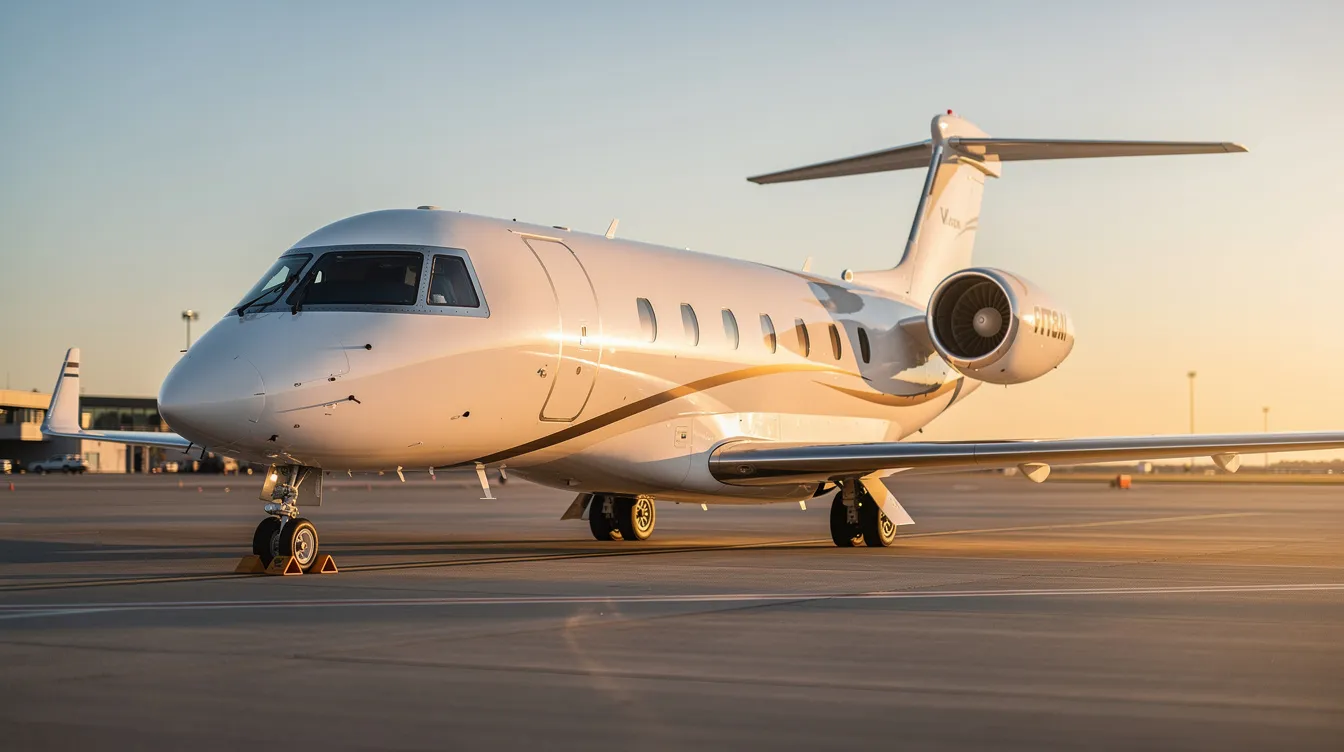
Think private jet travel costs $5,000 an hour and requires a CEO salary? That used to be mostly true. It isn't anymore. Between empty leg flights, flat-fee memberships, and a market that's expanded rapidly since 2020, flying private can be more affordable than expected in 2026. This complete guide breaks down every way to get on a private plane — from traditional charter flights to the membership model we built at Hoppyn — so you can figure out which one actually fits your budget and your life.
Key Takeaways
Flying on a private jet no longer has to cost $5,000+ per hour. Empty leg flights and private jet memberships can cut that by 50–80%, putting private flights within reach of far more travelers.
Hoppyn is a flat-fee private jet membership at $997/year that gives you access to global empty leg flights with no per-flight costs once your seat is confirmed.
Traditional private jet charter, jet cards, and empty leg memberships serve very different travelers. Charter is fully flexible but expensive. Jet cards require huge prepayment. Memberships like Hoppyn trade some schedule flexibility for dramatically lower cost.
Real routes — New York to Miami, London to Nice, Los Angeles to Las Vegas — regularly appear as empty legs for members who can stay flexible on timing.
Private jet memberships often include no hidden fees or costs, and Hoppyn adds 24/7 concierge service for personalized travel support.
How Private Jet Travel Really Works Today
Private jets aren't just for billionaires anymore. Demand spiked between 2020 and 2022 as travelers sought alternatives to commercial flights for safety, privacy, and flexibility. That surge brought new business models — and made private jet travel accessible to a much wider group of people.
Here's a quick breakdown of the terms you'll see in this guide:
Private Jet Charter
Hiring an entire aircraft on demand. You choose the departure time, the route, and the aircraft type, then pay per hour plus fees.
Air Charter / Private Charter
Same concept — renting the whole private plane for your journey.
Jet Card
A prepaid block of flight hours at a fixed rate. Think of it like a debit card for flight time.
Empty Leg Flight
A repositioning flight where a jet must fly without passengers (returning to base or heading to its next pickup). Operators sell these seats at steep discounts.
Membership
A flat annual fee that grants access to empty leg flights — no per-flight cost once you're confirmed.
This guide compares charter, membership, and other options for travelers trying to fly private for less.
Private Jet Charter
Hiring an entire aircraft on demand. You choose the departure time, the route, and the aircraft type, then pay per hour plus fees.
Air Charter / Private Charter
Same concept — renting the whole private plane for your journey.
Jet Card
A prepaid block of flight hours at a fixed rate. Think of it like a debit card for flight time.
Empty Leg Flight
A repositioning flight where a jet must fly without passengers (returning to base or heading to its next pickup). Operators sell these seats at steep discounts.
Membership
A flat annual fee that grants access to empty leg flights — no per-flight cost once you're confirmed.
To put costs in perspective: a light jet charter from New York to Miami runs roughly $8,000–$15,000 one way. That same route as an empty leg might cost $4,000–$7,500, or nothing beyond your membership fee with Hoppyn. Private jet charters offer access to over 20,000 aircraft globally, and private jets can utilize thousands of smaller regional airports not served by commercial flights — meaning more airports, more options.
This article covers everything from charter flights to Hoppyn's membership model so you can find the right way to fly private for less.
Private Jet Charter vs. Flying Private with a Membership
Most people still picture "call a broker, rent the whole jet" when they hear private jet charter. That's one option — but not the only one anymore.
Traditional private jet charter is fully on-demand. You pick the date, time, route, and aircraft. Hourly rates range from around $3,000 for light jets to $12,000+ for heavy or ultra-long-range jets. You're paying for total control, and the price reflects it. On top of the hourly rate, expect fuel surcharges, landing fees, crew costs, and a federal excise tax of roughly 7.5% on domestic legs.
Jet card programs require prepaying $50,000–$250,000 for a block of flight hours at a fixed rate, with guaranteed availability. They make sense for corporate users or anyone logging dozens of hours per year. But they still charge per hour — the card just locks in the rate.
Memberships like Hoppyn work differently. Instead of buying hours, you pay a low, fixed annual fee and gain access to empty leg flights worldwide. No hourly rates. No fuel surcharges. No per-flight invoices. Hoppyn doesn't sell charter flights or jet cards — we sell access to empty-leg seats under one transparent membership price.
Cost is a significant consideration when comparing private and commercial air travel. Charter is the premium option. Jet cards are the commitment option. Membership is the flexibility-for-savings option.
What Is an Empty Leg Flight and Why It's Cheaper
An empty leg is a repositioning flight that a private jet must operate without passengers. It happens after the jet drops off clients or needs to fly to its next pickup point. These flights are already scheduled and paid for — the operator just doesn't have anyone on board.
Here's a concrete example: a jet drops passengers in Los Angeles on March 4 and must fly empty back to Las Vegas on March 5. That return flight is an empty leg. Instead of burning fuel with zero revenue, operators list these seats at a discount so they can recover some cost.
Empty leg flights are discounted private jet flights because:
The aircraft is already paid for by the original charter client
Operators prefer some revenue over an entirely empty cabin
Seats would otherwise fly completely empty — any income is a win
Travelers can save up to 75% on empty leg flights compared to full charter pricing. Typical discounts fall in the 30–80% range depending on the route, aircraft type, and how close to departure the flight is. Empty leg flights are often available last minute, which is why flexibility matters.
The trade-off? Less control over exact schedule and routing. You adapt to the flight, not the other way around.
Hoppyn's twist is removing per-flight pricing entirely for members. After paying $997/year, your confirmed seats on available empty legs come with no additional flight costs. Access to empty-leg flights can make private aviation more affordable for members who fly even a few times per year.
The Main Ways You Can Fly Private in 2026
There are now multiple ways to fly private, and each suits a different type of traveler. Here's a quick rundown:
On-demand private charter: Full control, full price. Best for executives who need exact times on exact routes. Charter flights typically start around $2,800 and can reach $34,500+ per flight depending on aircraft and distance.
Jet card programs: Prepay for hours. Good for corporate teams or frequent flyers logging 25–100+ hours per year. Expect $50,000+ upfront.
Fractional ownership: Buy a share of an aircraft. Makes sense if you fly 100+ hours annually and want a consistent plane.
Full aircraft ownership: For the heaviest users — those flying hundreds of hours per year who can absorb depreciation, crew salaries, and maintenance.
Empty leg memberships (Hoppyn): A flat $997/year for access to global empty leg flights. Ideal for leisure travelers, remote entrepreneurs, and small teams who can plan with some flexibility and want to explore new destinations without charter-level costs.
A digital nomad hopping between European cities, a family taking three or four vacation trips per year, a small business owner visiting clients across the country — all of these travelers can find a cost-effective solution that doesn't require owning or chartering a full aircraft.
Inside the Private Jet Experience: From Curb to Cruise Altitude
Arriving at the FBO
You arrive at a private terminal in Dallas at 9:45 am for a 10:00 am empty leg to Aspen. No crowds. No overhead announcements. You walk through a quiet FBO lounge, show your ID, and head straight to the jet. That's it.
Private aviation typically involves arriving at a Fixed Base Operator (FBO) rather than a commercial terminal. Private jets typically allow check-in just 15–30 minutes before departure for domestic flights, and 45–60 minutes for international flights. Streamlined security procedures at FBOs involve quick ID verification and direct luggage handling — you skip crowded terminals and TSA lines entirely.
The FBO environment is calm: comfortable seating, coffee, fast Wi-Fi, private restrooms, and in many cases, direct car-to-jet access. Private aviation generally avoids the conventional boarding process of commercial flights.
Onboard Experience
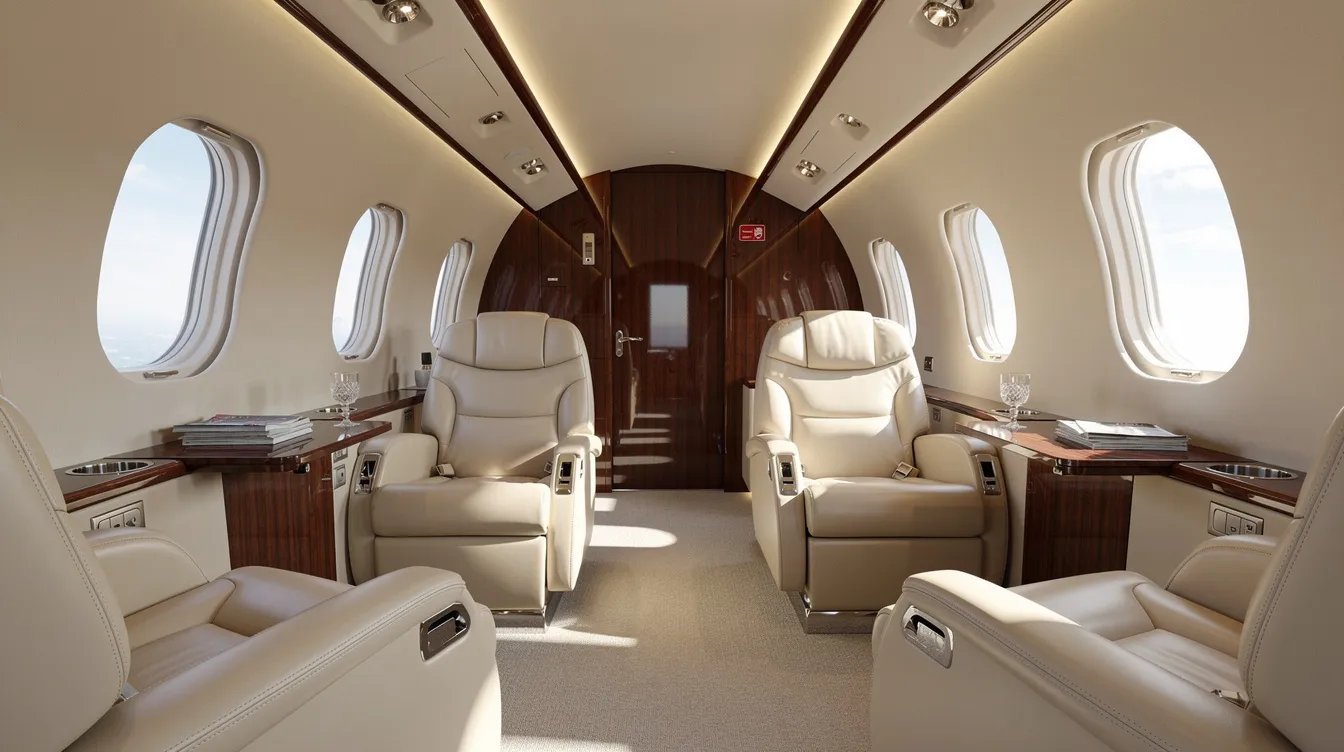
Onboard, the entire cabin of a private jet is private to the passengers. Traveling by private jet can enhance comfort and personalized service compared to commercial flights. Private jet cabins can create a quiet environment, enhancing productivity — whether you're working on a laptop or just unwinding before a vacation.
Aircraft Types and Amenities
What to expect by aircraft type:
Light jets (e.g., Citation CJ3): 4–8 seats, ideal for short hops under 3 hours. Compact but comfortable.
Midsize jets: 6–10 seats, more cabin space and amenities, suitable for 3–5-hour flights.
Heavy jets (e.g., Gulfstream G450): 10–16+ seats, full catering, Wi-Fi, and heavy jets can fly up to 7,000 miles nonstop — ideal for international flights.
Private jets provide customizable catering based on individual preferences, from light snacks to full meals. Higher cruising speeds and altitudes allow for more direct flight paths, and private jets allow for direct routing to final destinations, reducing total travel time. Booking a private jet can save significant time compared to commercial flights — no layovers, no connections, no waiting.
Private jets can fly internationally with additional logistics handled by providers, and they can accommodate tailored amenities and maintain a controlled cabin environment throughout the journey.
How Much Does It Really Cost to Fly Private?
"It depends" is true — but here are clear, realistic ranges so you can actually plan.
Per-hour charter rates (2026 estimates):
Turboprops: ~$2,000–$4,500/hour
Light jets: ~$3,000–$5,000/hour
Midsize/super-midsize: ~$5,000–$13,000/hour
Heavy/ultra-long-range: ~$9,000–$20,000+/hour
Route scenarios:
New York–Miami (light jet, ~3 hours): Charter runs roughly $9,000–$15,000 one way. An empty leg on the same route might drop to $4,500–$7,500, or be included with Hoppyn membership.
Los Angeles–Las Vegas (light jet, ~1 hour): Charter around $3,000–$4,500. Empty leg offers sometimes appear at $1,500–$2,500.
London–Nice (midsize jet, ~2 hours): Charter could hit $15,000–$25,000+. Empty leg discounts of 50–70% are common on this route in summer.
Private jet costs can range from $2,800 to $34,500 per flight depending on aircraft types and distance.
Now compare that to Hoppyn's flat $997/year membership. If you fly just two empty legs in a year, you've likely spent less than a single charter leg would cost. The more empty legs you take, the lower your effective cost per flight drops. That's why the membership model works — it turns private jet travel from a per-trip luxury into something closer to a travel subscription.
Flying private can be more affordable than expected in 2026 when you choose the right model.
Planning Your First Private Jet Trip Step by Step
Set Your Dates
Set your dates and flexibility window. The wider your window, the more empty legs you'll see. Even 2–3 days of flexibility makes a big difference.
Choose Your Route
Decide your route. Pick departure and destination airports. Private jets can utilize thousands of smaller regional airports, so you may land closer to your final destination than any commercial airport allows.
Determine Passenger Count
Determine passenger count and baggage. Private jet travel can better handle complex itineraries involving multiple destinations, and aircraft size matters for comfort and luggage.
Set a Budget or Choose a Membership
Set a budget or choose a membership. For one-off flights, contact a broker. For ongoing access to the best prices, consider a membership like Hoppyn.
Browse Options
Browse options. On Hoppyn's platform, filter by date and route. For charter, request quotes from a dedicated charter specialist who provides personalized booking assistance.
The booking process for a private jet involves defining trip details, choosing an aircraft, and confirming preferences. Private jet booking can be completed in under 24 hours in most cases.
For international journeys, bring a valid passport and check visa requirements in advance. Special requests — catering, ground transfers, pets — should be communicated early. First-time flyers can contact Hoppyn's support team for route advice and help reading an empty leg listing.
How Hoppyn Makes Flying Private More Affordable
Hoppyn is a subscription-based private jet membership built entirely around global empty leg flights. One annual fee. No flight costs once your seat is confirmed. That's the model.
What members get:
Access to a constantly updated board of empty leg flights across the globe
The ability to join waitlists for preferred routes and dates
Confirmation notifications as flights open up
Membership grants access to over 20,000 aircraft globally
Members enjoy 24/7 concierge service for personalized travel support
Compared to traditional private charter, there are no hourly rates, no fuel surcharges, and no hidden fees. Annual membership fees can be as low as $997 for unlimited flights. The potential to take multiple trips per year for less than a single charter leg is real.
The target traveler: frequent leisure travelers, remote entrepreneurs, and small business teams who can plan with some flexibility and want to fly private without the cost of chartering a full aircraft. Private jet travel offers flexibility and personalized service — and Hoppyn's transparent pricing, global reach, and 24/7 human support set it apart from competitors charging $15,000+ for similar access.

Using Hoppyn's Platform: From Browsing Empty Legs to Boarding
Here's what the member journey looks like on Hoppyn.
You log in and filter empty leg flights by departure airport, destination, date range, and number of seats. You'll see real upcoming legs — London to Ibiza next Friday, Miami to Teterboro next week, York to Palm Beach in two days.
The waitlist mechanic is straightforward: join waitlists on preferred routes and dates. Statuses show as "pending," "confirmed," or "full." You get notifications when a seat opens. Members can book flights with minimal advance notice — sometimes as little as 15 minutes before departure when a last-minute leg appears.
Once your seat is confirmed, you receive:
Full itinerary and flight details
FBO address and recommended arrival time
Any special instructions from the support team
There are no per-flight invoices to approve. Once you are a member, your confirmed flights are included. No surprise charges. No extra paperwork. Browse current flights to see what's available right now.
Limitations and Trade-Offs of Empty Leg Private Jet Travel
Empty leg flights are not a one-for-one replacement for bespoke charter flights. They shine when you're flexible. Here's what to know:
Non-guaranteed schedules: If the primary charter changes its plan, the empty leg can shift or be canceled.
One-way routes: Your return trip may not match. You might need to combine an empty leg with a commercial flight or rail connection.
Route availability varies by season: Expect lots of New York to South Florida empty legs in winter, many London to Mediterranean legs in summer. Less common city pairs appear less frequently.
Luggage and passenger limits: Determined by the right aircraft on each leg.
Hoppyn helps manage these trade-offs with real-time updates, alternative flight suggestions, and support with planning connecting legs. They provide access to luxury travel at lower costs — the trade-off is simply that you adapt your schedule rather than dictating it.
If your trip is time-critical with zero flexibility, charter is still the right tool. If you can shift by a day or two, empty legs are where the value is.
Safety, Aircraft Standards, and Service Level When You Fly Private
Safety on private jets is heavily regulated. In the U.S., charter operators fly under Part 135 certification, and pilots must meet strict hour and type-rating requirements. Hoppyn works only with vetted operators that meet industry safety standards.
Common accreditations you'll see in the industry include ARGUS, Wyvern, and IS-BAO — each representing third-party safety audits of operator practices, maintenance, and crew qualifications. Aviation experts consider these the baseline for reputable charter operations.
What to expect from crew and service:
Professional pilots with type-specific certifications
Pre-flight safety briefings
Support for special needs — pets, medical equipment, children — when arranged in advance
Personalized service tailored to your preferences
Hoppyn's 24/7 support team liaises with operators so you don't have to learn aviation jargon or negotiate with multiple charter brokers. You get peace of mind and security without the legwork.
Environmental Considerations and Flying Private Smarter
Private jets have a higher per-passenger carbon footprint than commercial flights. That's a fact worth stating plainly.
However, empty leg flights represent a more efficient use of existing aircraft movements. These jets are already flying — filling seats that would otherwise be empty doesn't add new emissions. It just means the flight serves a purpose rather than burning fuel for nothing.
The industry is making moves toward Sustainable Aviation Fuel (SAF) and carbon offset programs. Some operators on the Hoppyn network may offer these options. If environmental impact matters to you, consider grouping trips, choosing smaller jets when possible on the fleet, and offsetting emissions on longer routes.
Hoppyn's model focuses on better utilizing flights that are already operating — not adding unnecessary legs to the air.
Frequently Asked Questions
Here are answers to the most common questions about flying private with empty legs and Hoppyn memberships. For more, visit our FAQs page.
Can I bring friends or colleagues on a Hoppyn empty leg flight?
Yes. Members can typically bring additional passengers up to the seat limit on a given empty leg. There is no extra flight cost for guests — only the member holding the booking needs a valid membership. Seat-allocation rules and the right jet's capacity determine how many people can board. Coordinate through Hoppyn's support to confirm guest count before your flight.
How reliable are empty leg flights - do they get canceled often?
Empty legs depend on the primary charter. If that charter changes its schedule, the empty leg can be rescheduled or canceled. Industry-wide, cancellation rates sit around 10–15% for charter marketplaces. Hoppyn notifies members quickly and may suggest alternative flights. For time-critical trips, keep a backup plan — but most members find reliability is strong on popular routes, especially when booking a few days out rather than day-of.
What kind of luggage can I bring when I fly private on an empty leg?
Private jet travelers are generally free from strict baggage limits, and private jets can carry more luggage than commercial airlines. That said, allowances depend on aircraft type. Light jets have smaller cargo holds; midsize and heavy jets handle golf bags, skis, and instruments more easily. If you're bringing anything oversized, clear it with Hoppyn support in advance so the right aircraft can accommodate your gear.
Do I still have to go through security when flying private?
You still need ID checks and, for international flights, passports and customs clearance. But you skip traditional TSA lines and metal-detector queues entirely. At the FBO, security is fast — a quick ID verification, a brief safety overview, and you walk directly to the jet. Travelers can check in just 15 minutes before departure for most domestic legs, which is why booking a private jet avoids long security lines and crowded terminals.
How do I join Hoppyn and start flying on empty leg private jets?
Visit the Join Hoppyn page, review the $997/year membership details, and sign up online. You'll access the flight board immediately and can start browsing available empty leg flights by date, route, and destination. If you have questions about whether specific routes suit your 2026 travel plans, reach out to our 24/7 support team. Private jets enable flexible scheduling for departures and arrivals — discover what's available and start your next journey on your terms.
Conclusion
Flying private no longer means breaking the bank or committing to complex ownership models. Thanks to innovations like empty leg flights and flat-fee memberships such as Hoppyn’s, private jet travel has become accessible, affordable, and flexible. Whether you choose traditional charter for full control or a membership for unbeatable savings, private aviation offers a smarter way to travel — skipping crowded airports, saving time, and enjoying personalized service.
With a bit of planning and flexibility, you can experience the benefits of flying private for less in 2026 and beyond. Ready to take off? Explore empty leg flights today and discover how Hoppyn can unlock private jet access on your terms.




Unlock Your Private
Jet Experience
Join our exclusive membership for
free flights today!

Explore More
Blogs


Join Our Exclusive
Newsletter
.png)






